
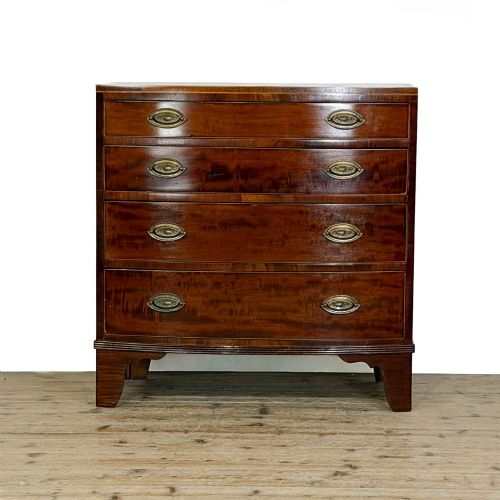

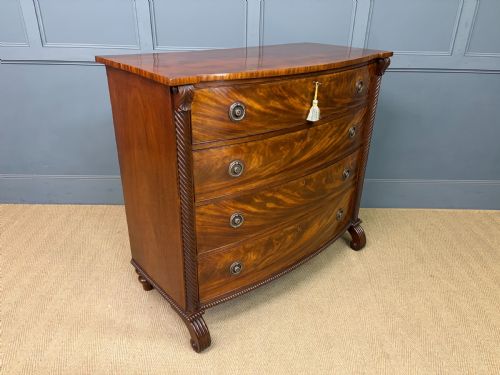
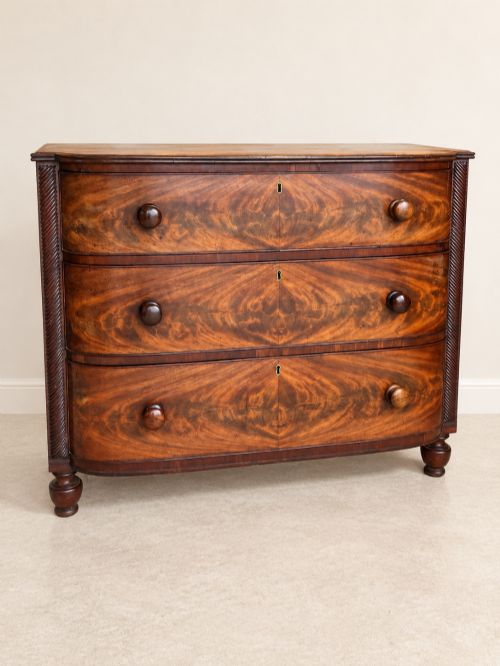
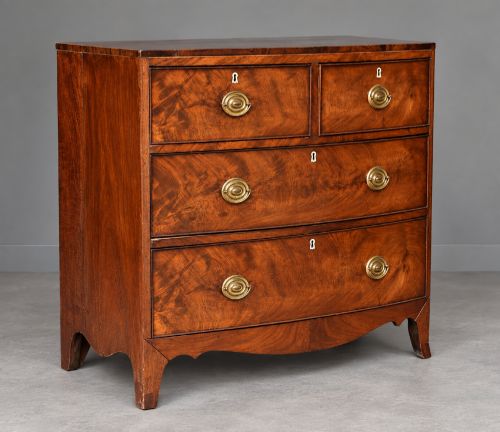
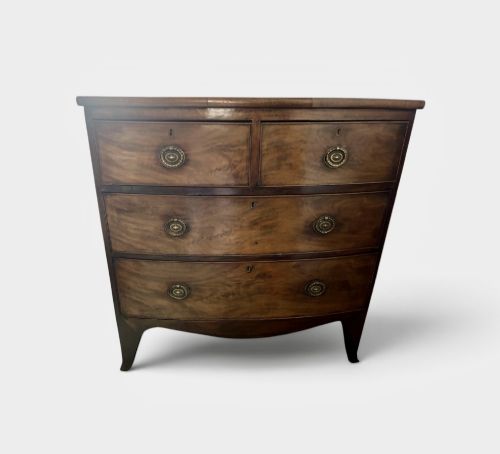
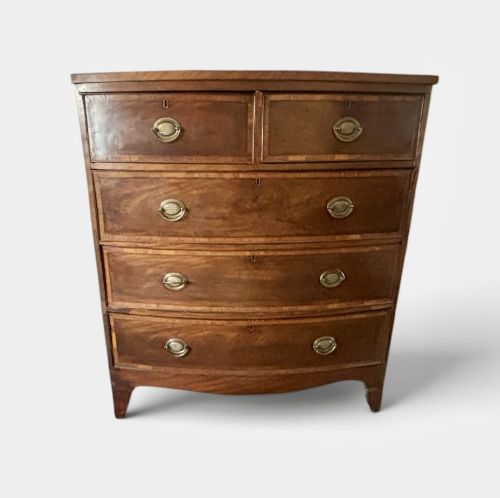
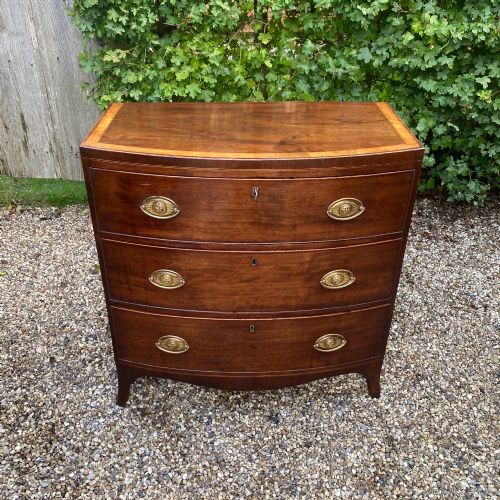
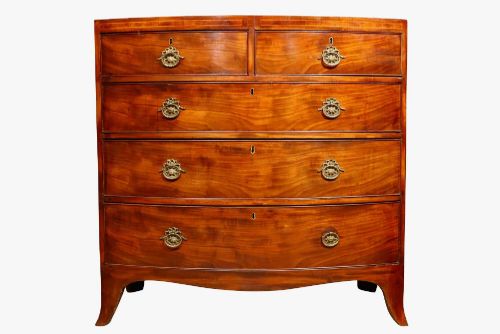
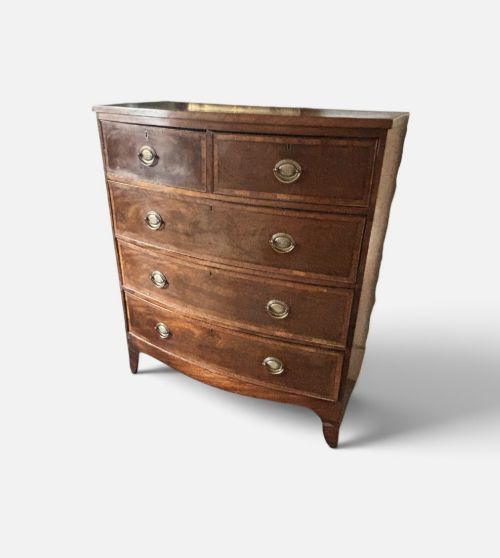
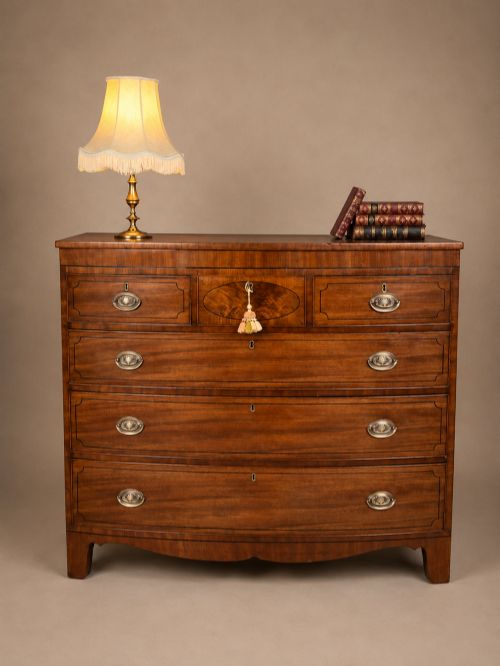
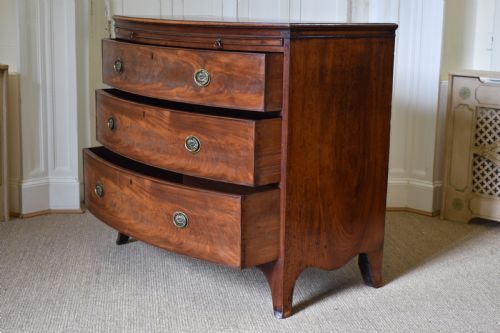
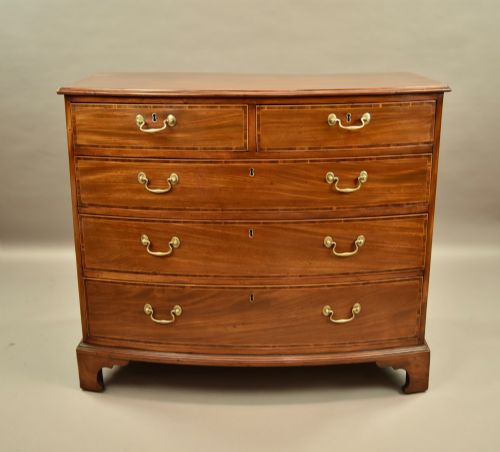
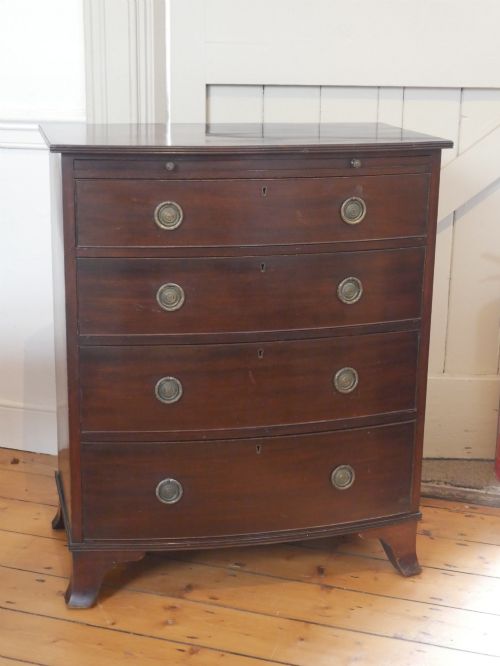
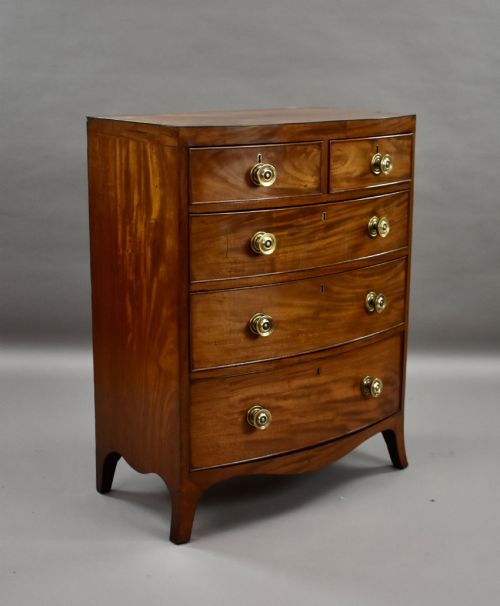
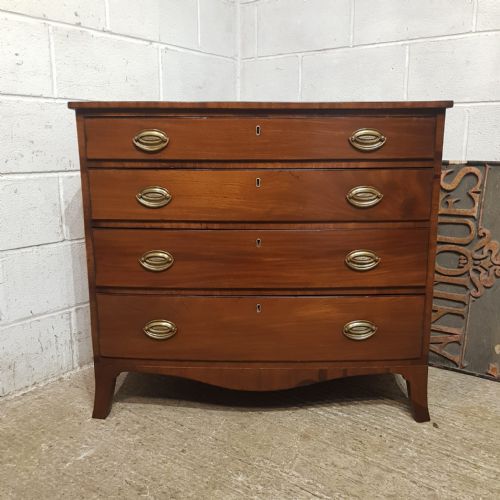
Regency Bowfront Commode
A regency bowfront commode brings curved mahogany presence and fine satinwood stringing to a hallway or bedroom.
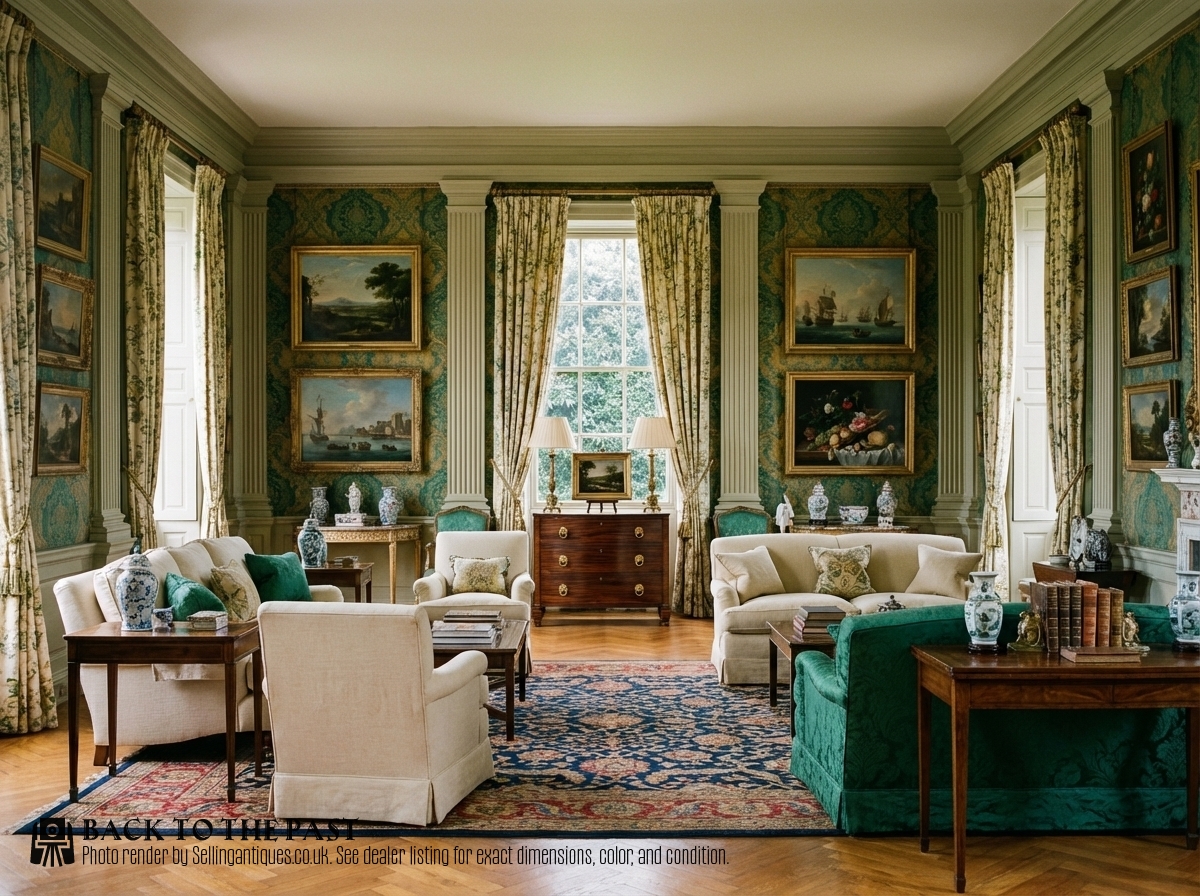
What They Are
A regency bowfront commode is a substantial case piece designed for storage, typically taking the form of a chest of drawers with a gracefully curved front profile. These pieces emerge principally from the Regency period and the wider nineteenth century, carrying the architectural gravity characteristic of the era. Buyers encounter variations ranging from large proportions down to narrow footprints and bedside cabinets.
The dominant material format on this page is mahogany, often enhanced with contrasting wood inlay or satinwood crossbanding. Occasional pieces incorporate burr oak or reflect the subsequent William IV style while retaining the foundational bowfront silhouette. They function practically as chests of drawers while serving as focal points for traditional interiors.
How They Were Made
Cabinetmakers constructed these commodes using solid and veneered timbers, primarily selecting mahogany for the primary carcase and drawer fronts. Woods like satinwood and burr oak were introduced as veneers to create decorative borders and contrasting panels across the curved surfaces.
Fine craftsmanship shows in the execution of the curved bowfront drawers, which required precise timber bending and shaping techniques. Artisans applied wood inlay and crossbanding by hand to frame the drawer edges, finishing the structural joinery with brass hardware.
Retail Price Guide 2026
Typical UK retail prices for regency bowfront commode, calculated from the Sellingantiques database of over a million retail prices indexed since 2003. This retail price guide relies exclusively on Sellingantiques data; no external sources or auction records are used, so the figures do not describe the wider market.
Listings feature pieces spanning the Regency period and the wider nineteenth century, constructed primarily in mahogany with satinwood and burr oak elements.
What Varies in Quality
Quality separates along the ambition of the timber selection and the precision of the decorative details. Pieces featuring striking burr oak or intricate satinwood crossbanding sit at the higher end, showing a more deliberate contrast against the dark mahogany body.
The finesse of the bowfront shaping and the crispness of the wood inlay define the upper tier of cabinetmaking. Simpler nineteenth century iterations rely on plain mahogany surfaces, whereas grander Regency examples demonstrate a tighter control over proportions and decorative geometry.
The Regency Bowfront Commode Glossary
- Bowfront
- A convex curved front profile typical of case furniture from the Regency period. This design softens the room presence of a standard rectangular chest.
- Crossbanding
- A decorative border of veneer laid perpendicular to the grain of the surrounding wood. It frames drawer fronts on mahogany and satinwood pieces.
- Satinwood
- A luminous, fine-grained timber imported from tropical regions and used for contrasting inlays. Its pale yellow tone stands out sharply against dark mahogany.
- Commode
- A term historically applied to low cabinets or chests of drawers with decorative ambitions. In these listings, it bridges the gap between bedside cabinets and larger chests.
Frequently Asked Questions
Where should I place a bowfront commode?
These pieces suit bedrooms, hallways, or living spaces where their curved silhouette can be appreciated without blocking narrow walkways. Their storage depth makes them practical for clothing or linen.
Position them against flat walls to let the convex curve draw the eye. Avoid damp or overly warm spots that might distress antique timber veneers.
How do I care for mahogany and satinwood?
Dust regularly with a soft, dry cloth to prevent particulate accumulation on the polished surfaces. Apply a quality beeswax periodically to nourish the wood and maintain the sheen.
Keep pieces away from direct sunlight and heat sources to prevent the veneers from drying out or lifting. Avoid silicone-based sprays that can damage historic polishes.
What is the difference between Regency and William IV styles?
Regency pieces often display refined proportions, lighter satinwood details, and delicate crossbanding. They lean towards classical elegance and restraint in ornament.
William IV furniture tends to be heavier and more robust, occasionally incorporating timbers like burr oak. The scale is frequently larger, reflecting shifting tastes towards bolder Victorian mass.
Are these commodes practical for daily storage?
The drawer configurations offer substantial room for domestic storage needs, from clothing to household linens. The sliding action relies on historical timber runners that benefit from careful handling.
While sturdy, they remain antique furniture requiring sensible use rather than heavy industrial loading. Ensure drawers are opened evenly by their brass pulls to maintain alignment.