

Flame Mahogany Furniture
Flame mahogany furniture brings dramatic figured grain and rich warmth to interiors through chests of drawers, sideboards and wardrobes from Georgian to Edwardian periods.
Flame Mahogany Furniture
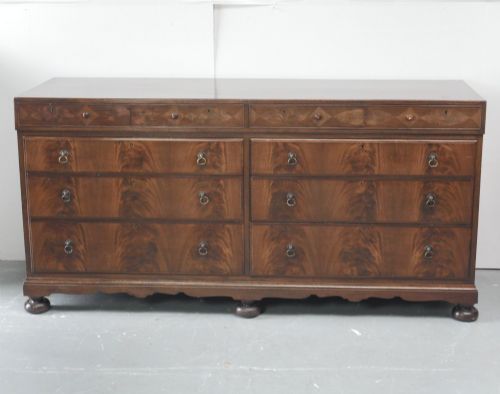
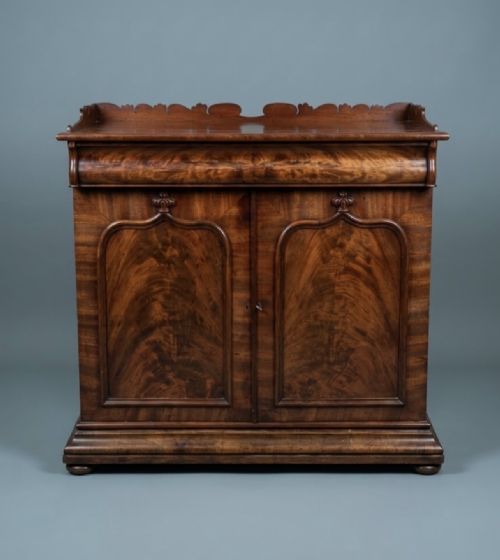
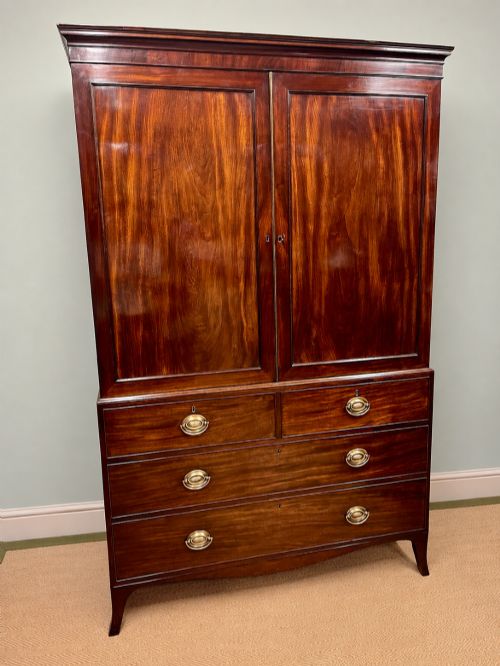
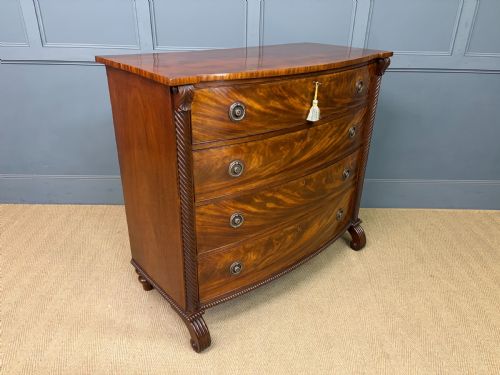
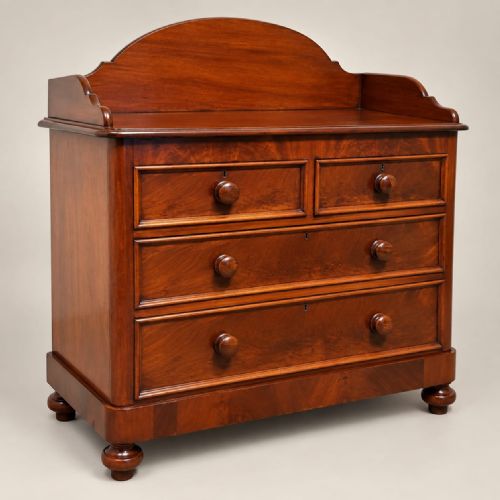
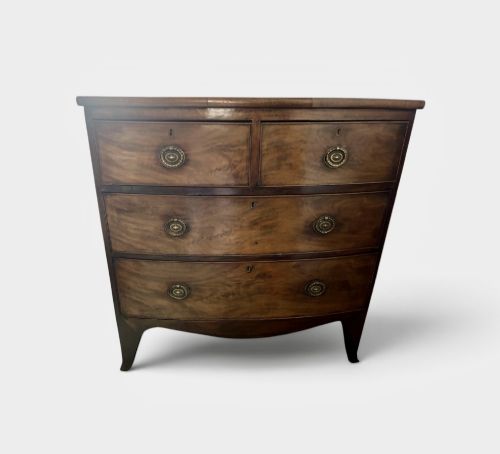
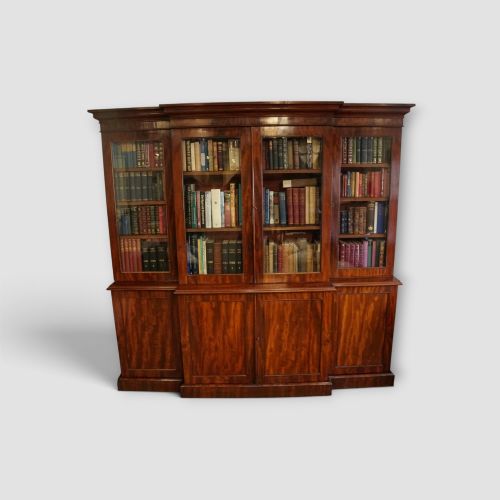
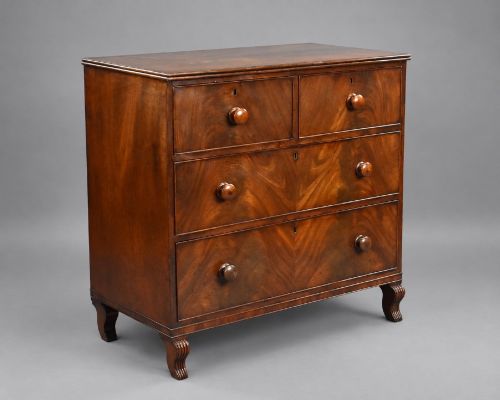
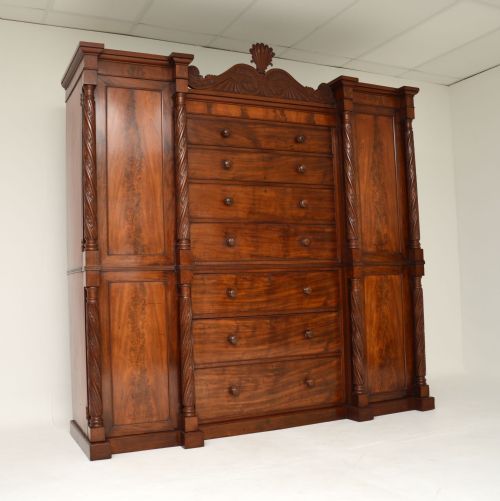
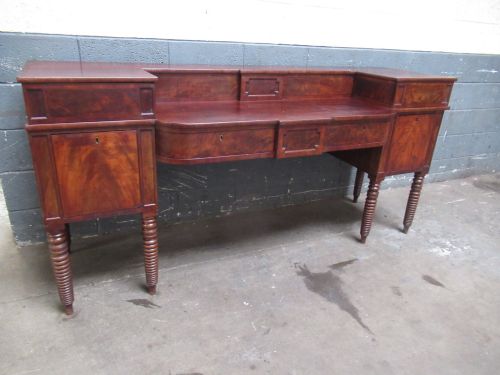
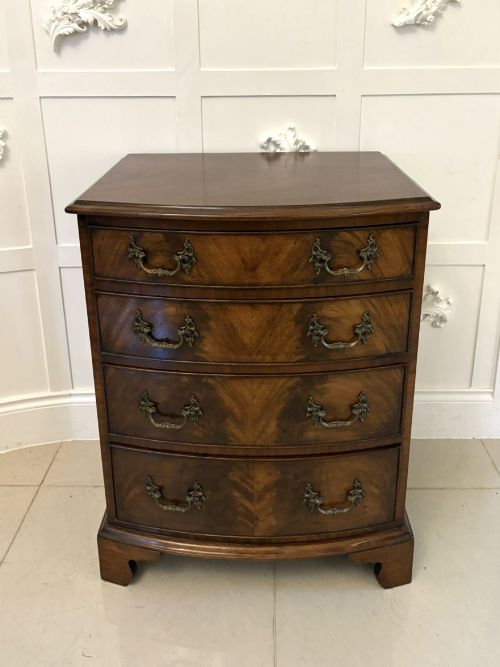
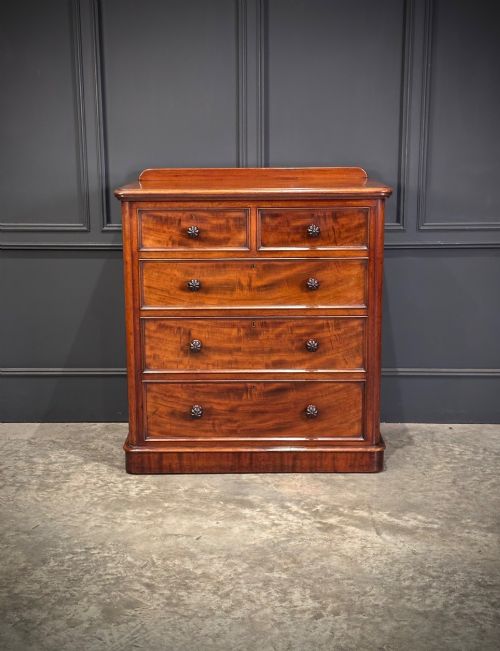
When you search for flame mahogany furniture, you encounter substantial case pieces designed for storage and display, most commonly chests of drawers, sideboards and linen presses. These items span the eighteenth, nineteenth and early twentieth centuries, with Regency and Victorian examples appearing frequently across the selection.
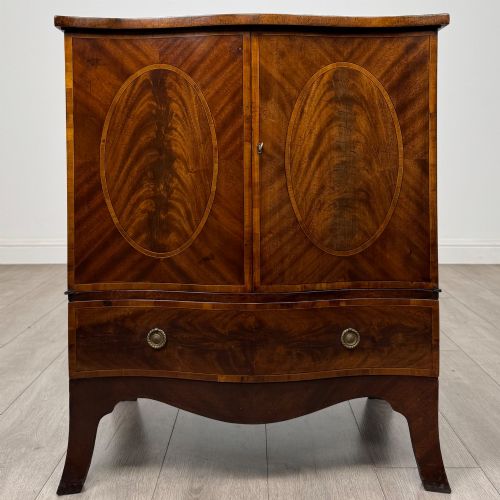
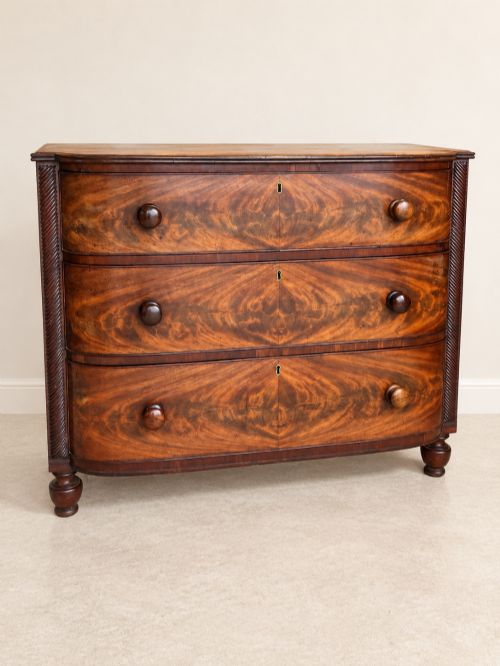
The forms range from bow-front chests and breakfront bookcases to compactum wardrobes and side cabinets. Makers utilised timber with distinct figuring to create striking visual movement across drawer fronts and cabinet doors, often framed by solid mahogany or contrasting stringing.
Originating largely from British workshops alongside continental examples such as French Empire commodes, these pieces reflect the shifting stylistic preferences from Georgian classical proportions through to William IV robustness and Edwardian revivals.
Materials and construction methods
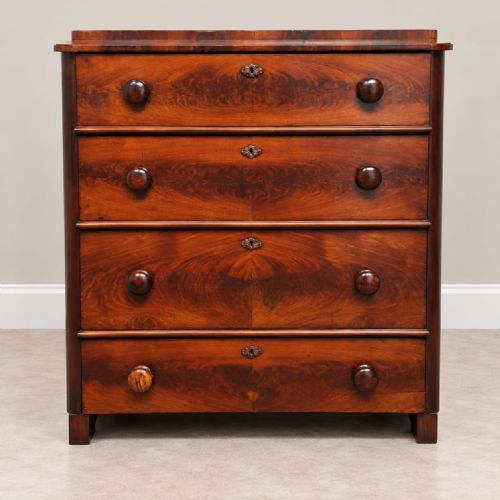
Cabinetmakers constructed these pieces primarily using solid mahogany carcases faced with thin veneers cut from timber forks or branch junctions, which yielded the characteristic flame figure. Secondary woods like oak frequently appear in drawer linings and internal framing.
Veneers were painstakingly laid by hand using animal glue, matching grain patterns symmetrically across drawer fronts to enhance the dramatic visual effect. Brass hardware, such as lion paw feet, handles and escutcheons, was integrated alongside glass panels in bookcases and marble tops on select commodes.
Flame Mahogany Furniture Retail Price Guide 2026
Typical asking prices for flame mahogany furniture among the pieces listed under this phrase on Sellingantiques today, from the lower quarter to the upper quarter. They describe what is for sale here now, not the wider market.
The listings span the 18th, 19th and early 20th centuries, uniting Regency, Victorian, Edwardian and Georgian eras through mahogany, brass and glass.
Distinctions in quality and execution
Quality rests principally on the choice and matching of the veneer, where superior pieces display bold, unbroken flame patterns symmetrically aligned across multiple drawers. The depth of the timber's natural lustre and the precision of the cabinetmaker's joinery set the higher tier apart from standard production.
Secondary detailing dictates the grade of a piece, from hand-cut dovetails in the oak drawer carcases to the weight and finish of original brass mounts. Pieces attributed to notable makers demonstrate superior proportions and restraint in inlay work compared to plainer commercial equivalents.
Whytock & Reid·Denby & Spinks·Gillows·Henry Dasson·Weisweiler
The Flame Mahogany Furniture Glossary
- Flame mahogany veneer
- A thin slice of timber cut from the point where a branch joins the main trunk, producing a rippling, flame-like grain pattern used on prominent surfaces. This figuring is the primary decorative element of the furniture.
- Bow front
- A convex curved cabinet front that projects outward in a smooth arc. This shape is frequently found on chests of drawers and sideboards.
- Linen press
- A tall storage piece comprising upper cupboard doors enclosing sliding trays and lower drawers. Originally designed for storing household linens.
- Compactum wardrobe
- A large fitted wardrobe featuring internal compartments, hanging space and drawers arranged systematically. It offers comprehensive clothing storage within a single carcass.
- Serpentine
- A front contour characterised by a convex centre flanked by concave curves. This sophisticated shaping requires precise woodworking skill.
Flame Mahogany Furniture: Frequently Asked Questions
How do I care for flame mahogany furniture?
Keep pieces away from direct sunlight and heat sources to prevent the timber veneers from drying out and lifting. Regular dusting with a soft, dry cloth maintains the polish without building up residue.
Apply a traditional beeswax sparingly once or twice a year to nourish the wood and preserve its deep lustre. Avoid using modern silicone sprays, which can damage the historic finish.
What is the difference between Georgian and Victorian pieces?
Georgian furniture generally exhibits refined proportions, lighter framing and restrained classical details influenced by Sheraton or Chippendale designs. Timbers often display a mellow, warm tone developed over centuries.
Victorian pieces tend to be heavier and more robust in construction, accommodating changing domestic requirements with deeper drawers and bolder mouldings. Mahogany used in this later era can sometimes possess a darker, redder hue.
Where were these cabinets placed in a home?
Chests of drawers and wardrobes were positioned in bedrooms to store clothing and personal linens, while sideboards and linen presses stood in dining rooms or hallways. Their striking grain patterns ensured they functioned as principal decorative focal points.
Bookcases and cabinets found homes in libraries and parlours, displaying bound volumes and valuable household items behind glazed doors. Their substantial presence suited the formal entertaining spaces of the period.
Are all flame mahogany pieces British?
While the majority of pieces originate from British workshops and regional centres like Scotland, continental examples also appear within the selection. French Empire and Biedermeier pieces demonstrate alternative interpretations of the same figured timber.
Continental makers often combined mahogany with distinct classical motifs, marble tops or gilt-bronze mounts. This international exchange influenced cabinetmaking styles across Europe during the nineteenth century.