
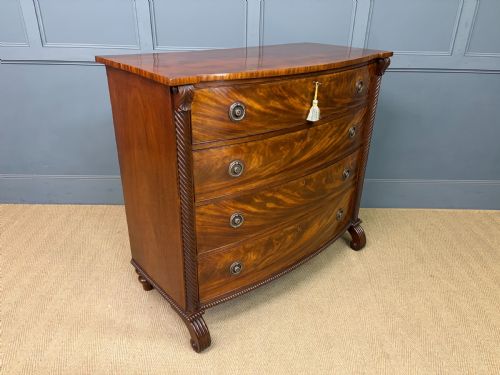
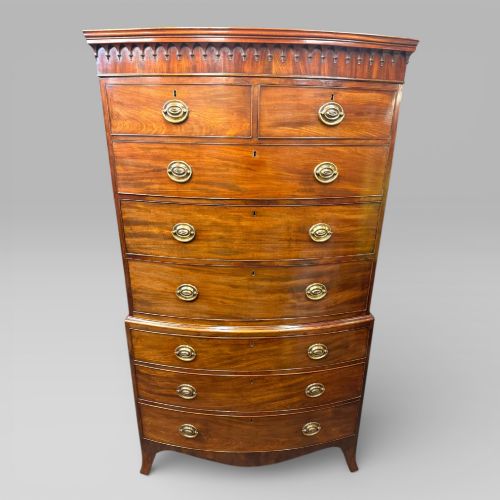
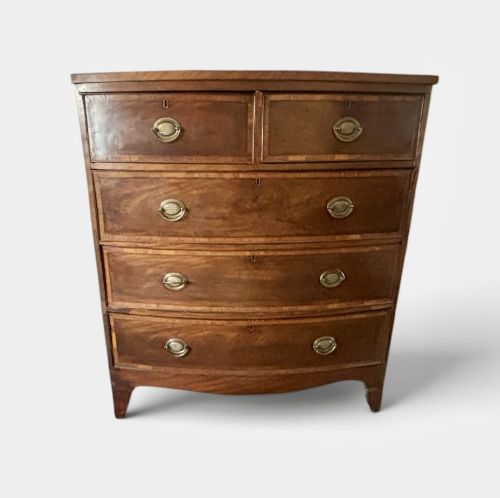
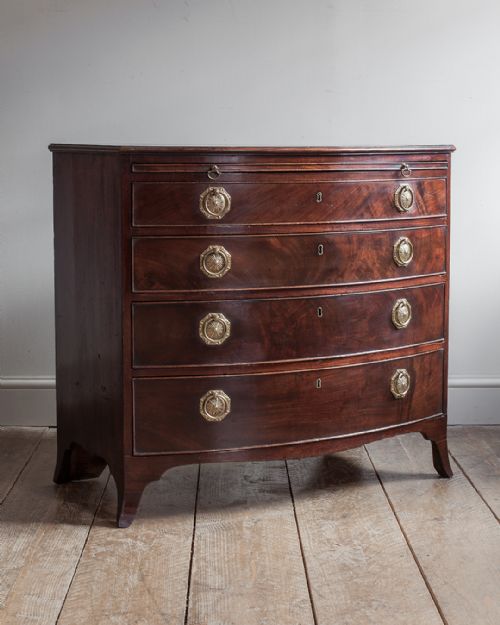
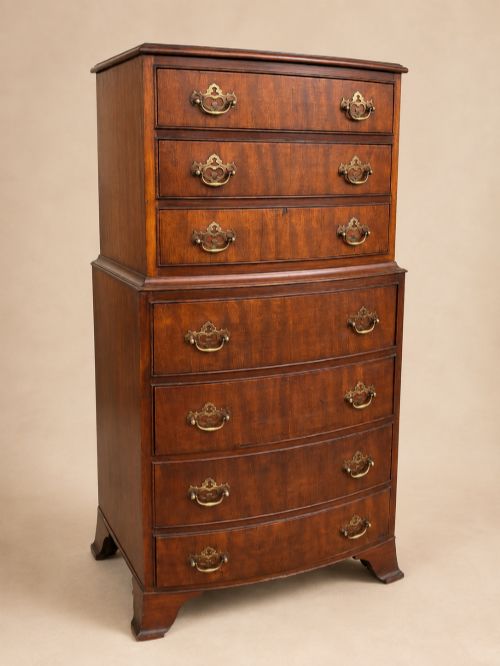
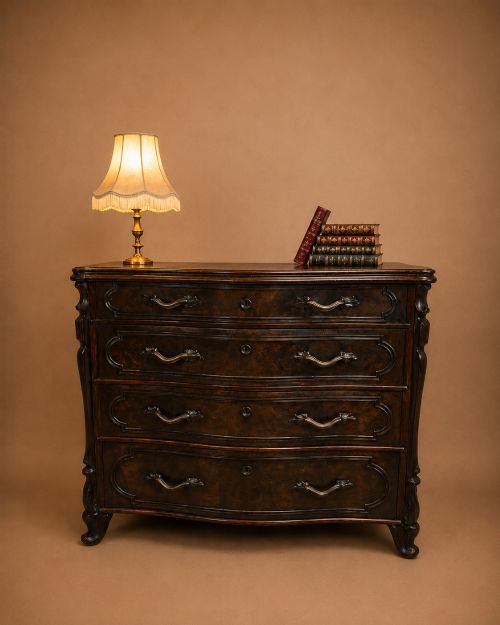
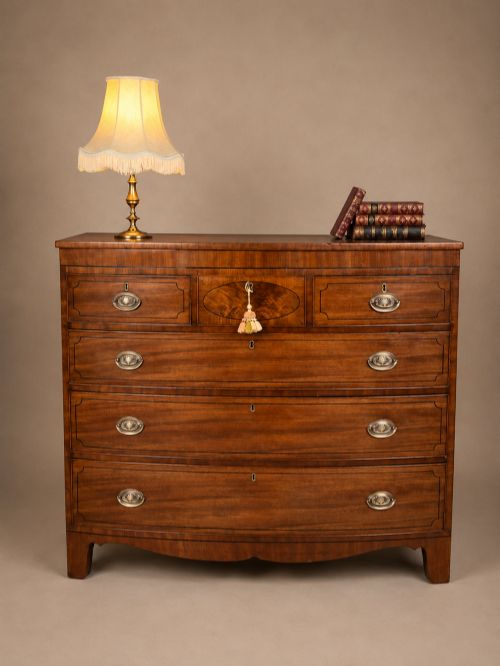
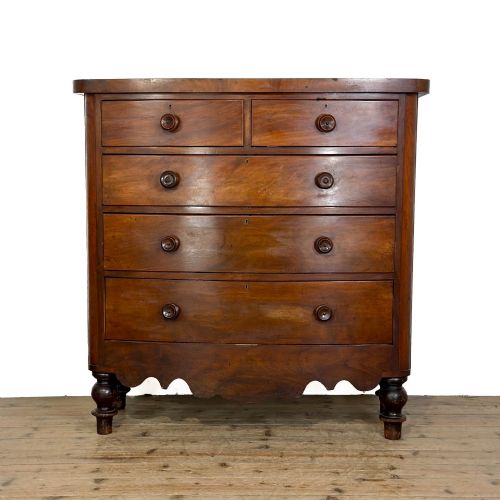
Curved Mahogany Chest
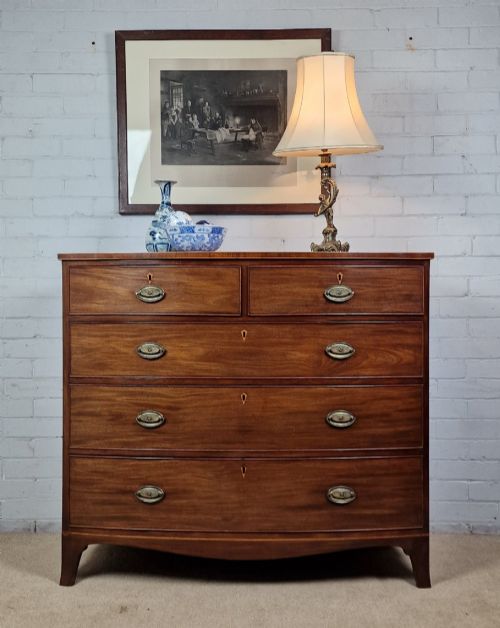
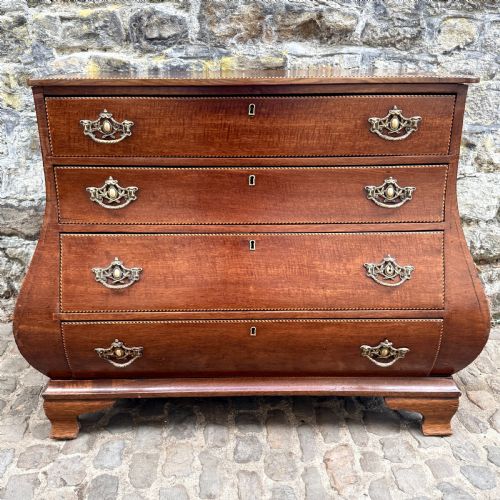
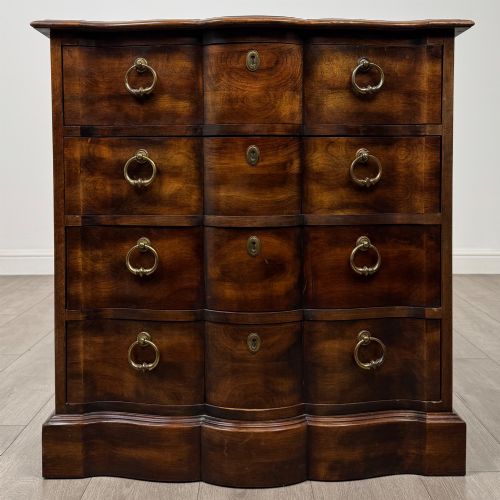
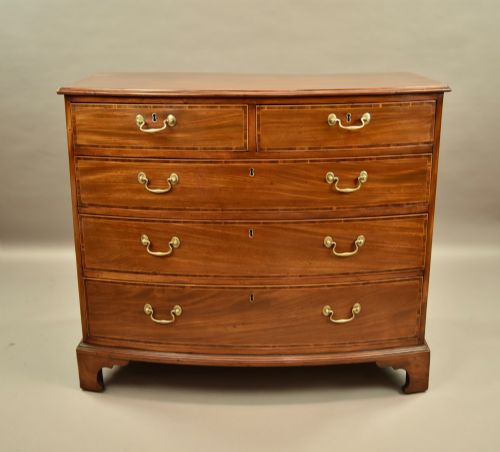
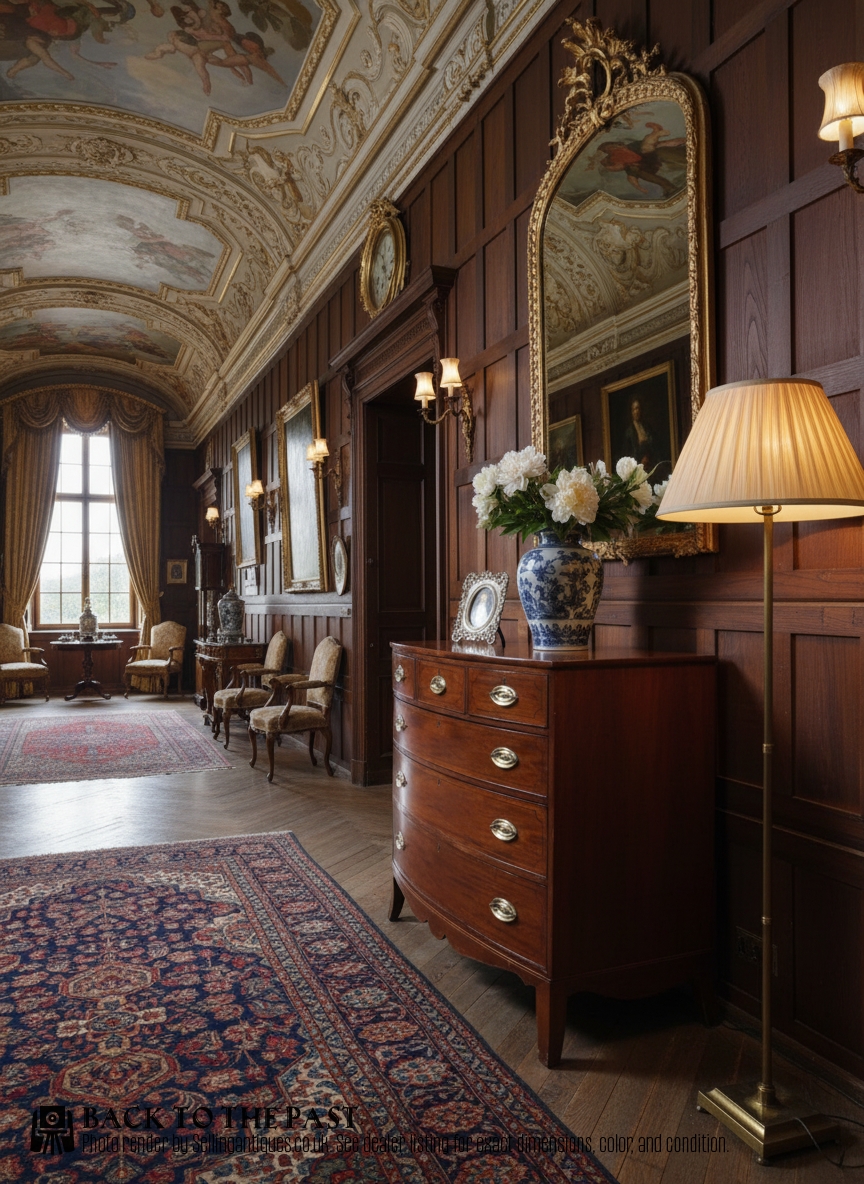
A curved mahogany chest offers generous storage with a softened silhouette, bringing warmth and presence to a room.
Curved Mahogany Chest
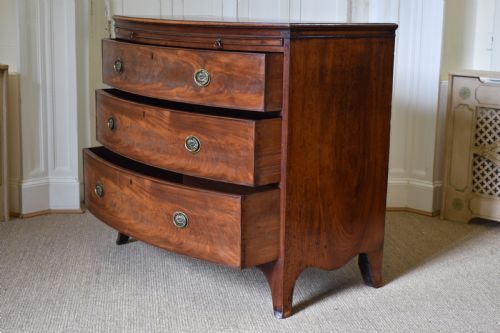
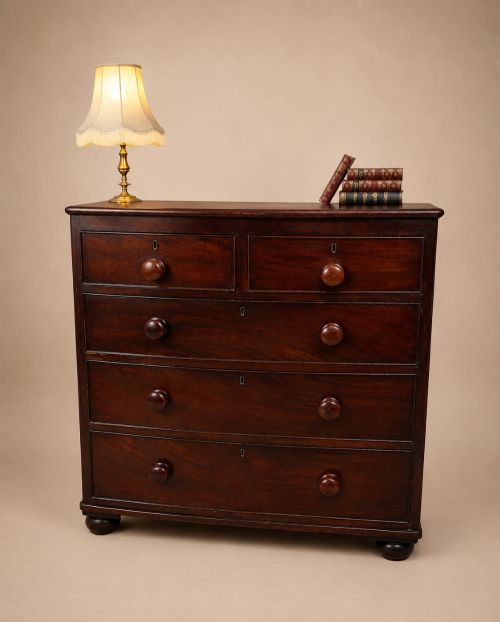
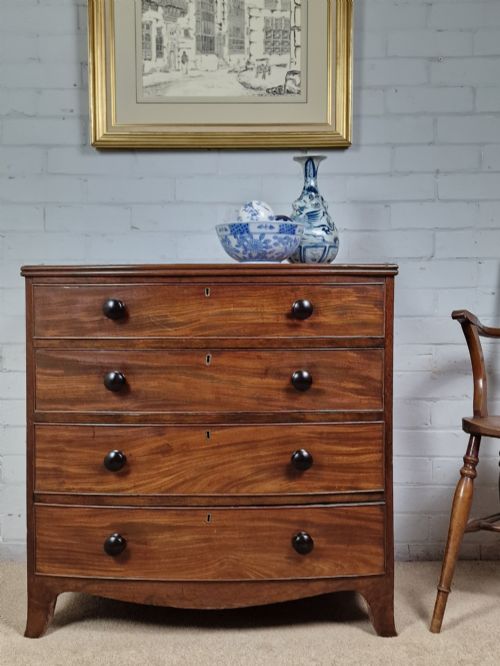
A curved mahogany chest typically takes the form of a bow front or serpentine chest of drawers, built across periods from the 18th century through to the 20th century. The pieces appearing most frequently originate in the Georgian, Regency, and Victorian eras, alongside later interpretations.
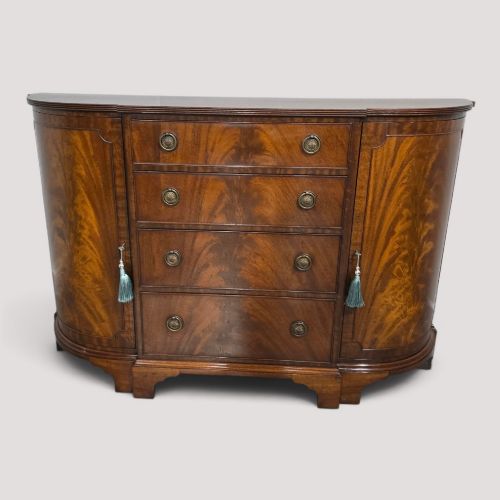
Makers constructed these storage pieces as chests of drawers, chest on chest configurations, and occasionally as smaller bedside cabinets or sideboards. The proportions range from compact narrow examples to large case pieces designed for principal rooms.
Materials and construction
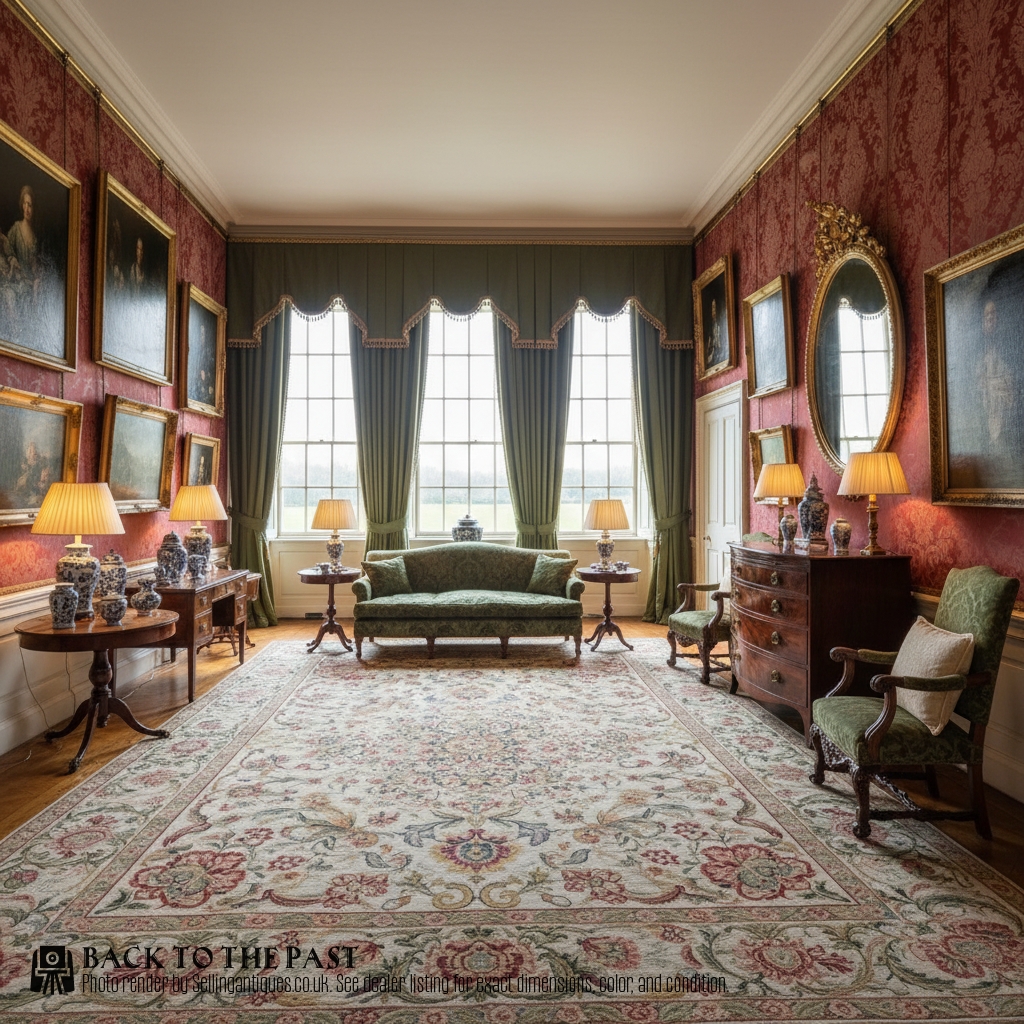
Cabinet makers utilised solid mahogany and wood veneer surfaces, often selecting flame mahogany veneer to create deep visual movement across the curved drawer fronts. Secondary timbers such as pine frequently form the interior carcase and drawer linings.
Details such as boxwood inlay, satinwood banding, and cast brass hardware complement the construction. The curved facades require precise joining and bending techniques to maintain structural integrity along the bowed or serpentine lines.
Curved Mahogany Chest Retail Price Guide 2026
Typical asking prices for curved mahogany chest among the pieces listed under this phrase on Sellingantiques today, from the lower quarter to the upper quarter. They describe what is for sale here now, not the wider market.
One regional Welsh chest manages to conceal a secret drawer within its mahogany curves.
Distinctions in craftsmanship
The standard of a curved mahogany chest depends on the selection of timber figures and the precision of the veneering across the curved facade. Superior examples display seamless matching of grain patterns on the drawer fronts and crisp execution of inlaid banding.
Drawer construction reveals the underlying skill, with hand-cut dovetails and clean secondary timber framing separating finer workshop production from later commercial output. The crispness of moulded edges and the original quality of brass handles further define the tier of the piece.
The Curved Mahogany Chest Glossary
- Bow front
- A convex curved furniture front that projects outward in a smooth arc. This shape softens the profile of a standard rectangular chest.
- Serpentine
- A furniture front characterised by a central convex curve flanked by concave sweeps, or vice versa. It demands high skill from the cabinet maker.
- Flame mahogany
- A veneer cut from timber where the grain creates a flickering, flame-like pattern. It is prized for its decorative impact on primary drawer surfaces.
- Satinwood
- A pale yellow hardwood utilised for contrasting stringing and banding details. Cabinet makers deployed it to frame darker mahogany panels.
Curved Mahogany Chest: Frequently Asked Questions
Where should I place a curved mahogany chest?
These chests suit bedrooms, hallways, or living spaces where a softened profile prevents sharp corners from jutting into a walkway. The curved facade adds visual interest to a flat wall.
Ensure adequate clearance around the piece so the drawers can open fully without obstruction from adjacent furniture.
How do I identify a Georgian curved chest?
Georgian pieces display proportions, timber selection, and construction methods characteristic of the 18th and early 19th centuries. Look for hand-cut dovetails and traditional wax finishes.
Later reproductions from the 20th century often mimic these styling cues but utilise different interior woods and machine-cut joints.
How do I care for mahogany veneer?
Keep the wood away from direct sunlight and heat sources to prevent the veneer from drying and lifting. Maintain a stable room climate.
Apply natural beeswax periodically to nourish the timber and preserve the depth of the grain without building up synthetic residues.