


Antique Bowfront Drawers
These antique bowfront drawers offer curved fronts and generous storage, combining elegance with practical utility for any traditional room.
Identifying antique bowfront drawers
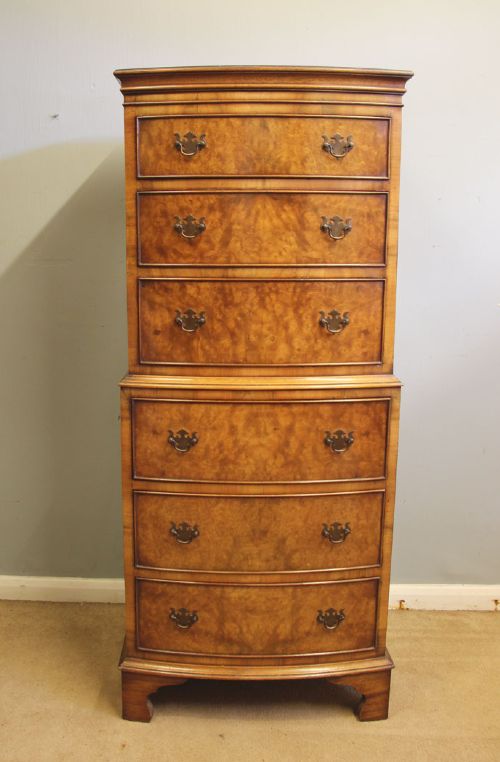
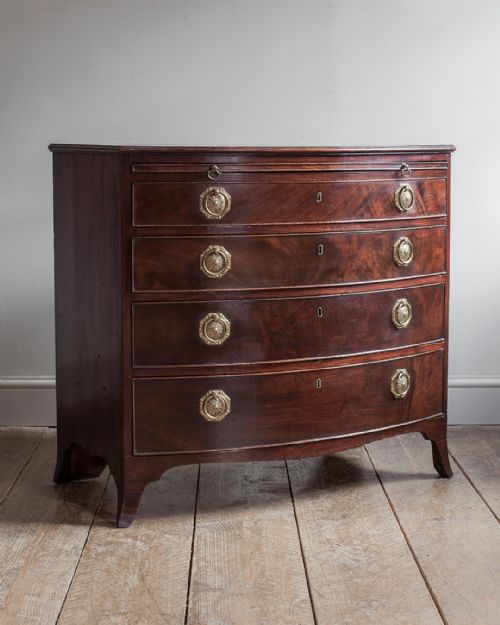
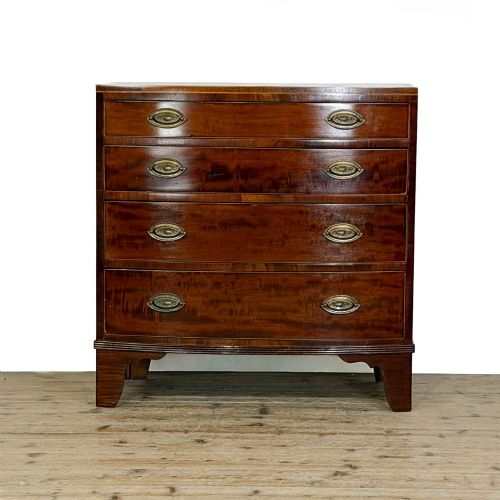
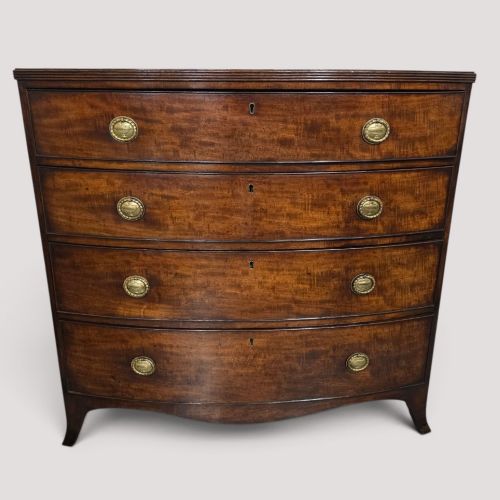
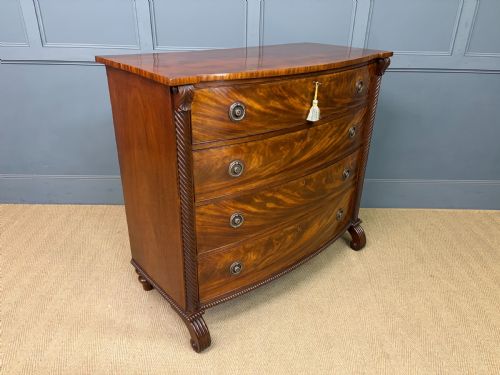
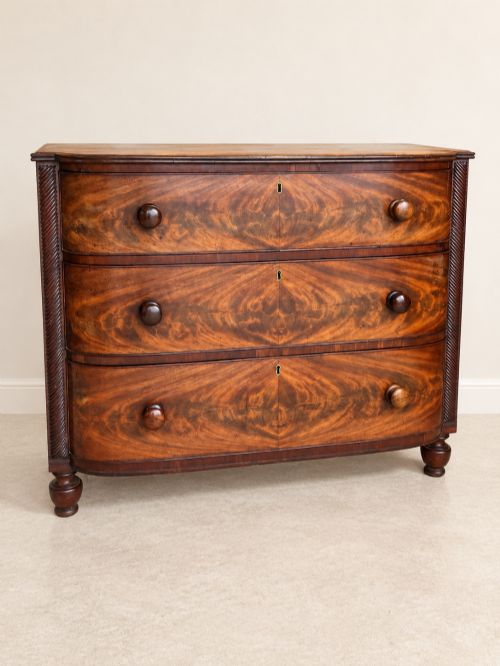
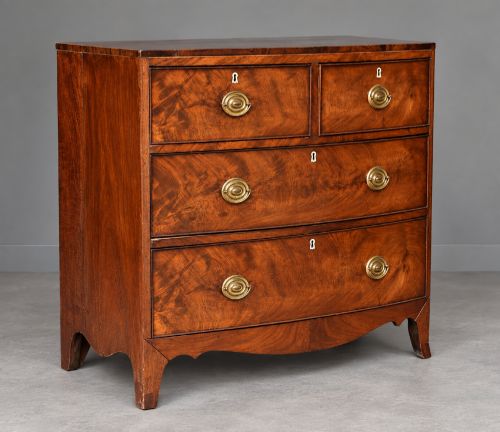
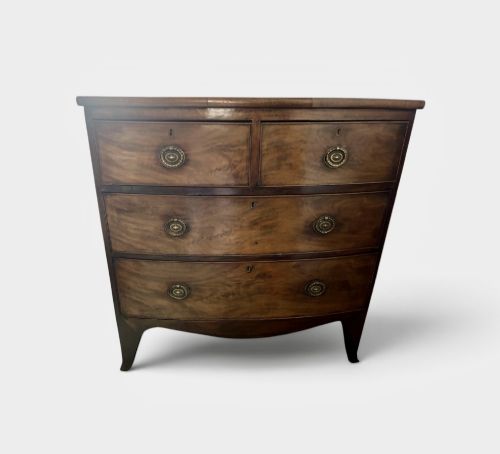
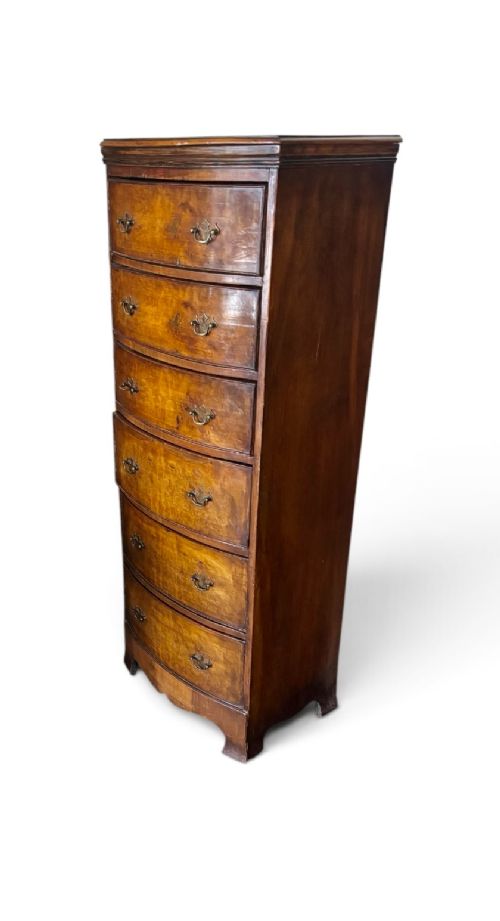
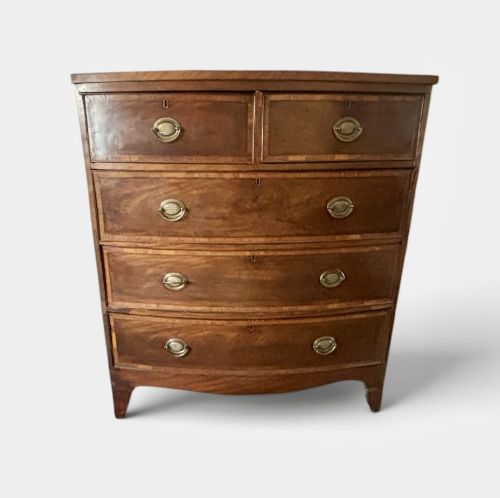
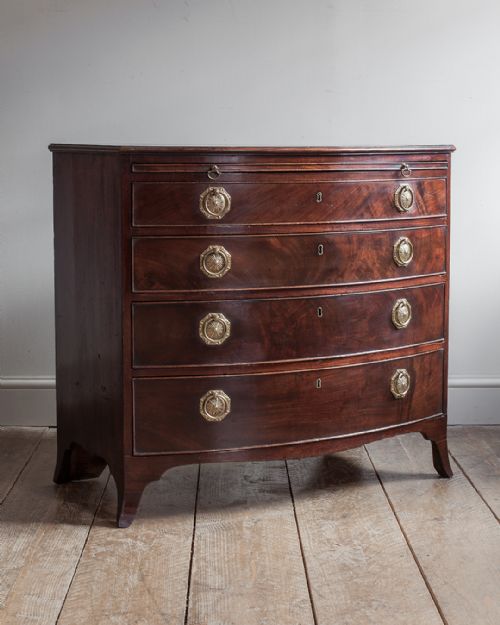
When you search for antique bowfront drawers, you are looking at case furniture featuring a convex curved front that projects forward from the frame. The forms recorded here appear principally as chests of drawers, spanning the Georgian, Regency, and Edwardian periods.
The majority of pieces met on this page belong to the Regency and Georgian eras, alongside examples from the eighteenth century up to nineteen hundred. These encompass both full-size chests and smaller proportions suited to more compact spaces.
Materials and construction
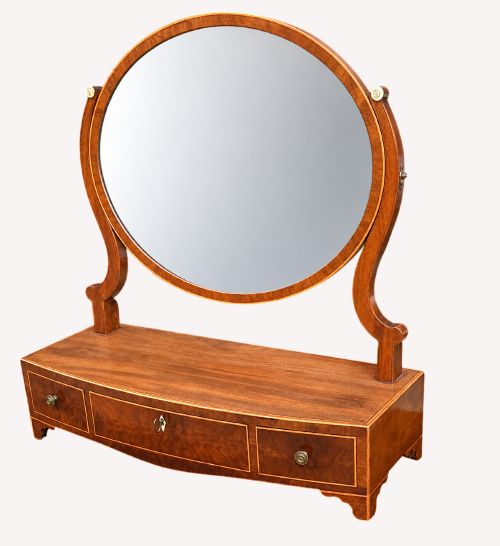
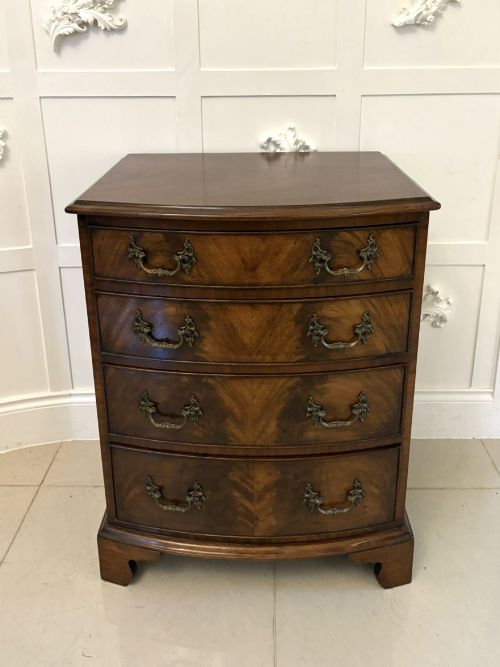
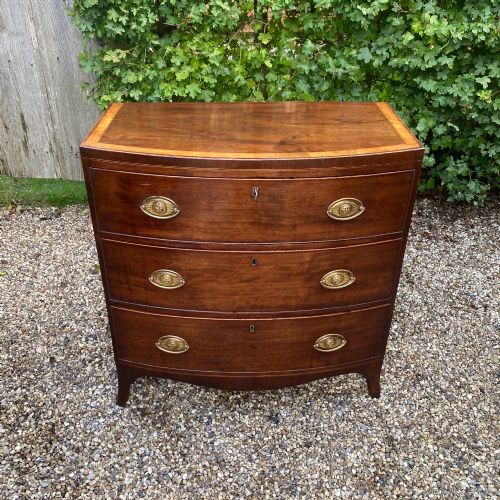
Cabinet makers constructed these chests using solid timber frames overlaid with flame mahogany veneer, complemented by secondary woods like oak. Surfaces frequently incorporate satinwood inlay and are accented with brass hardware.
Some variations utilise painted wood finishes alongside traditional polished wood, demonstrating the range of decorative treatments applied during the Georgian and Regency periods.
Retail Price Guide 2026
Typical UK retail prices for bowfront drawers, calculated from the Sellingantiques database of over a million retail prices indexed since 2003. This retail price guide relies exclusively on Sellingantiques data; no external sources or auction records are used, so the figures do not describe the wider market.
Listings span Georgian, Regency, and Edwardian periods, utilising mahogany, satinwood, oak, and brass.
Judging quality in bowfront chests
Quality rests upon the selection of timber figures, particularly the grain matching across flame mahogany veneer and the crispness of satinwood inlay work. Superior examples exhibit balanced proportions and harmonious integration of the curved drawer fronts within the overall carcase.
The refinement of brass handles and the execution of the primary wood finish distinguish finer workshops from simpler utility pieces, whilst Edwardian and later alterations sit apart from untouched Georgian work.
The Antique Bowfront Drawers Glossary
- Bowfront
- A furniture front that curves outward in a convex arc. This shape softens the profile of a standard rectangular chest.
- Flame mahogany
- A veneer cut from timber where the grain resembles flickering flames. It provides high decorative movement on drawer fronts.
- Satinwood
- A pale, hard wood sourced from tropical trees. It serves as contrasting inlay stringing or banding.
- Caddy top
- A tabletop style with a raised, moulded edge reminiscent of tea caddy lids. It appears on select Georgian chests.
- Regency
- A British design period spanning the early nineteenth century. Furniture from this era often shows classical restraint and refined proportions.
Frequently Asked Questions
What are bowfront drawers?
These are storage chests featuring a distinct outward-curving front that swells from the corners. The design softens the rectangular silhouette typical of standard case furniture.
They emerged strongly during the Georgian and Regency periods, remaining popular through the nineteenth century and into the Edwardian era.
How were they used?
Historically, these chests served as bedroom furniture for storing garments, linens, and personal items. Their deep drawers accommodated folded clothing efficiently.
Today, they function equally well in hallways, living rooms, and bedrooms, offering surface display space alongside enclosed storage.
How do I identify a Georgian chest?
Georgian pieces generally display heavier timber scantlings, hand-cut dovetails, and understated cock-beading around drawer edges. Mahogany and oak predominate in this earlier work.
Later Regency examples often introduce finer veneers, contrasting satinwood inlay, and lighter overall proportions.
What is flame mahogany?
Flame mahogany is a highly figured veneer obtained from the fork of the tree where the branch meets the trunk. The grain pattern creates a striking, rippled light effect.
Cabinet makers reserved this timber for prominent surfaces like drawer fronts to catch the eye.