

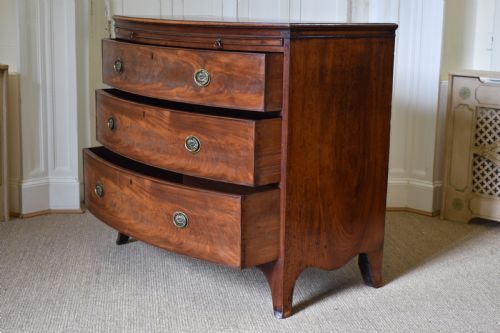
Regency Bowfront Chest
A regency bowfront chest brings sweeping architectural curves and rich timber grain into a room, offering generous storage with distinctive period proportion.
Regency Bowfront Chest
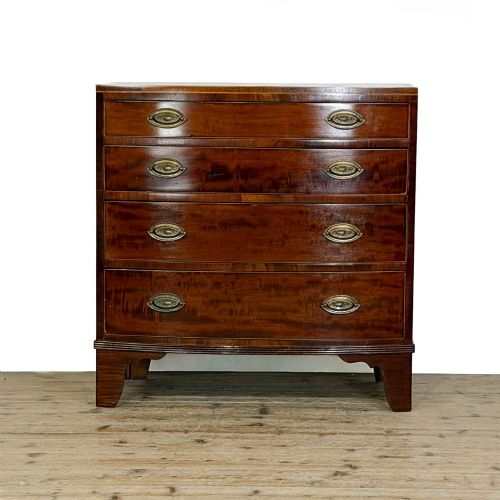
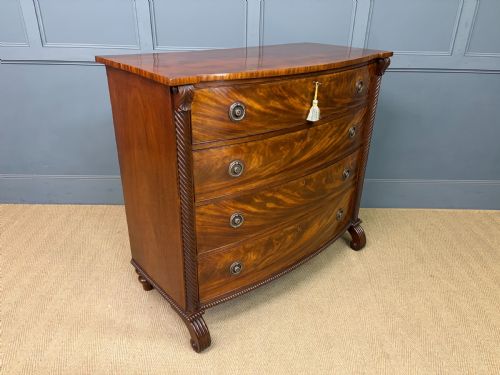
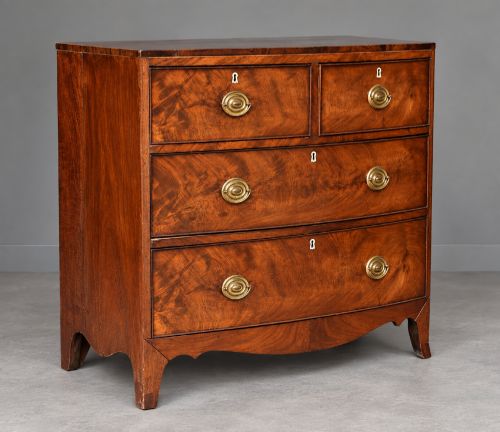
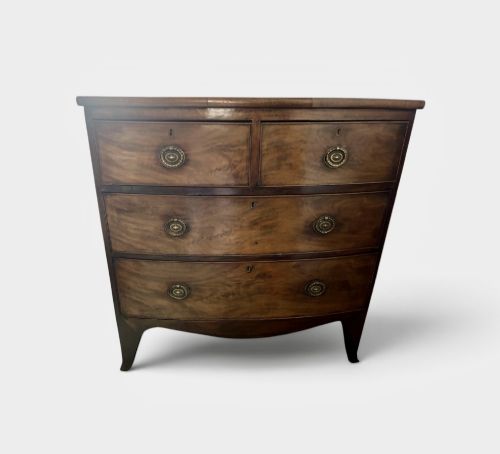
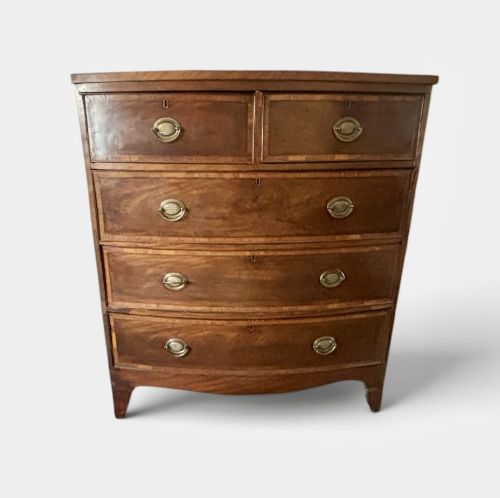
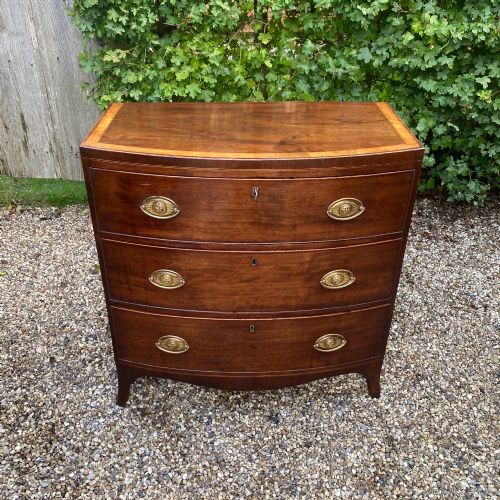
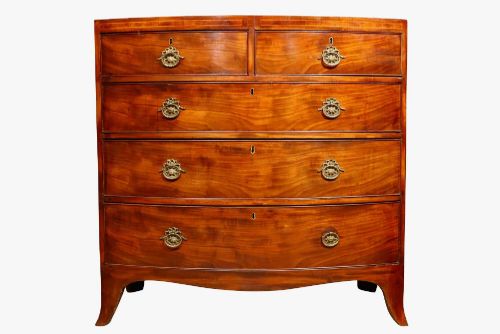
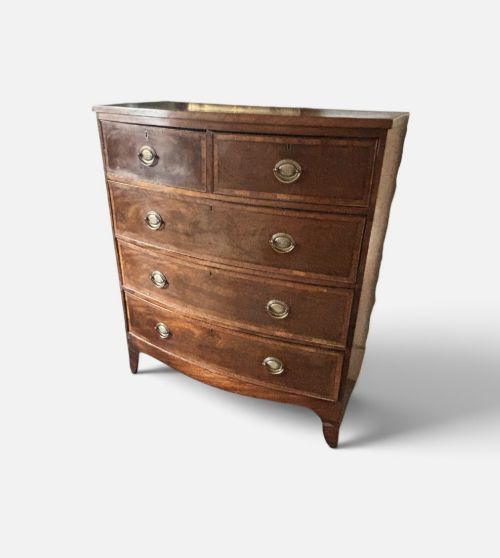
A regency bowfront chest is a case piece designed with a convex curved front that softens the corners of a bedroom or hall. Most examples found here date from the 19th Century and the Georgian period, rendered primarily as chests of drawers in varying scales.
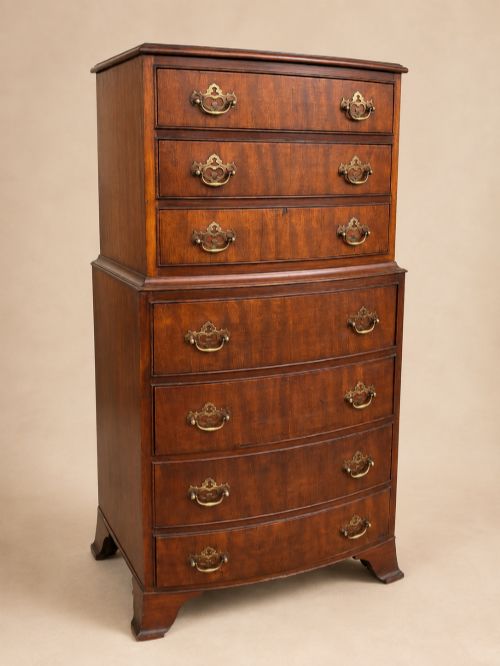
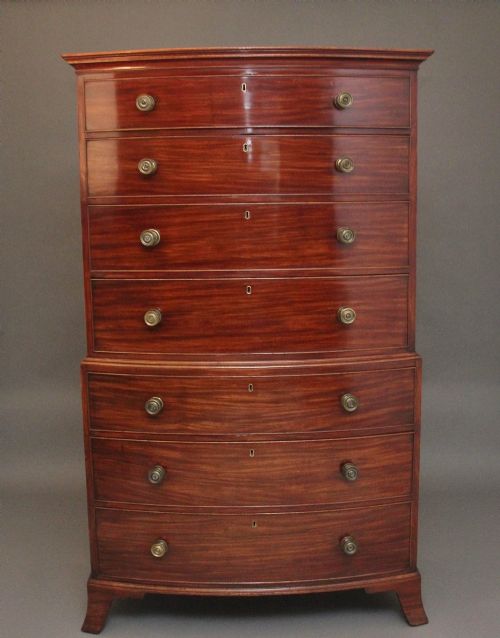
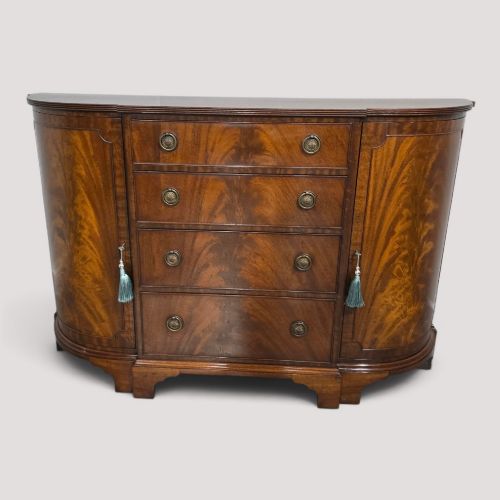
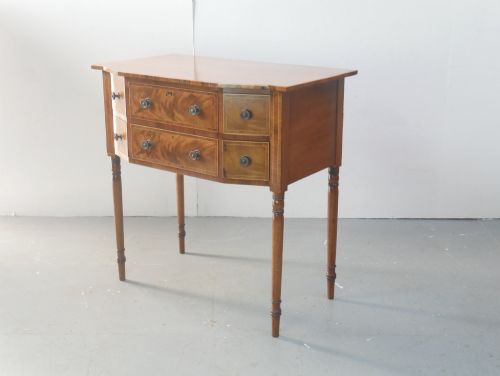
Makers shaped these forms in standard drawer configurations, alongside occasional tallboys, linen presses, and smaller side cabinets. The proportions range from neat, compact units to large storage pieces built for grander chambers.
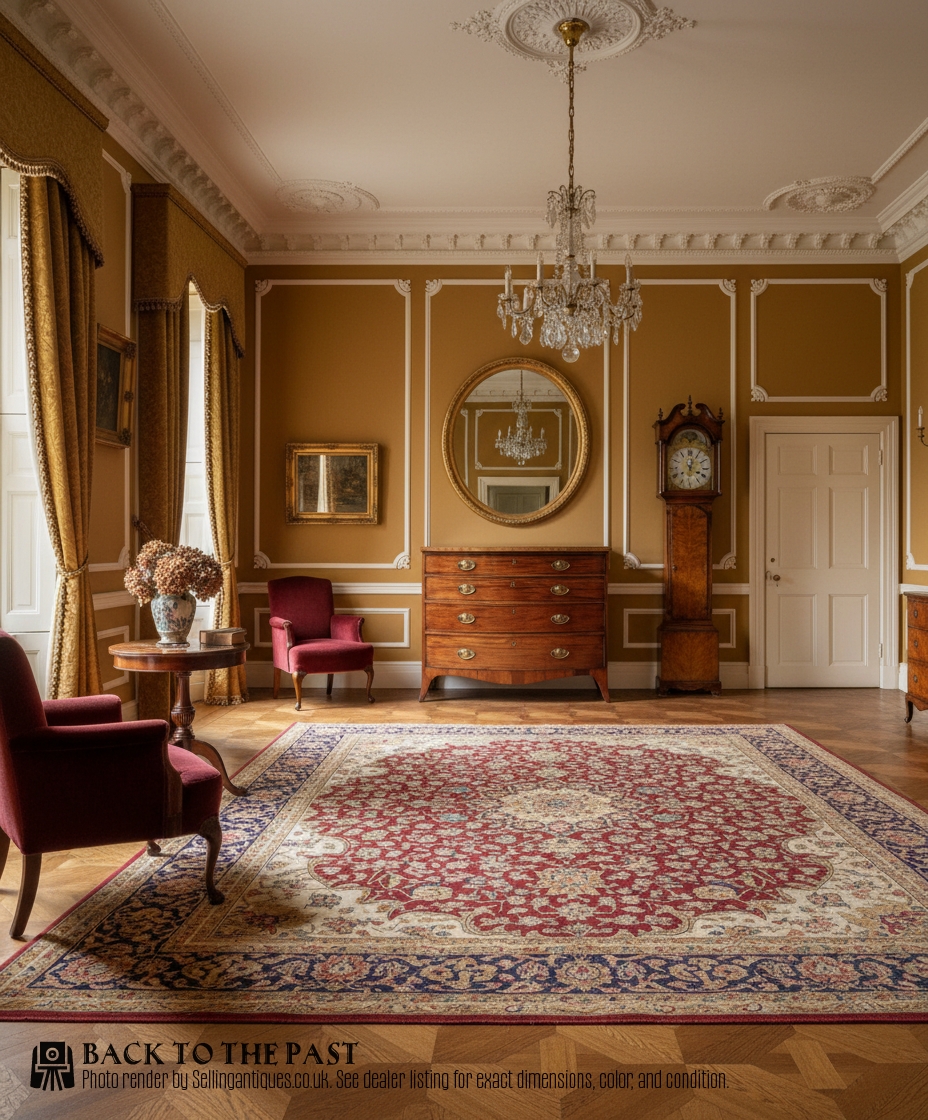
How They Were Made
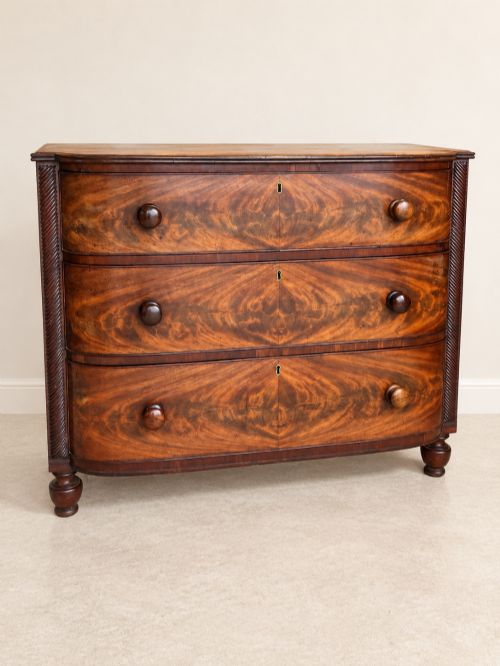
Cabinetmakers relied heavily on solid mahogany and flame mahogany veneer, often selecting cuts that displayed deep natural figuring across the curved drawer fronts. Oak frequently served as the structural timber for drawer linings and internal framing.
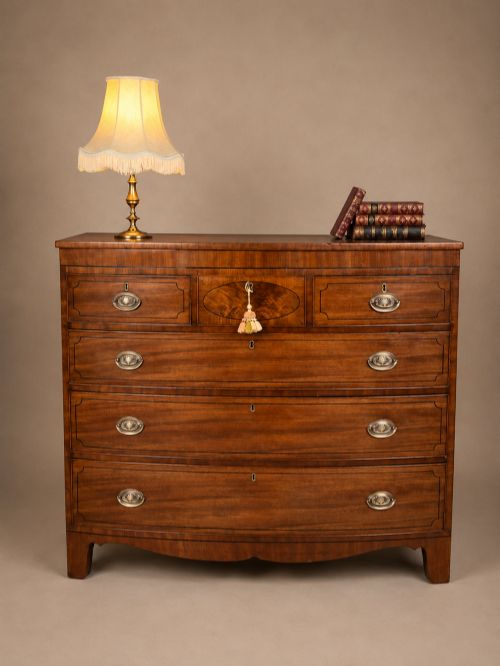
Surface enrichment relied on contrasting timbers rather than heavy carving, incorporating satinwood banding, boxwood inlay, and occasional brass details. Caddy tops and specialised corner treatments finished the upper edges of the carcase.
Regency Bowfront Chest Retail Price Guide 2026
Typical asking prices for regency bowfront chest among the pieces listed under this phrase on Sellingantiques today, from the lower quarter to the upper quarter. They describe what is for sale here now, not the wider market.
Some clever chests hide secret compartments tucked away near the top drawers, ready to guard small treasures.
What Varies in Quality
The standard of a regency bowfront chest rests on the selection and bookmatching of the wood veneers across the curved drawers. Superior pieces display continuous grain patterns that wrap smoothly around the convex sweep without interruption.
Proportion and secondary timbers also dictate the standing of a piece. Fine examples maintain crisp edge detailing, precise inlay work, and clean oak drawer construction that endures through centuries of use.
The Regency Bowfront Chest Glossary
- Bowfront
- A convex curved front that projects outward from the corners, characteristic of select Georgian and 19th Century case furniture. This curved profile softens the room's geometry.
- Flame Mahogany
- A veneer cut from the fork of the mahogany tree to create a distinctive flickering flame pattern. Cabinetmakers placed these dramatic figures centrally on drawer fronts.
- Caddy Top
- A raised, moulded tabletop profile resembling the lid of a tea caddy. This edge treatment adds a distinct architectural cap to the chest.
- Crossbanding
- A narrow strip of veneer laid perpendicular to the surrounding grain to form a decorative border. It frames the drawer fronts in contrasting timber.
- Graduated Drawers
- A set of drawers that decrease in depth from bottom to top. This arrangement maintains visual balance on the tall façade.
Regency Bowfront Chest: Frequently Asked Questions
Where should I place a bowfront chest?
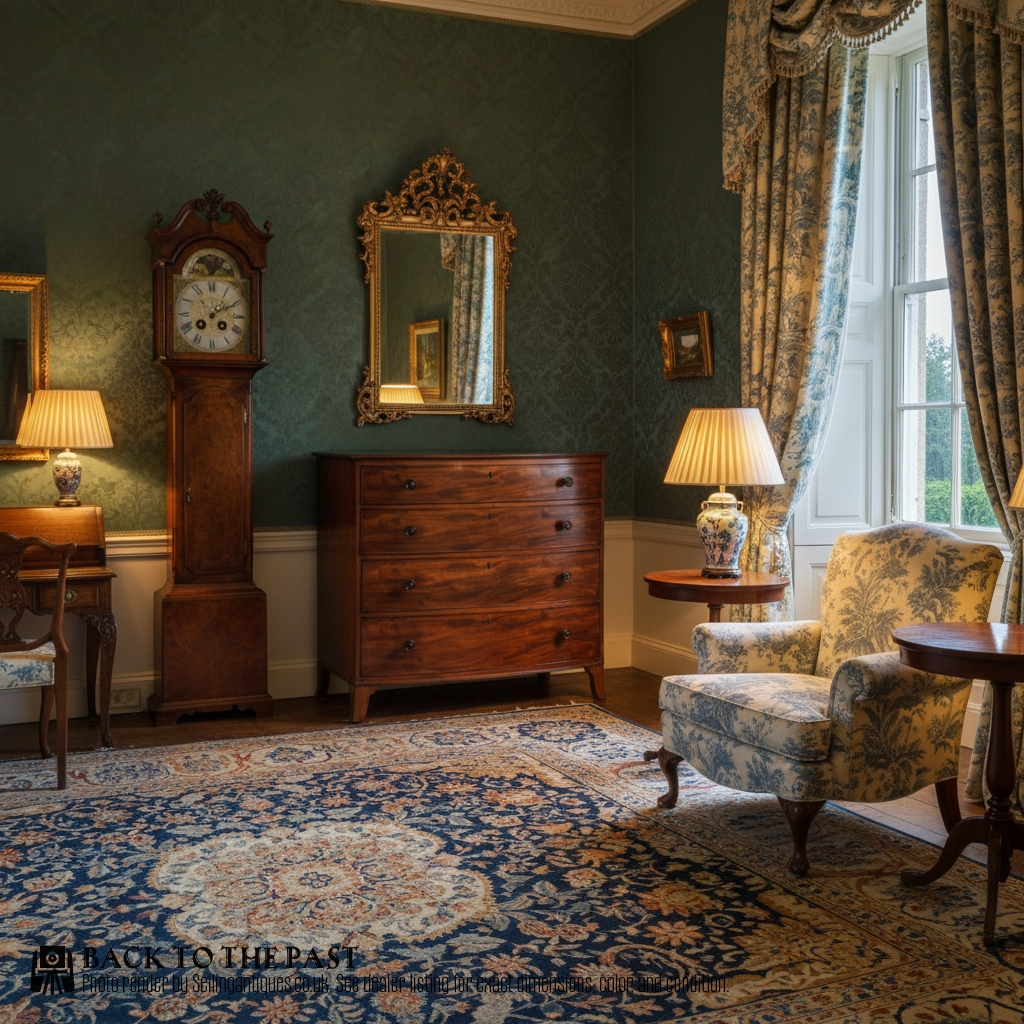
These pieces suit bedrooms, living rooms, and hallways where a curved silhouette softens straight architectural lines. Their forward sweep provides substantial internal volume without dominating the floor space.
Because the top surface offers a generous display area, they also function well beneath mirrors or artwork in reception spaces.
How do I identify a Regency period piece?
Look for characteristic timber selections such as flame mahogany paired with satinwood stringing or boxwood inlay. The proportions tend to be crisp and restrained, reflecting the neoclassical design influences of the early 19th Century.
Internal construction details, including oak drawer linings and hand-cut dovetails, further support the period attribution.
What is the difference between a chest and a tallboy?
A standard chest of drawers sits at a height designed for comfortable top access, usually featuring three to five drawers. A tallboy incorporates additional vertical storage capacity, often built as a double chest or a chest upon chest.
Both forms utilise the curved bowfront profile, but tallboys demand more vertical clearance in a room.
How do I care for antique mahogany surfaces?
Maintain the timber by applying traditional beeswax polish sparingly and buffing gently with a soft cloth. Avoid placing these pieces in direct sunlight or near heat sources to prevent the veneer from drying.
Consistent indoor humidity protects both the solid mahogany carcase and the delicate internal oak linings.