

Bow Front Drawers
Bow front drawers bring a curved, space-softening presence to a room, offering generous storage through centuries of cabinet-making skill.
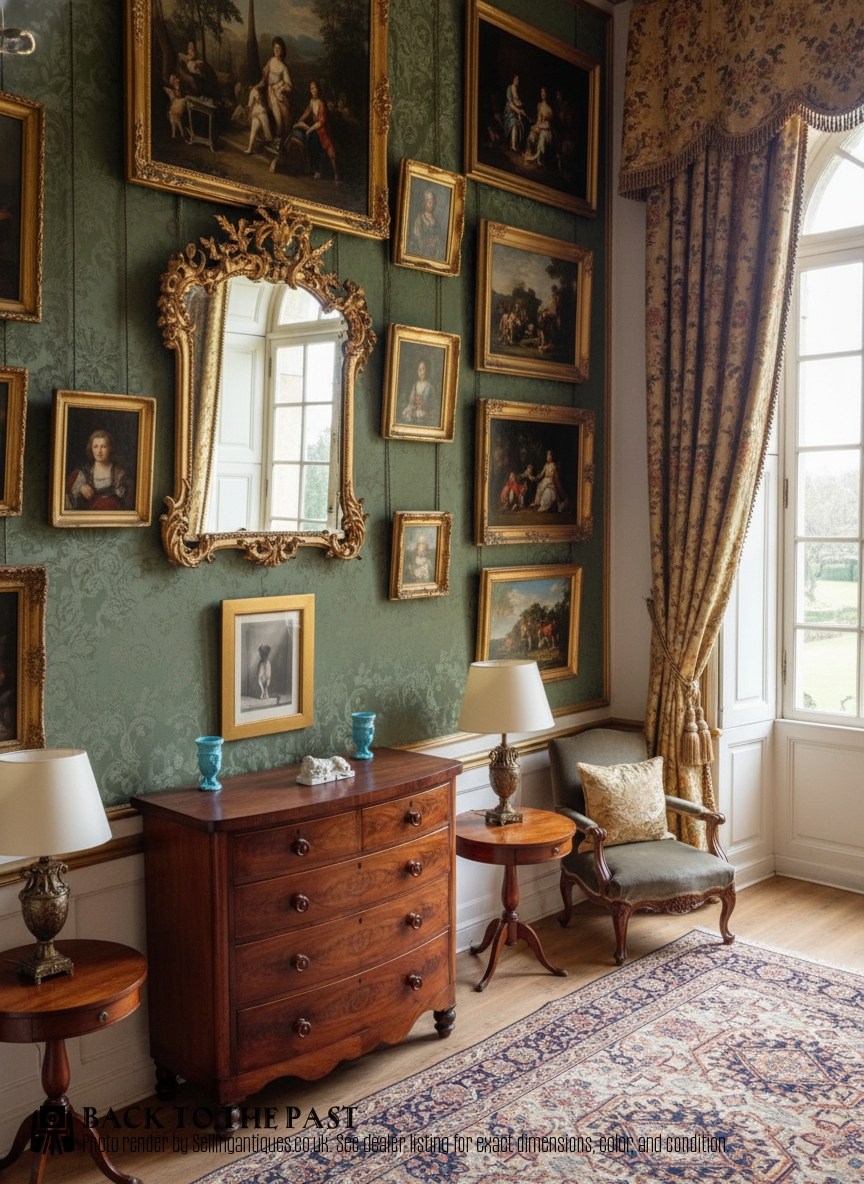
Bow Front Drawers
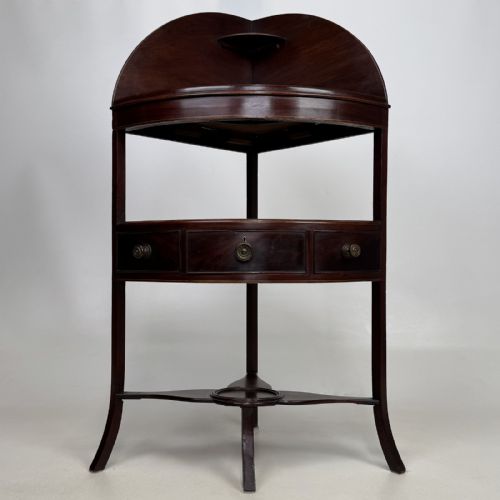
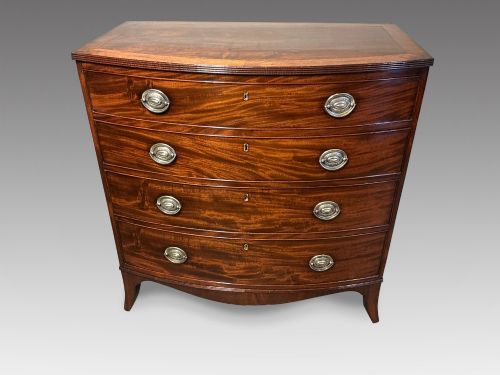
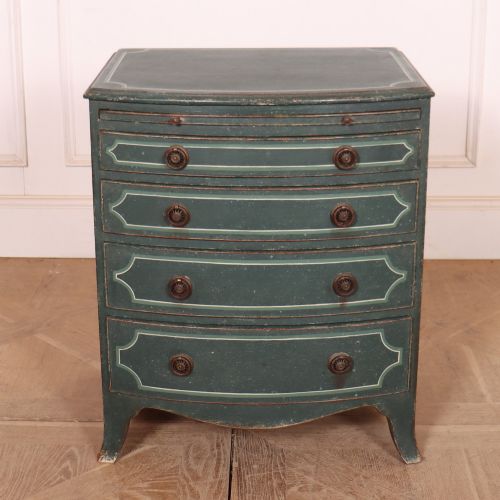
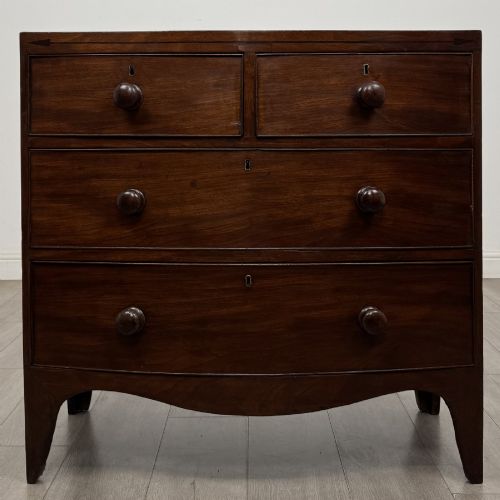
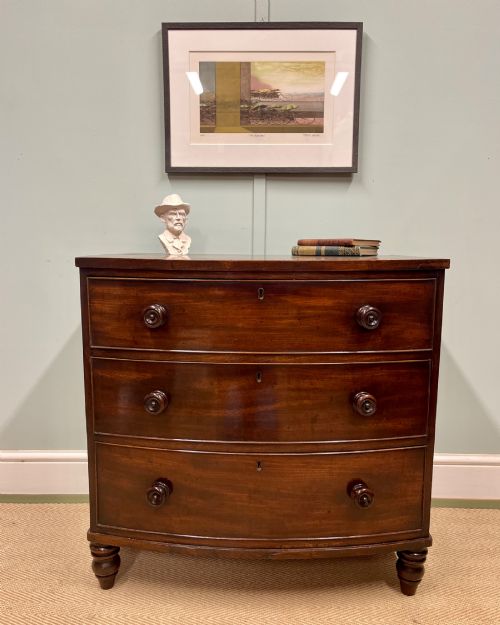
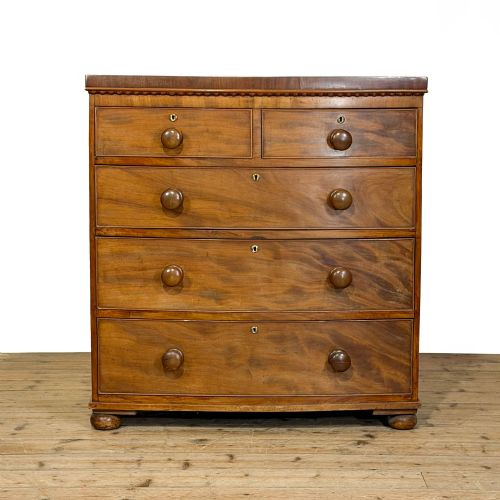
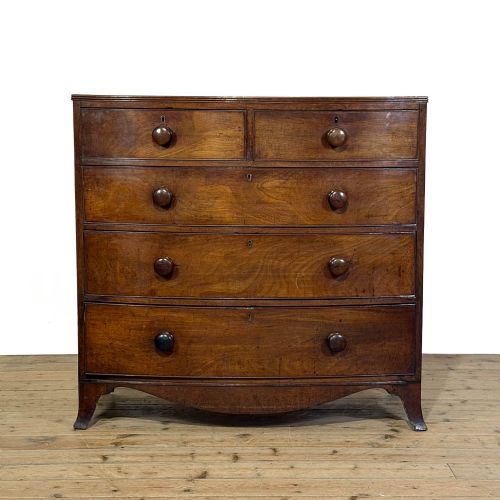
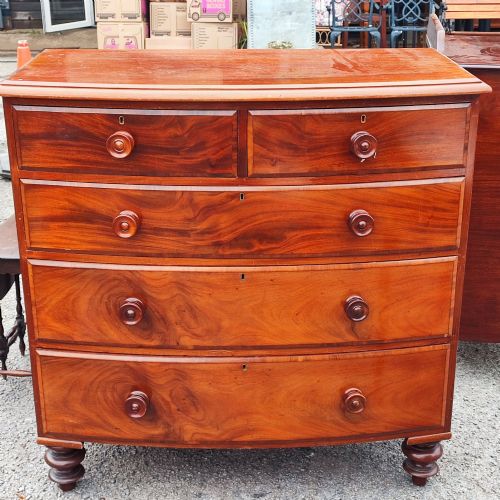
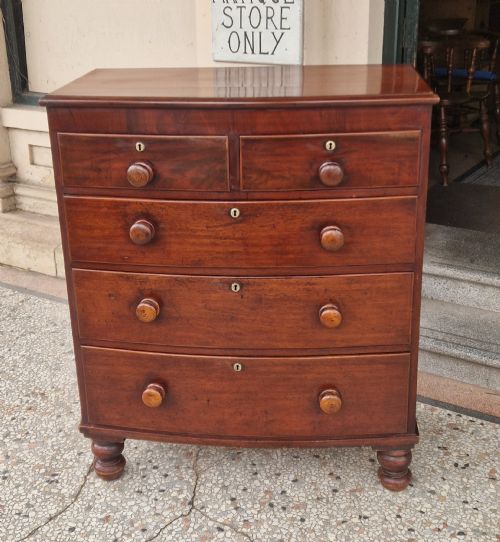
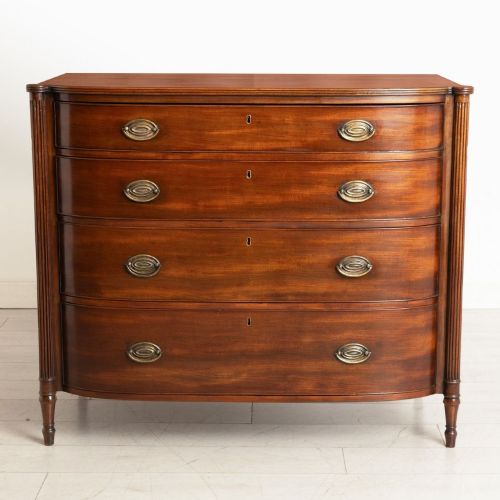
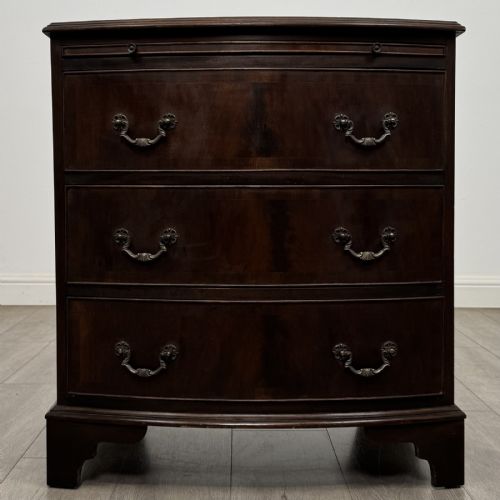
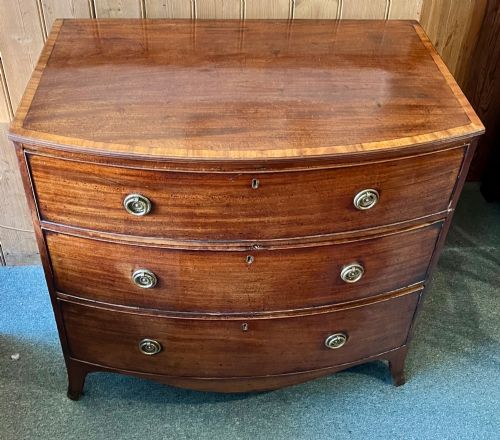
When searching for bow front drawers, buyers encounter pieces where the front of the cabinet curves outward in a convex sweep, softening the rectangular lines typical of traditional furniture. The selection spans the Georgian, Regency, and Victorian eras, alongside later revival pieces from the early twentieth century.
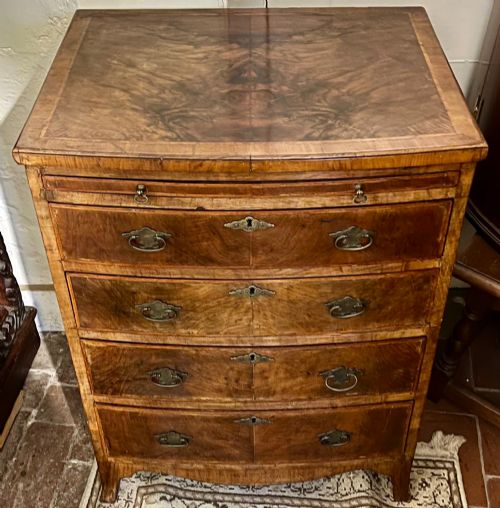
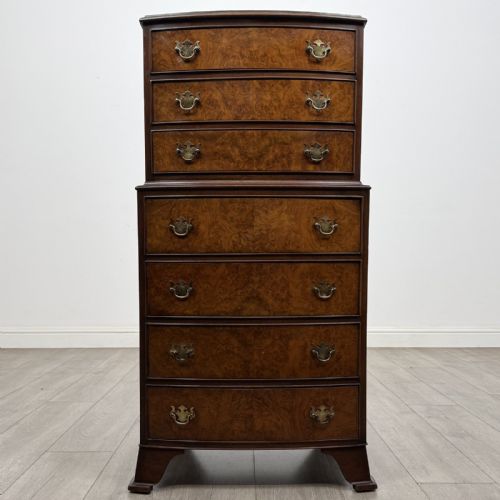
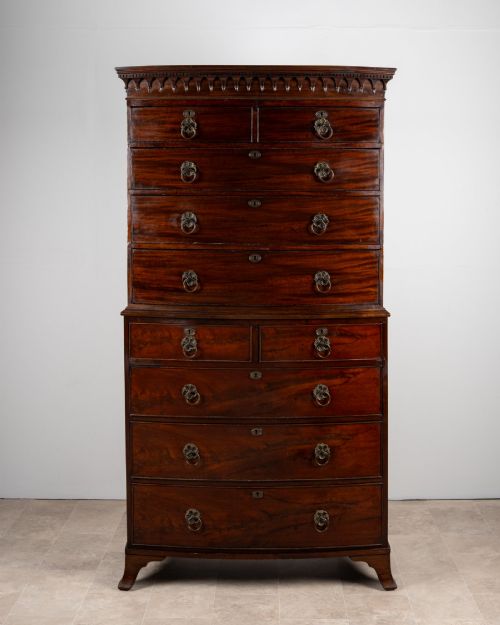
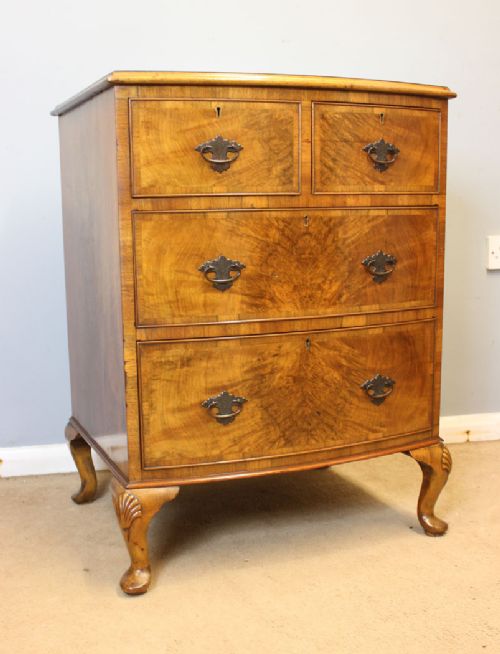
The primary form met on this page is the chest of drawers, though the category extends to tallboys, sideboards, wardrobes, and smaller bedside cabinets. Mahogany dominates the historical pieces, often paired with satinwood banding, while later examples frequently utilise burr walnut and wood veneer.
Originating largely from British workshops across the eighteenth and nineteenth centuries, these items combine practical domestic storage with pronounced decorative presence. Their curved profile allows them to sit comfortably in both narrow hallways and principal bedrooms without sharp corners projecting into the room.
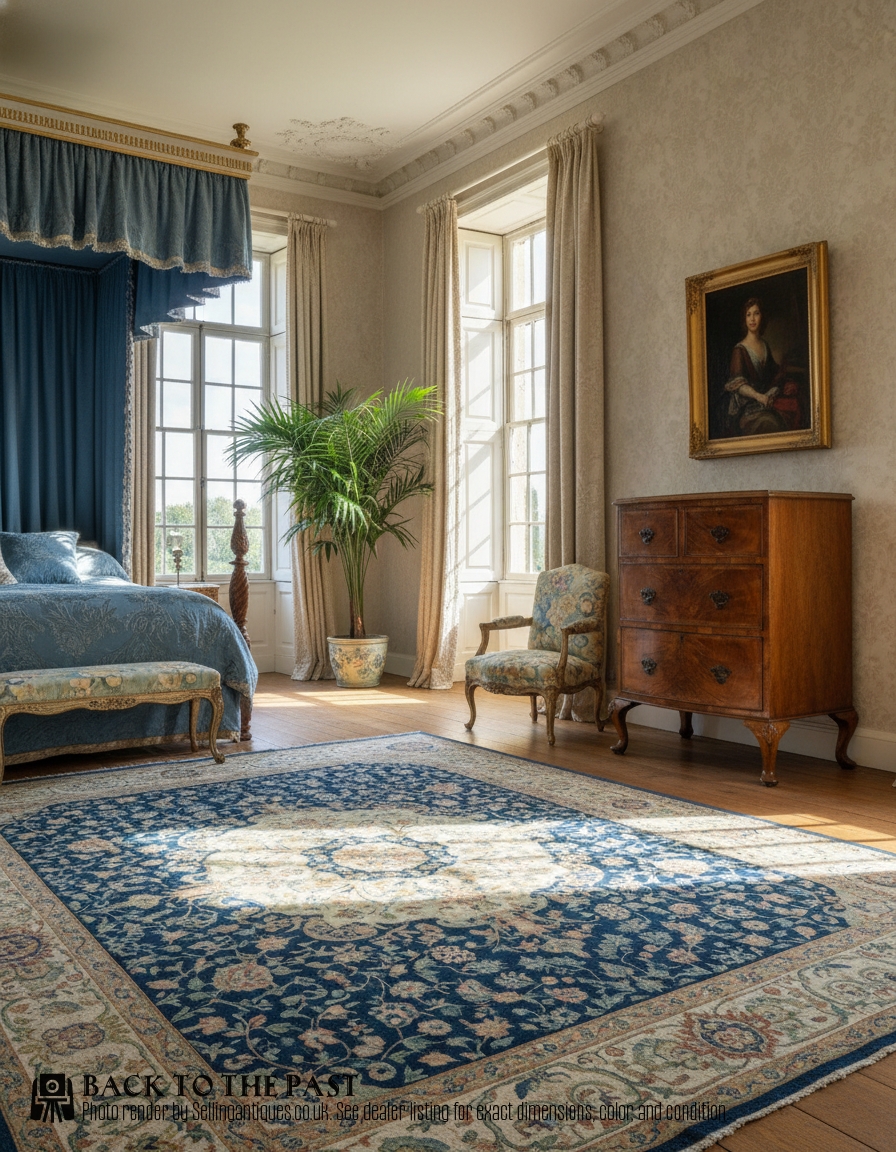
Materials and construction
Makers constructed the curved carcasses of bow front drawers by gluing thin layers of timber together over a form or by cutting solid wood blocks to shape. Mahogany served as the primary structural timber, valued for its stability and resistance to warping under tension.
Veneers such as flame mahogany, satinwood, and burr walnut were laid over secondary woods like pine to create decorative grain patterns across the drawer fronts and top surfaces. Brass hardware, including drop handles and escutcheons, was fitted to complete each piece.
Crossbanding and stringing lines in contrasting timbers frequently border the drawer fronts, framing the grain and demonstrating the precision required to fit straight inlays onto curved surfaces.
Bow Front Drawers Retail Price Guide 2026
Typical asking prices for bow front drawers among the pieces listed under this phrase on Sellingantiques today, from the lower quarter to the upper quarter. They describe what is for sale here now, not the wider market.
Several pieces conceal secret drawers tucked neatly beneath the top moulding, requiring a hidden catch to open.
Distinctions in quality
Quality in bow front drawers rests on the execution of the curve and the selection of timber. Superior pieces display book-matched veneers or carefully chosen flame mahogany where the grain flows symmetrically across the drawer fronts.
Cabinet-making standards appear in the drawer construction, where hand-cut dovetails and solid oak or mahogany drawer linings indicate higher production values. Lesser examples rely on thinner secondary timbers and simpler machine joints.
Proportion and foot style also define the range, with bracket feet, ogee feet, or shaped aprons integrating harmoniously with the sweep of the bow rather than appearing heavy or mismatched.
The Bow Front Drawers Glossary
- Caddy top
- A tabletop with a raised, moulded edge that follows the contour of the piece below. This feature often appears on smaller chests from the Georgian period.
- Crossbanding
- A narrow strip of veneer laid perpendicular to the grain of the surrounding surface. It frames drawer fronts and tabletops in a contrasting wood.
- Tallboy
- A tall chest of drawers made in two sections, stacking one cabinet atop another. These units maximise vertical storage capacity while retaining a compact footprint.
- Stringing
- Thin inlay lines of contrasting timber used to outline panels and drawer fronts. Cabinet makers applied this technique to add linear definition to plain surfaces.
- Graduated drawers
- A series of drawers decreasing in depth from bottom to top. This arrangement creates a balanced visual weight and practical storage for various items.
Bow Front Drawers: Frequently Asked Questions
How do I date a bow front chest?
Dating relies on timber choice, handle style, and construction methods. Georgian pieces often feature oak linings and delicate bracket feet.
Later Victorian and Edwardian examples tend to use deal or pine secondary woods with heavier proportions and machine-cut elements.
Where should I place bow front furniture?
These pieces suit bedrooms, living rooms, and hallways where a curved front softens the geometry of the space. Their rounded corners reduce the visual bulk of traditional chests.
Ensure adequate clearance in narrow passages so the convex projection does not obstruct movement.
What is the difference between a tallboy and a chest on chest?
A tallboy typically refers to a single tall chest of drawers, sometimes incorporating a wardrobe section at the top. A chest on chest consists of two distinct cabinet sections stacked together.
Both forms offer substantial vertical capacity while maintaining the characteristic curved bow front.
Are these drawers suitable for daily use?
Solid construction from periods like the Georgian and Regency eras makes these drawers robust for everyday storage. Smooth drawer action depends on the stability of the timber and the original runners.
Proper humidity control helps prevent the curved drawer fronts from sticking within their frames.