

Antique Bow Front Chest
An antique bow front chest brings a curved, elegant silhouette to a room, offering generous storage alongside a refined Georgian or Regency profile.
What an antique bow front chest is
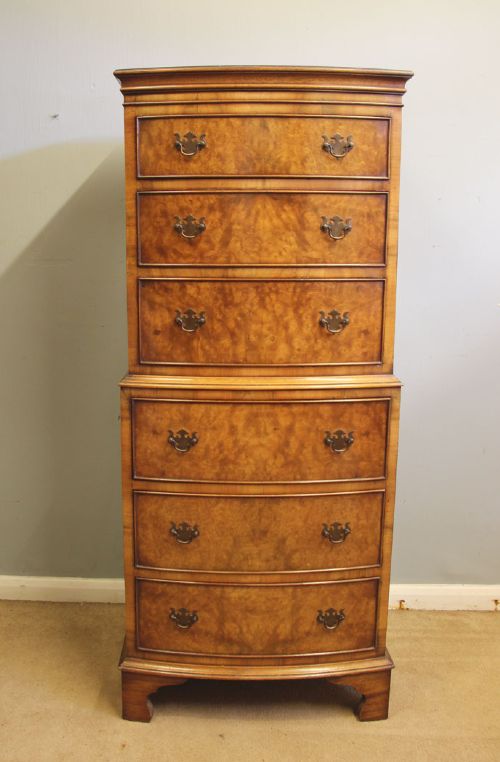
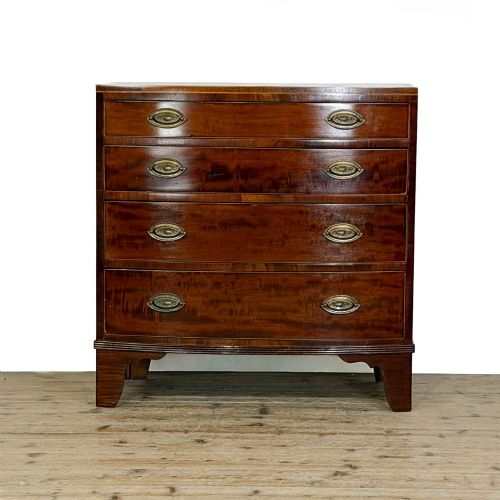
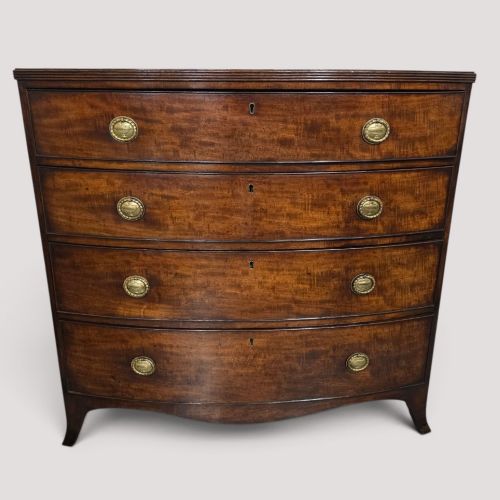
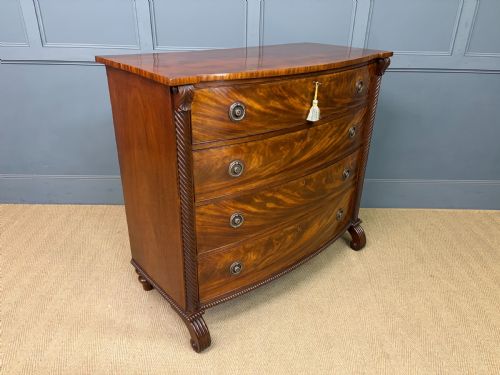
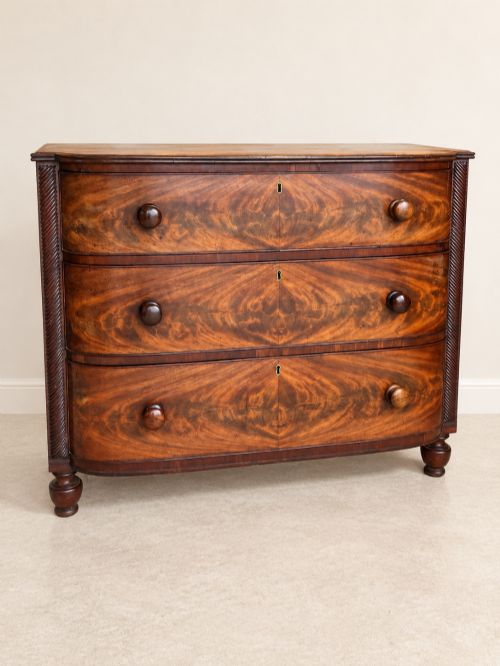
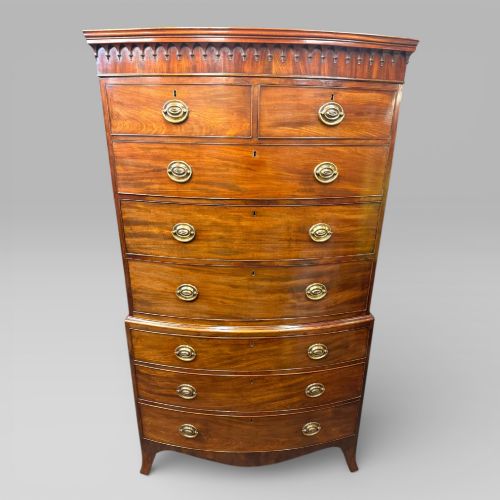
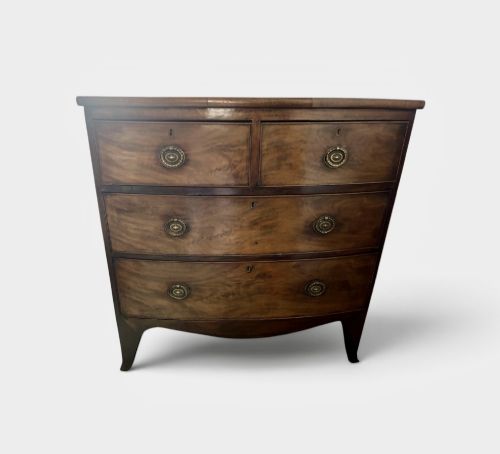
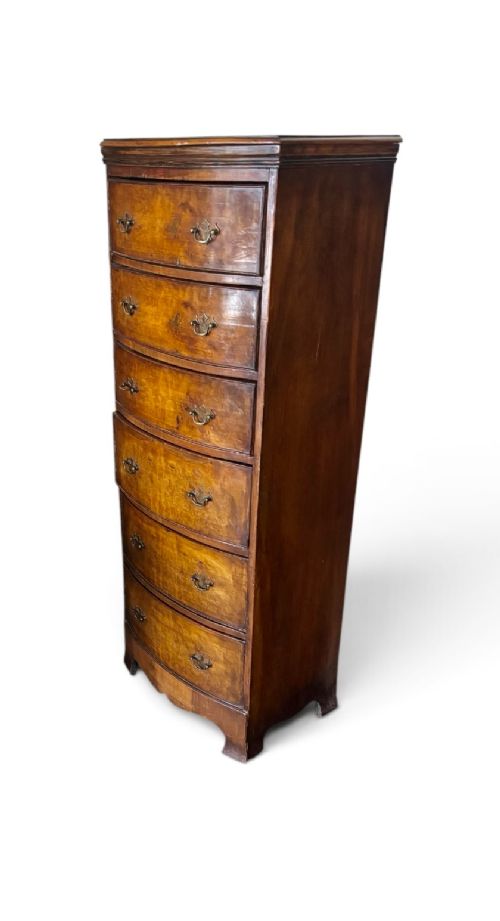
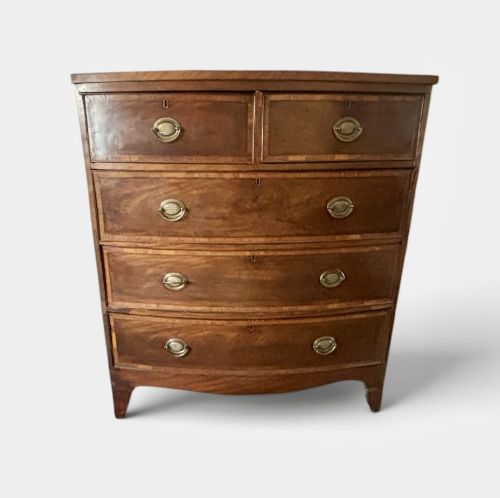
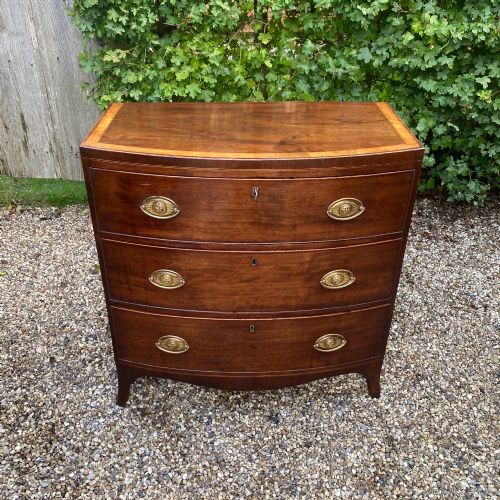
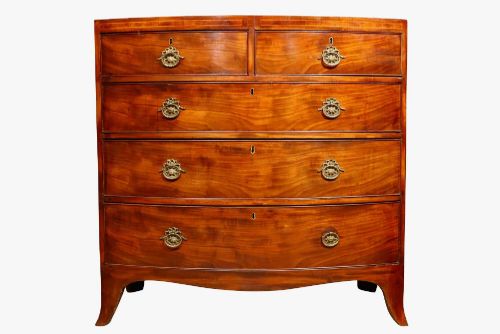
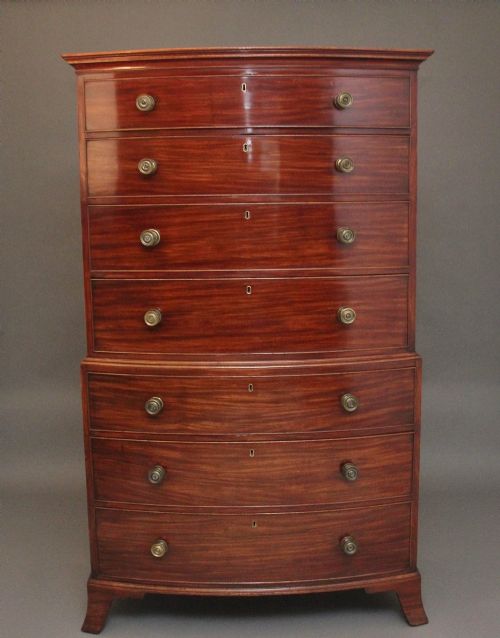
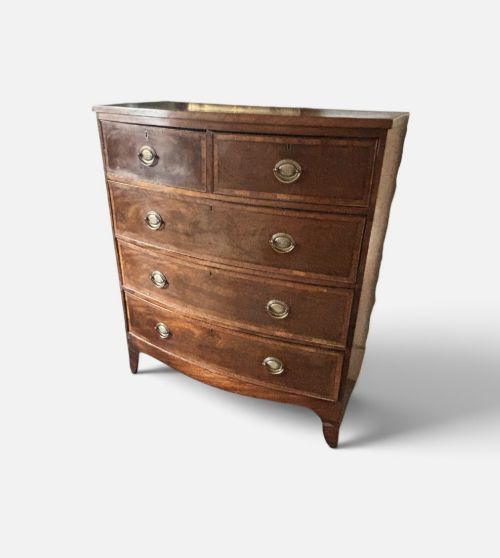
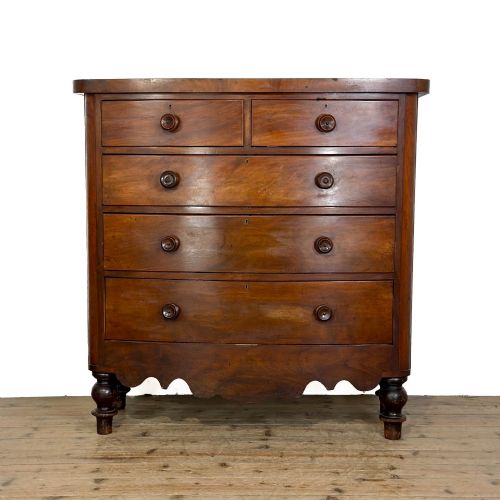
An antique bow front chest is a substantial storage piece defined by its convex, projecting front facade. These chests emerge primarily in mahogany, walnut, oak, and painted wood finishes.
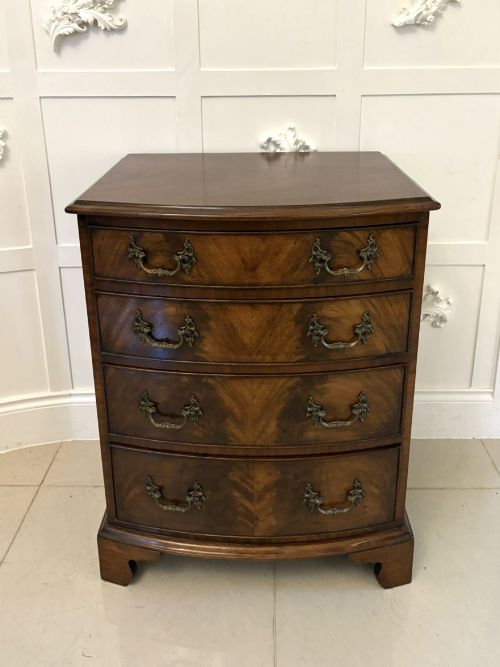
The pieces on this page span the eighteenth, nineteenth, and twentieth centuries, encompassing styles from Georgian and Regency to French Chateau. Alongside standard chests of drawers, buyers will encounter bedside tables and window seat chests.
Mahogany remains the dominant wood across the historical record and current listings. Walnut and painted timber provide alternative finishes within the broader tradition.
How they were made
Cabinetmakers constructed these chests using solid and veneered timbers, often selecting figured mahogany, flame mahogany, or burr walnut for the primary surfaces. Grain matching across the curved drawers demanded considerable skill.
Hardware details such as brass pulls and lion mask handles complemented the timber construction. Secondary woods formed the internal drawer boxes and structural framing.
Retail Price Guide 2026
Typical UK retail prices for bow front chest, calculated from the Sellingantiques database of over a million retail prices indexed since 2003. This retail price guide relies exclusively on Sellingantiques data; no external sources or auction records are used, so the figures do not describe the wider market.
Listings feature periods from the 1800s through the 1920s, constructed in mahogany, walnut, brass, and painted wood.
What varies in quality
The choice of timber grain dictates much of the visual merit, with figured mahogany and burr walnut representing the higher tiers of cabinetmaking. Plain timber finishes occupy a simpler category.
Proportion and scale distinguish finer workshops from standard production. Well-judged curvature and crisply integrated drawer construction elevate a piece above utilitarian storage.
The Antique Bow Front Chest Glossary
- Bow front
- A convex, curved front on a case piece that projects outward. This shape softens the room presence of a standard rectangular chest.
- Figured mahogany
- Timber exhibiting distinctive, highly decorative grain patterns such as flame or fiddleback. Cabinetmakers reserved these boards for primary display surfaces.
- Burr walnut
- Wood taken from the growth excrescences of walnut trees, yielding intricate swirling patterns. It appears frequently on luxury nineteenth and twentieth-century case pieces.
- Regency
- A British design style spanning the early nineteenth century characterised by classical restraint and clean architectural lines. Pieces from this period often employ dark mahogany with minimal ornament.
Frequently Asked Questions
What is a bow front chest?
A bow front chest is a drawer unit featuring a curved, outward-projecting front facade. This design emerged to soften interior angles and provide a more sculptural profile.
Cabinetmakers adopted the shape widely during the Georgian and Regency eras, applying it to both full-sized chests and smaller bedside tables.
How do I date an antique chest?
Dating relies on timber selection, handle styles, drawer construction methods, and overall proportions. Georgian and Regency pieces generally display specific wood figuring and secondary framing techniques.
Later nineteenth and twentieth-century iterations often incorporate different internal timbers and standardised hardware fittings.
Where should I place a bow front chest?
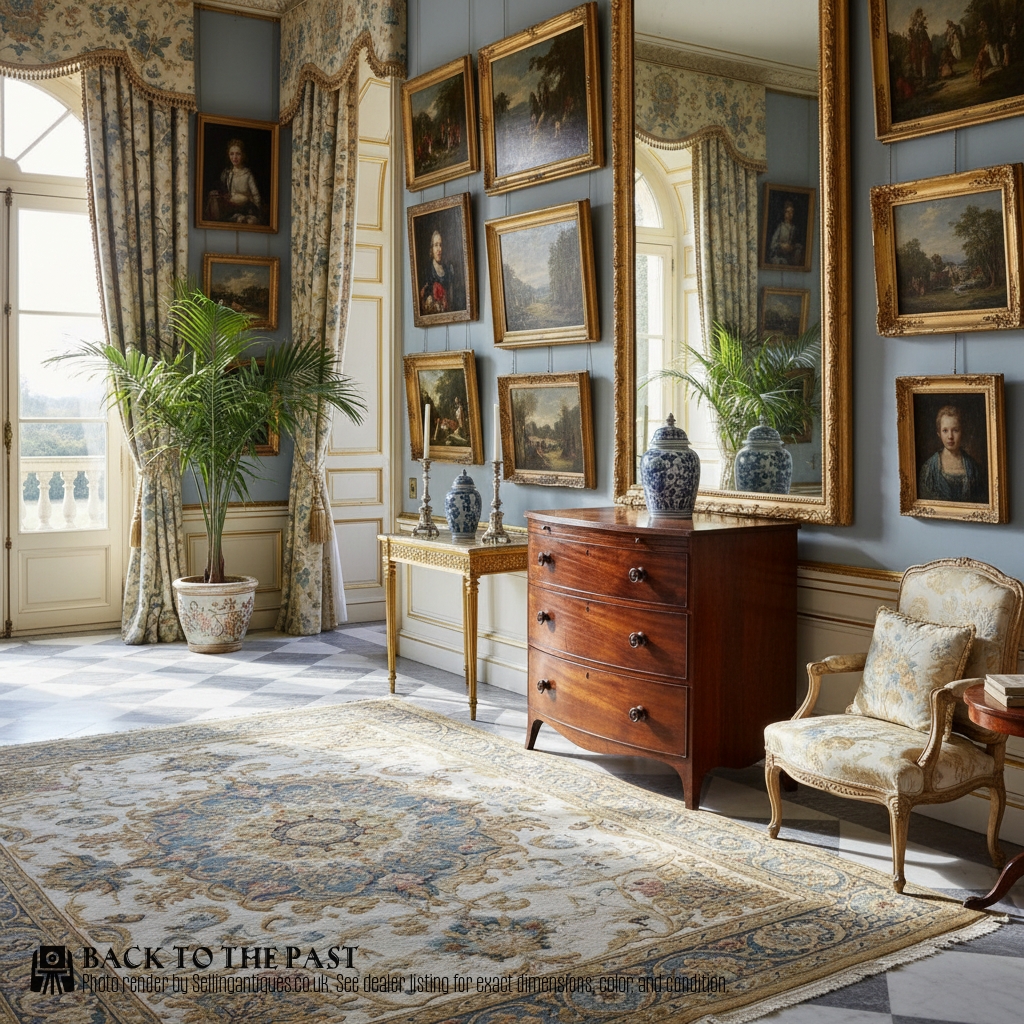
These chests function effectively in bedrooms, hallways, or living spaces where surface area and drawer storage are required. Their curved profile prevents them from blocking tight walkways as harshly as sharp rectangular corners.
They pair well with traditional or transitional interiors that benefit from rich mahogany or walnut tones.
What woods were used for these chests?
Mahogany is the primary material found across these listings, appearing in plain, figured, and flame varieties. Walnut and burr walnut also feature prominently in certain periods.
Oak and painted wood provide alternative finishes, reflecting broader regional and chronological preferences in British cabinetmaking.