

Regency Bowfront Drawers
Regency bowfront drawers combine practical storage with sweeping convex fronts that define the period's cabinet work.

Regency Bowfront Drawers
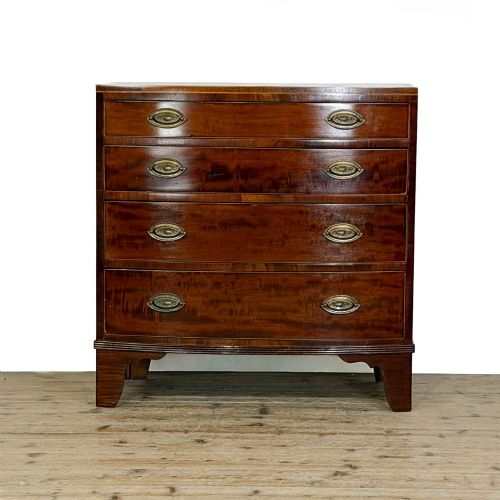
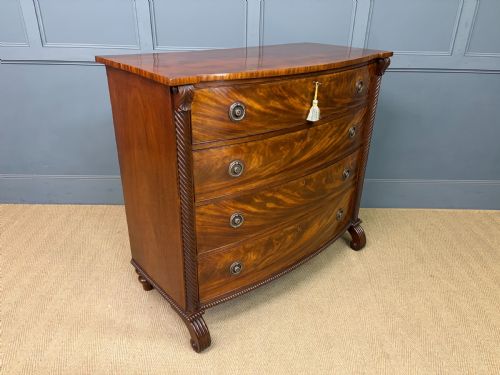
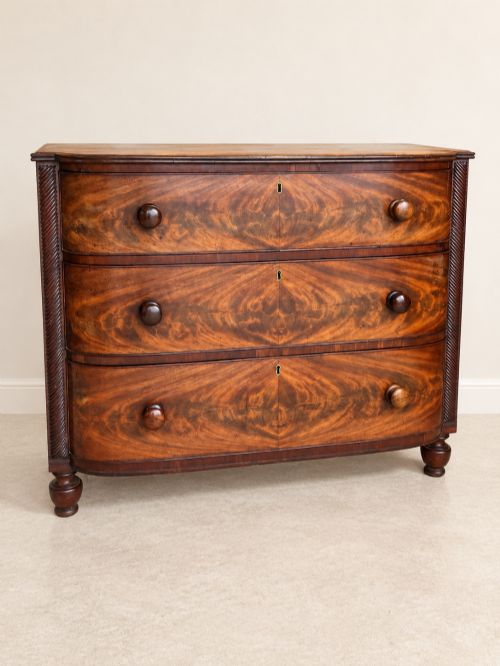
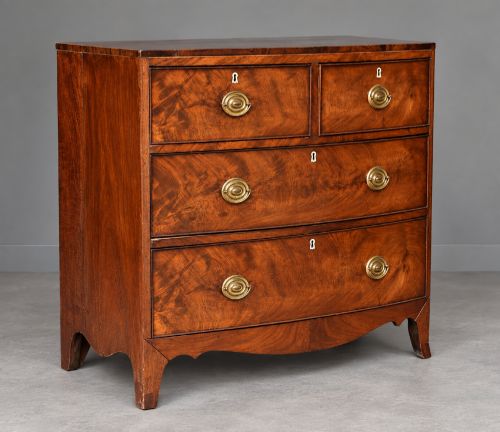
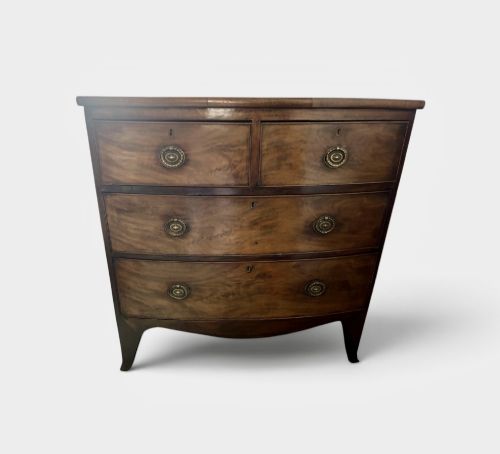
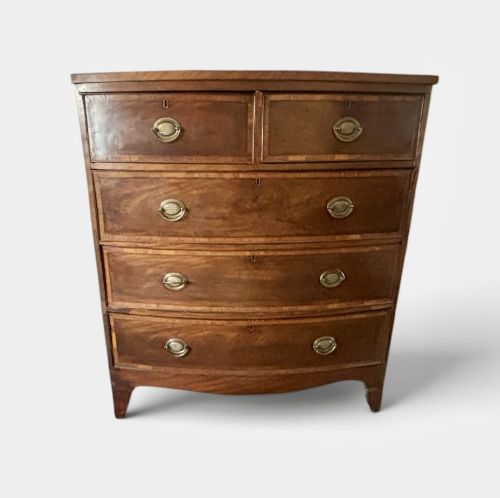
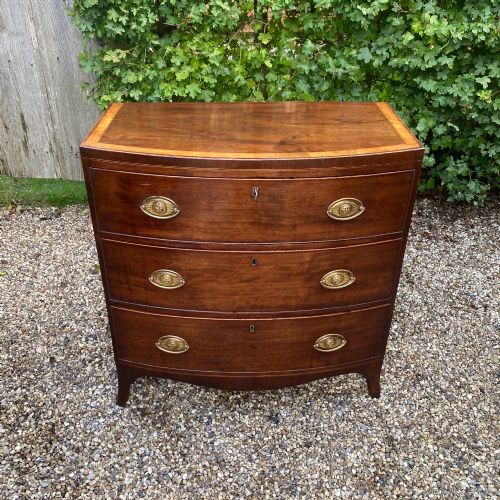
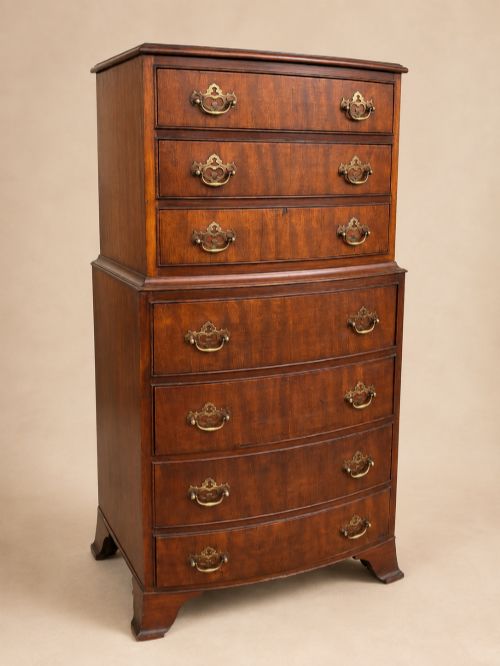
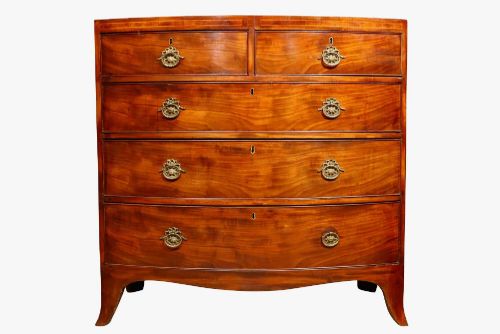
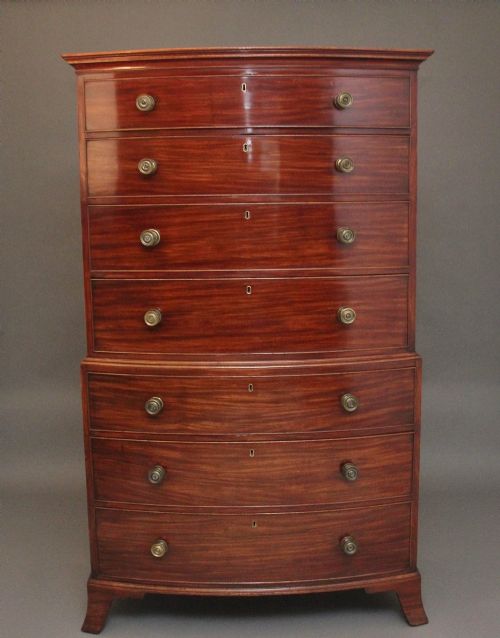
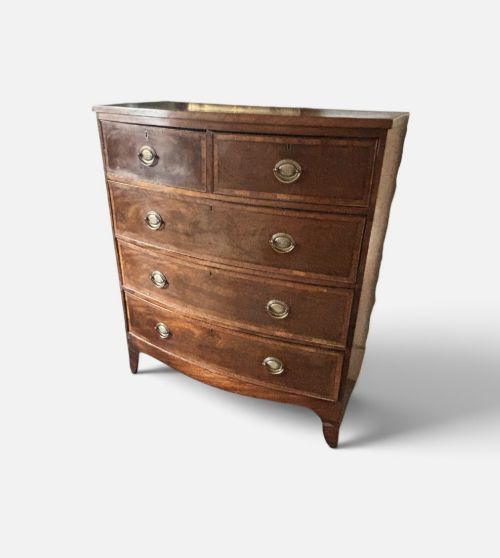
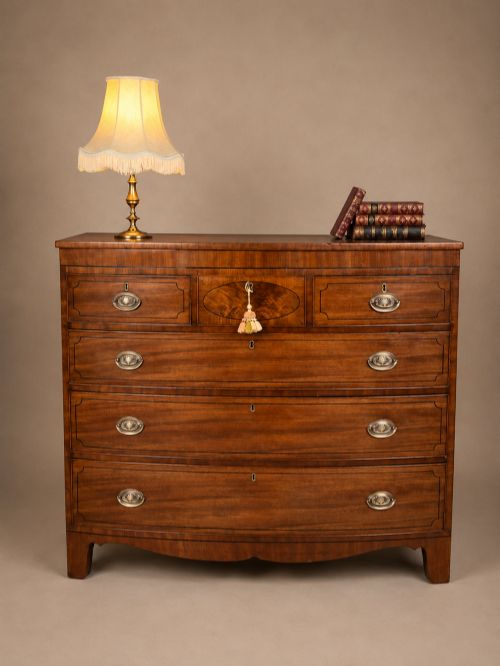
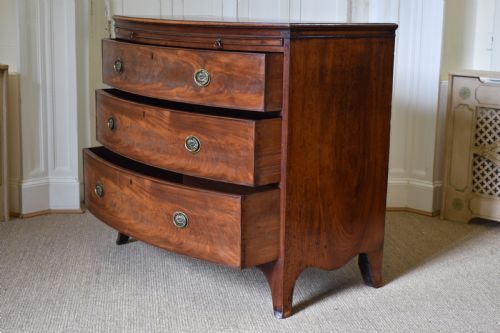
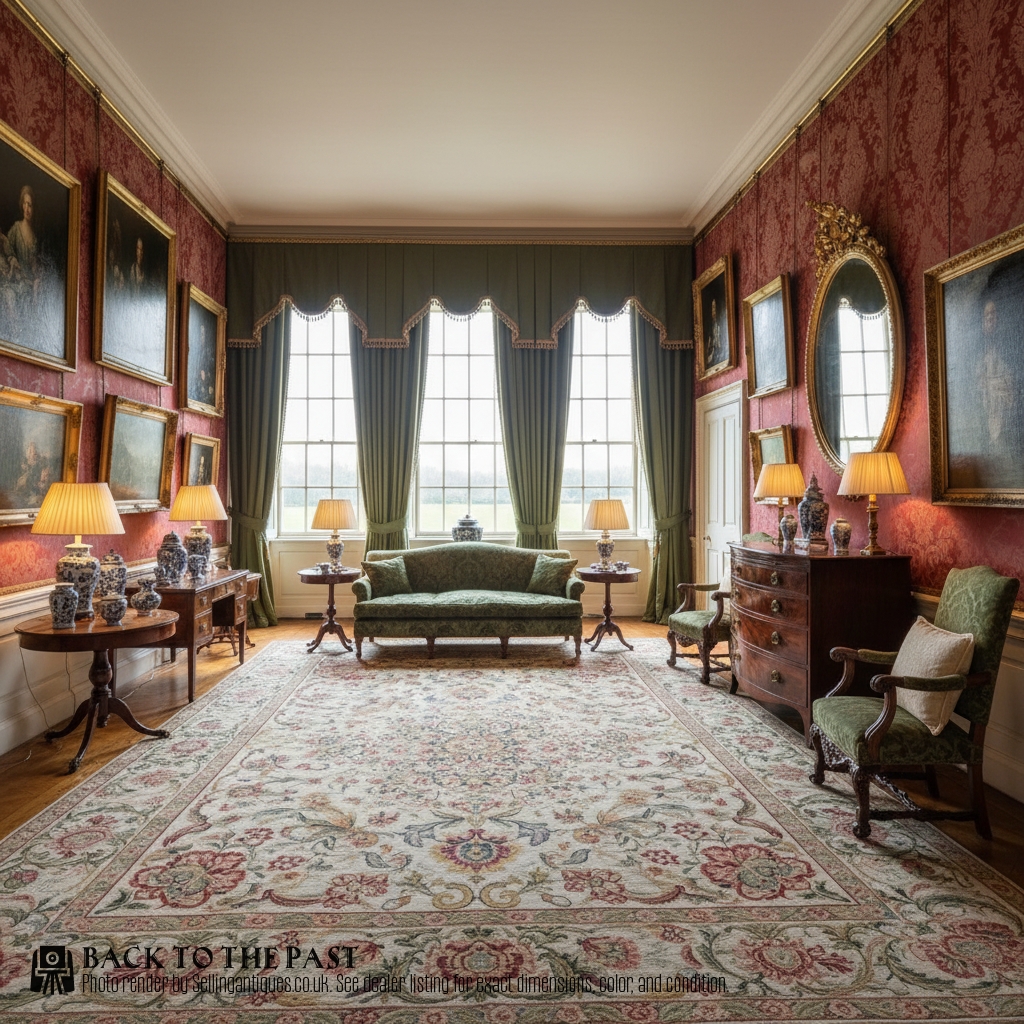
When you search for regency bowfront drawers, you enter a domain dominated by mahogany chests constructed during the early nineteenth century and the Georgian era. These pieces offer graduated drawers housed within a curved front frame designed to catch the ambient light of a room.
The standard form encountered here is the compact chest, often featuring four drawers and resting on bracket feet or short turned legs. Alongside traditional chests, variants include tallboys, caddy top designs, and pieces incorporating satinwood banding or crossbanding.
Originating primarily from English and Scottish workshops, these items span the Regency, George IV, and later revival periods, including pieces from the nineteen-twenties that emulate earlier proportions.
Materials and construction methods
Cabinet makers relied heavily on solid mahogany and flame mahogany veneer, chosen for rich grain patterns that accentuate the curved facade. Secondary timbers such as oak frequently appear in the internal drawer linings.
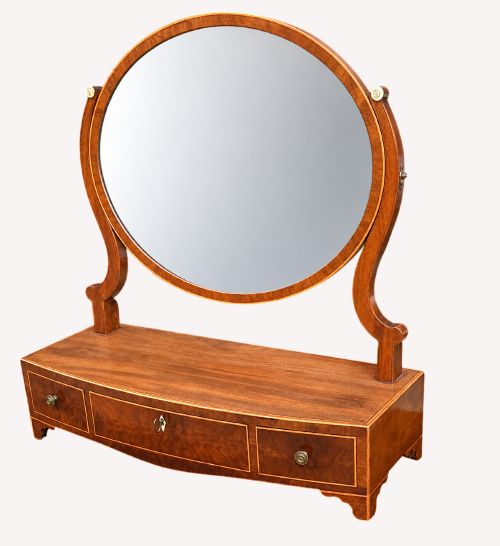
Decorative detailing involves contrasting stringing and banding utilising satinwood and boxwood inlay, often paired with cast brass handles fixed to the drawer fronts.
Regency Bowfront Drawers Retail Price Guide 2026
Typical asking prices for regency bowfront drawers among the pieces listed under this phrase on Sellingantiques today, from the lower quarter to the upper quarter. They describe what is for sale here now, not the wider market.
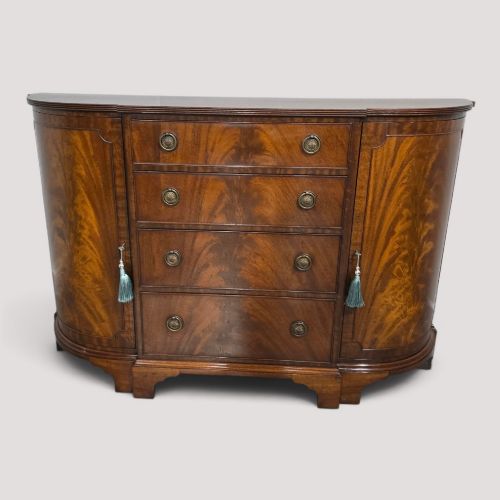
Recorded object forms include dressing table mirrors, wardrobes, sideboards, and linen presses alongside standard chests of drawers.
Distinguishing quality in construction
Superior examples display careful book-matching of flame mahogany veneers across the curved drawer fronts, ensuring the grain patterns flow symmetrically. Lower tiers often utilise plain mahogany solids or less active veneer selections.
The precision of the boxwood and satinwood inlay separates standard workshop production from finer cabinet work, alongside the structural integrity of the oak drawer linings and the retention of original brass hardware.
The Regency Bowfront Drawers Glossary
- Bowfront
- A convex curved cabinet front that projects outward from the centre. This shape defines the visual rhythm of the piece.
- Caddy top
- A raised top with moulded edges resembling the lid of a tea caddy. It sits upon the upper surface of the chest.
- Crossbanding
- A narrow strip of veneer laid across the grain of the primary surface. It creates a contrasting border around drawer edges.
- Graduated drawers
- A series of drawers decreasing in depth from bottom to top. This arrangement maintains balanced proportions on the facade.
- Stringing
- Thin inlaid lines of contrasting timber used for decoration. It outlines panels and drawer borders.
Regency Bowfront Drawers: Frequently Asked Questions
How do I date a bowfront chest?
Examine the secondary timbers inside the drawers, such as oak, and look at the construction of the drawer dovetails. Cabinet makers of the Regency period employed hand-cut joints and specific framing techniques that changed by the Victorian era.
Hardware styles and veneer choices also provide clues, as flame mahogany and satinwood banding became particularly prominent during the early nineteenth century.
Were these chests used in bedrooms?
These pieces served primarily as clothes storage in domestic bedchambers during the Georgian and Regency periods. Their proportions allowed them to fit comfortably against bedroom walls while offering deep storage capacity in the lower drawers.
Smaller versions functioned effectively in dressing rooms or parlours, occasionally incorporating brushing slides for temporary writing tasks.
How do Scottish chests differ?
Scottish pieces often exhibit distinctive proportions, featuring deeper drawer configurations and robust cabinet framing. Cabinet makers in Scotland frequently utilised local hardwoods alongside traditional mahogany.
These chests maintain a heavy, solid presence compared to their lighter English counterparts from the same decades.
What is flame mahogany?
Flame mahogany is a veneer cut from the branch junctions of the mahogany tree, creating a dramatic, flickering grain pattern. Cabinet makers reserved this timber for the primary visible surfaces of high-status furniture.
When polished, the grain reflects light dynamically across the curved facade of the chest.