




Scottish Regency Chest
These scottish regency chest pieces combine rich timber grains and bold proportions, offering practical storage with strong regional character.
Scottish Regency Chest
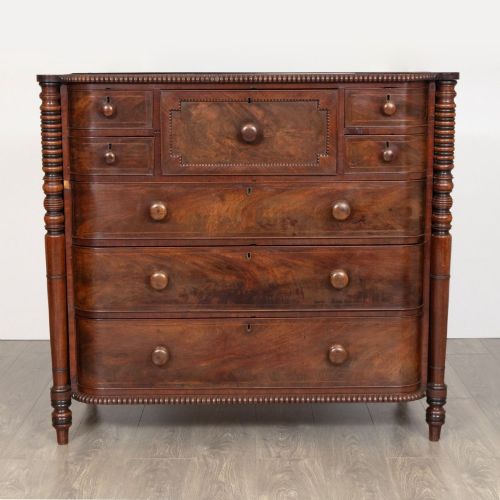
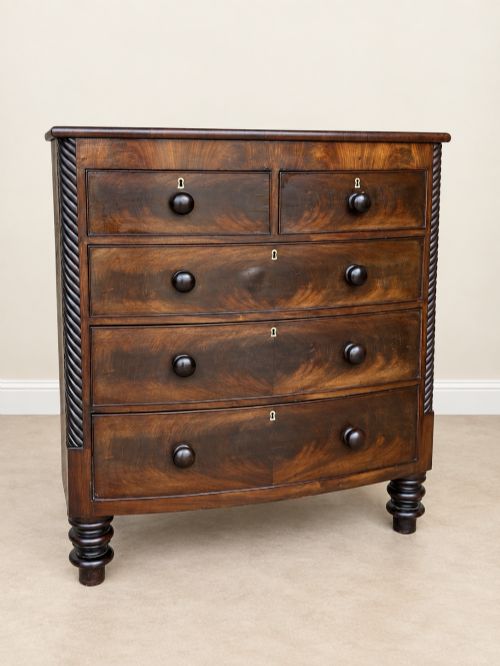
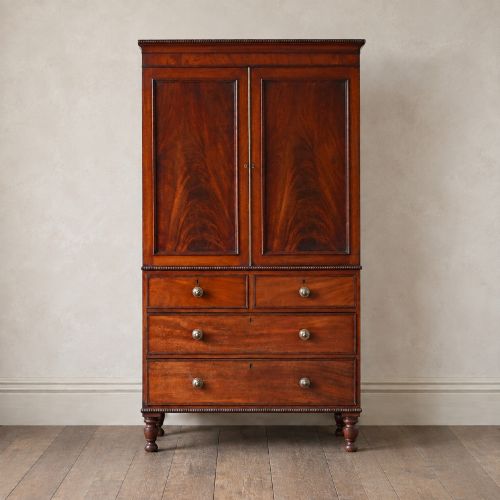
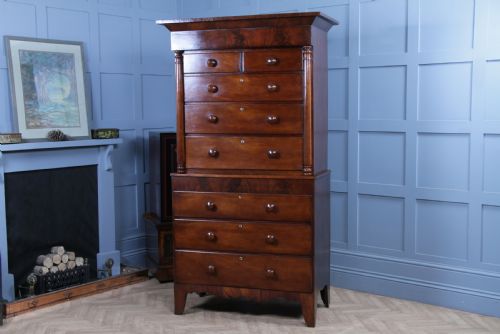
A scottish regency chest represents a distinct regional take on classic storage furniture, appearing across the nineteenth century alongside related Georgian pieces. Buyers encounter various forms on this page, ranging from compact bow fronts to tall chests and linen presses.
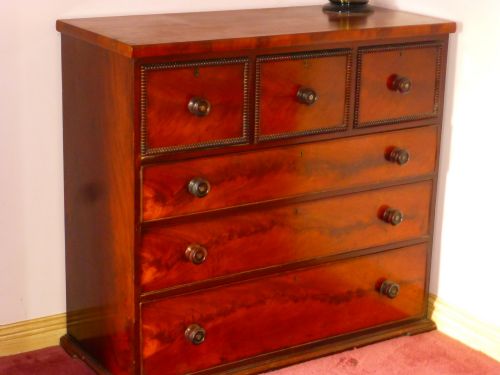
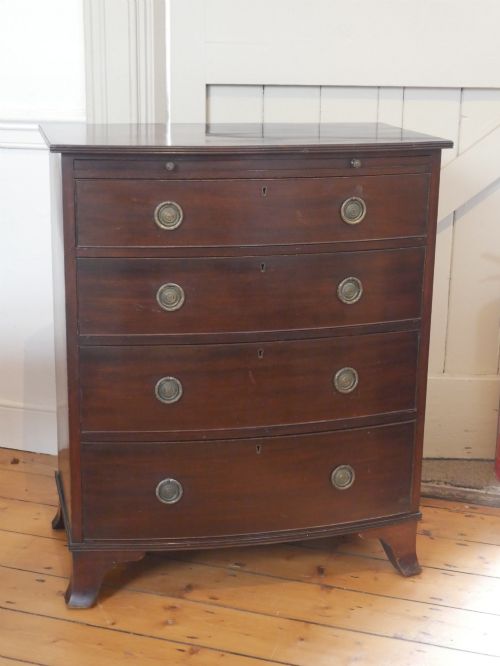
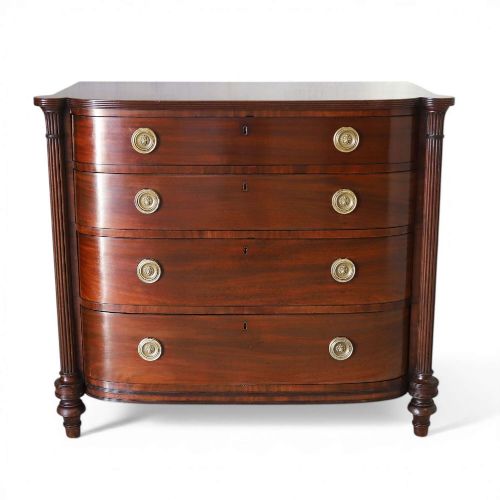
Makers in Scotland during this period favoured generous proportions and striking timbers, producing items like the bow front chest of four graduated drawers. Alongside standard drawer configurations, the listings include secretaire desks, teapots, and sarcophagus wine coolers.
The objects span multiple eras including the nineteenth century, Georgian period, and Regency styles, with occasional later twentieth century interpretations. This variety gives collectors distinct options in scale and internal arrangement.
How they were made
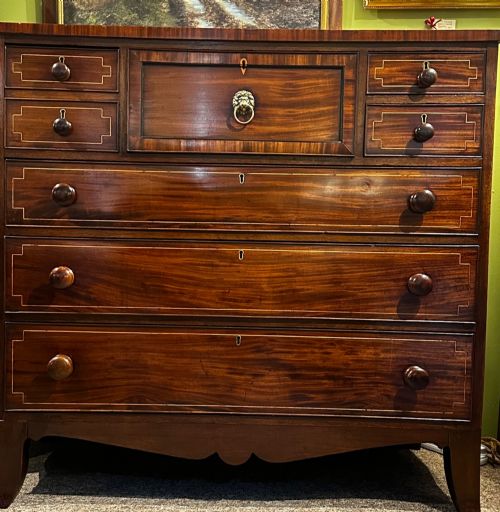
Cabinetmakers constructed these pieces primarily from solid mahogany and flame mahogany veneers, often incorporating secondary timbers such as oak for drawer linings. Boxwood stringing frequently provides linear contrast against the dark polished surfaces.
Structural hardware relies heavily on brass for handles, escutcheons, and keyplates, complementing the warmth of the wood. Specialised linings like baize appear in fitted desk compartments and coin or cutlery drawers.
Some chests hide secret compartments within their secretaire drawers, perfect for guarding small treasures from curious guests.
What varies in quality
The grade of timber selection marks the primary distinction between pieces, particularly the intensity and figure of the flame mahogany veneer. Superior examples display symmetrical grain patterns that wrap evenly across the drawer fronts.
Joinery execution and drawer graduation determine the structural merit of each chest, with finer work seen in smooth drawer movement and crisp moulding details. Attributed pieces and documented regional workshops command greater attention from discerning collectors.
WILLIAM TROTTER Edinburgh
The Scottish Regency Chest Glossary
- Flame mahogany
- A veneer cut from the fork of the mahogany tree to create a dramatic, flickering flame-like pattern.
- Bow front
- A convex, outwardly curved front elevation typical of many nineteenth-century case pieces.
- Secretaire
- A cabinet or chest incorporating a pull-down writing drawer fitted with small pigeonholes and inner drawers.
- Linen press
- A tall cupboard featuring upper sliding trays or shelves for textiles above a base of lower drawers.
- Graduated drawers
- A series of drawers decreasing in depth from bottom to top, creating a balanced visual perspective.
Scottish Regency Chest: Frequently Asked Questions
What defines a Scottish chest?
These pieces typically display robust regional proportions and distinctive timber choices, often featuring flame mahogany veneers over sturdy carcases.
They serve as prominent storage items that reflect nineteenth-century cabinetmaking traditions north of the border.
How do bow front chests differ?
A bow front incorporates a convex curved facade that softens the rectangular silhouette of standard drawer units.
This shaping showcases the selected wood grain across a curved surface rather than a flat plane.
What is a secretaire chest?
A secretaire chest combines standard drawer storage with a dedicated writing surface hidden behind a drop-front top drawer.
Inside, small compartments and secondary drawers provide space for correspondence and writing materials.
Where were these pieces used?
Original owners placed them in bedrooms, libraries, and formal reception rooms as primary storage for clothing and documents.
Modern interiors utilise them similarly to anchor a room while providing deep drawer capacity.
Which woods appear most often?
Mahogany and flame mahogany dominate the visible surfaces, supported by secondary timbers like oak inside the drawers.
Boxwood inlay and brass hardware frequently accent the main timber body.