

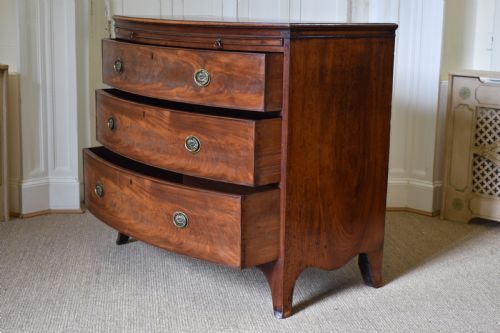
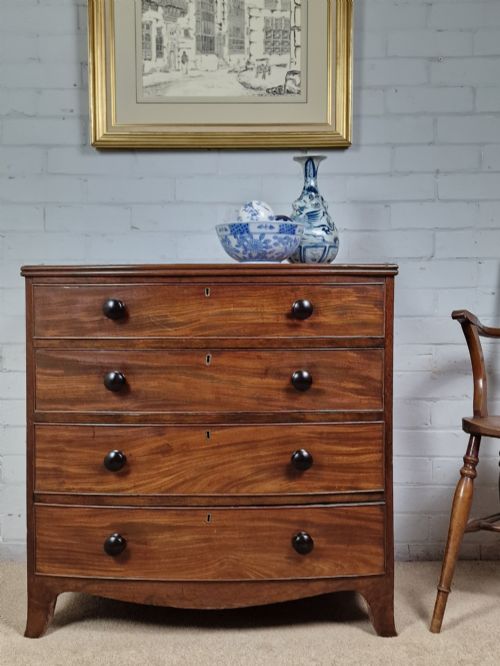
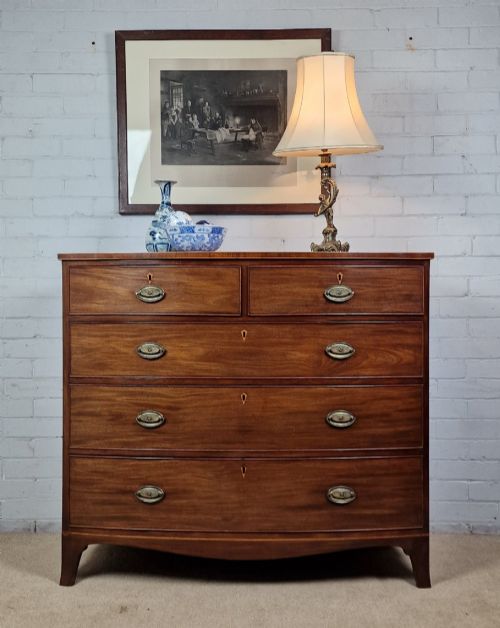
Bow Front Commode
A bow front commode brings serpentine curve and generous storage to a room, offering Georgian craft in mahogany, satinwood, and oak.
Understanding the Bow Front Commode
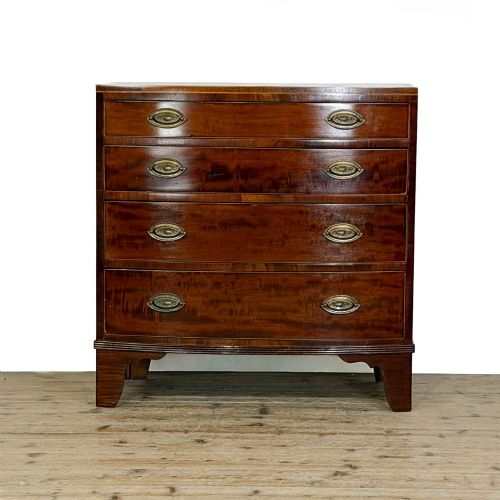
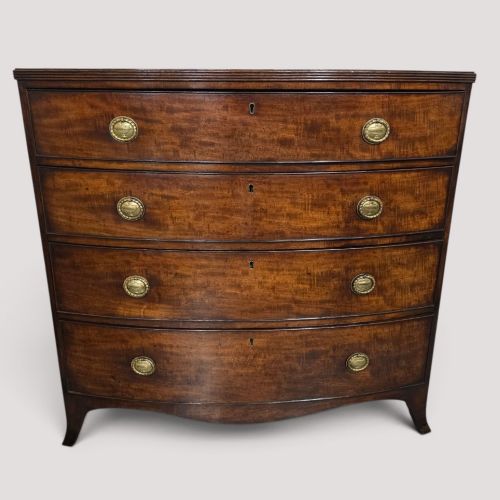
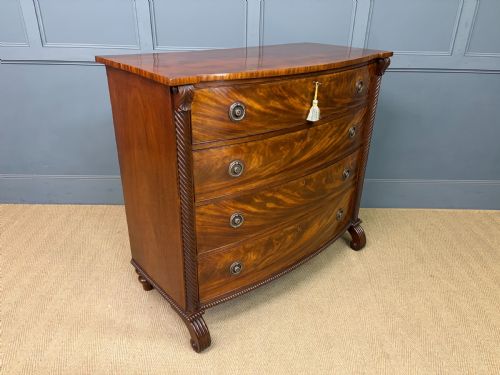
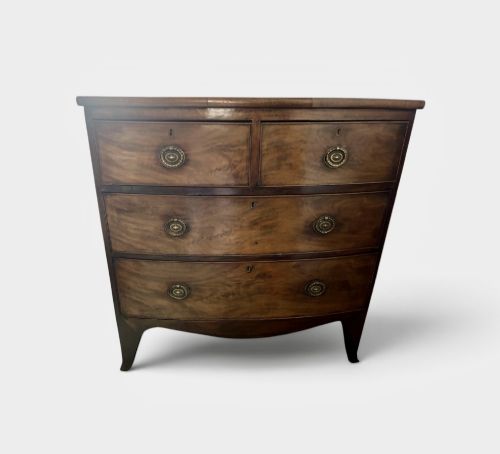
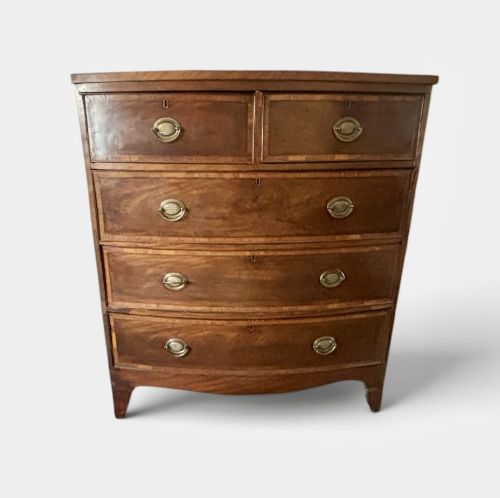
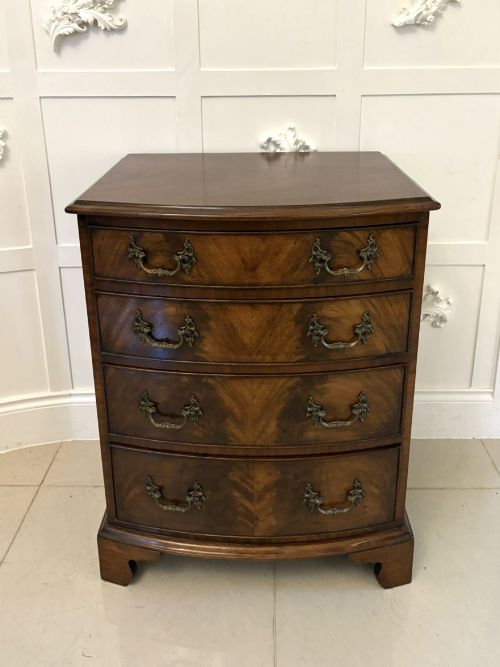
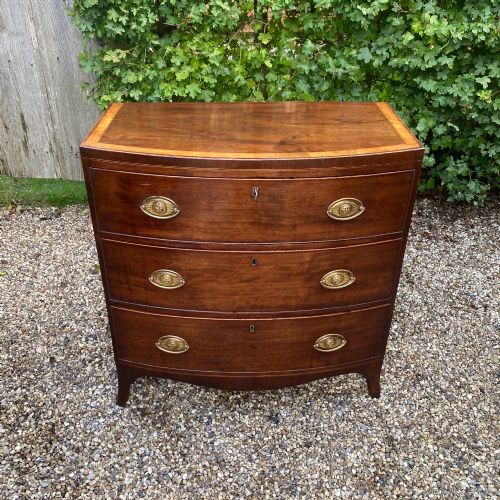
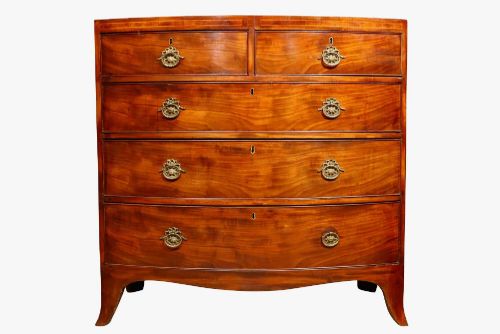
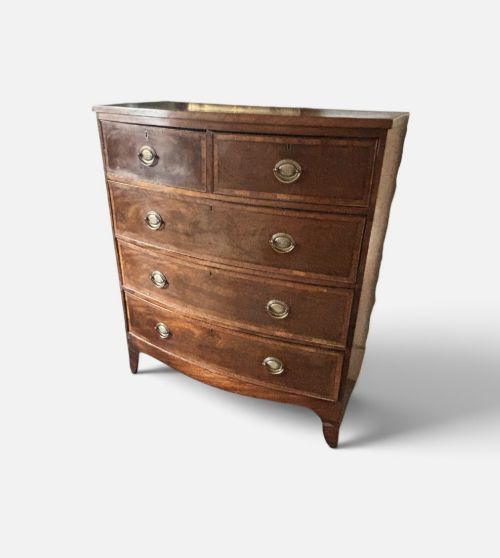
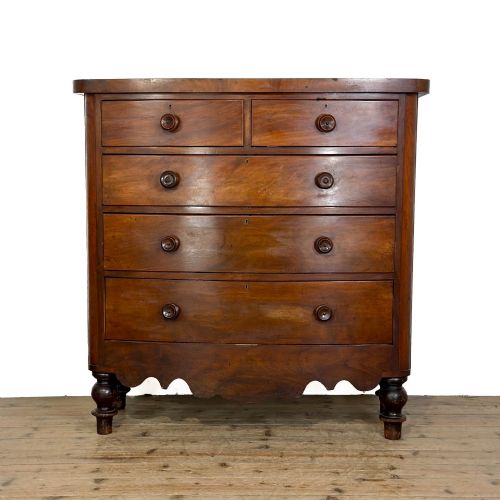
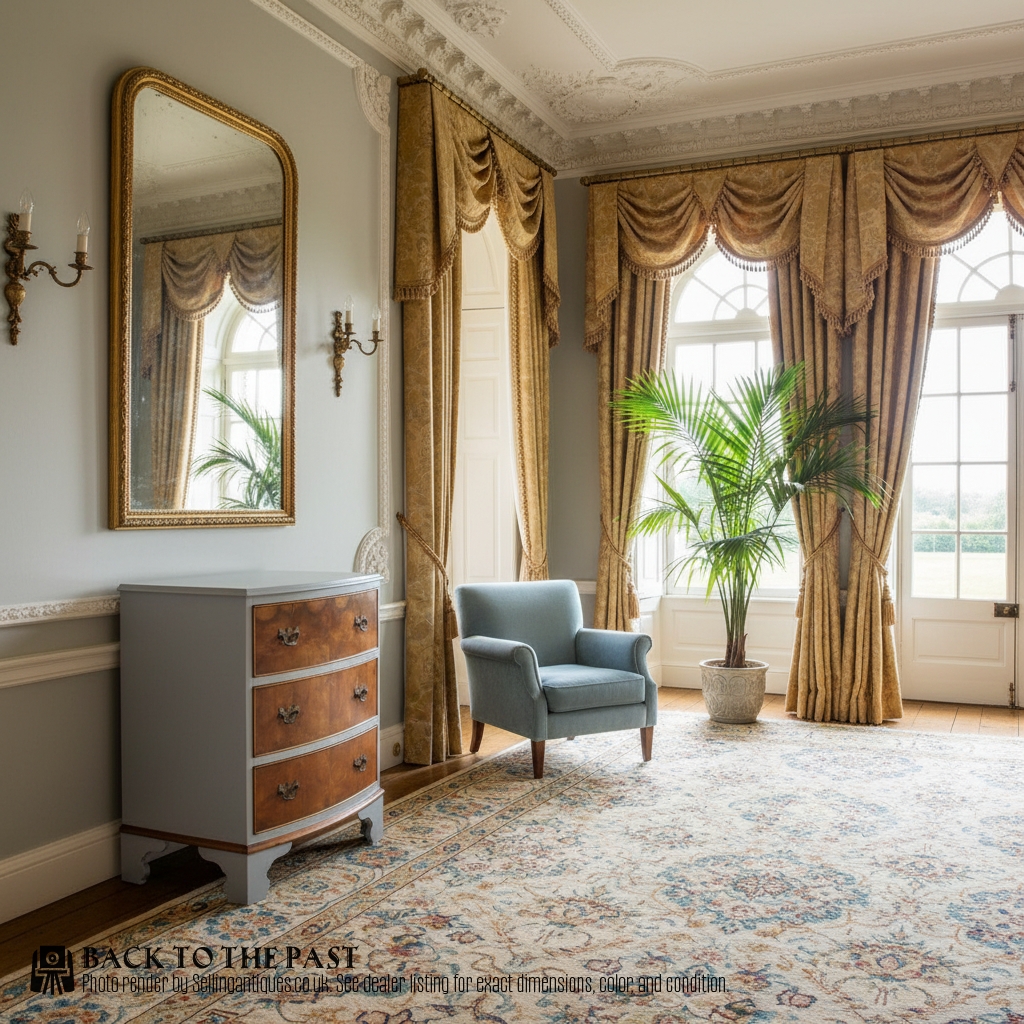
A bow front commode is a case piece defined by its convex curved front, historically serving as a refined chest of drawers or a bedside cabinet. When you search for a bow front commode, you encounter pieces originating from the eighteenth and nineteenth centuries, alongside later revivals.
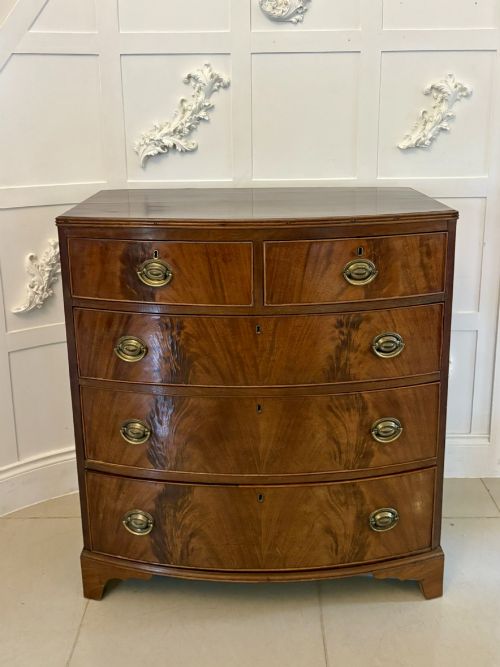
The form appears predominantly in rich hardwoods like mahogany and flame mahogany, often accented with satinwood stringing or boxwood inlay. Smaller bedside versions and tall chests of drawers make up the core of what circulates on this market.
Originating largely from British workshops in the Georgian and Regency periods, these items also emerge in French provincial, Dutch marquetry, and Austrian variants. Each regional interpretation shifts the proportion and the choice of decorative veneer.
Construction and Materials
Cabinet makers built these pieces using solid oaks and pines for internal drawer linings, while applying expensive veneers such as flame mahogany and burr walnut to the exterior carcase. The curved front required careful steam bending or segmented blocking of timber before the cabinet maker laid the primary grain.
Crossbanding and stringing in lighter woods like boxwood framed the drawer fronts, creating geometric contrast against the dark body. Brass hardware, including drop handles and escutcheons, fastened through the drawer faces to complete the construction.
Retail Price Guide 2026
Typical UK retail prices for bow front commode, calculated from the Sellingantiques database of over a million retail prices indexed since 2003. This retail price guide relies exclusively on Sellingantiques data; no external sources or auction records are used, so the figures do not describe the wider market.
Current and archive listings demonstrate a strong presence of Georgian and Regency mahogany, alongside French and Dutch marquetry commodes.
Assessing Quality and Execution
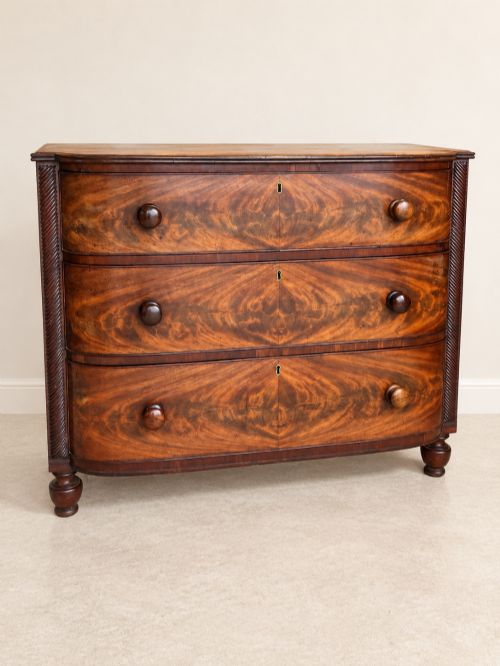
The distinction between standard execution and superior work rests on the grain selection of the timber and the precision of the inlay. Fine examples display book-matched flame mahogany or burr walnut that flows symmetrically across the curved drawers.
Secondary wood selection and drawer construction reveal the workshop standard, where hand-cut dovetails and solid oak linings indicate rigorous British manufacture. The depth of the surface patina and the retention of original brass hardware further elevate the standing of a piece.
The Bow Front Commode Glossary
- Bow front
- A convex curved front that projects outward from the centre, characteristic of certain eighteenth and nineteenth century case furniture. This shape softens the rigidity of standard rectangular chests.
- Commode
- A low cabinet or chest of drawers, often used for bedside storage or general chamber utility in earlier periods. The term covers both English drawer chests and continental cabinets.
- Flame mahogany
- A veneer cut from timber where the branch meets the trunk, producing a rippling, flame-like pattern. Cabinet makers prized this figure for its visual movement on principal drawer fronts.
- Crossbanding
- A border of veneer laid with the grain running perpendicular to the main panel. It frames the central field of wood and adds a crisp linear boundary.
- Graduated drawers
- A set of drawers that decrease in depth from bottom to top, improving the visual balance of the piece. This proportion requires precise carpentry on curved carcases.
Frequently Asked Questions
What is the difference between a commode and a chest of drawers?
In British furniture history, a commode often refers to a smaller bedside cabinet or a decorative lower chest, whereas a standard chest of drawers is taller and designed for general clothing storage.
However, continental European pieces with doors or drawers are frequently catalogued under the broader term commode regardless of scale.
How do I date a bow front commode?
Dating relies on examining the secondary timbers, construction methods, and hardware styles used in the drawer framing. Eighteenth century pieces typically feature hand-cut dovetails and oak linings, while nineteenth century items introduce machine-sawn elements and different brass casting techniques.
Secondary woods like deal or pine often replace oak in later regional or provincial workshops.
Where should I place a bedside commode?
These compact cabinets suit spaces beside a bed where enclosed storage and a small surface are useful. Their curved profiles allow them to soften corners in bedrooms and hallways alike.
Ensure the height matches your mattress level for practical daily use.
Are these pieces suitable for modern interiors?
The warm tones of mahogany, satinwood, and burr walnut pair well with both traditional and contemporary room schemes. Their compact footprints provide functional storage without dominating floor space.
Natural timber grain adds texture to minimalist settings.