


Burr Walnut Bedside Chest
A burr walnut bedside chest brings rich timber grain and compact storage beside the bed, spanning Victorian, Art Deco, and revival periods.
Understanding burr walnut bedside chests
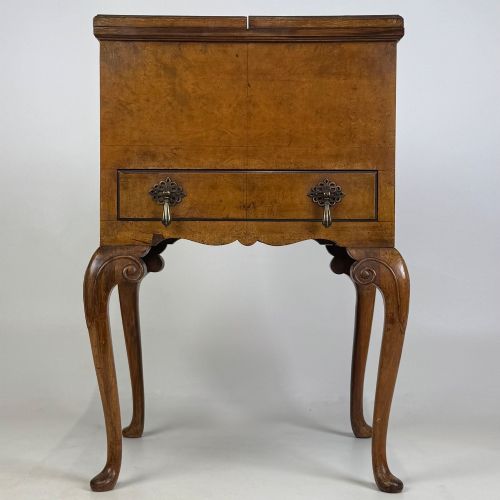
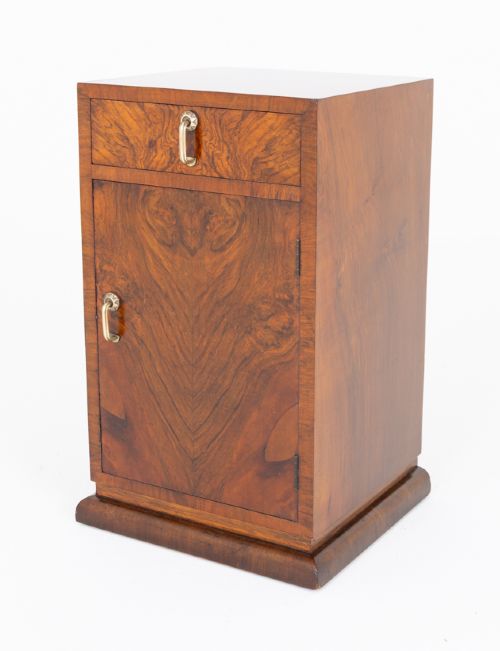
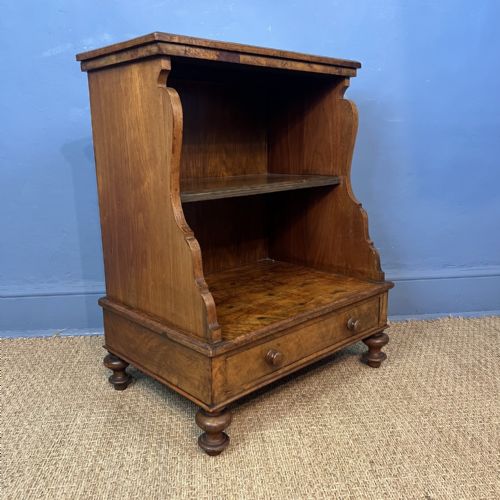
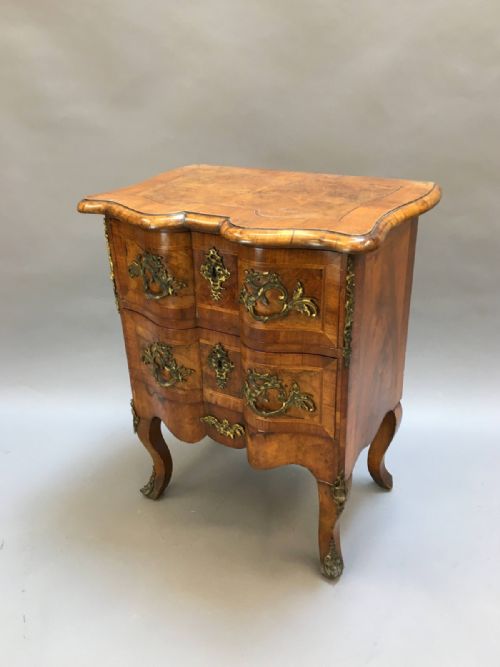
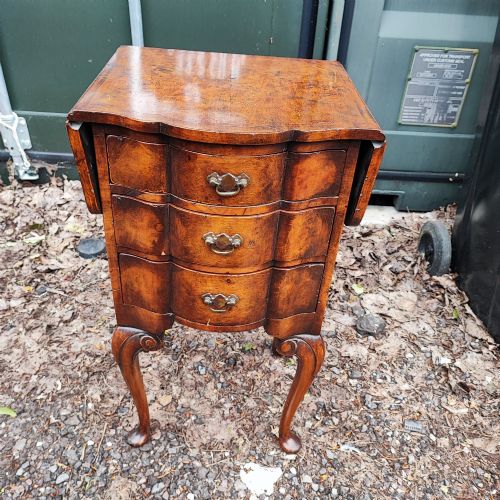
A burr walnut bedside chest is a compact storage piece designed for the bedroom, appearing in forms such as bedside cabinets, tables, chests of drawers, and low bookcases. These pieces range from Victorian examples to Art Deco and revival styles.
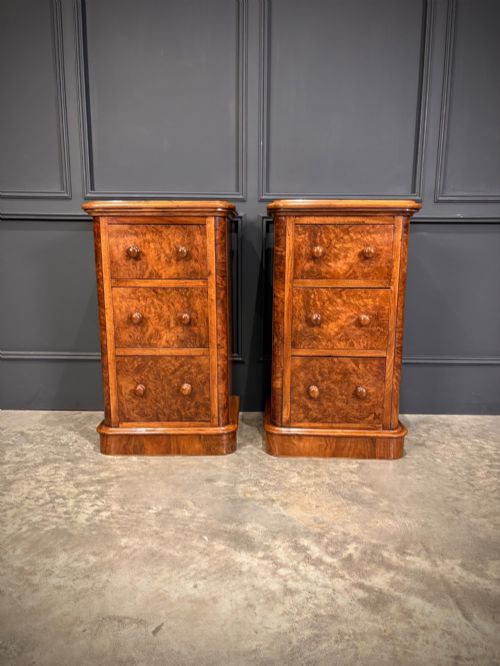
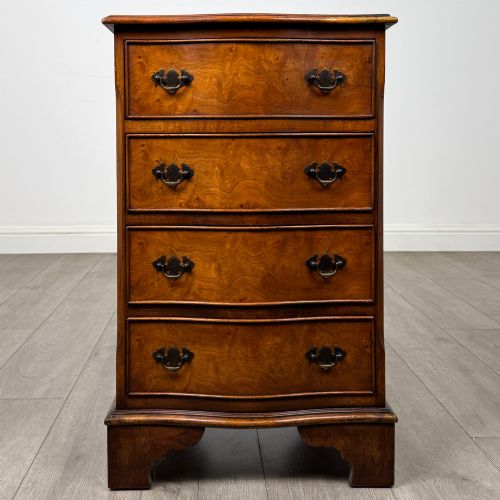
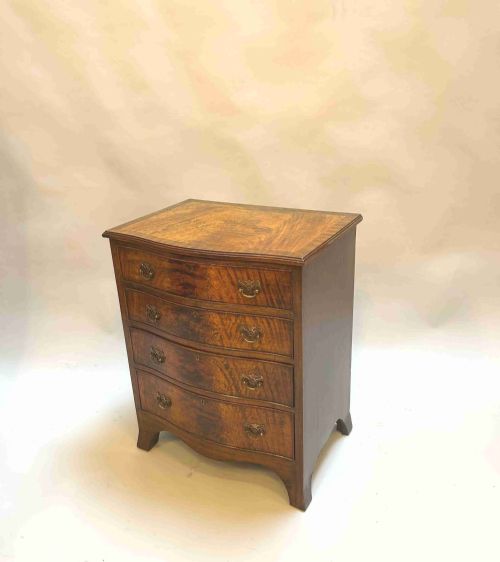
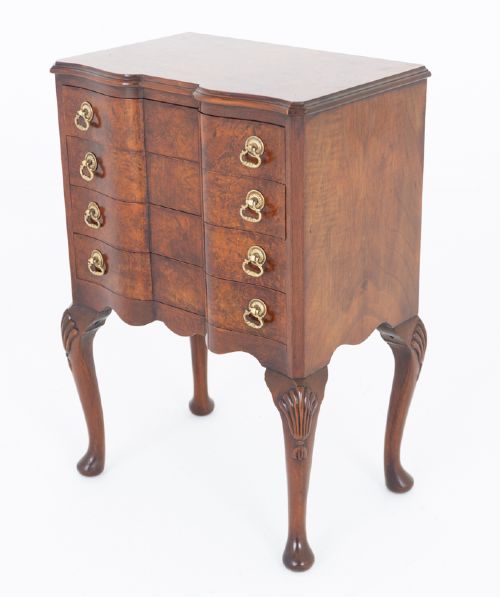
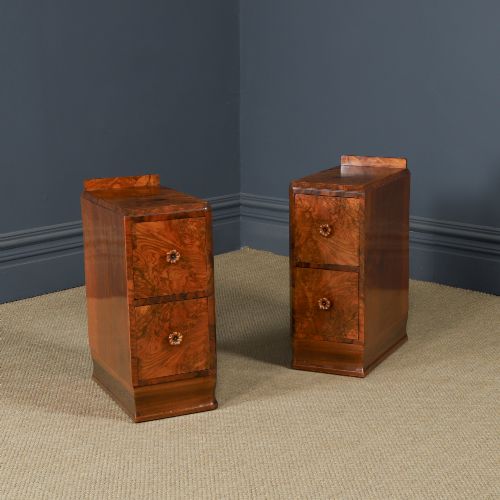
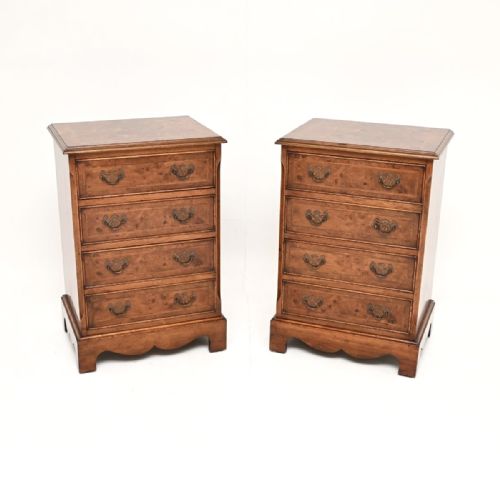
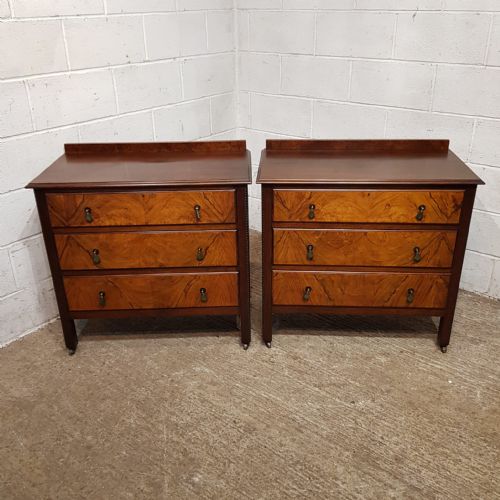
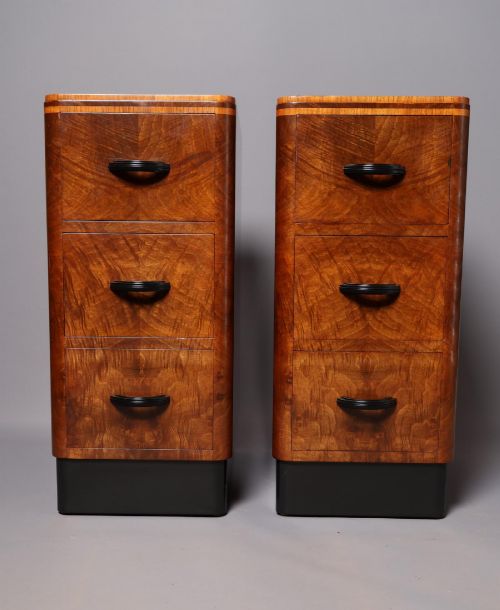
The version most frequently met on this page is the bedside chest of drawers, often found as matched pairs originating from the Victorian period or the 1920s and 1930s. Buyers also encounter serpentine, bow front, and shaped formats.
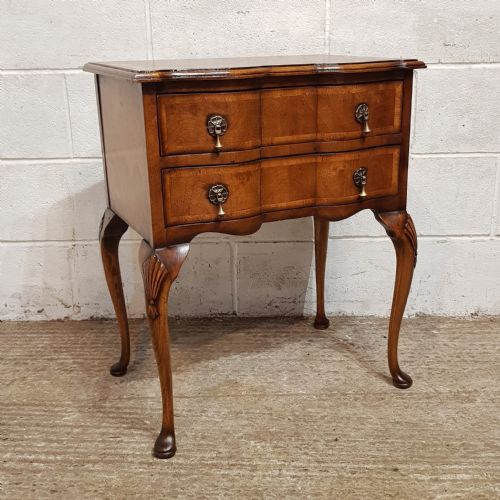
Makers utilised walnut timber for its decorative figuring, shaping cabinets with doors or stacking drawers to suit smaller spaces. The selection reflects diverse design movements, including Queen Anne style and Georgian revival.
Materials and construction
Cabinet makers applied burr walnut veneer over a solid timber base to showcase the intricate, swirling patterns of the wood growth. Inlaid details and painted wood elements occasionally complement the figured grain.
Hardware such as brass handles and metal fittings finish the drawers and doors on these cabinets. Individual pieces rest on dedicated legs or low bases designed to support the compact form.
Retail Price Guide 2026
Typical UK retail prices for burr walnut bedside chest, calculated from the Sellingantiques database of over a million retail prices indexed since 2003. This retail price guide relies exclusively on Sellingantiques data; no external sources or auction records are used, so the figures do not describe the wider market.
Materials recorded across the pieces include solid walnut, burr walnut veneer, brass, metal, and painted wood.
Distinctions in quality
The standard of a burr walnut bedside chest depends on the symmetry and richness of the veneer grain across the primary surfaces. Finer cabinets display continuous, book-matched figuring that wraps smoothly around the edges and drawers.
Construction precision separates standard production from exceptional work, visible in the tight alignment of drawer joints and the crisp execution of serpentine or bow front shapes. Matched pairs with consistent timber selection and original hardware command greater attention.
The Burr Walnut Bedside Chest Glossary
- Burr walnut
- A veneer sliced from the deformed growth or burl of a walnut tree, prized for its swirling, highly figured grain patterns. It provides a decorative surface on fine cabinet work.
- Serpentine
- A curved shape characterised by a convex centre flanked by concave ends, seen on select cabinet fronts. This contour requires precise woodworking skill to execute properly.
- Bow front
- A convexly curved front on a chest of drawers or cabinet that softens the rectangular profile of the furniture. This form appears across various 19th and 20th century pieces.
- Veneer
- A thin layer of choice wood applied over a secondary timber base to create decorative exterior surfaces. This technique allows cabinet makers to display striking grain figures efficiently.
Frequently Asked Questions
Are these chests usually found in pairs?
Many of these pieces survive as matched pairs, particularly from the Victorian period and the Art Deco era.
Single bedside cabinets and tables also appear frequently in the listings.
What periods do these pieces come from?
The selection spans the nineteenth and twentieth centuries, with dates ranging from Victorian origins through the 1920s and 1930s.
Revival styles referencing earlier eras like Queen Anne and Georgian design are also common.
How do I identify Art Deco examples?
Art Deco pieces from the 1920s and 1930s typically feature streamlined geometric shapes and clean, unadorned surfaces that highlight the burr walnut grain.
These designs depart from the more ornate curves of Victorian and revival furniture.
What is the difference between a cabinet and a chest?
Bedside cabinets generally feature a cupboard door enclosing interior shelf space for storage.
Chests of drawers consist of stacked horizontal drawers utilised for holding smaller items.