

Small Walnut Drawers
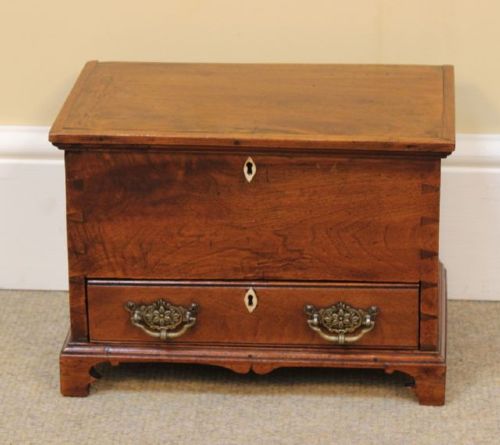
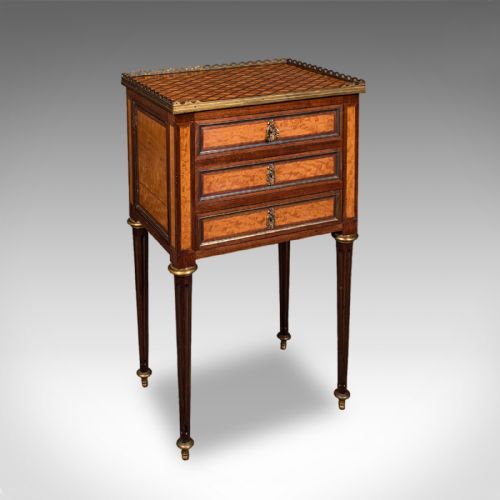
Small walnut drawers encompass compact chests, bedside cabinets, and miniature collector pieces spanning from the eighteenth century through the twentieth.
Small Walnut Drawers
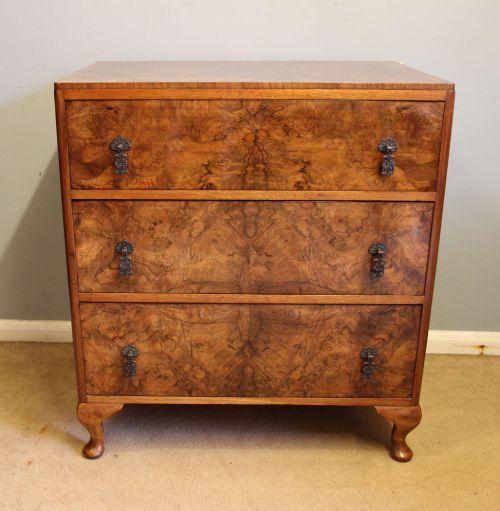
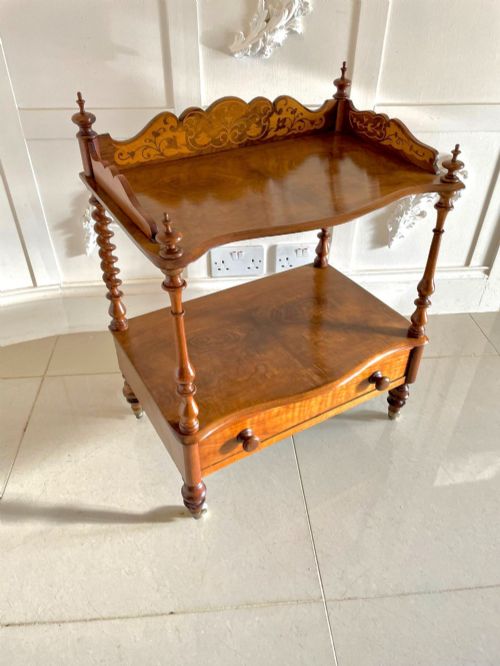
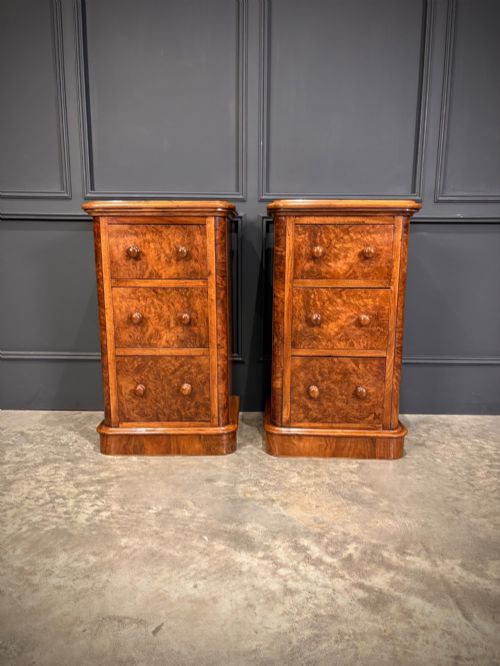
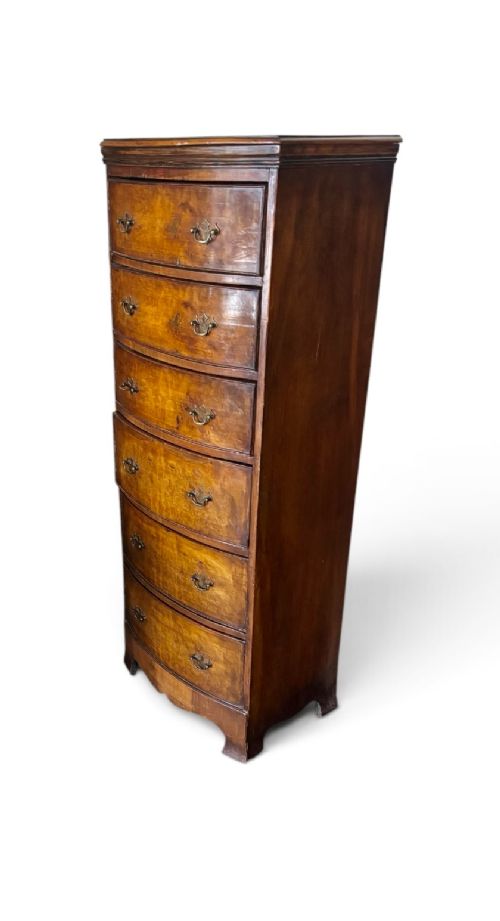
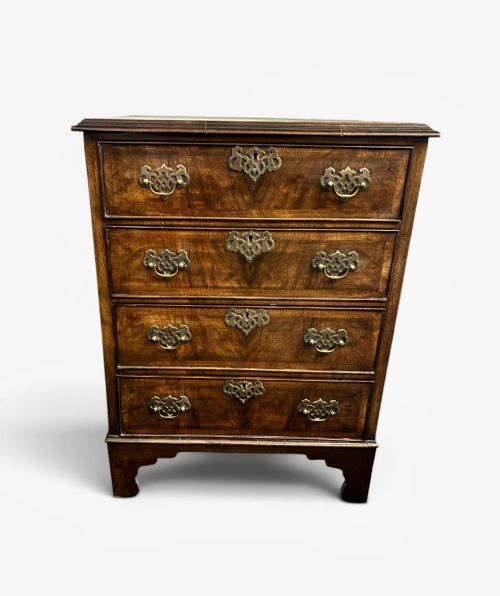
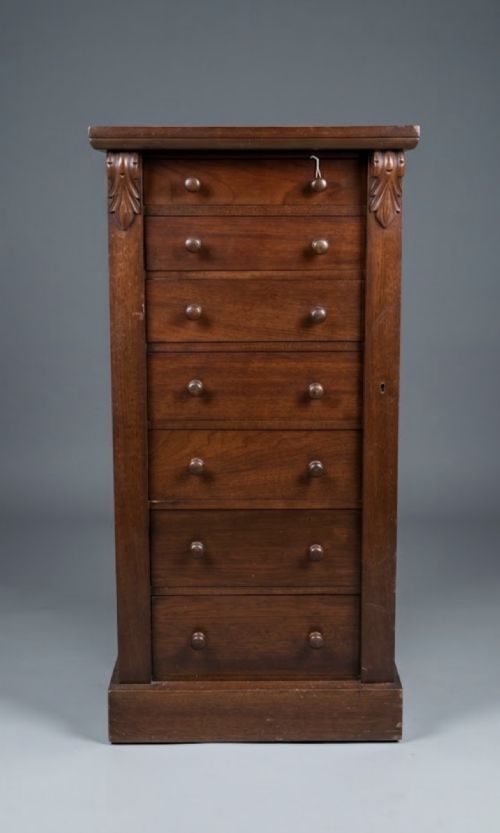
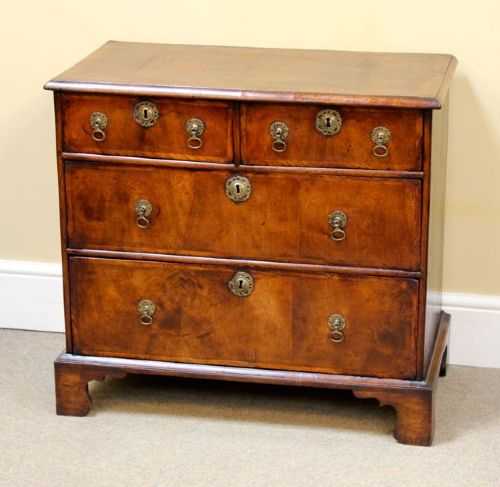
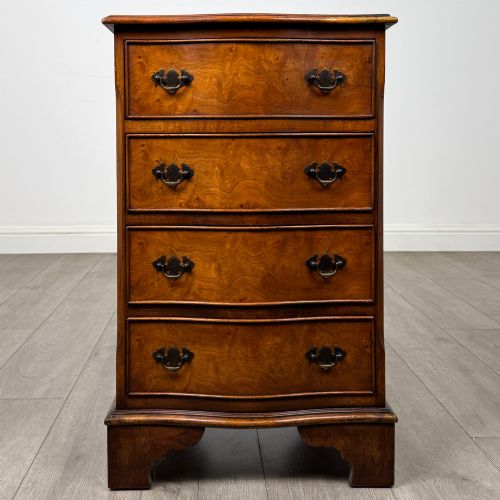
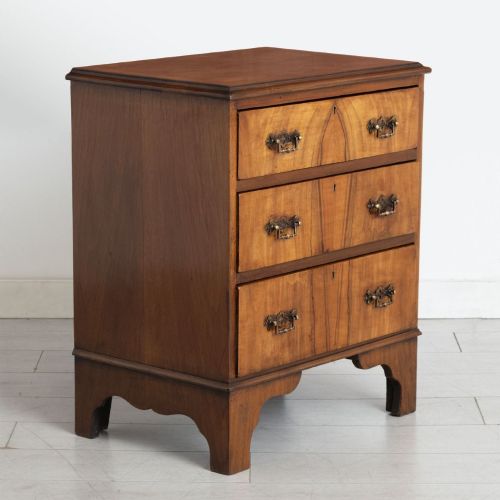
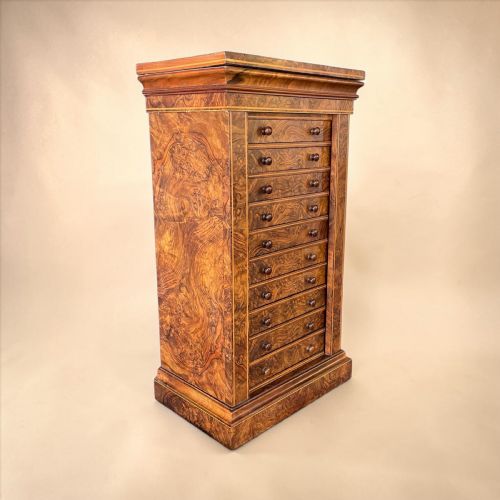
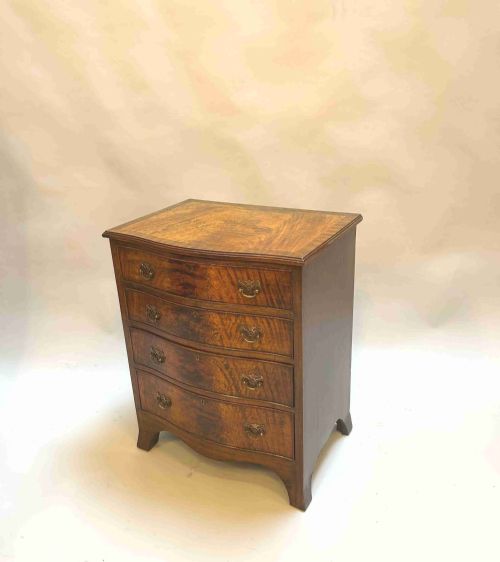
Small walnut drawers bridge multiple centuries of cabinet-making, encompassing compact bedroom chests, bedside tables, and miniature furniture designed for domestic storage. Buyers seeking small walnut drawers encounter various forms including serpentine fronts, tallboys, lowboys, and Wellington chests originating from Georgian, Victorian, Edwardian, and later revival periods.
The selection frequently includes bedside cabinets and small chests produced during the early twentieth century alongside eighteenth-century examples. Common formats range from four-height drawer units and bow fronts to diminutive apprentice pieces and collectors cabinets.
How they were made
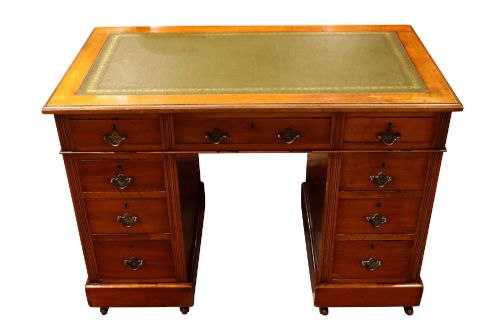
Makers utilised solid walnut and decorative veneers such as burr walnut and figured walnut applied to secondary timbers like oak and mahogany. Brass hardware, leather inserts, and crossbanding frequently accent the primary wood surfaces.
Construction techniques involve drawer boxes assembled with traditional joints, alongside curved serpentine and bombe shaping seen in specific regional and revival pieces.
Small Walnut Drawers Retail Price Guide 2026
Typical asking prices for small walnut drawers among the pieces listed under this phrase on Sellingantiques today, from the lower quarter to the upper quarter. They describe what is for sale here now, not the wider market.
Secret drawers tucked inside small writing slopes offered Victorian owners a private spot for confidential notes.
What varies in quality
Grain selection dictates visual appeal, with richly patterned burr walnut veneer demanding high skill to match symmetrically across drawer fronts and top surfaces. Plain walnut timber relies on deep natural colour and tidy proportions.
Joinery execution separates standard workshop output from superior items. Smooth drawer runners, tight mitres, and intact brass fittings reflect the original cabinet-maker's standard.
The Small Walnut Drawers Glossary
- Burr walnut
- A figured wood grain derived from tree growths, producing intricate circular patterns highly prized by cabinet-makers. This veneer is typically applied to drawer fronts and top panels.
- Lowboy
- A small side table featuring one or more rows of drawers, standing on relatively tall legs. Eighteenth-century examples often display cabriole legs.
- Wellington chest
- A tall, narrow chest of drawers secured by a hinged locking side pilaster bar. The design originated in the nineteenth century for efficient paper storage.
- Serpentine
- A curved furniture front featuring a convex centre flanked by concave ends. This contour requires advanced woodworking skill to execute properly.
- Crossbanding
- A narrow strip of veneer laid perpendicularly to the surrounding grain along the border of a panel. This technique frames drawer faces and table tops.
Small Walnut Drawers: Frequently Asked Questions
How do I date a walnut chest?
Dating relies on construction methods, handle hardware styles, and underlying secondary timbers like oak or pine. Eighteenth-century pieces display different drawer linings and dovetails compared to Edwardian or 1920s revivals.
Cabinet proportions and veneer thickness also shift across periods, moving from solid native timber constructions towards intricate burr veneers applied over firmer core woods.
What is a miniature chest?
Miniature chests are small-scale case pieces created either as apprentice demonstration items or as specialised tabletop storage. They replicate full-size furniture with working drawers and precise joinery.
These compact items served decorative or functional roles in historical interiors, housing small valuables or personal documents.
Are bedside chests antique?
Bedside chests span multiple eras, with Victorian and Edwardian examples common alongside 1920s revival pieces. Many nineteenth-century bedside cabinets were adapted or specifically built as pairs for bedrooms.
Twentieth-century iterations often emulate earlier Queen Anne or Georgian styles while functioning as modern nightstands.
How do I care for walnut furniture?
Walnut surfaces require stable indoor humidity away from direct sunlight and heat sources to prevent veneer lifting. Regular dusting with a dry cloth maintains the finish without chemical buildup.
Occasional application of appropriate wax preserves the sheen of antique timber and protects the grain from drying out.