
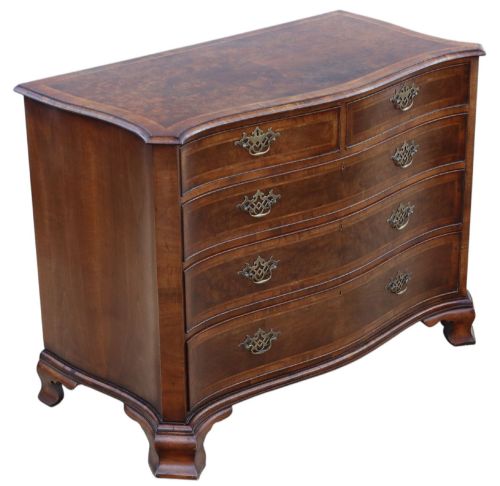
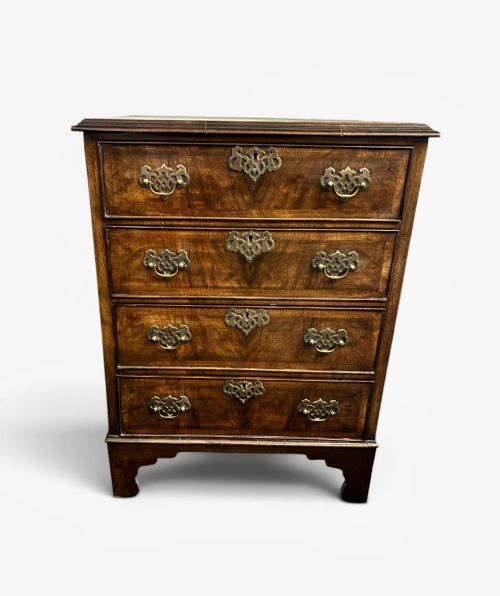
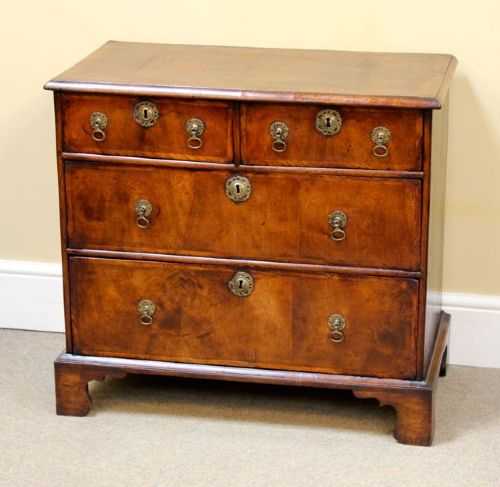
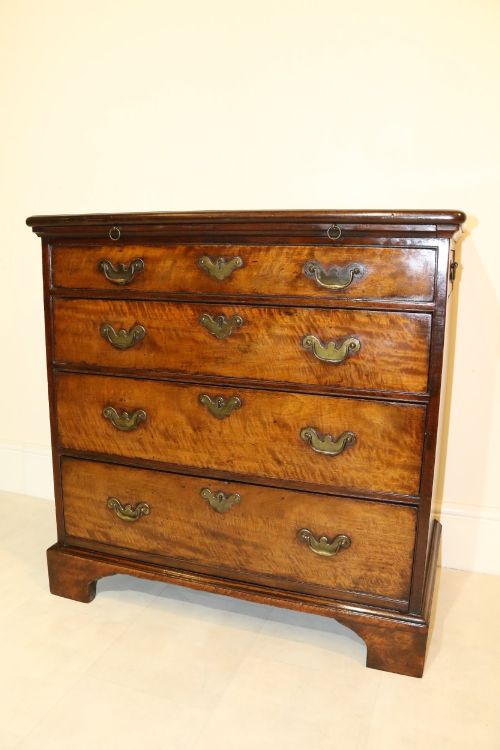
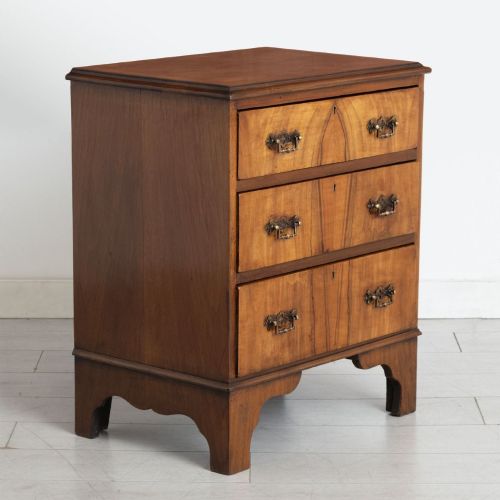
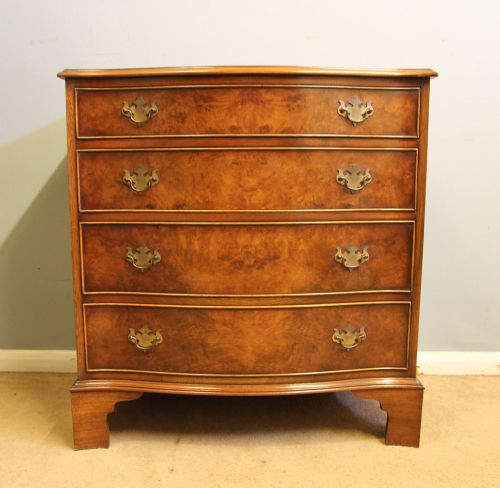
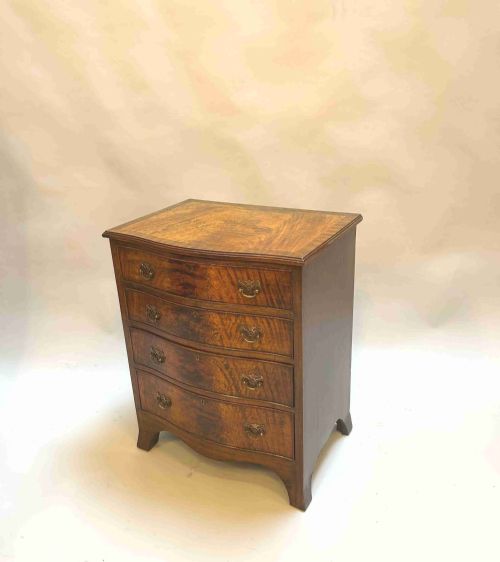
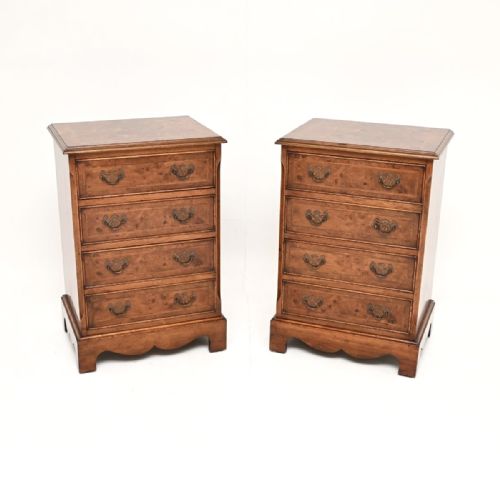


Walnut Bachelors Chest
A walnut bachelors chest combines compact domestic utility with rich timber grain, serving as a versatile writing surface and drawer unit.
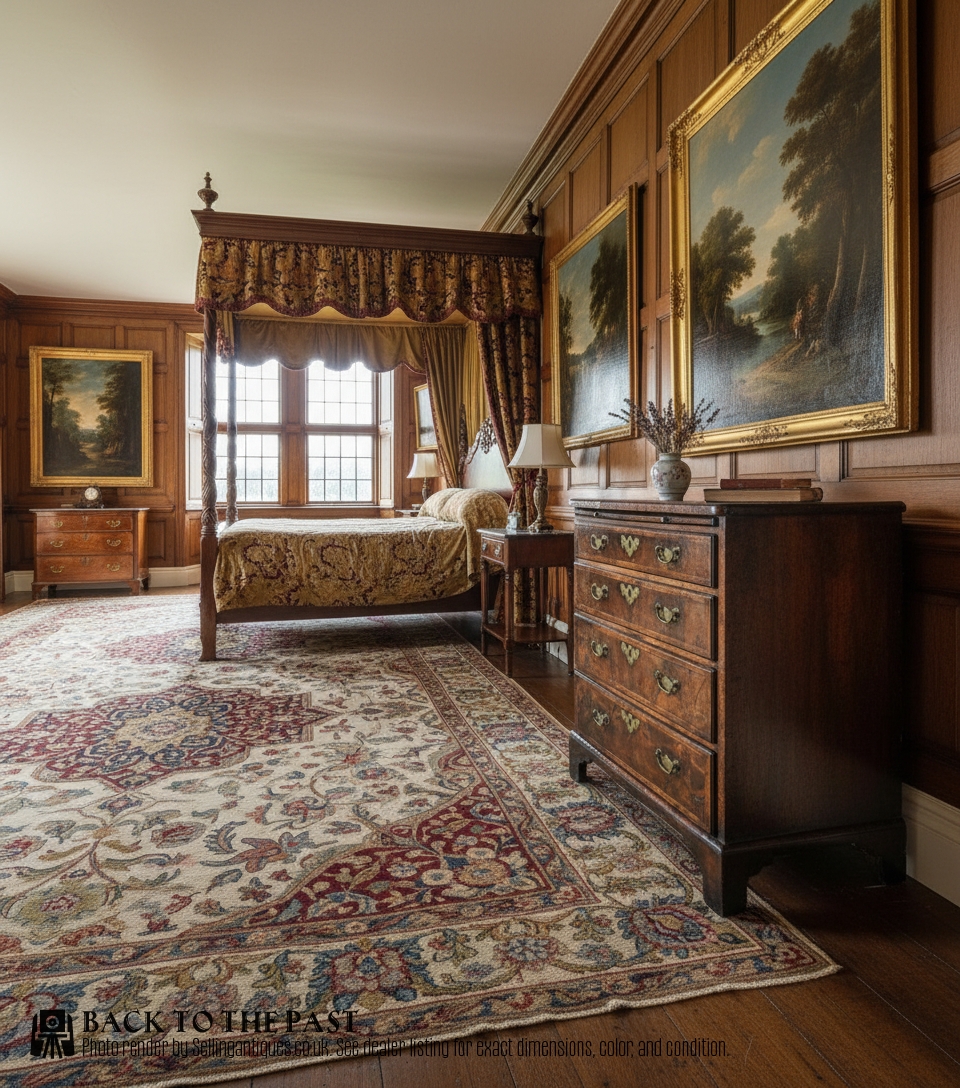
Walnut Bachelors Chest
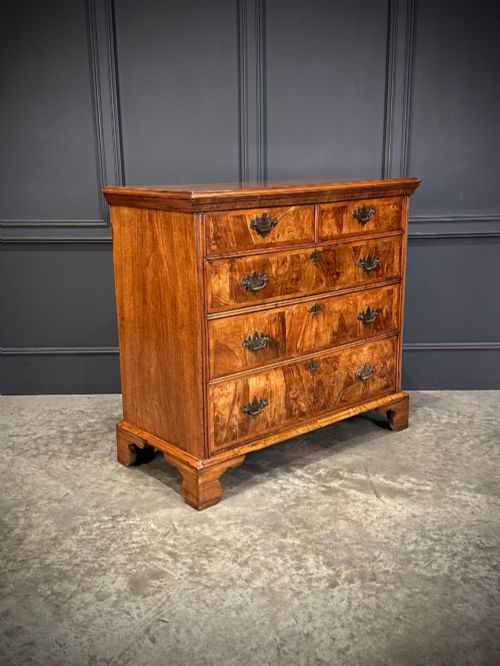
When you search for a walnut bachelors chest, you encounter compact case furniture designed primarily for smaller rooms and private chambers. The form bridges the gap between a conventional chest of drawers and a writing desk, frequently incorporating a folding top or sliding panel.
The versions most common on this page span from the eighteenth century up through later revival periods including Edwardian and 1920s interpretations. These pieces often appear in modest proportions, making them adaptable as bedside tables, side units, or occasional desks.
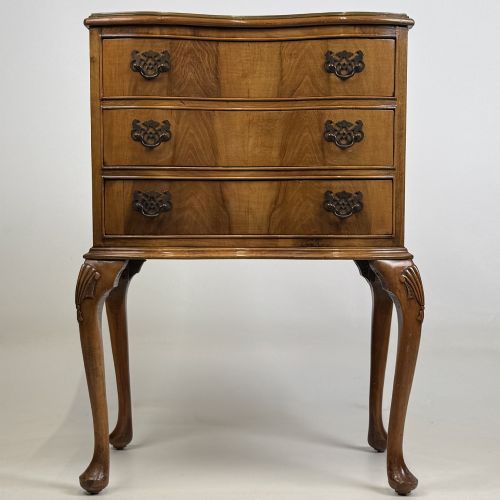
The inventory covers original Georgian examples alongside later George I, George II, and George III styles, as well as Queen Anne revivals. Alongside traditional chests, related forms such as kneehole desks and serpentine commodes populate the selection.
Materials and construction methods
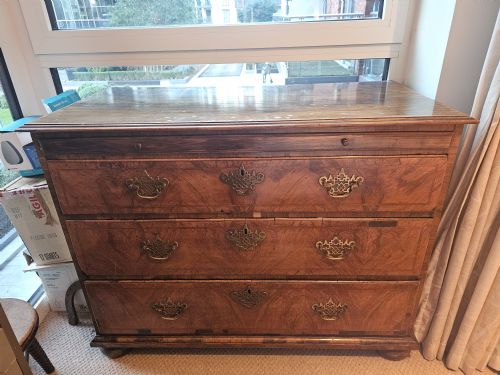
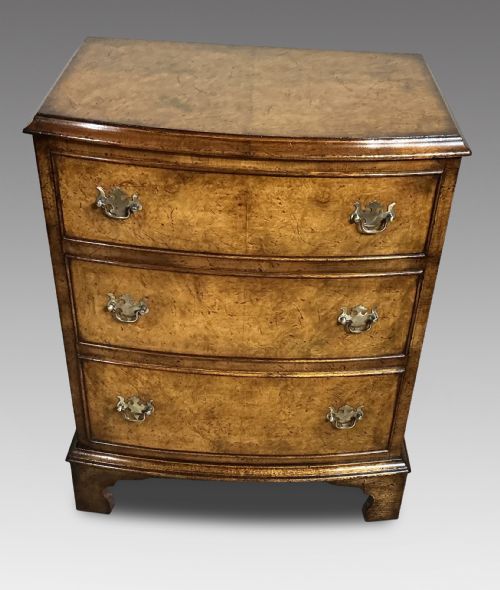
Cabinet makers utilised solid walnut, fruitwood, and oak as structural timbers, applying burr walnut veneer to visible surfaces to create striking figured patterns. Crossbanding and matched grain layouts enhance the decorative impact of the drawer fronts and top panels.
Hardware consists principally of brass handles and escutcheons, whilst secondary timbers such as oak provide stability for drawer linings and internal framing. Nineteenth and twentieth-century makers continued these traditions while occasionally introducing brass binding for military-style lockers.
Listings span the 18th century, the Victorian era, Edwardian times, and the 1920s and 1930s, constructed from walnut, burr walnut veneer, oak, fruitwood, brass, and leather.
Distinctions in quality
Quality rests upon the selection of the timber veneers and the precision of the cabinet work. Matched burr walnut figures and subtle crossbanding separate high-status commissions from plain utility pieces.
The preservation of original surface patination and untouched timber finishes dictates the standing of an antique chest. Pieces retaining their early brass hardware and smooth-sliding drawers command greater attention from discerning collectors.
The Walnut Bachelors Chest Glossary
- Bachelors chest
- A compact chest of drawers featuring a fold-over top or sliding writing panel. This form serves multiple domestic functions within a limited footprint.
- Burr walnut
- A prized timber harvested from walnut tree growths, yielding intricate swirling grain patterns. Cabinet makers slice this wood into thin veneers for decorative surfaces.
- Crossbanding
- A border technique where thin strips of veneer are laid perpendicular to the primary grain. This frames drawer fronts and top panels with contrasting timber direction.
- Serpentine
- A curved front profile undulating inward and outward in a gentle wave. This shaping demands advanced woodworking skill to execute cleanly on drawer fronts.
Walnut Bachelors Chest: Frequently Asked Questions
What is a walnut bachelors chest used for?
These pieces function as compact drawer units and writing desks combined. The folding top or sliding panel provides a temporary surface for correspondence or reading.
Historically placed in private bedchambers, they hold personal items while occupying minimal floor space compared to larger bureau desks.
How do I date a walnut chest?
Dating relies upon examining construction methods, timber choice, and hardware styles. Eighteenth-century examples display hand-cut dovetails and native woods, while revival pieces from the Edwardian era or 1920s show later manufacturing techniques.
Drawer linings, secondary timbers, and lock mechanisms offer further clues to the period of manufacture.
Are all these chests eighteenth century?
The inventory includes both eighteenth-century originals and later revival pieces from the Edwardian period and the 1920s and 1930s. Georgian styles were frequently reproduced during the early twentieth century.
Examining the internal structure and timber ageing helps distinguish period pieces from later stylistic revivals.
How do I care for walnut furniture?
Walnut furniture requires placement away from direct sunlight and heat sources to prevent timber shrinkage and veneer cracking. Maintaining stable indoor humidity protects the fragile burr surfaces.
Gentle dusting with a dry cloth preserves the original patina without stripping the historic finish.