




Brushing Slide Chest
A brushing slide chest is a versatile bedroom or dressing piece offering a concealed pull-out surface alongside traditional drawer storage.

Brushing Slide Chest Forms and Origins
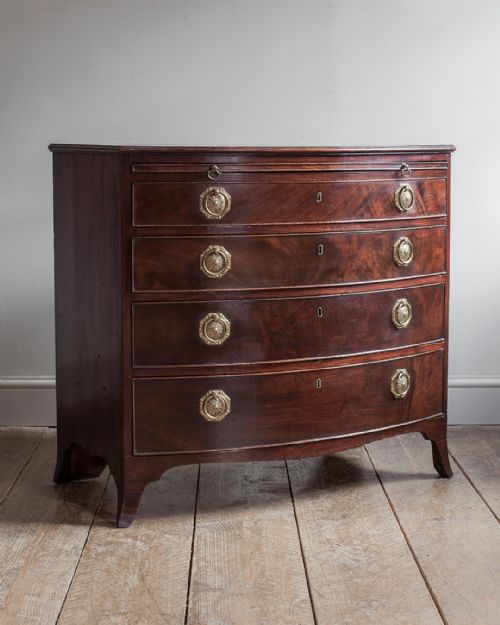
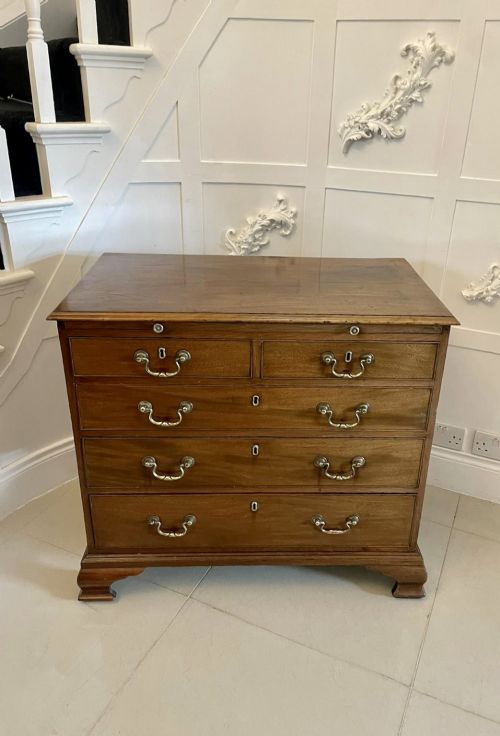
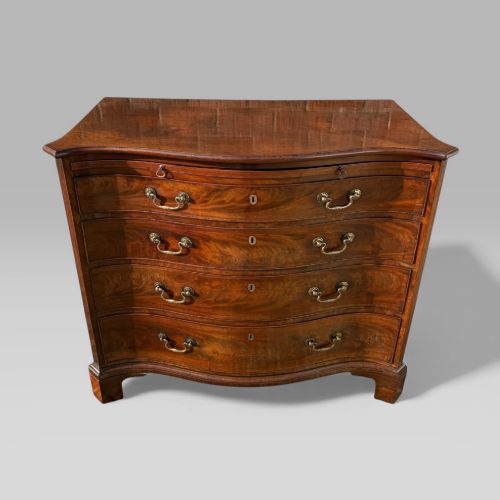
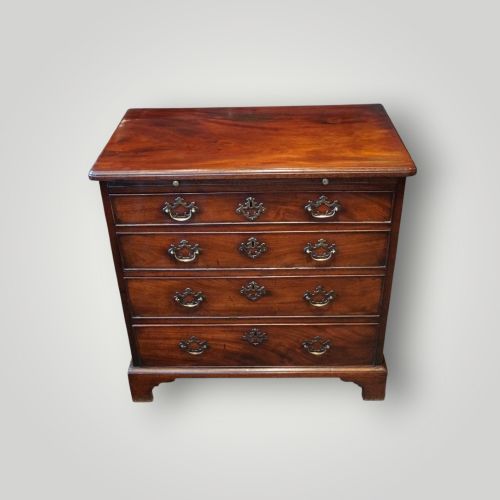
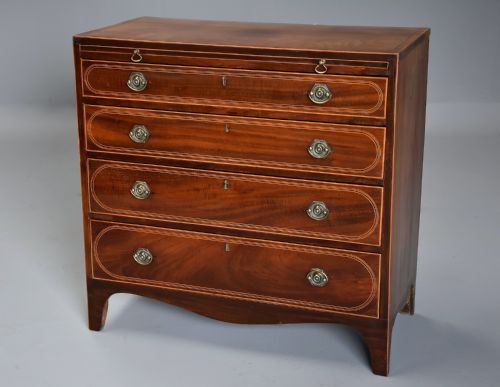
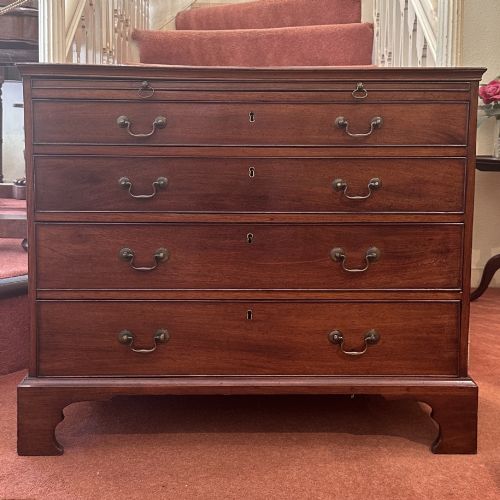
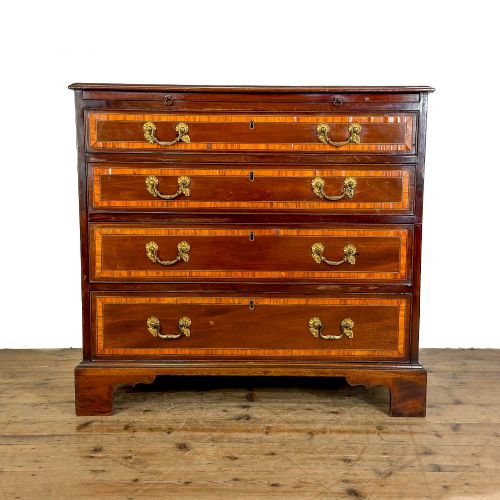
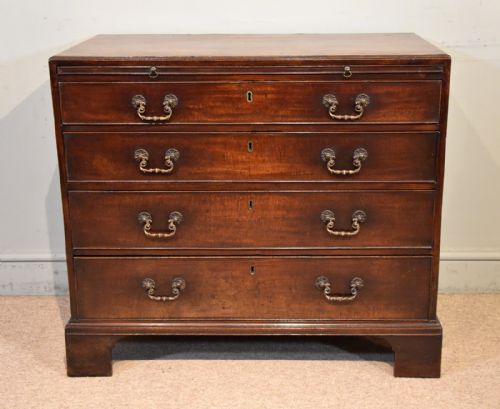
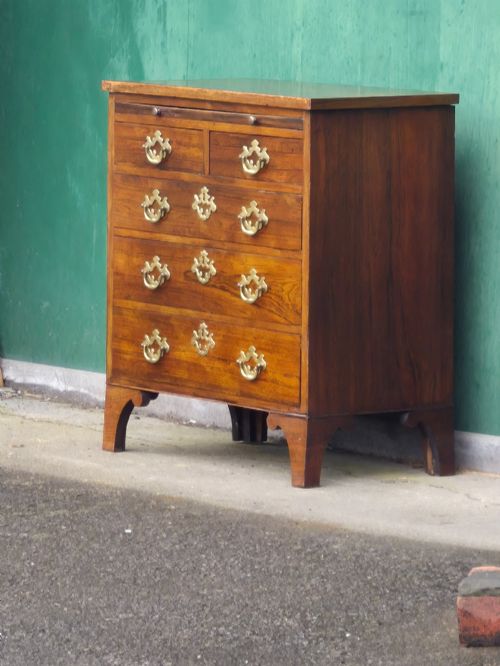
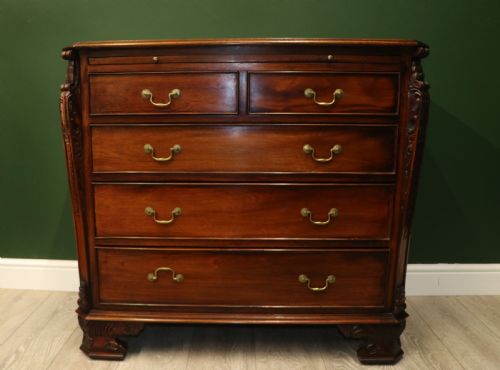
A brushing slide chest combines standard drawer storage with a pull-out wooden shelf positioned just beneath the top surface. Historically termed a bachellor's chest, this form serves multiple dressing or writing functions without dominating a room.
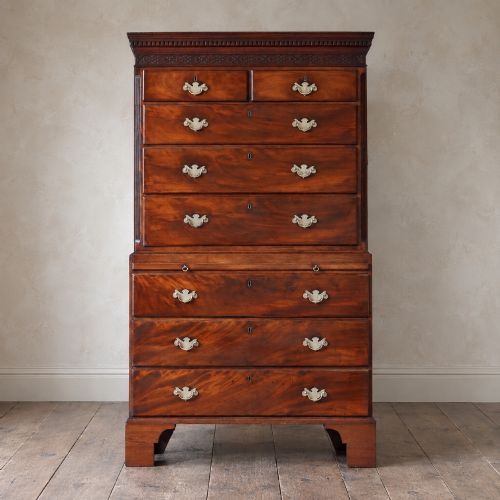
The majority of pieces encountered on this page belong to the George III and broader Georgian periods, predominantly constructed in mahogany. Formats range from standard straight-front chests of four or five drawers to compact bow-front and serpentine proportions.
Variants extend from the eighteenth century into the nineteenth and early twentieth centuries, including walnut chests on chests, tallboys, and occasional painted or inlaid examples. The sliding shelf itself slides neatly into the frieze when not in use, maintaining clean architectural lines.
Evaluating Proportion and Finish
Proportion and scale dictate the desirability of these pieces, with smaller, neat dimensions commanding greater attention from collectors. The crispness of the serpentine or bow-front shaping and the retention of original brass handles influence visual balance.
Surface finish and timber figure separate standard examples from finer works, where aged patina and rich grain depth emerge through traditional polishing methods. The tight fit and smooth travel of the brushing slide indicate careful initial carpentry.
Retail Price Guide 2026
Typical UK retail prices for brushing slide chest, calculated from the Sellingantiques database of over a million retail prices indexed since 2003. This retail price guide relies exclusively on Sellingantiques data; no external sources or auction records are used, so the figures do not describe the wider market.
Listings feature mahogany and walnut timbers across George III, Georgian, and early twentieth-century periods.
The Brushing Slide Chest Glossary
- Brushing slide
- A pull-out wooden shelf integrated into the upper section of a chest, historically used for brushing clothes or light writing.
- Serpentine front
- A convex central section flanked by two concave curves, creating a fluid, undulating facade on chests of drawers.
- Bow front
- A convex curved front that projects outward in a smooth arc, frequently seen on later Georgian and Regency examples.
- Chest on chest
- A tall case furniture piece featuring a smaller upper chest stacked directly upon a larger lower chest, sometimes called a tallboy.
- Dovetail joint
- An interlocking woodworking joint formed of interlocking wedge-shaped fingers, prized for its tensile strength in drawer construction.
Frequently Asked Questions
What was a brushing slide used for?
The slide served as a temporary horizontal surface for dusting garments, grooming, or writing letters in bedrooms lacking large dressing tables.
When pushed flush into the frame, the slide disappears completely beneath the top moulding.
How do I identify a George III chest?
George III pieces typically display dense mahogany timbers, hand-cut dovetails, and restrained proportions characteristic of late eighteenth-century design.
Look for original bracket feet or splayed feet alongside traditional brass swan-neck handles.
Are these chests suitable for modern bedrooms?
Their compact footprints and functional drawer layouts make them practical for storing folded clothing while occupying minimal floor space.
The pull-out slide provides a convenient surface for placing small daily items.
What is the difference between a bachelor chest and a standard chest?
A bachelor chest specifically incorporates the pull-out slide feature combined with well-proportioned drawer configurations.
Standard chests of drawers omit this sliding shelf entirely, focusing solely on stacked drawer storage.