
Tallboy Chest of Drawers
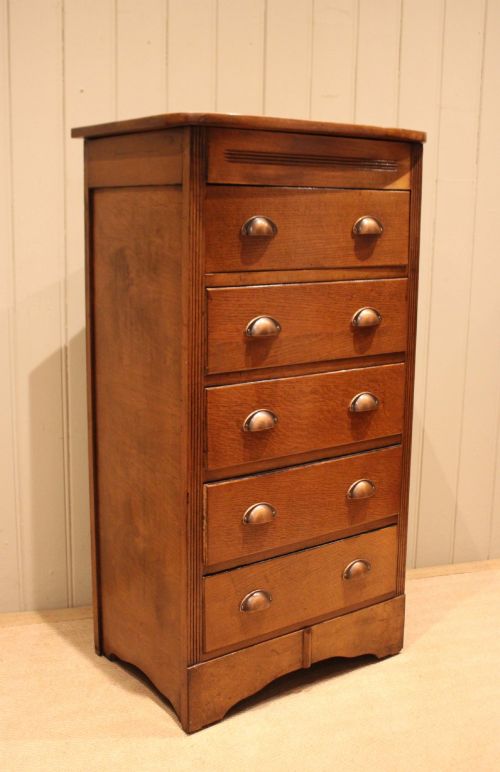
A tallboy chest of drawers delivers vertical storage with architectural presence, combining a compact footprint with substantial capacity for the bedroom.
Forms and Origins
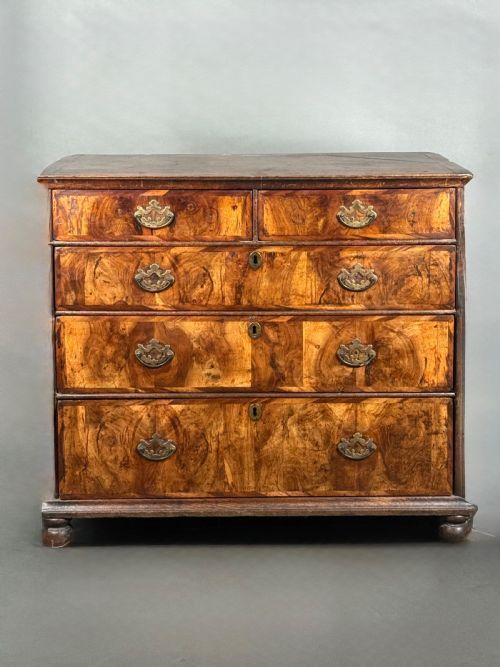
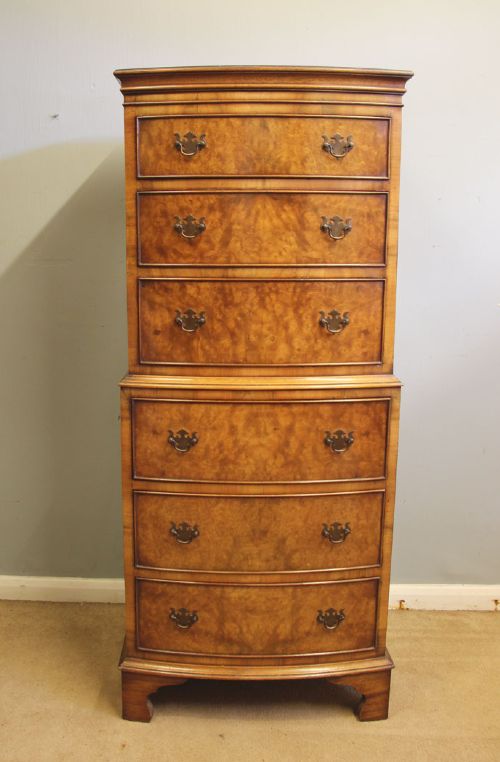
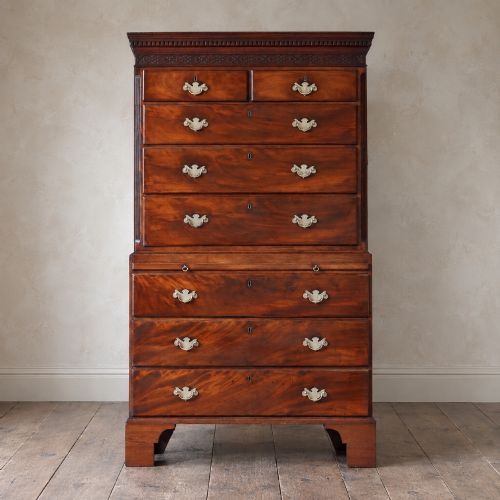
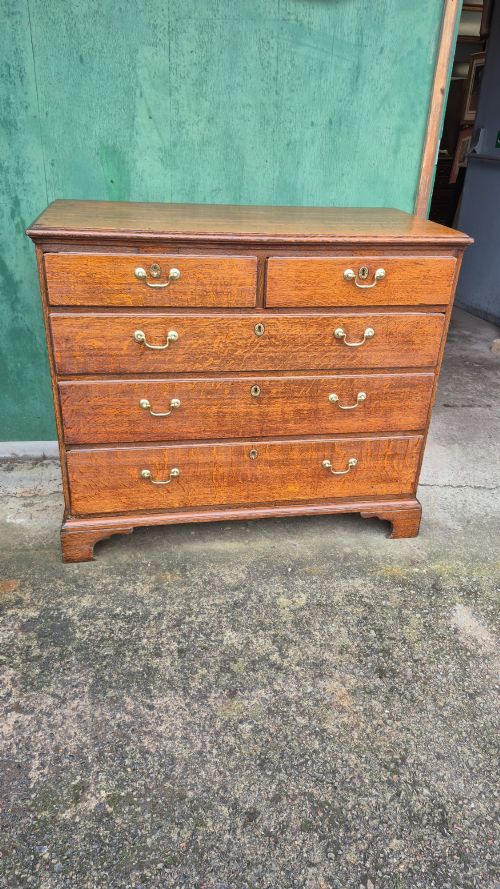
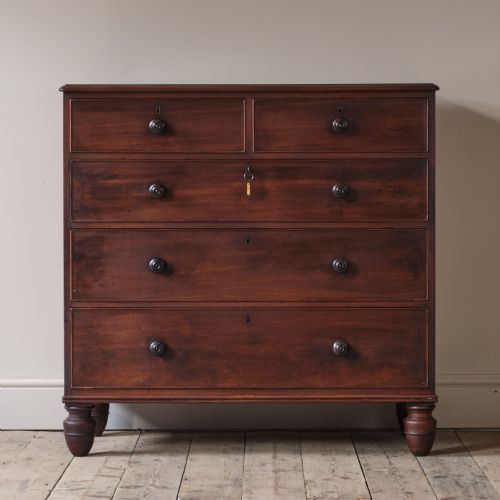
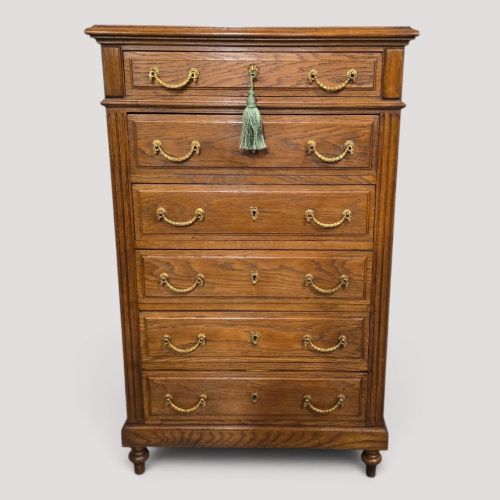
A tallboy chest of drawers stands as a commanding vertical storage piece, frequently encountered as a two-part chest on chest or a single tall carcass. The pieces appearing here span from the eighteenth century through the nineteenth century, including Georgian and Regency periods alongside later walnut and mahogany iterations. Provincial examples in oak sit alongside sophisticated urban pieces in figured timbers.
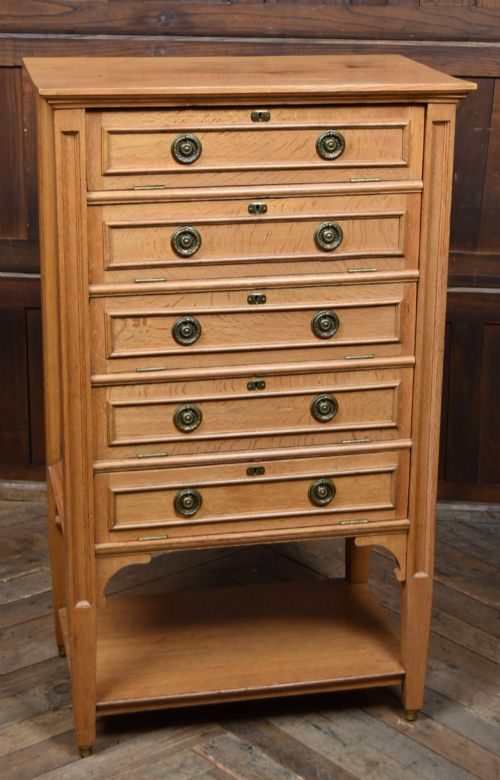
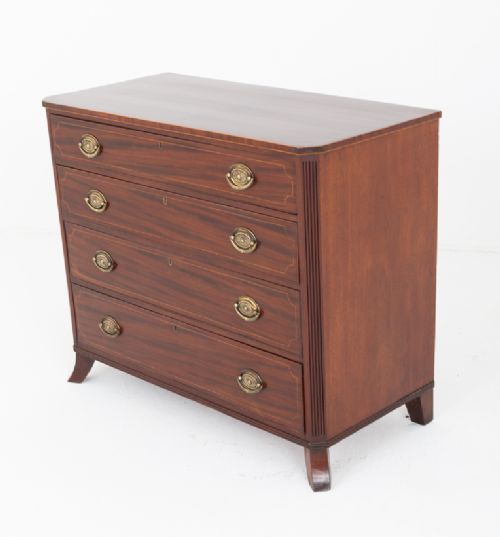
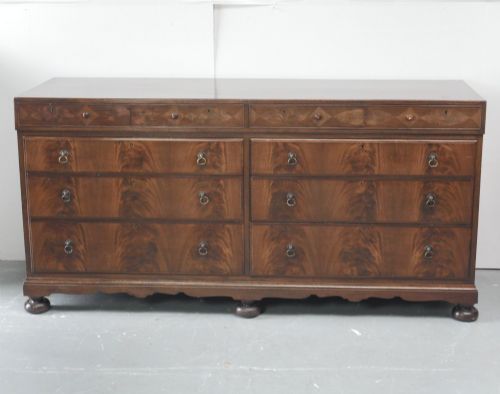
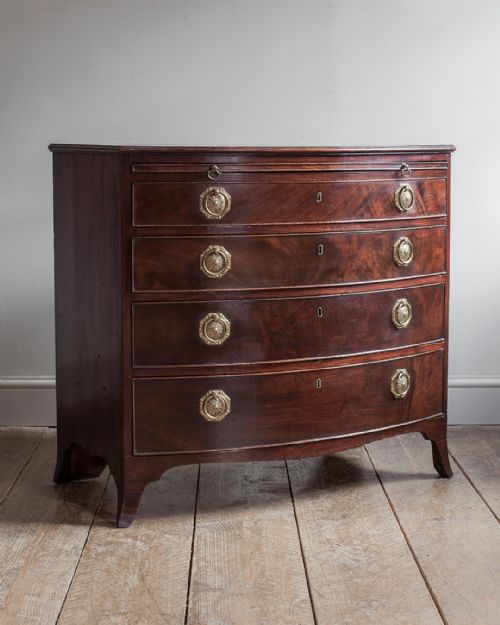
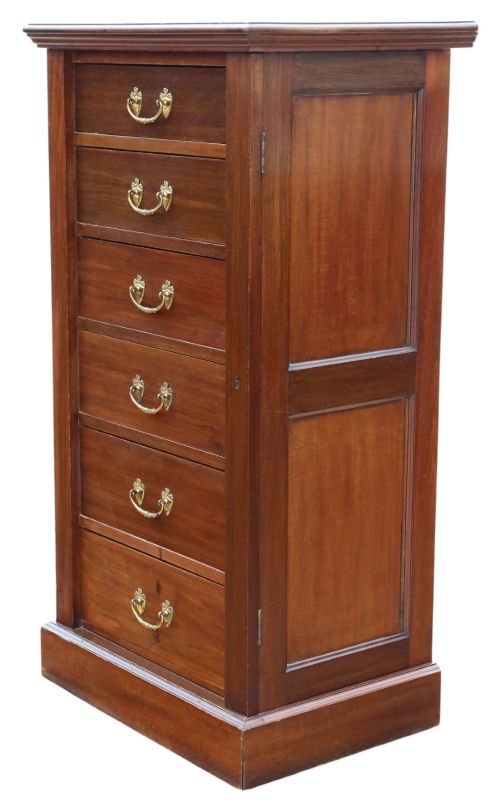
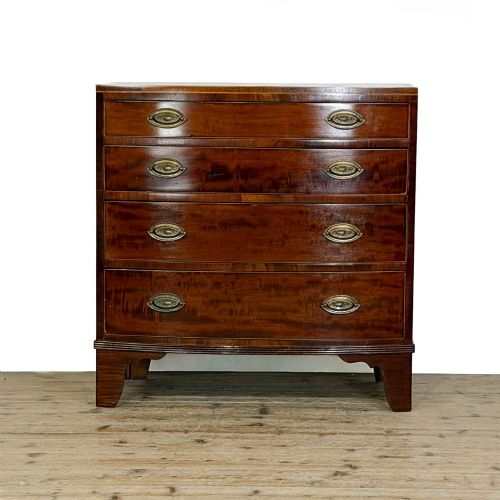
The dominant format across these listings is the traditional mahogany or walnut chest on chest, combining a lower set of wide drawers with a shallower upper section. Buyers also encounter bow-fronted variants and specialised compartments designed for linen or gentleman's garments. Oak and mahogany serve as the primary structural timbers, shaped by cabinet makers across British and continental workshops.
Distinctions in Execution
Quality separates through the choice of timber veneer and the precision of its application, particularly where burr walnut or marquetry creates complex visual patterns. Superior pieces display harmonious grain matching across multiple drawer fronts and intact, original brass hardware that befits the period.
The integrity of the structural joinery, especially the dovetailing on drawer carcasses and the alignment of the upper and lower sections on chest-on-chest forms, dictates the tier of craftsmanship. Finer examples maintain crisp mouldings, smooth drawer action, and surfaces carrying a rich, untouched patina.
Retail Price Guide 2026
Typical UK retail prices for tallboy chest of drawers, calculated from the Sellingantiques database of over a million retail prices indexed since 2003. This retail price guide relies exclusively on Sellingantiques data; no external sources or auction records are used, so the figures do not describe the wider market.
Some gentleman's tallboys hide slide-out leather writing surfaces behind their central drawers for clandestine correspondence.
Heals
The Tallboy Chest of Drawers Glossary
- Tallboy
- A tall storage furniture piece typically formed by stacking one chest of drawers upon another, maximising vertical capacity without expanding the floor footprint.
- Chest on chest
- An alternative descriptor for a tallboy where a wider lower chest supports a slightly narrower upper chest, creating a distinct stepped profile.
- Burr walnut
- A prized timber veneer sourced from tree growths, producing swirling, highly decorative grain patterns frequently utilised on high-status eighteenth-century and Art Deco cabinets.
- Marquetry
- The art of applying pieces of veneer to a structure to form decorative patterns, seen on Dutch and English case furniture.
- Escutcheon
- A protective brass plate surrounding a keyhole, adding both functional reinforcement and decorative contrast to drawer faces.
- Dovetail
- A traditional interlocking joint used in drawer construction, prized for its tensile strength and resistance to being pulled apart.
Frequently Asked Questions
Where should a tallboy be placed?
A tallboy suits bedrooms or dressing rooms where floor space is limited but vertical capacity is required. Its height allows it to anchor an empty wall without dominating the room's circulation.
Ensure adequate clearance for doors or drawers to open fully, particularly if the piece incorporates a writing slide or cabinet doors.
How do I care for walnut veneer?
Walnut surfaces respond best to occasional polishing with quality beeswax to nourish the timber and maintain its natural lustre. Avoid placing the piece in direct sunlight or near heat sources to prevent the veneer from drying and lifting.
Dust regularly with a soft, dry cloth rather than using silicone-based sprays that build up over time.
What is a chest on chest?
A chest on chest is a specific two-part tallboy configuration where a smaller chest rests securely upon a larger base chest. This design allowed large wardrobes to be transported up narrow staircases during the eighteenth century.
The division between the upper and lower sections remains a defining characteristic of the form.
How do I distinguish eighteenth-century pieces?
Eighteenth-century examples often reveal hand-cut dovetails, oak secondary linings, and timber with a deep, warm patina developed over centuries of handling. Closer inspection of the backboards and drawer sides reveals the distinct tool marks of period woodworking.
Proportions tend to be slender, with subtle cock-beading around drawer edges and original brassware fittings.