
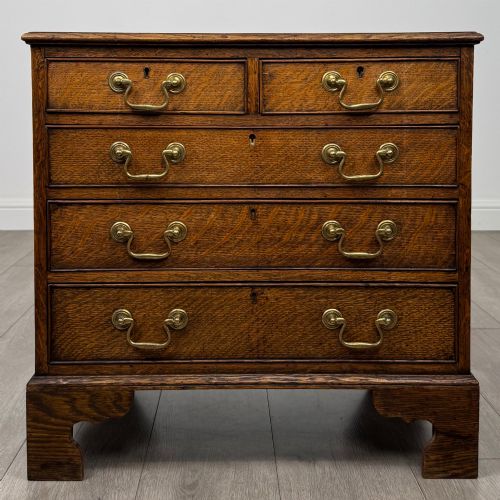
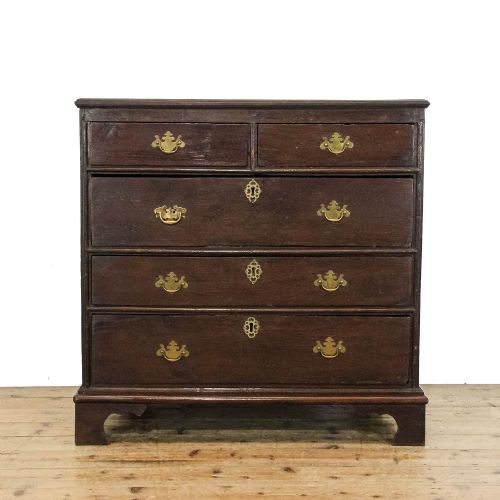
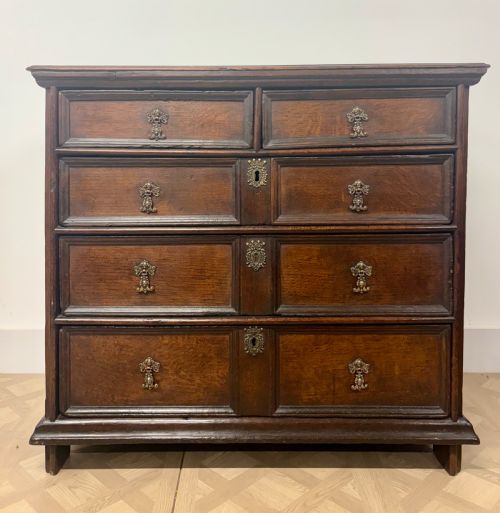
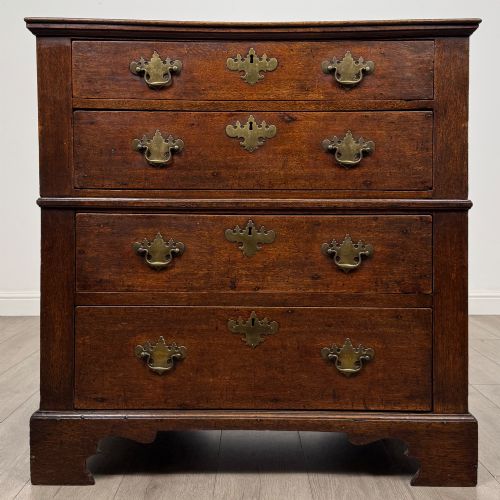
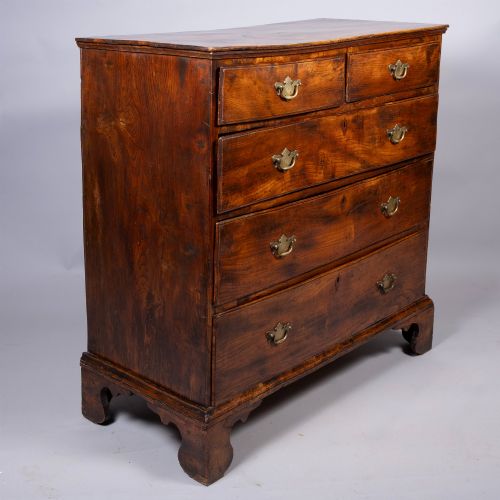
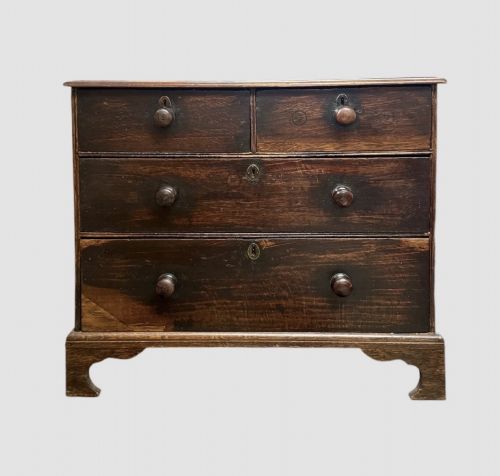
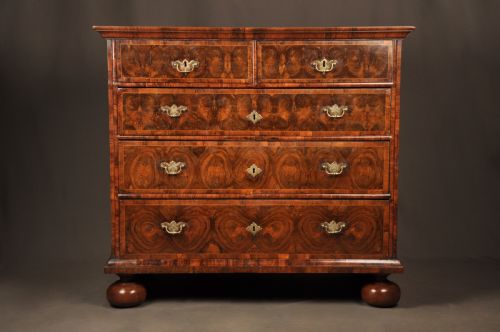


English Oak Tallboy
An english oak tallboy brings sturdy architectural presence and generous vertical storage into a room.
English Oak Tallboy
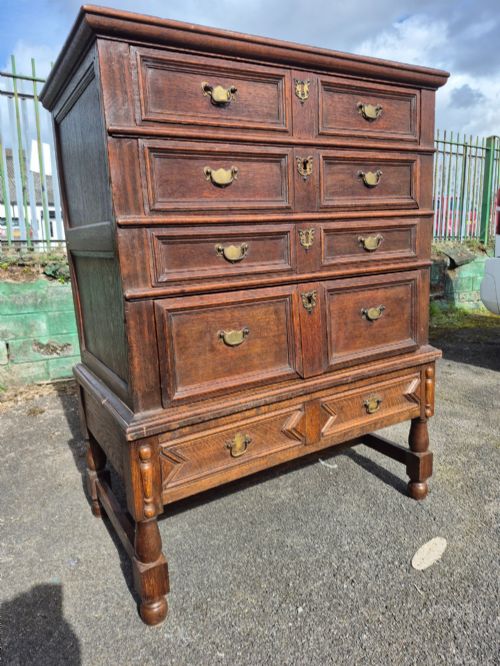
An english oak tallboy is a stacked form of furniture, typically combining a chest on chest or a chest on stand to maximise storage capacity without demanding excessive floor space. These pieces serve as practical storage units while introducing deep timber grain and historical character to an interior.
Most examples encountered here date from the eighteenth and nineteenth centuries, spanning Georgian and Victorian periods, alongside earlier seventeenth-century manifestations. The listings feature substantial proportions, often arranged in multiple graduated drawers.
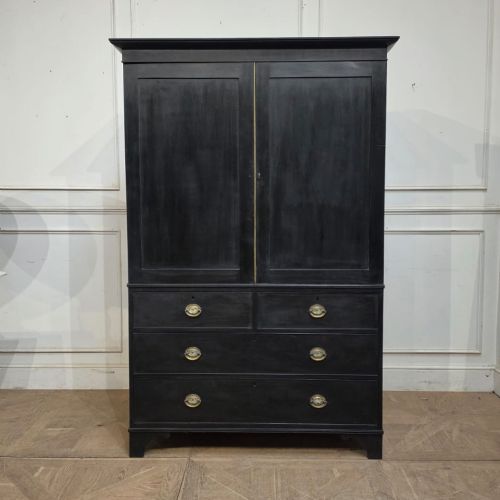
Alongside standard tallboys, the selection includes related forms such as linen presses, chests on stands, and chests of drawers sharing the same primary material. Buyers encounter both provincial country pieces and more refined urban examples.
How they were made
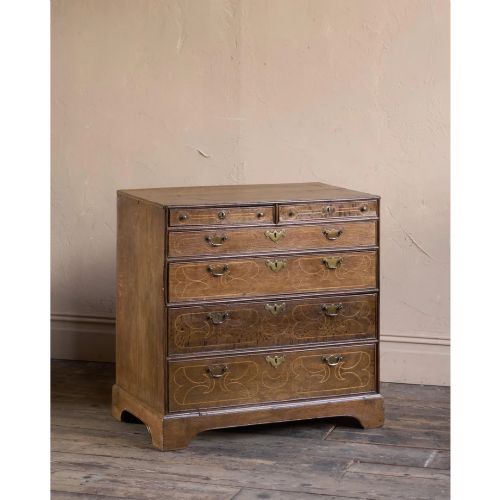
Construction relies primarily on solid oak, frequently paired with secondary timbers like mahogany, walnut, fruitwood, or elm for drawer linings and decorative inlays. Cabinetmakers utilised frame and panel construction to accommodate the natural movement of timber over centuries.
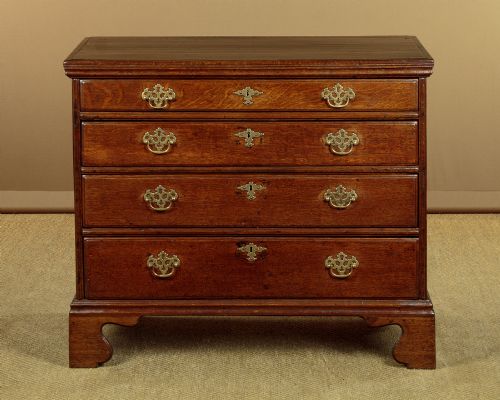
Surface ornamentation ranges from plain moulded panels to decorative cross-banding, ebonised details, and olive oyster veneers. Hardware typically consists of brass drop handles and escutcheons fixed to hand-dovetailed drawer boxes.
English Oak Tallboy Retail Price Guide 2026
Typical asking prices for english oak tallboy among the pieces listed under this phrase on Sellingantiques today, from the lower quarter to the upper quarter. They describe what is for sale here now, not the wider market.
The listings span from the seventeenth century through the georgian and victorian eras, predominantly utilising solid oak alongside walnut, mahogany, and fruitwood.
What varies in quality
Quality rests in the crispness of the mouldings, the selection of figured timber, and the integrity of the original construction. Superior pieces maintain their original brass hardware, stable bases, and well-fitted drawers that slide smoothly within their carcases.
Distinction also lies in the balance of proportions between the upper and lower sections of the tallboy. Pieces exhibiting thoughtful scaling, minimal alterations, and deep patination command greater appreciation among collectors.
Maple & Co
The English Oak Tallboy Glossary
- Tallboy
- A tall chest of drawers, usually formed by stacking one chest on top of another or mounting a chest on a stand. This configuration provided ample bedroom storage whilst keeping the footprint compact.
- Chest on chest
- A specific tallboy format featuring a smaller chest of drawers sitting directly atop a wider base chest. It is a defining characteristic of eighteenth-century case furniture.
- Cross-banding
- A decorative border technique where thin strips of veneer are laid perpendicular to the grain of the surrounding wood. This method framed drawer fronts on more finished pieces.
- Oyster veneer
- Small circular or oval slices cut across small branches of wood, arranged to create intricate repeating patterns. Olive oyster work appears on select seventeenth-century pieces.
- Dovetail
- A traditional interlocking joint used to join the sides of drawer boxes to their fronts and backs. Hand-cut dovetails indicate earlier craftsmanship before mass production.
English Oak Tallboy: Frequently Asked Questions
What is an english oak tallboy?
An english oak tallboy is a tall storage unit constructed from oak, typically comprising two stacked sections of drawers. It offers considerable vertical capacity while maintaining a relatively small floor footprint.
Historically, these pieces served bedrooms and dressing rooms for storing linens and apparel. Today, they function as practical statement furniture in traditional and contemporary interiors alike.
How do I date an oak tallboy?
Dating relies on examining construction methods, hardware, timber selection, and overall proportions. Seventeenth and eighteenth-century examples often feature hand-cut joinery, pegged frames, and distinct moulding profiles.
Later nineteenth-century iterations frequently incorporate machine-sawn elements and different secondary woods. Comparing handles and drawer linings helps narrow down the period of manufacture.
Where should I place a tallboy?
A tallboy suits bedrooms, dressing areas, or hallways where vertical storage is required without sacrificing floor space. Because these pieces are tall, securing them to a wall ensures stability in everyday use.
Their substantial timber presence also allows them to act as anchor pieces against larger walls in living spaces. Pairing them with simpler modern furnishings highlights their historical texture.
How do I care for antique oak?
Antique oak benefits from stable indoor humidity and protection from direct sunlight to prevent timber splitting and fading. Applying occasional specialist wax preserves the dry, rich patination accumulated over centuries.
Avoiding harsh chemical cleaners ensures the surface finish remains intact. Gentle dusting with a dry cloth maintains the timber on a regular basis.