
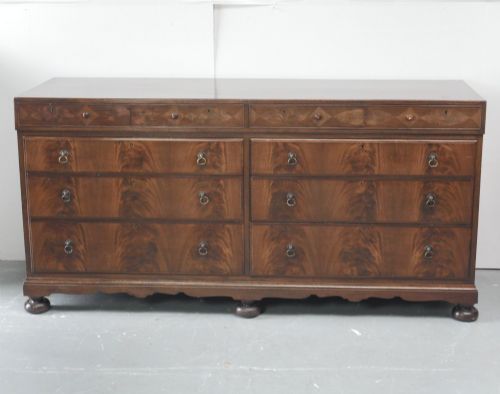
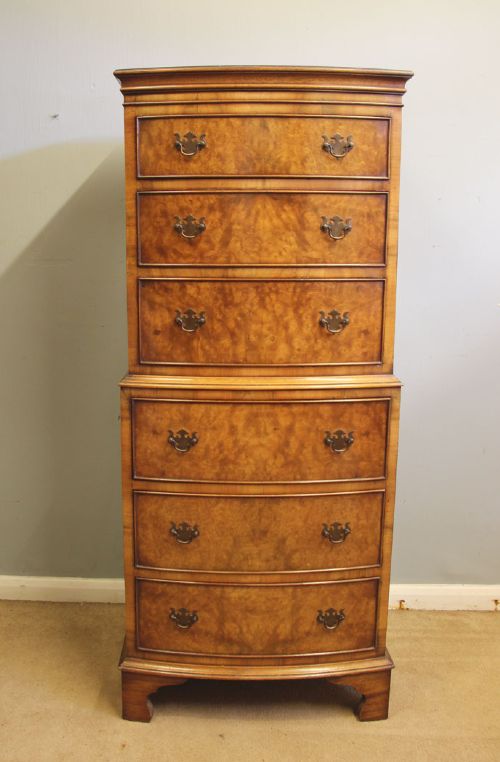
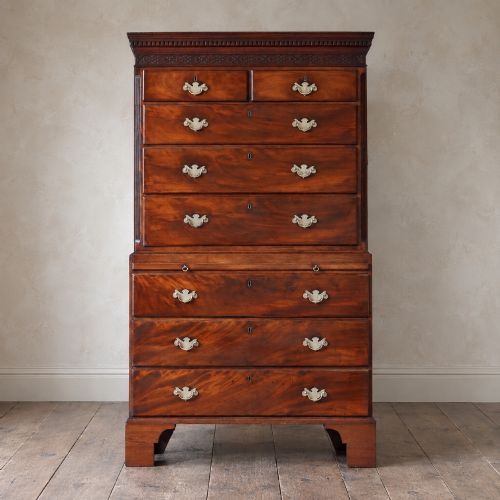
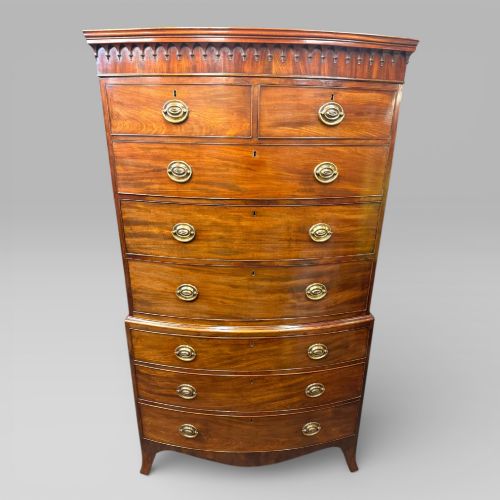
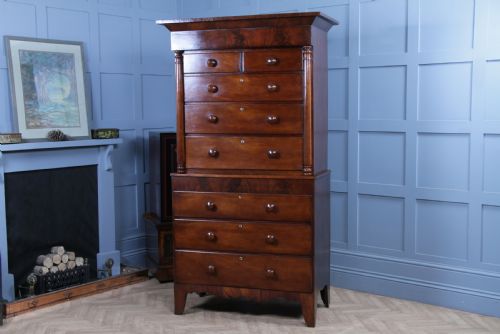
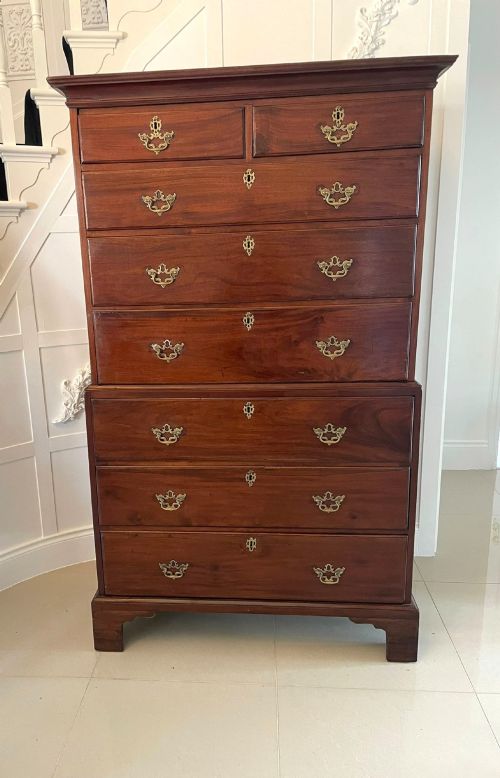
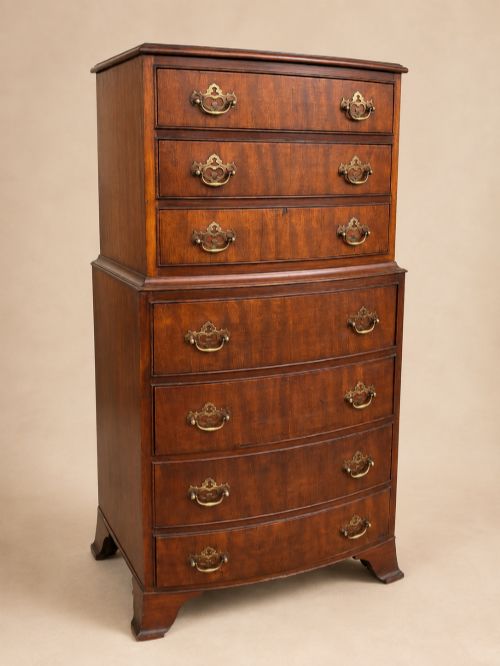
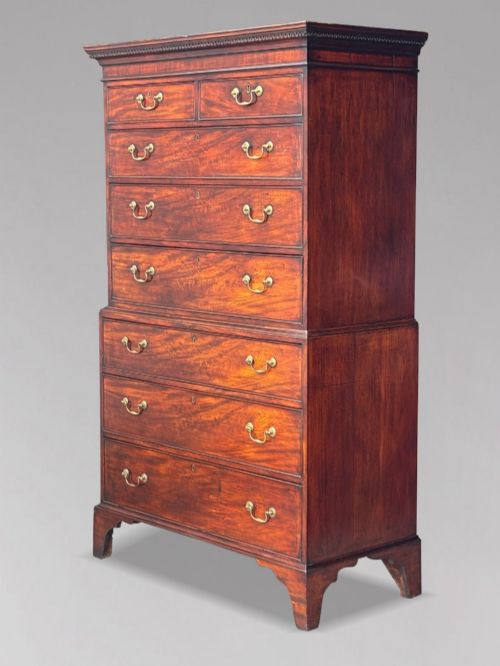
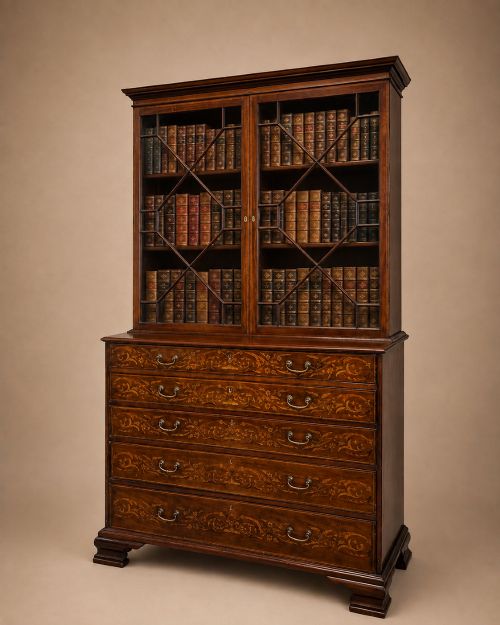
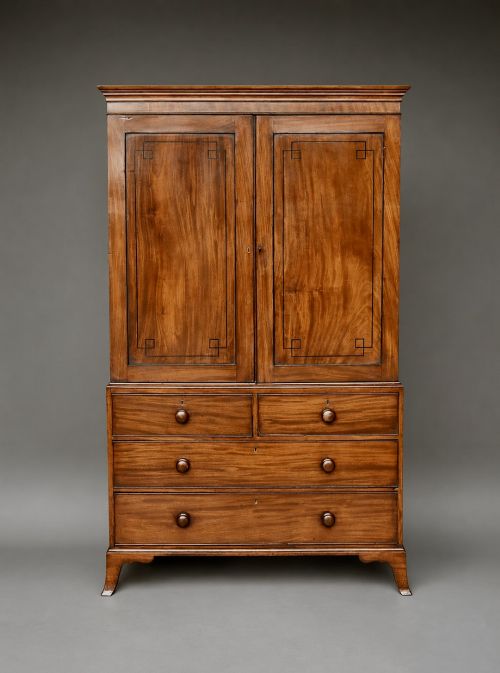
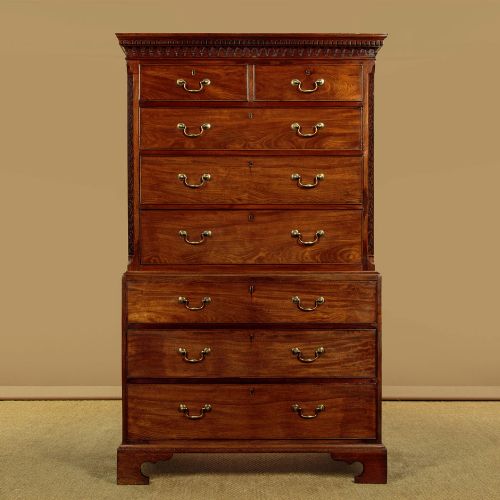
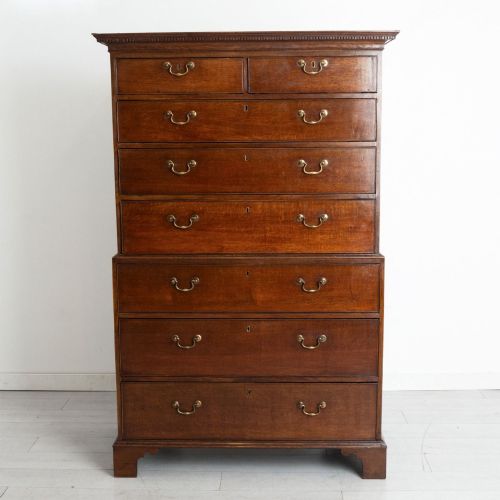
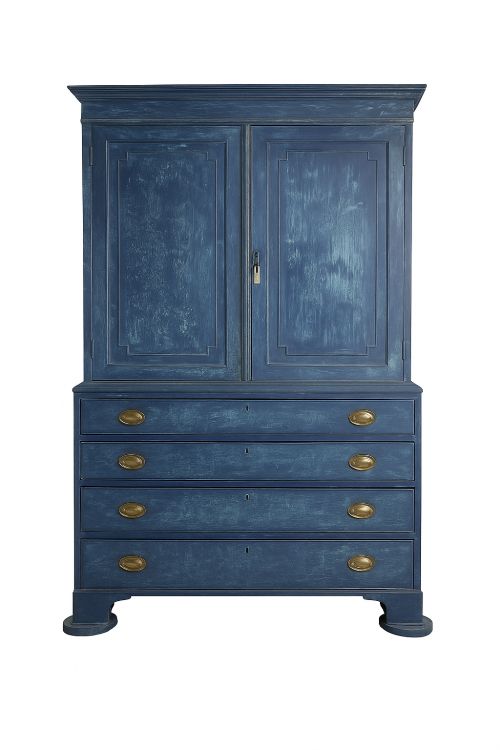
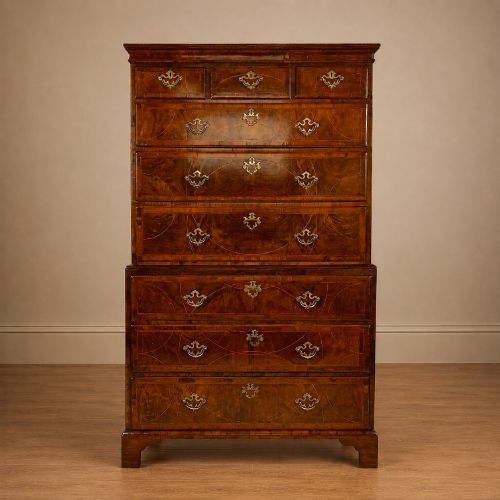
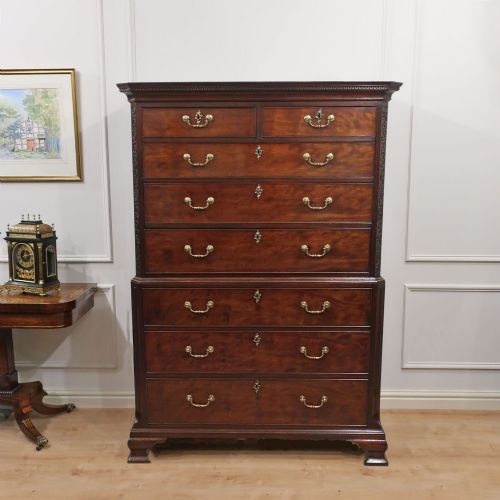
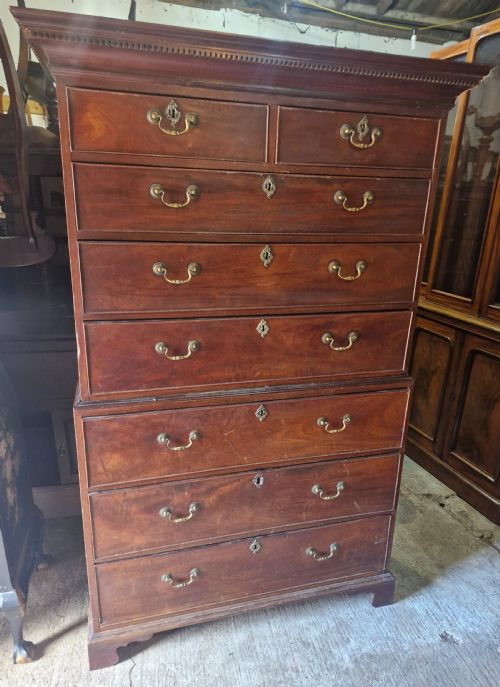
Georgian Double Chest Drawers
Georgian double chest drawers bring vertical presence and serious timber to a room, offering the disciplined storage every serious collector chases.
What Georgian double chest drawers are
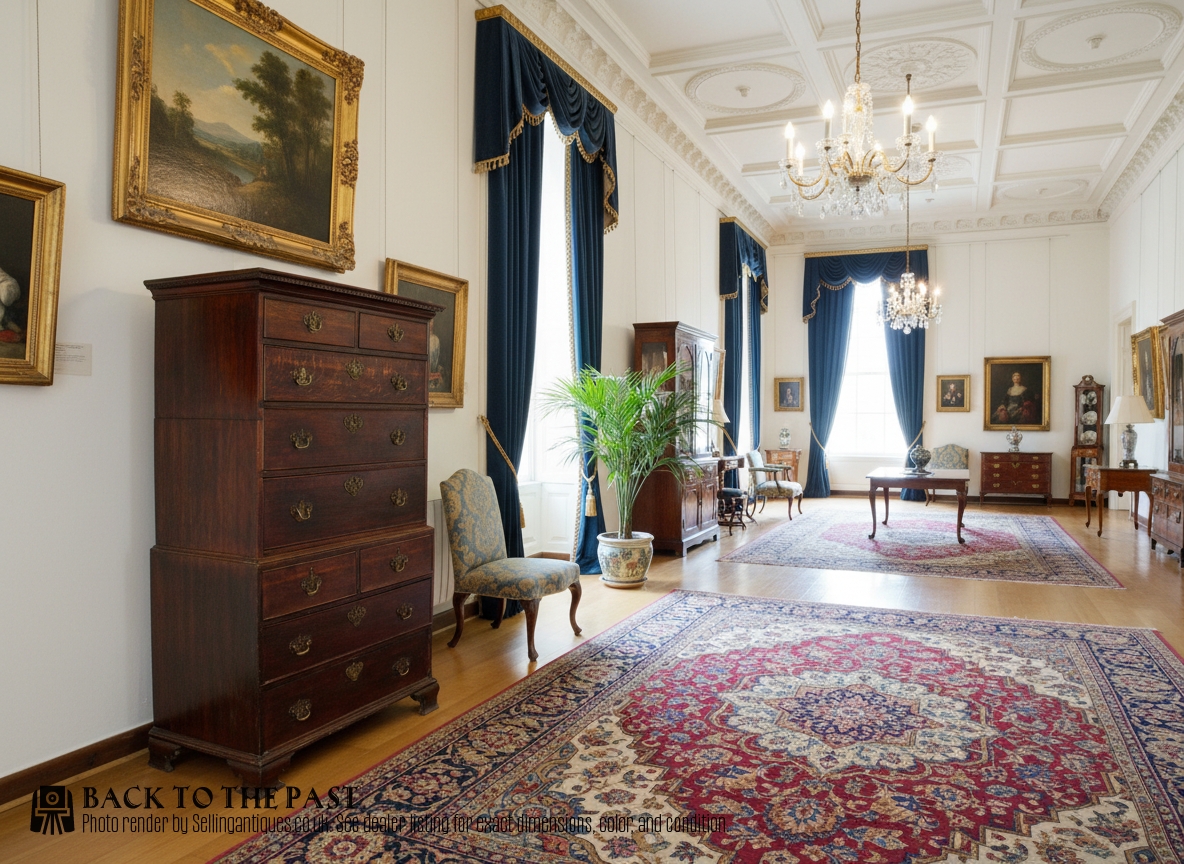
These georgian double chest drawers are substantial case pieces built in two distinct sections, stacking a smaller chest squarely upon a larger base. The form goes by several names in the trade, including tallboys and chests on chests, all sharing this commanding vertical stance.
The examples recorded here belong primarily to the Georgian and 19th Century periods, stretching back to around 1700 and continuing through 1800. Mahogany is the dominant timber, though oak surfaces occasionally in country pieces, whilst pine often forms the internal secondary woods.
Buyers meet varied internal configurations among these georgian double chest drawers, ranging from simple graduated drawer stacks to sophisticated pieces fitted with a brushing slide or a writing drawer. Secretaire variants also appear, housing fitted desk interiors behind a drop-down front.
How they were made
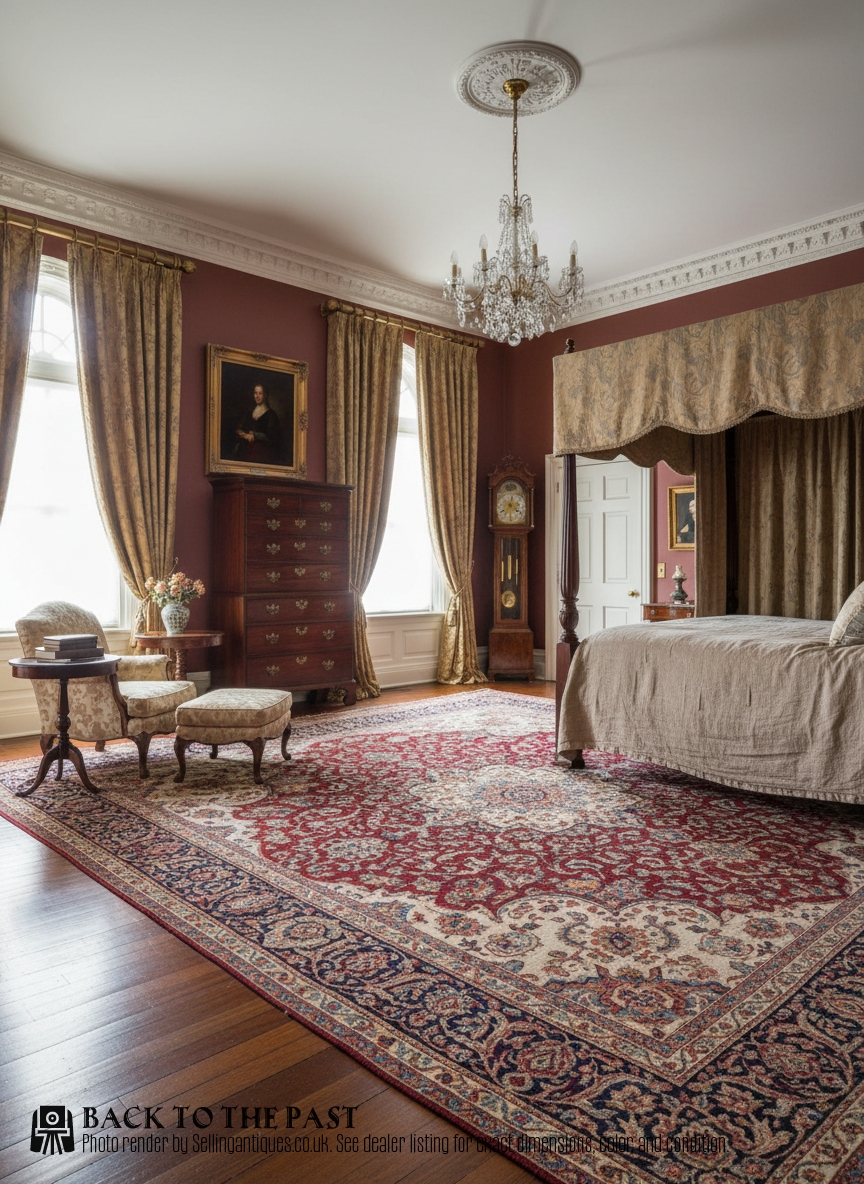
Cabinetmakers constructed these pieces using dense solid timbers and rich veneers, applying mahogany predominantly to the primary external faces whilst employing oak and pine for drawer linings and carcase backs. Wood inlay often accents the facade, adding crisp geometric definition to the drawer fronts and cornices.
Brass hardware completes the construction, featuring cast drop handles and escutcheons secured to the drawer fronts. The two-part nature of the design required precise joinery to ensure the upper chest sits plumb and secure upon the lower section without shifting.
Retail Price Guide 2026
Typical UK retail prices for georgian double chest drawers, calculated from the Sellingantiques database of over a million retail prices indexed since 2003. This retail price guide relies exclusively on Sellingantiques data; no external sources or auction records are used, so the figures do not describe the wider market.
Many a dusty drawer still hides a stray nineteenth-century brass key rattling in the back corner.
What varies in quality
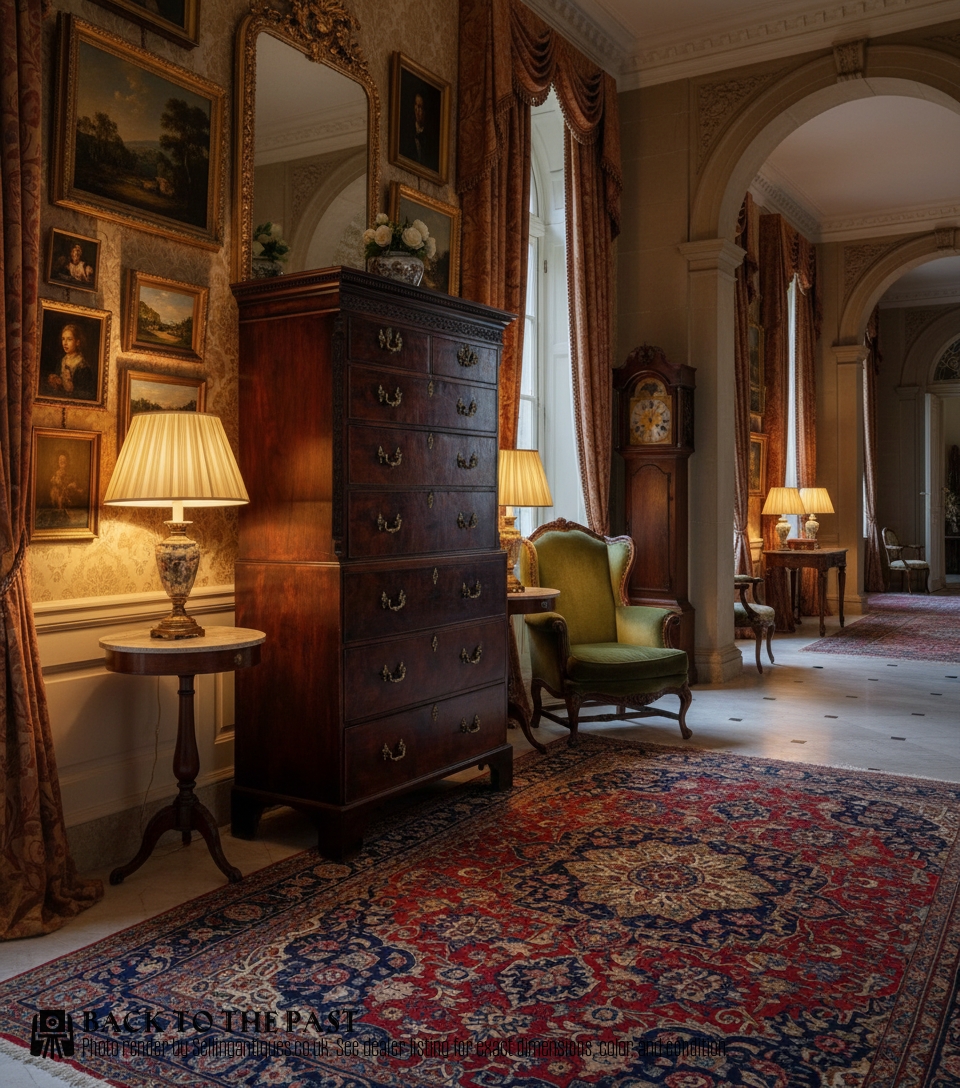
Quality in these pieces rests heavily on the choice of timber and the handling of grain figures, where richly figured mahogany commands the eye through deep chatoyancy and careful book-matching. The integration of specialised fitted elements, such as a secretary drawer or a sliding brushing board, separates standard storage from elevated craftsmanship.
Proportion and scale dictate the visual success of the piece, with finer examples maintaining slender cornices and delicate bracket feet that balance the immense weight of the double carcase. The crispness of the brass mounts and the tight tolerances of the drawer runs further distinguish the upper tier of production.
George III
The Georgian Double Chest Drawers Glossary
- Tallboy
- A traditional term describing a tall chest of drawers, often specifically applied to a chest on chest configuration. It maximises vertical storage capacity whilst occupying a modest floor footprint.
- Brushing slide
- A pull-out shelf integrated into the carcase between the upper and lower drawers, originally used for dusting clothes or as a temporary writing surface. It tucks away flush when not in use.
- Secretaire
- A drawer fitted with a drop-front mechanism that conceals small pigeonholes and letter drawers inside. It transforms the upper section into a functional writing desk.
- Escutcheon
- A decorative brass plate surrounding a keyhole that protects the surrounding wood from wear. On better pieces, these are hand-cast and chased with refined detail.
- Graduated drawers
- A sequence of drawers that decrease in depth from bottom to top, creating balanced visual proportions. This arrangement is typical of quality case pieces from the period.
Frequently Asked Questions
What is a double chest?
A double chest consists of two separate carcass units stacked vertically, creating a tall storage unit with a smaller upper chest resting on a larger lower base. This design allowed large volumes of clothing to be stored without demanding excessive floor space in a bedchamber.
Cabinetmakers built these in two sections specifically to make transport up staircases manageable. The split line usually runs just below waist height, often concealed beneath a decorative waist moulding.
How do I date a tallboy?
Dating relies on examining construction traits, timber selection, and hardware styles. Earlier pieces from the eighteenth century typically feature oak drawer linings, hand-cut dovetails, and rich figured mahogany veneers over sturdy deal carcases.
Later nineteenth-century examples often show thinner mahogany veneers, machine-sawn elements in concealed areas, and standardised brass fittings. Cornice designs also shifted over the decades, moving from heavy architectural dentil moulding to simpler pediments.
Where should I place one?
These tall pieces require a room with adequate ceiling height and wall space that can anchor their visual weight. Bedrooms and dressing rooms remain the traditional locations, utilising their deep drawers for linens and garments.
Because they stand high off the floor, ensure the room has stable humidity to protect old timber and veneers. Securing the upper chest to the wall using discreet brackets is also standard practice for safety.
What is a brushing slide?
A brushing slide is a pull-out wooden shelf positioned just beneath the top drawers of the chest. Historically, servants used it to brush garments or lay out accessories before they were worn.
In daily use today, the slide serves as a convenient temporary shelf when sorting through contents or holding small items. When pushed completely home, it disappears entirely behind the moulding.