

Antique Highboy Drawers
Antique highboy drawers are tall, stacked chests that bring serious presence and vertical storage to a room.
What Antique Highboy Drawers Are
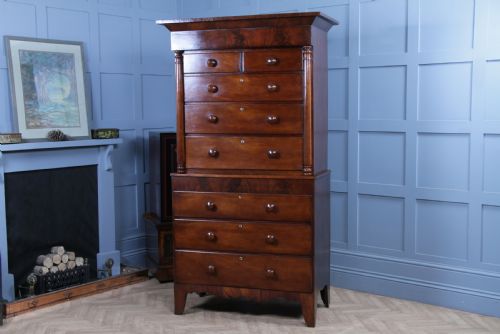
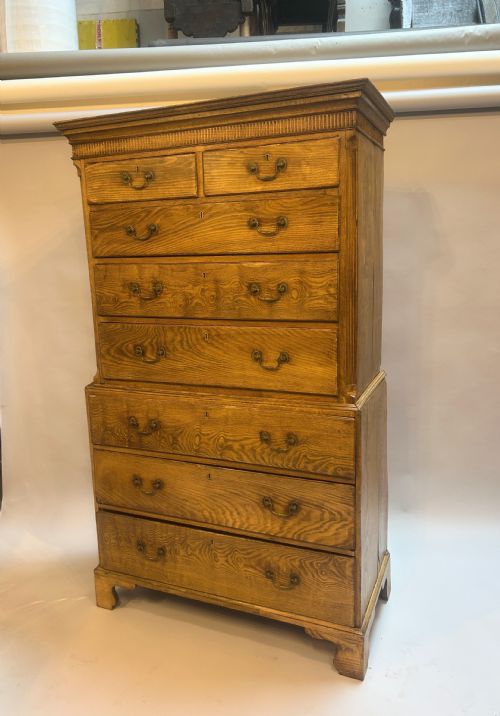
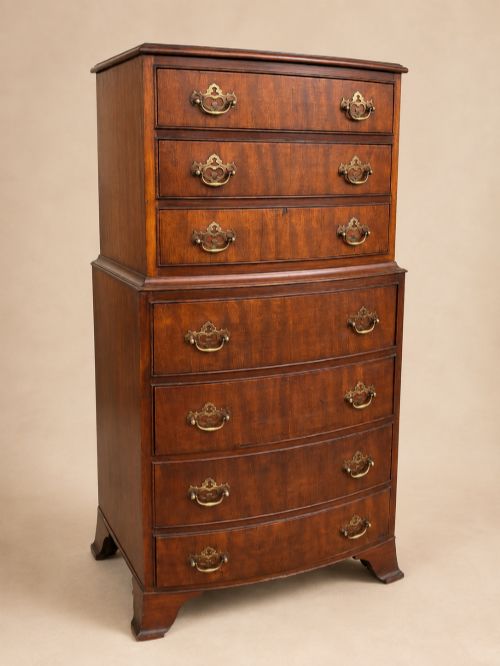
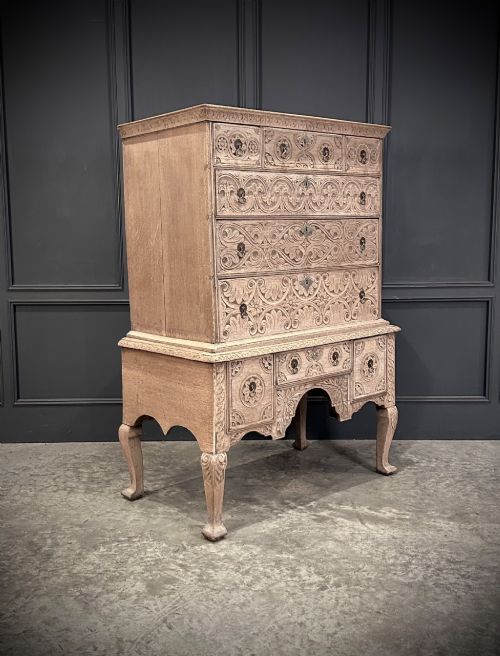
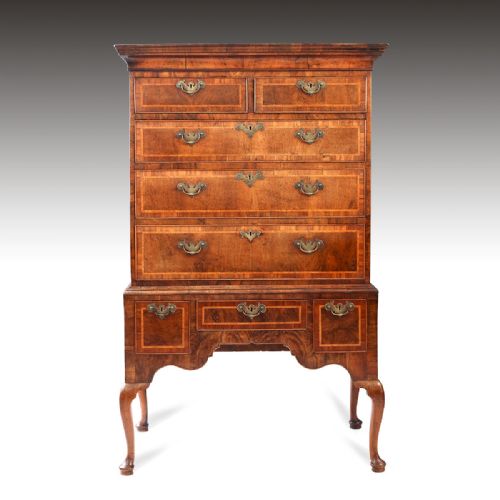
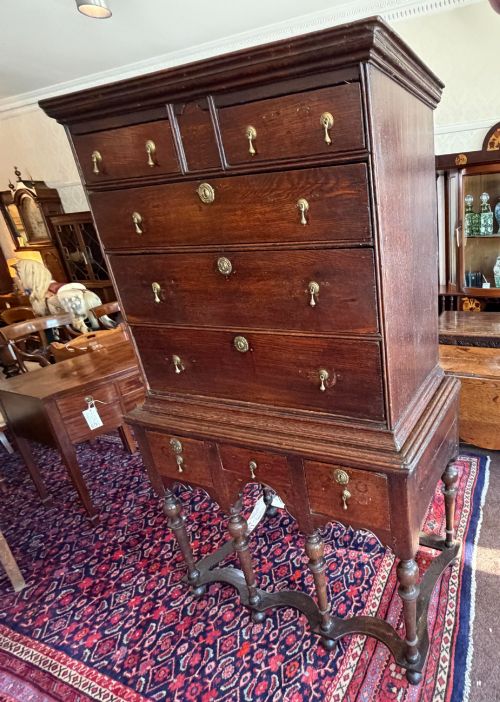
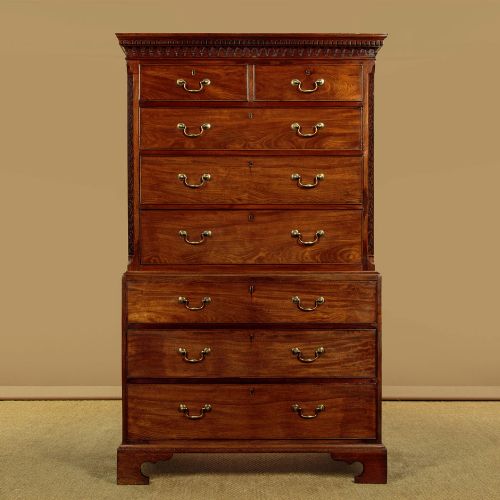
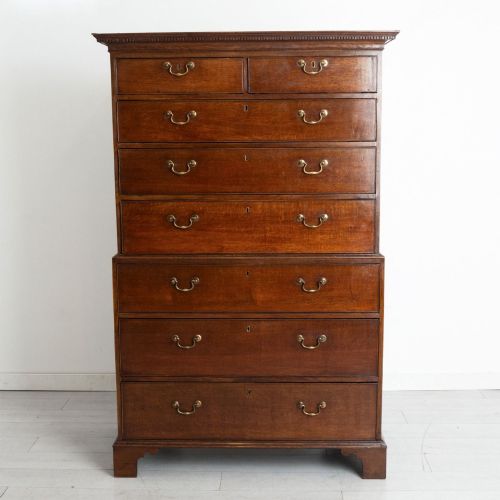
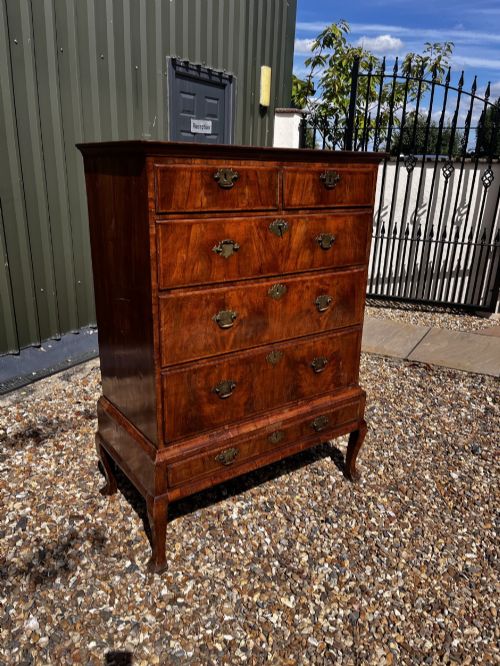
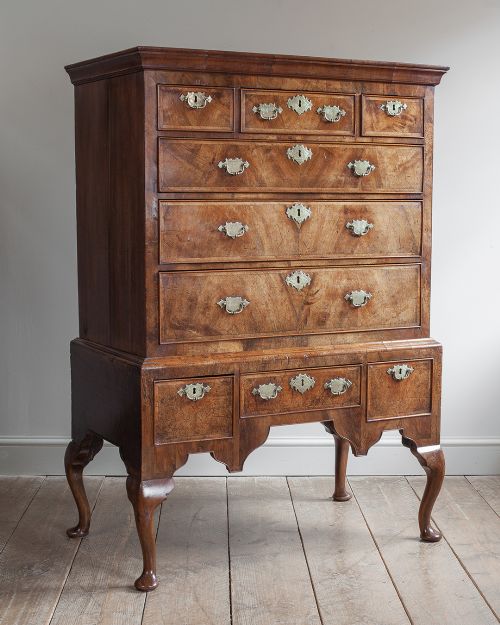
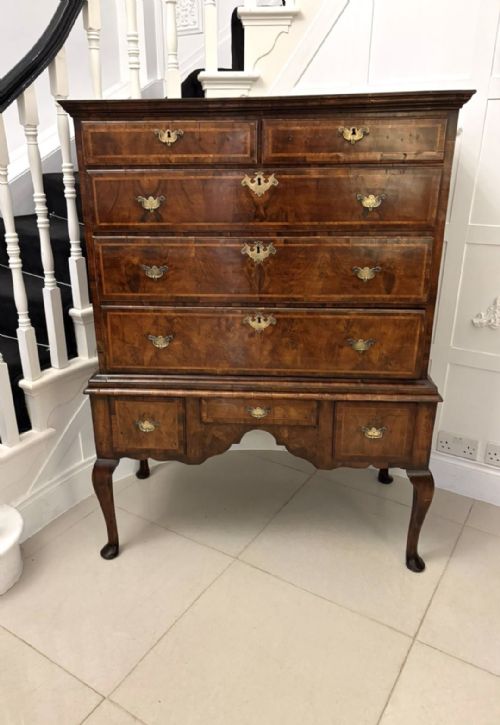
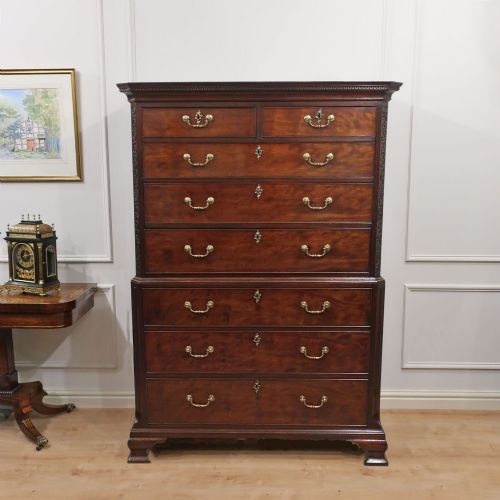
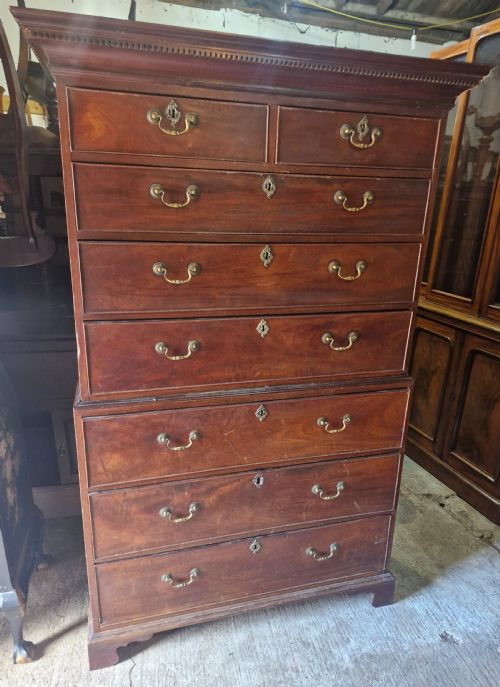
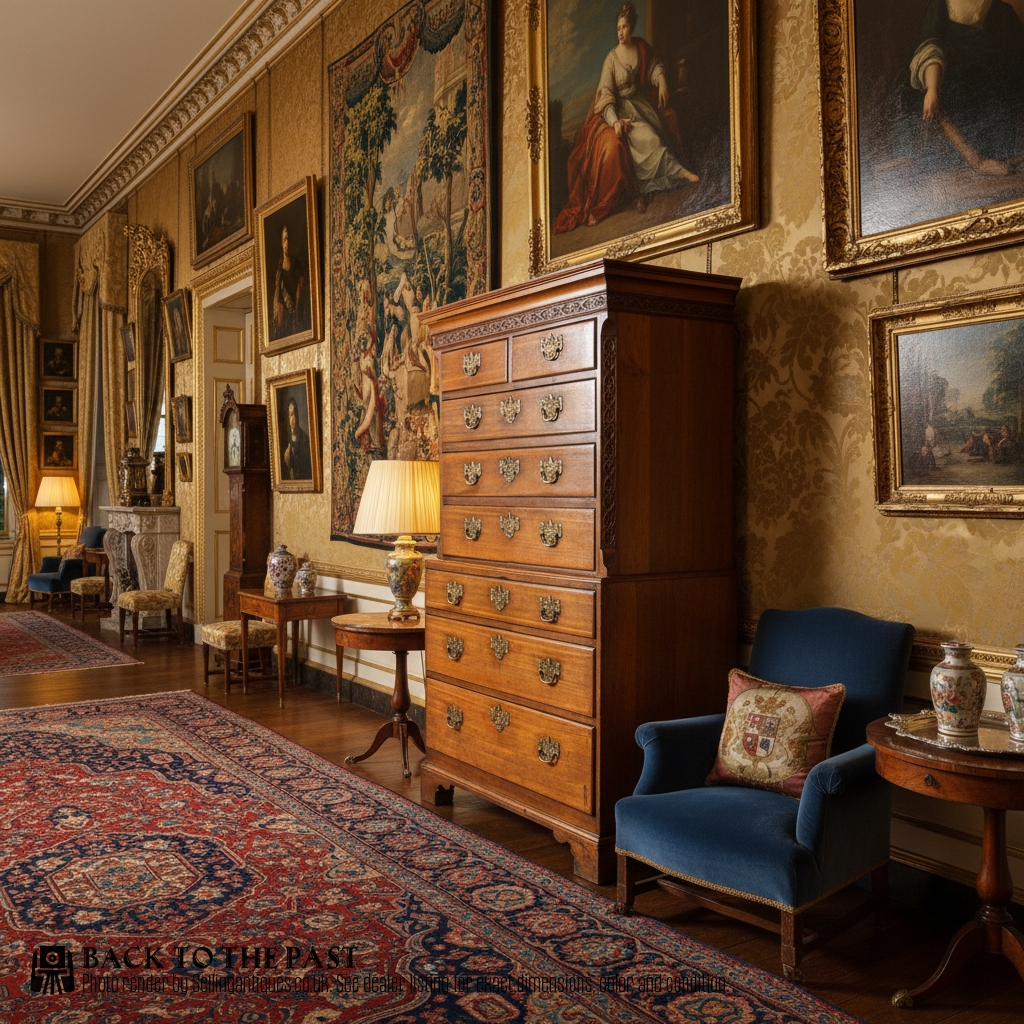
When you search for antique highboy drawers, you encounter impressive two-section chests built to maximise storage while occupying a modest floor footprint. These pieces typically take the form of a chest on chest or tallboy, rising well above standard drawer units.
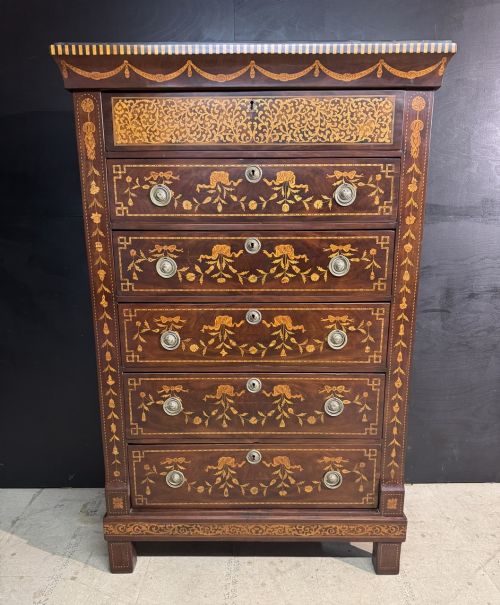
The examples available here stretch from the eighteenth century into the twentieth century, covering Georgian periods alongside Edwardian and later interpretations. You find regional variations, including Scottish and Dutch pieces, sitting alongside classic English forms.
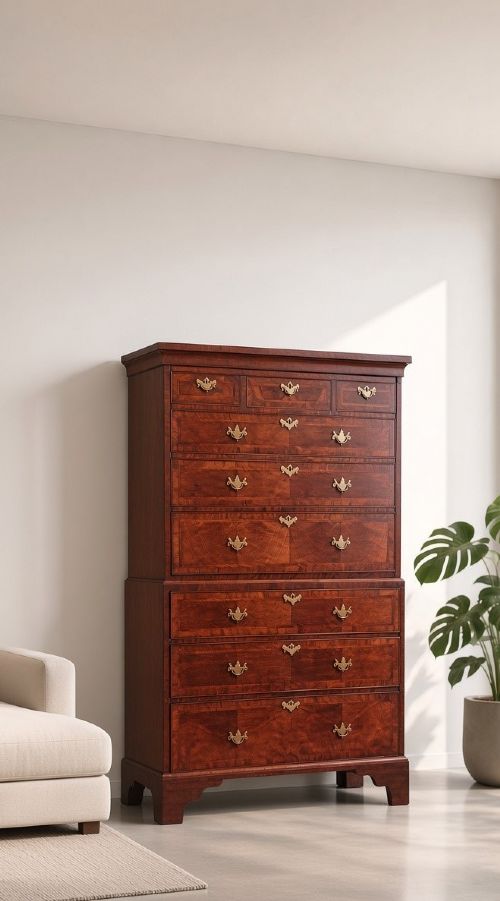
Most items on this page manifest as mahogany chests on chest, occasionally fitted with writing drawers or supported on stands. The timber selection ranges from straight-grained mahogany to burr walnut and fruitwood inlay.
How They Were Made
Cabinetmakers built these tall chests using robust primary timbers like mahogany, walnut, and oak, often incorporating secondary woods for internal drawer linings. Construction relied on traditional joinery, dovetailing drawer sides and framing the upper and lower sections to bear the substantial weight.
Surface decoration involved finely cut veneers, boxwood stringing, and marquetry, particularly on Dutch pieces from the eighteenth century. Brass handles and escutcheons completed the exteriors, fastened securely to drawer fronts that required precise hand-fitting.
Retail Price Guide 2026
Typical UK retail prices for highboy drawers, calculated from the Sellingantiques database of over a million retail prices indexed since 2003. This retail price guide relies exclusively on Sellingantiques data; no external sources or auction records are used, so the figures do not describe the wider market.
Some tallboys hide a secret writing drawer, proving that eighteenth-century cabinetmakers understood the need to pen letters in bed.
What Varies in Quality
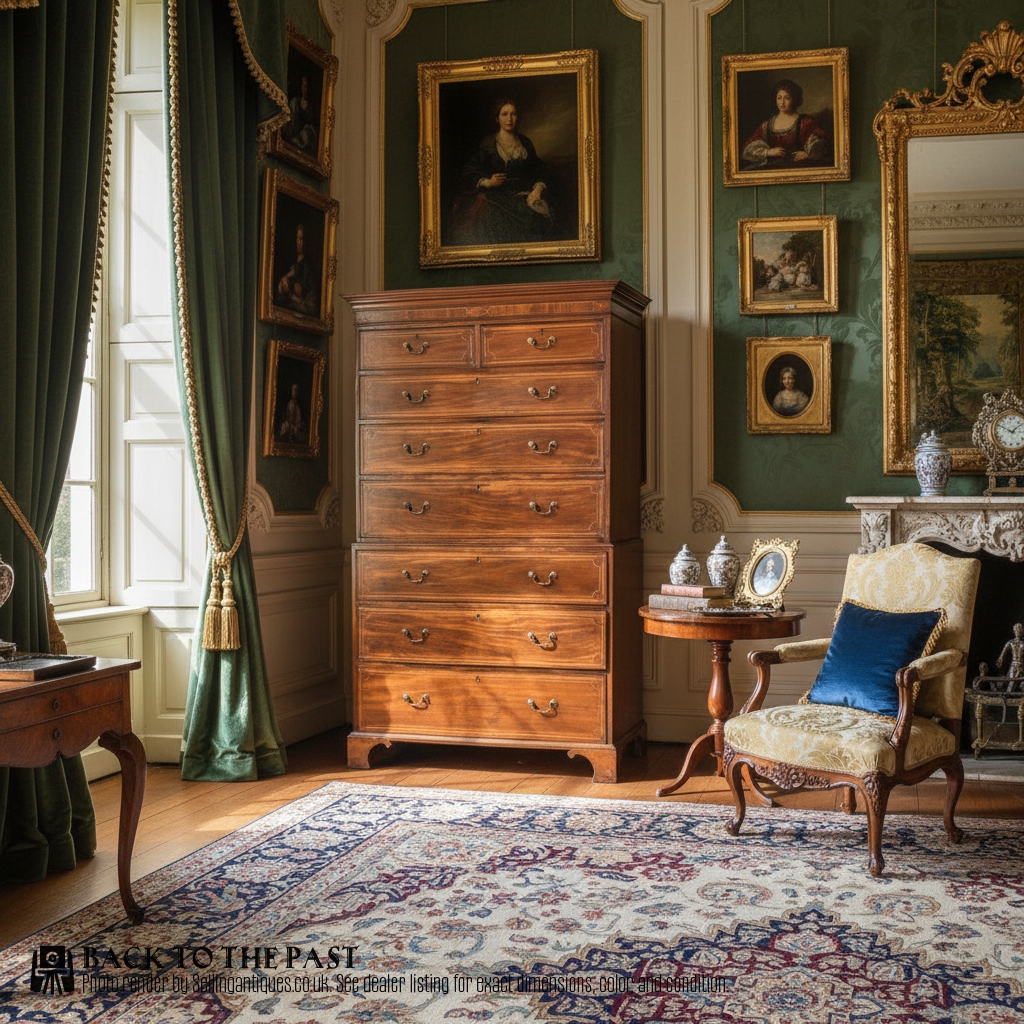
Quality in these tall chests rests on the crispness of the cabinetwork and the integrity of the timber figure. Finer examples display carefully matched grain patterns across multiple drawer fronts and retain their original brass hardware.
The Antique Highboy Drawers Glossary
- Chest on chest
- A tall storage unit constructed in two separate sections, with a smaller upper chest resting on a larger lower chest. This configuration allows easier transport of heavy furniture up narrow staircases.
- Tallboy
- An alternative term for a tall chest of drawers, frequently used interchangeably with chest on chest in British furniture. These pieces reach heights that demand sturdy internal bracing.
- Marquetry
- The art of applying decorative veneer pieces to a structure to form intricate patterns or pictures. Dutch makers utilised this technique extensively with various fruitwoods.
- Escutcheon
- A protective plate surrounding a keyhole, usually cast from brass on these chests. They prevent the timber from wearing around the lock.
- Dovetail
- A joint formed by interlocking wedge-shaped fingers, standard in drawer construction. Hand-cut dovetails indicate earlier craftsmanship before machine production took over.
Frequently Asked Questions
What is a highboy?
A highboy is a tall chest of drawers made in two stacked sections, offering deep vertical storage.
In British tradition, these are more commonly referred to as chests on chest or tallboys.
How old are these chests?
The pieces span from the eighteenth century through the Georgian era up to the twentieth century.
Cabinetmakers built them using solid hardwoods and traditional joinery techniques appropriate to their specific period.
Where do I put a tallboy?
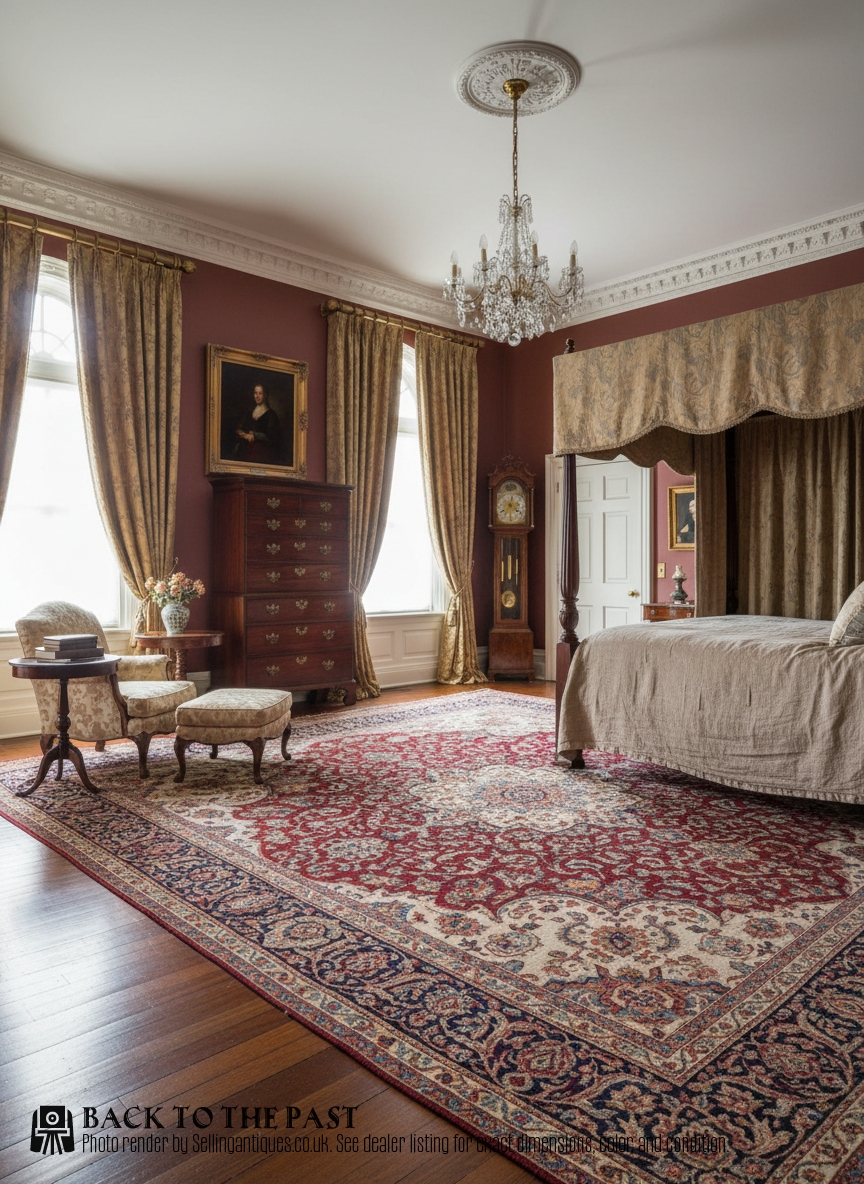
These tall chests suit bedrooms, hallways, or dressing rooms where floor space is limited.
Their vertical proportions provide substantial drawer capacity without dominating the room's footprint.
How do I spot a Georgian piece?
Georgian chests typically feature dense mahogany timber, hand-cut dovetails, and restrained proportions.
Many incorporate decorative stringing or sit on bracket feet characteristic of the eighteenth century.