
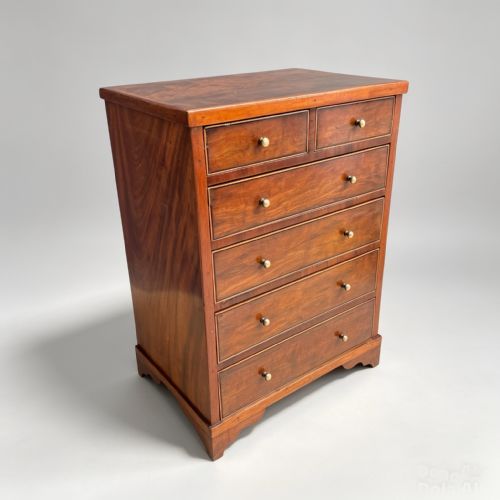
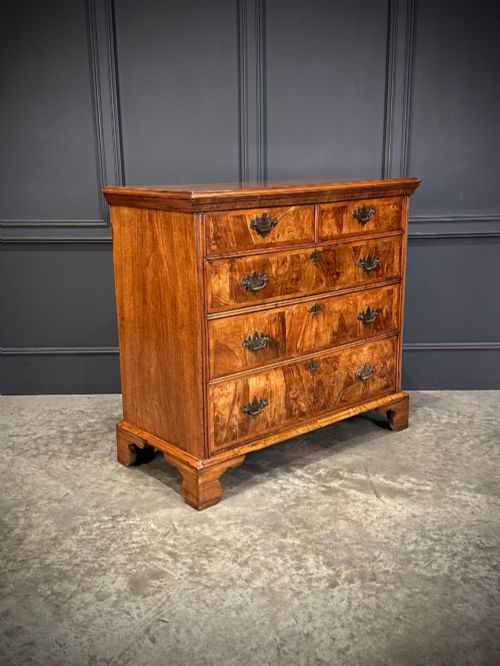
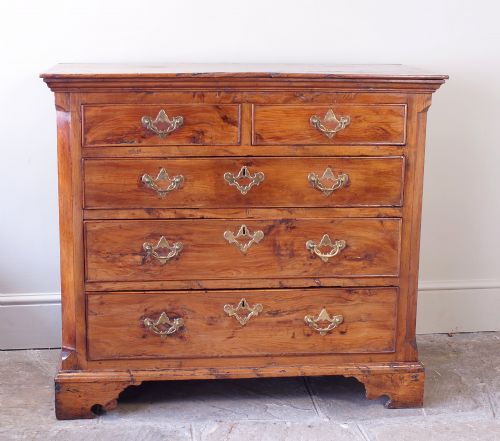
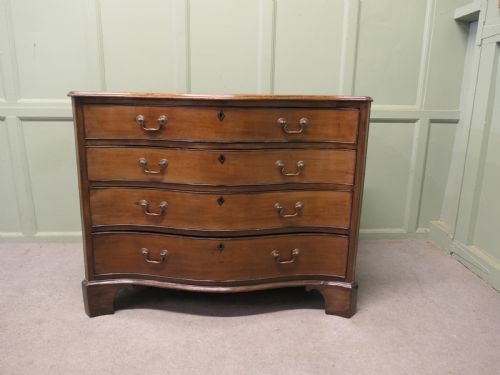


Eighteenth Century Tallboy
An eighteenth century tallboy delivers commanding vertical storage and striking timber grain to a room, offering the quintessential Georgian solution for the bedroom.
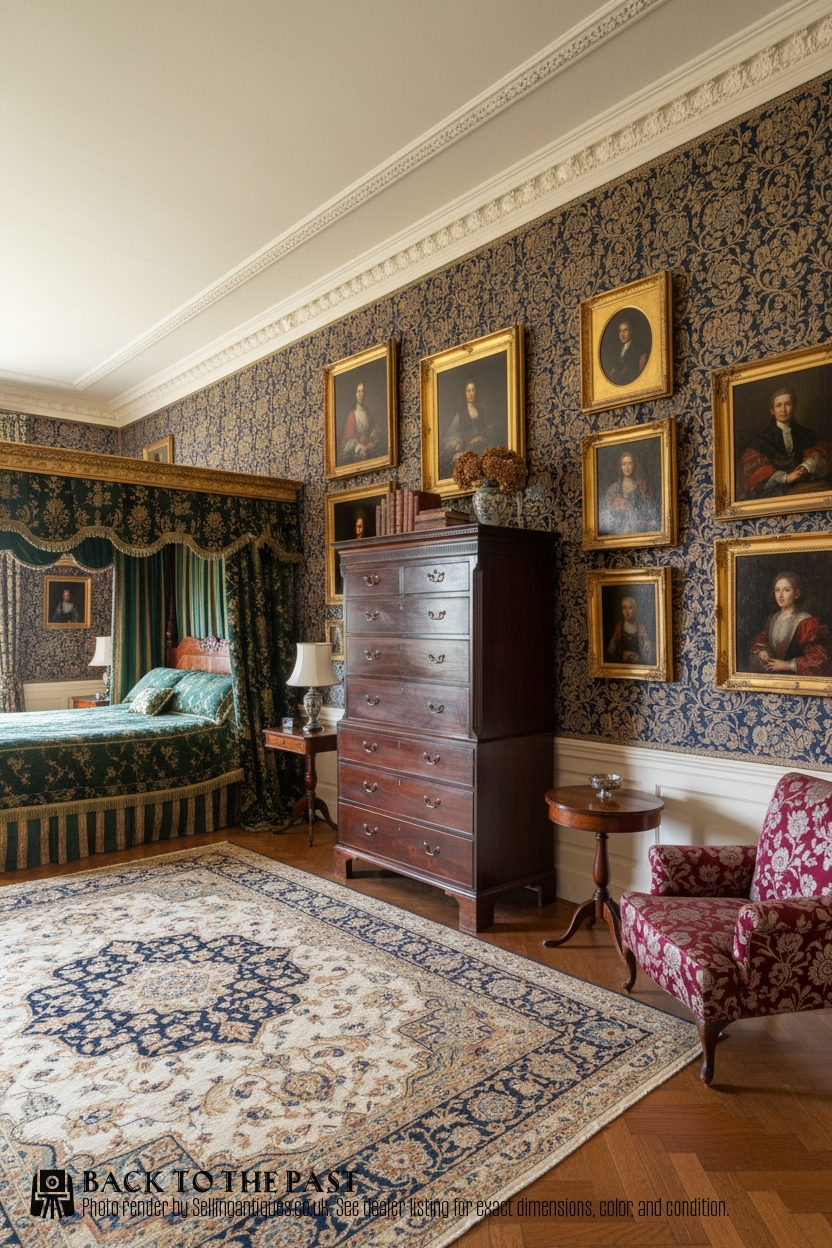
What an eighteenth century tallboy is
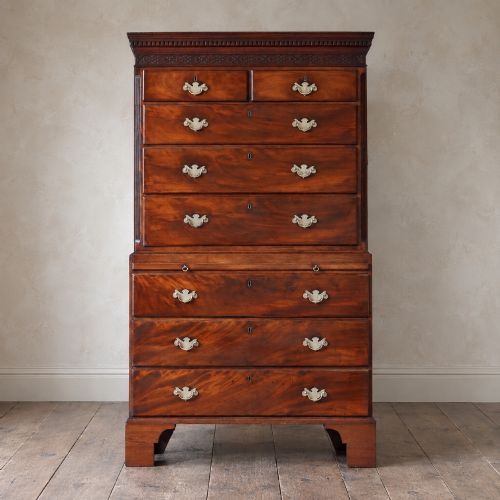
An eighteenth century tallboy stands as a double chest of drawers, stacking a smaller upper section directly onto a wider base to maximise storage without claiming excessive floor space. These impressive case pieces typically divide into upper and lower carcases, creating a commanding presence in any chamber.
The versions met on this page span the 18th century, Georgian, and Edwardian periods, appearing alongside related forms such as the chest on stand. Makers constructed these storage items using rich timbers including mahogany, walnut, burr walnut, oak, and yew wood.
Stylistic variations range from Queen Anne and George I designs through to George III and Chippendale style pieces. Buyers encounter both full-height double chests and smaller scale chests on stand that maintain the signature vertical proportion.

How they were made
Cabinetmakers constructed these case pieces using solid timbers and decorative veneers applied over secondary woods like oak and pine. Craftsmen selected figured grain patterns such as burr walnut and flame mahogany for the primary facades, securing them with traditional joinery.
Drawer construction relied on hand-cut dovetails and solid linings, paired with brass drop handles or bail pulls fixed to the drawer fronts. Brass escutcheons protected the keyholes around iron locks that secured each compartment.
Retail Price Guide 2026
Typical UK retail prices for eighteenth century tallboy, calculated from the Sellingantiques database of over a million retail prices indexed since 2003. This retail price guide relies exclusively on Sellingantiques data; no external sources or auction records are used, so the figures do not describe the wider market.
Listings feature mahogany, walnut, burr walnut, oak, and yew wood across the eighteenth century, Georgian, and Edwardian periods.
What varies in quality
The refinement of the timber selection dictates the visual impact, separating simple utility pieces from those designed for high-status interiors through rich grain figuring and careful bookmatching. The handling of proportions, particularly in the relationship between the upper and lower sections, defines the aesthetic success of the piece.
Moulding profiles and carved details, whether simple cockbeading around drawer edges or more elaborate cornice work, reflect the skill invested by the original cabinetmaker. Original surface patination and colour integrity across the different sections hold immense weight in establishing the character of the piece.
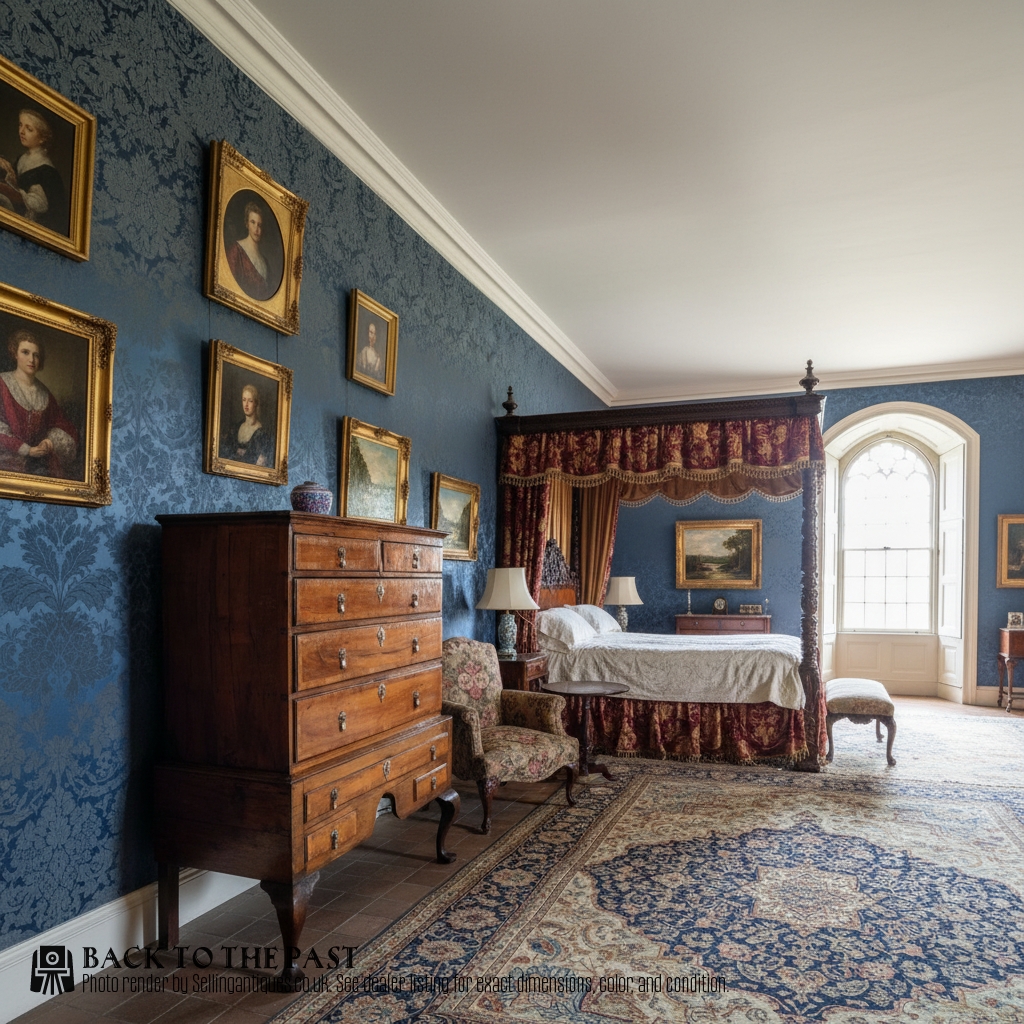
The Eighteenth Century Tallboy Glossary
- Tallboy
- A tall chest of drawers made in two sections, one stacked upon the other. This form provides substantial vertical storage while maintaining a compact footprint.
- Chest on chest
- An alternative term for a tallboy, denoting two distinct drawer chests built to lock together vertically. The upper chest is traditionally narrower than the lower base.
- Chest on stand
- A form featuring a drawer chest raised on a separate table-like stand with legs. This configuration lightens the visual weight of the furniture.
- Cockbeading
- A narrow semi-circular moulding fitted around the edges of drawer fronts. It protects the drawer edges and frames the timber surface.
- Escutcheon
- A decorative brass plate surrounding a keyhole. It protects the surrounding wood from wear and adds a metallic accent to the drawer face.
Frequently Asked Questions
What is an eighteenth century tallboy used for?
An eighteenth century tallboy serves as a primary bedroom storage unit, originally designed to hold folded linens, garments, and personal valuables.
The stacked drawer arrangement allows for the segregation of different types of clothing within a single vertical footprint.
How do I identify a George III tallboy?
George III pieces frequently display straight bracket feet or ogee bracket feet beneath a mahogany carcase, sometimes featuring elaborate cornice mouldings.
The drawer fronts often show precise cockbeading and figure-matched veneers characteristic of late eighteenth-century cabinetmaking.
Where should I place a tallboy in my home?
A tallboy suits bedrooms, dressing rooms, or high-ceilinged hallways where vertical wall space allows the piece to anchor the room.
Ensure the placement avoids direct heat sources and strong sunlight to protect the aged timber surfaces.
What is the difference between a tallboy and a chest on stand?
A tallboy consists of two full-sized drawer sections stacked directly together, whereas a chest on stand places a single chest upon an open legged base.
Chest on stand designs generally appear lighter and sit lower than the double-stacked carcase of a standard tallboy.