





Queen Anne Highboy
A queen anne highboy stands as a masterclass in proportion, stacking drawer upon drawer to deliver monumental presence from remarkably modest footprints.
Queen Anne Highboy
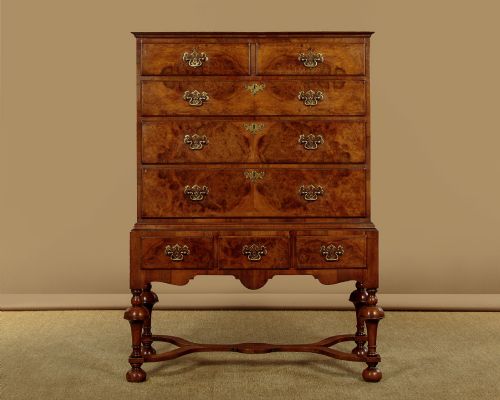
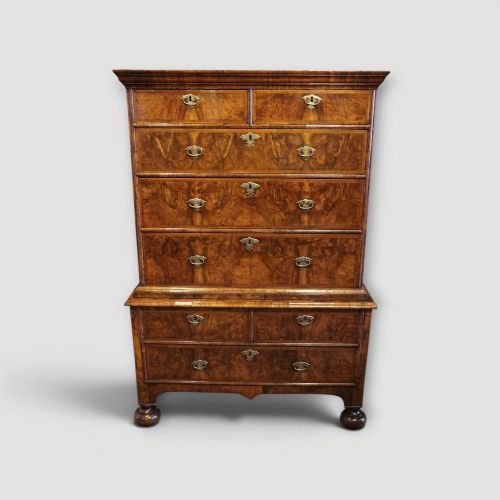
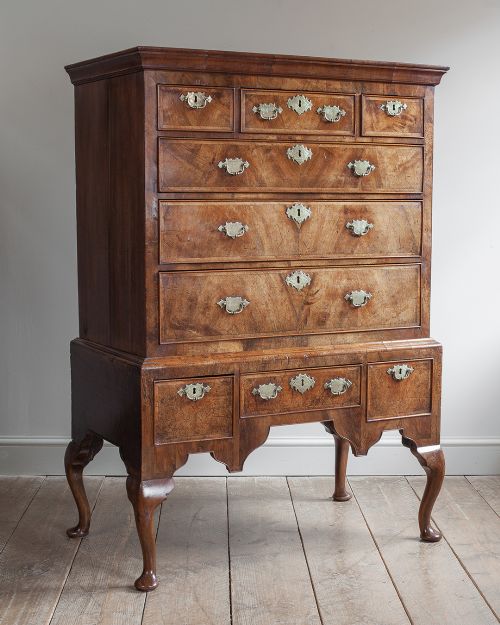
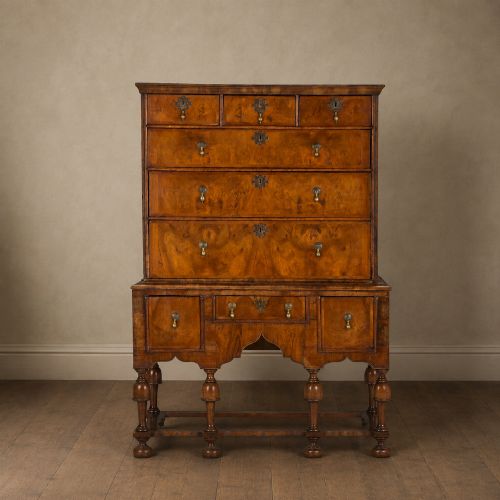
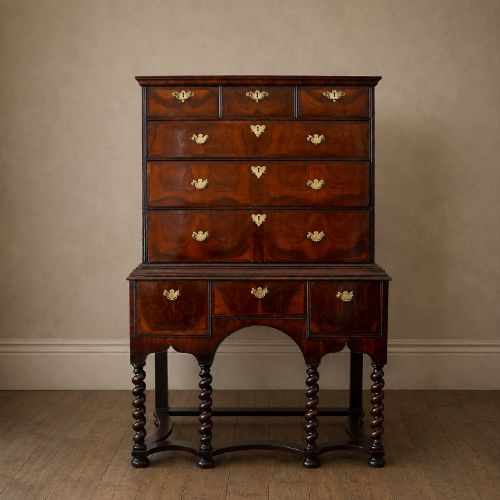
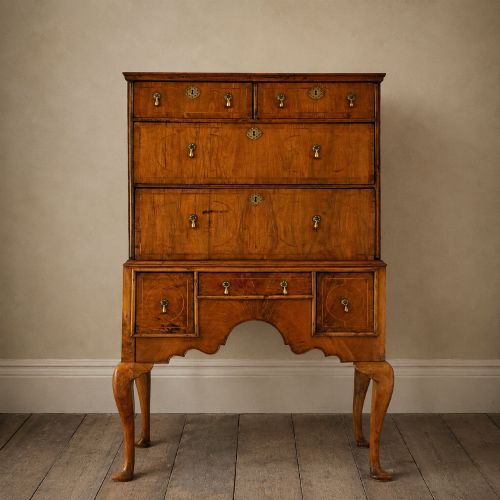
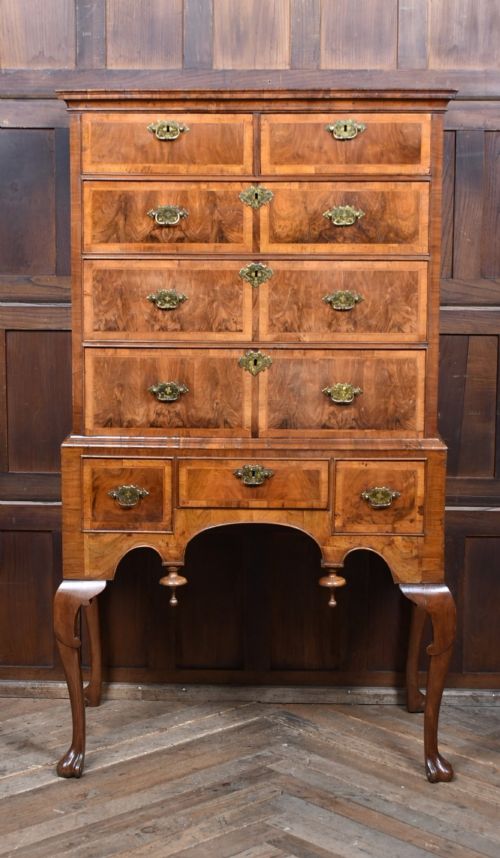
When you search for a queen anne highboy, you are looking at tall case furniture typically configured as a chest on stand, chest on chest, or tallboy. These pieces divide naturally into two stacked sections: a lower table-like stand fitted with drawers and a larger upper chest.
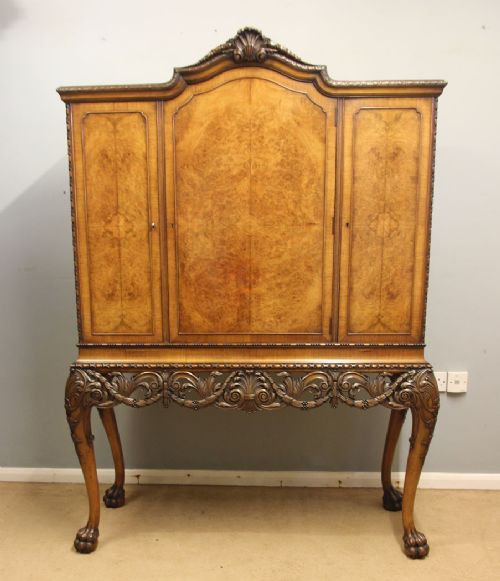
On this page, the version you are most likely to meet spans the eighteenth century and the early twentieth-century revival periods. These survivors appear predominantly in walnut, burr walnut, and oak, often reflecting the architectural shifts of the Georgian era alongside earlier William and Mary influences.
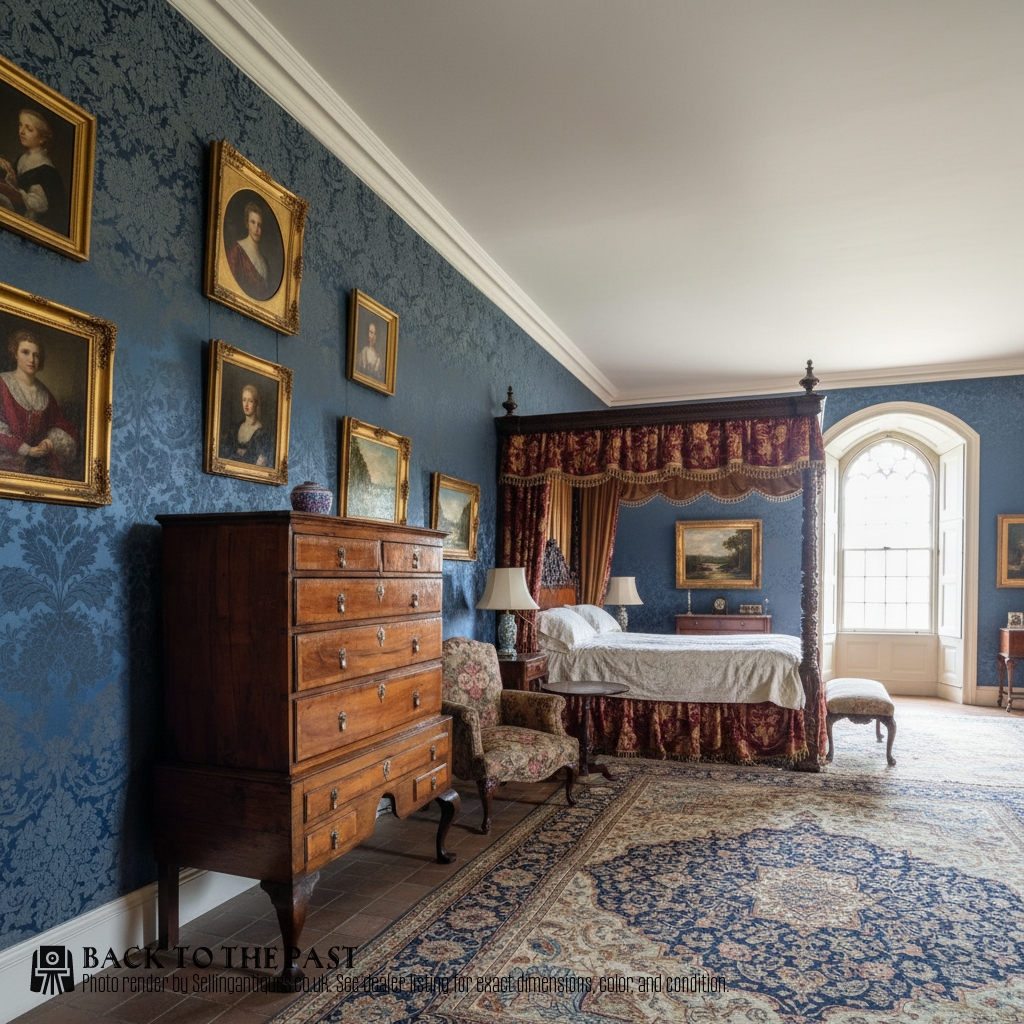
Materials and construction
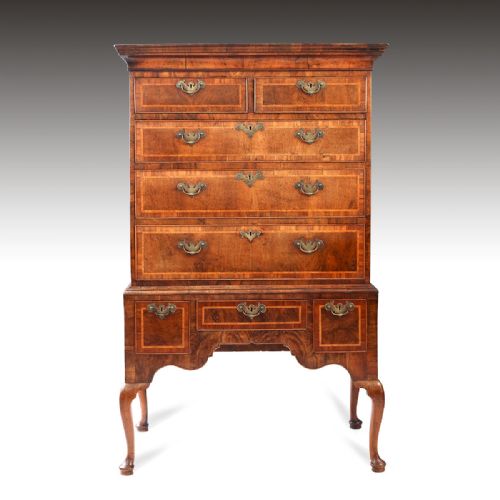
Cabinet makers utilised native oak for structural carcasing and drawer linings, applying fine veneers of walnut, burr walnut, and figured walnut to visible primary surfaces. Crossbanding and oyster veneering added decorative borders that framed the grain patterns of the timber.
Brass hardware, including teardrop pulls and engraved backplates, secured the drawer fronts, while distinct stands elevated the main body on legs that could include cabriole forms. Pine frequently served as a secondary timber in backing boards and internal framing.
Queen Anne Highboy Retail Price Guide 2026
Typical asking prices for queen anne highboy among the pieces listed under this phrase on Sellingantiques today, from the lower quarter to the upper quarter. They describe what is for sale here now, not the wider market.
Materials documented across the inventory include walnut, burr walnut, oak, pine, yew wood, and brass.
Distinguishing quality
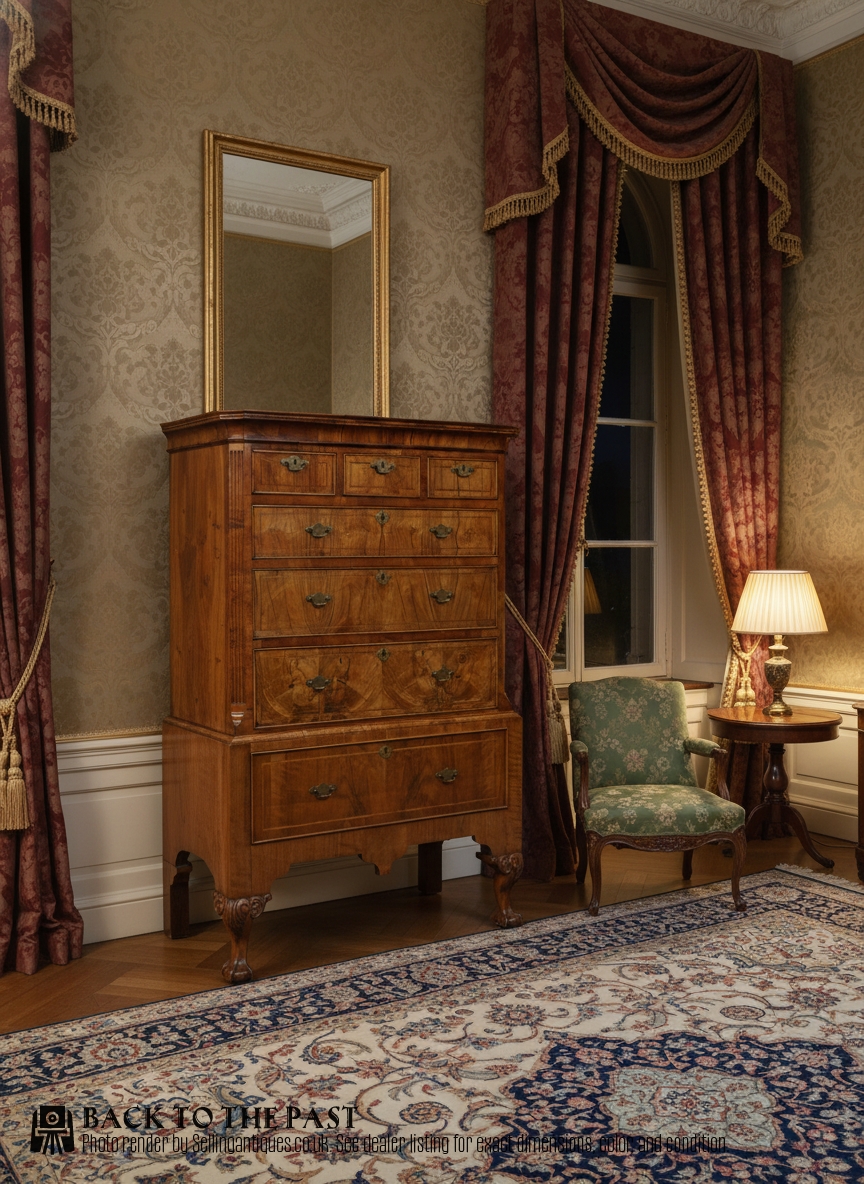
The degree of sophistication in the figured grain selection separates standard examples from exceptional ones, particularly where burr walnut or elaborate crossbanding covers the drawer fronts. Uniformity in the matching of veneer panels across multiple tiers demonstrates the hand of a skilled maker.
Proportion and the integrity of the joinery between the upper chest and its lower stand determine the visual balance of the piece. Surviving elements such as original brasses and undisturbed patination elevate the standing of an example far beyond those altered by later restoration.
The Queen Anne Highboy Glossary
- Chest on stand
- A two-part furniture form featuring an upper cabinet of drawers resting upon a low, table-like base with legs. This configuration defines the classic highboy structure.
- Veneer
- A thin layer of figured wood applied over a secondary timber base to create a decorative surface. Walnut and burr walnut are typical species treated this way.
- Tallboy
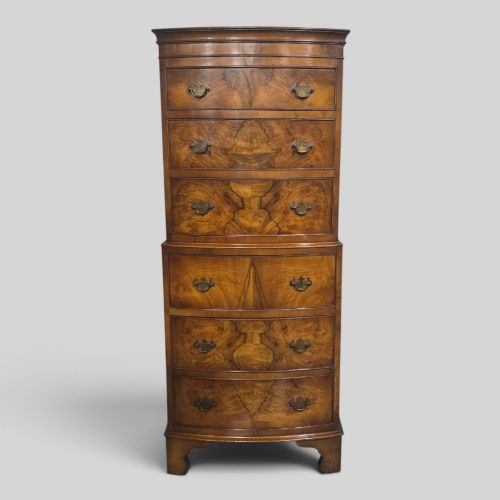
- A tall chest of drawers, often constructed as a chest on chest, providing substantial vertical storage. Examples in the evidence span both eighteenth-century and twentieth-century periods.
- Crossbanding
- A decorative border of veneer laid with the grain running perpendicular to the main panel. This technique frames drawer fronts on period case furniture.
- Oyster veneering
- The practice of slicing small branches transversely to produce circular or oval patterns resembling oyster shells. It appears on select George I examples.
Queen Anne Highboy: Frequently Asked Questions
What is a queen anne highboy?
A queen anne highboy is a tall chest of drawers built in two stacked sections, usually combining an upper cabinet with a lower drawer stand.
These pieces emerged during the late seventeenth and early eighteenth centuries, providing elevated storage while maintaining a slender footprint.
How do I date a highboy?
Dating relies on examining the timber species, construction methods, and secondary woods like pine or oak used inside the drawers.
Eighteenth-century examples display period-specific dovetailing and hand-cut elements, whereas revival pieces from the twentieth century often use machine-cut joints and modern adhesives.
What is the difference between a highboy and a tallboy?
A highboy specifically refers to a chest mounted on a separate leg stand, creating a distinct separation between the upper and lower halves.
A tallboy generally describes a chest on chest where a smaller upper chest sits directly on a larger lower chest of drawers.
Where should I place a highboy?
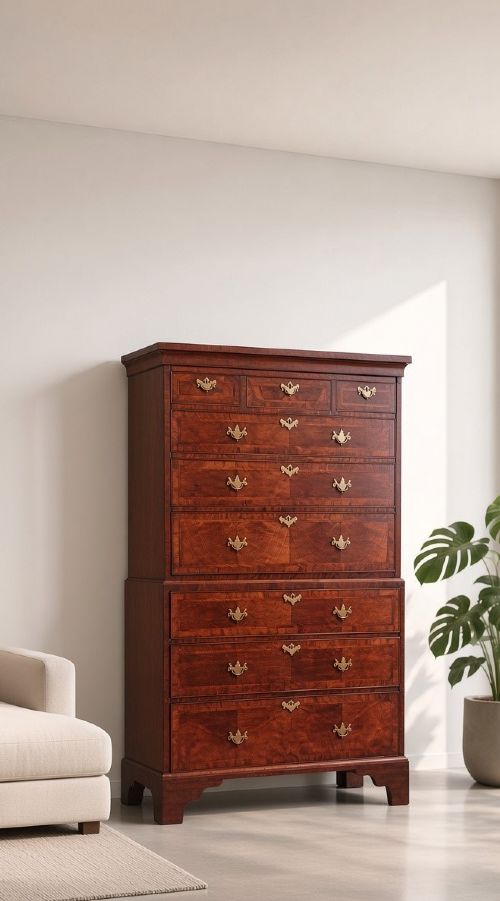
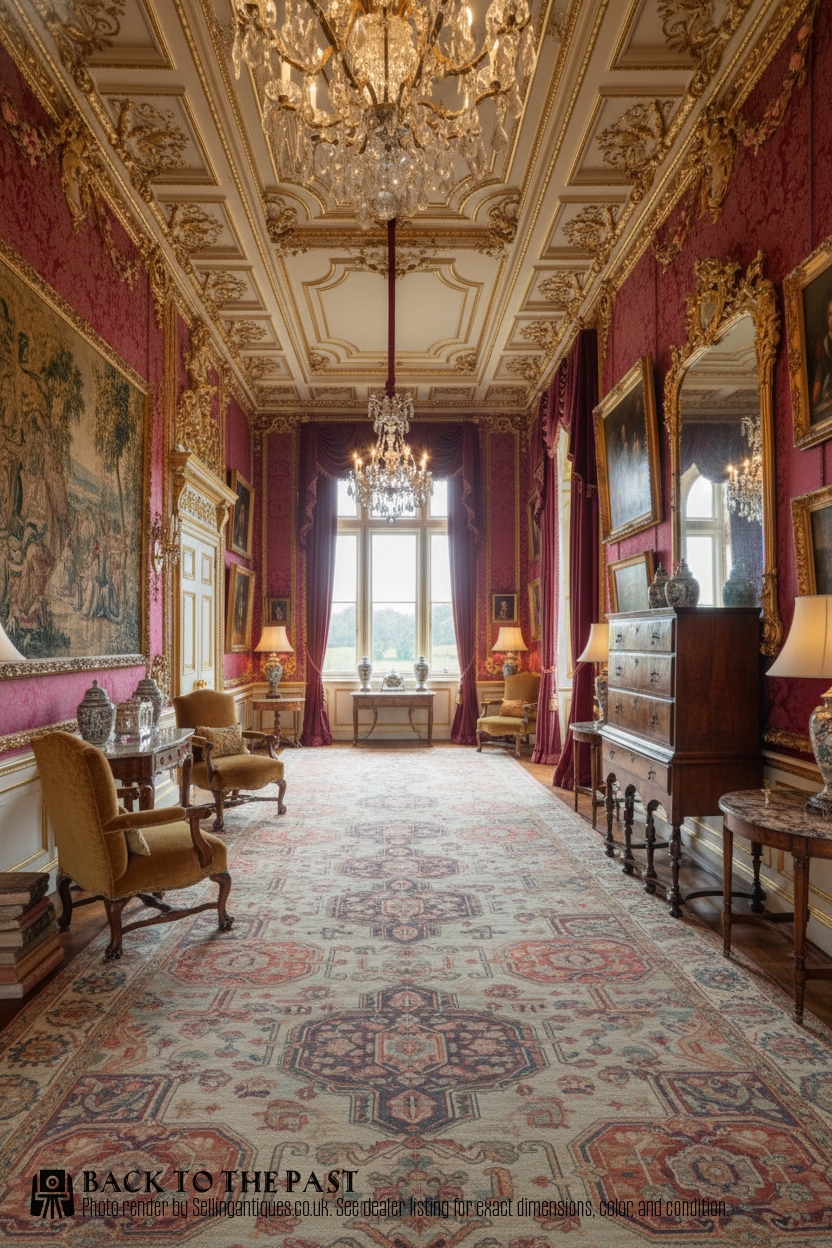
Highboys suit hallways, bedrooms, and living spaces where vertical storage is required without occupying excessive floor area.
Their substantial height draws the eye upward, making them effective focal points against blank wall spaces.