




Chest on Frame
A chest on frame elevates storage quite literally, combining a compact set of drawers with a raised stand for presence and practicality.
Chest on Frame
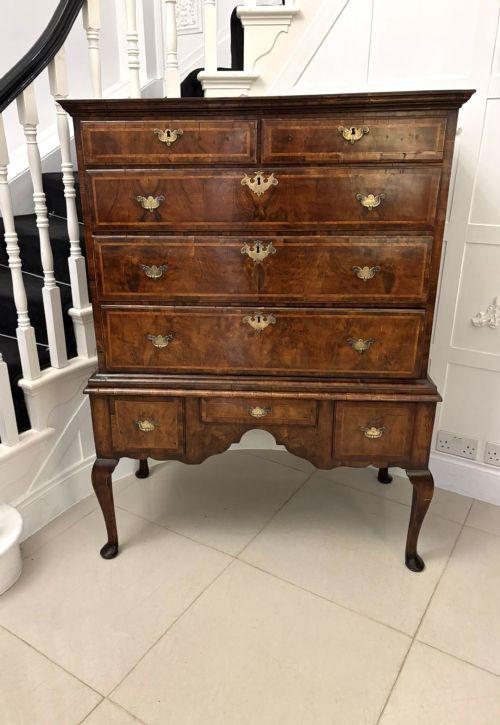
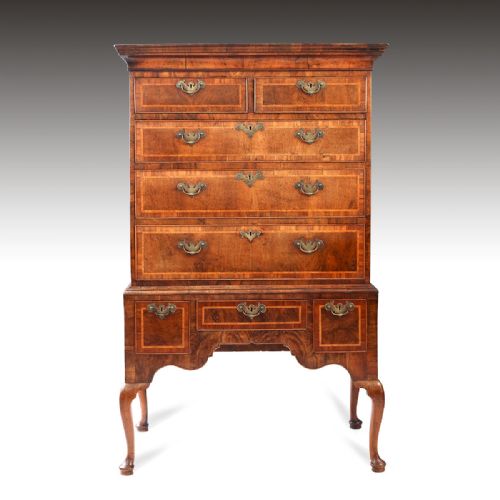
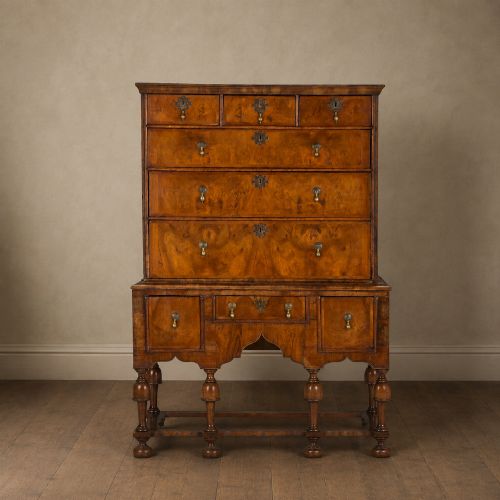
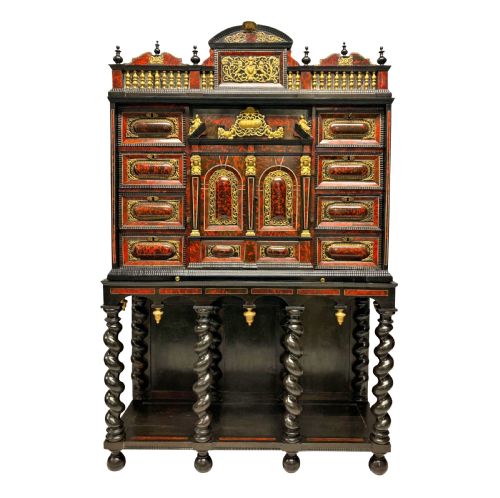
When searching for a chest on frame, a buyer encounters pieces designed to lift heavy storage off the floor on legs or a dedicated stand. The most common examples met here date from the seventeenth and eighteenth centuries, executed in walnut or oak.
These forms bridge the gap between low chests and tallboys, offering accessible drawer space while maintaining an airy footprint in a room. Many follow classic periods such as Queen Anne or William and Mary.
Makers constructed these units in two distinct sections, allowing the upper chest of drawers to rest securely upon a lower frame or stand fitted with cabriole or turned supports.
Materials and construction
Cabinet makers relied heavily on native oak and rich walnut veneers applied to secondary woods, creating structured surfaces that held up to daily use. Brass hardware, including drop handles and escutcheons, fastened securely to the drawer fronts.
Joinery techniques involved precise dovetails for the drawers and sturdy framing for the stands, which often incorporated shaped aprons and stretchers for added rigidity.
Chest on Frame Retail Price Guide 2026
Typical asking prices for chest on frame among the pieces listed under this phrase on Sellingantiques today, from the lower quarter to the upper quarter. They describe what is for sale here now, not the wider market.
Listings feature oak, walnut, and mahogany timbers alongside brass hardware across periods ranging from the seventeenth century to the 1930s.
Judging quality
The degree of craftsmanship shows in the selection of timber figure, particularly how grain patterns match across drawer fronts and walnut veneers. Superior examples retain proportional balance between the upper chest and the supporting frame.
Original brass mounts, clean dovetail construction, and minimal restoration elevate a piece above standard workshop output. The sharpness of carved details on the stand distinguishes finer regional work from simpler builds.
Shapland & Petter·Lamb of Manchester·James Deakin & Sons
The Chest on Frame Glossary
- Chest on stand
- A piece of furniture consisting of a drawer section elevated on a separate framework with legs. This form predates the taller chest on chest.
- Veneer
- A thin layer of fine wood applied to a secondary timber base to create decorative patterns. Walnut was widely utilised for this purpose.
- Cabriole
- A furniture leg that bends outward and then tapers inward, terminating in a pad or foot. It defines many pieces from the Queen Anne period.
- Dovetail
- A joint formed by interlocking wedge-shaped fingers, used to join drawer corners securely. Hand-cut examples indicate older construction.
- Stretcher
- A horizontal wooden bar connecting the legs of a stand for extra stability. They are typical of seventeenth and early eighteenth century frames.
Chest on Frame: Frequently Asked Questions
What is a chest on frame?
A chest on frame is a two-part storage furniture item where drawers sit upon a raised, open-legged stand rather than resting directly on the floor. This design provides elevated access and visual lightness.
Craftsmen built these predominantly in oak and walnut during the seventeenth and eighteenth centuries, adapting them for domestic bedrooms and parlours.
How do I date a chest on frame?
Dating relies on observing timber choices, construction methods, and stylistic cues such as leg shapes and hardware. Walnut and oak dominate the earlier examples from the seventeenth and eighteenth centuries.
Secondary woods, drawer dovetailing style, and the profile of the stand all help narrow down the period of manufacture.
Are stands original to the chests?
Many surviving examples retain their matching original bases, though seventeenth and eighteenth century pieces sometimes underwent pairing over time. Examining the timber grain and joining points clarifies authenticity.
Consulting detailed descriptions helps identify whether the upper and lower sections share the same period origin.