

English Walnut Chest
An English walnut chest brings warm, figured timber and disciplined storage into a room, spanning early cabinet-making and later revival designs.
Understanding the English walnut chest
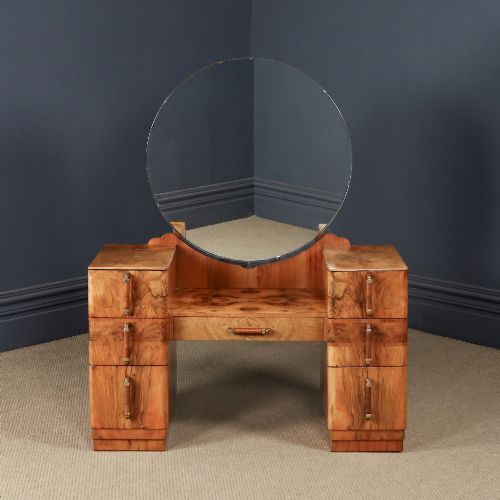
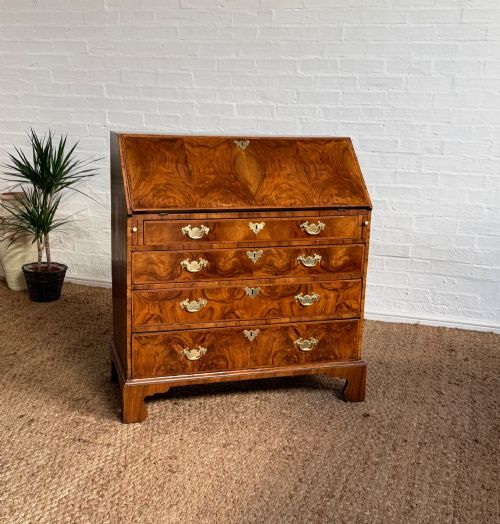
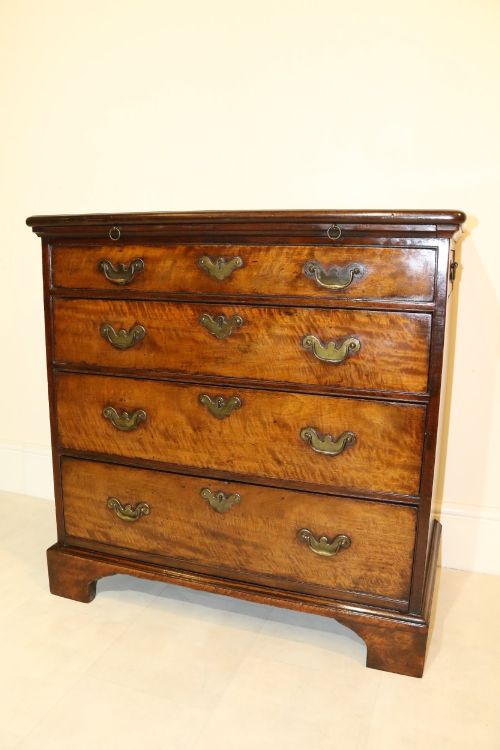
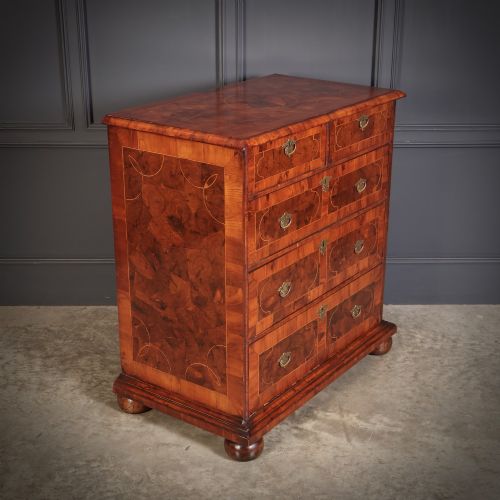
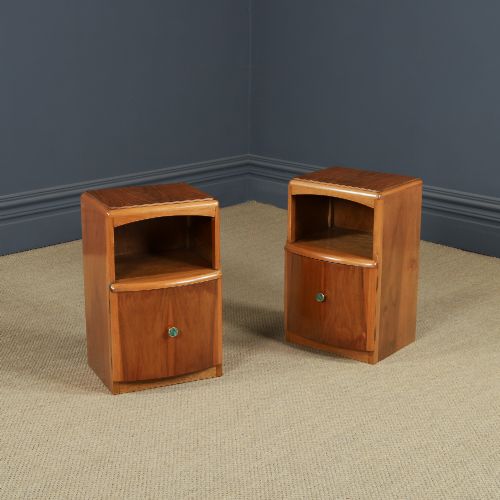
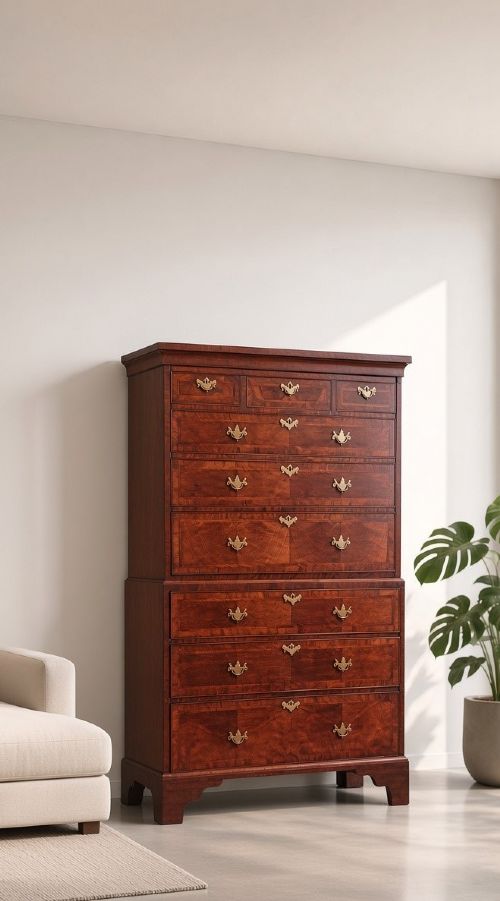
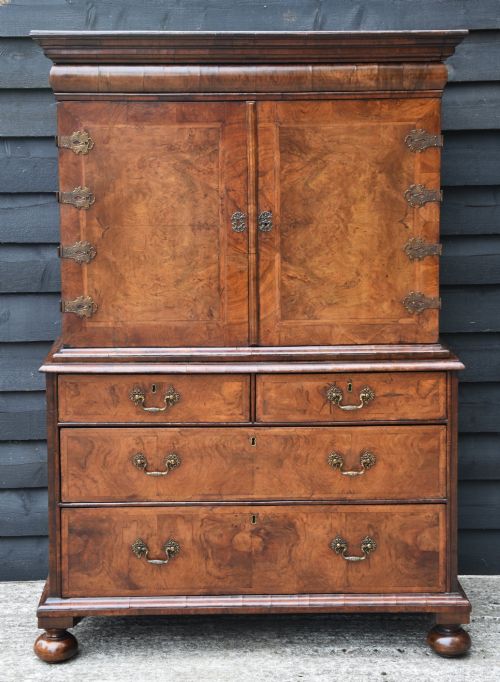
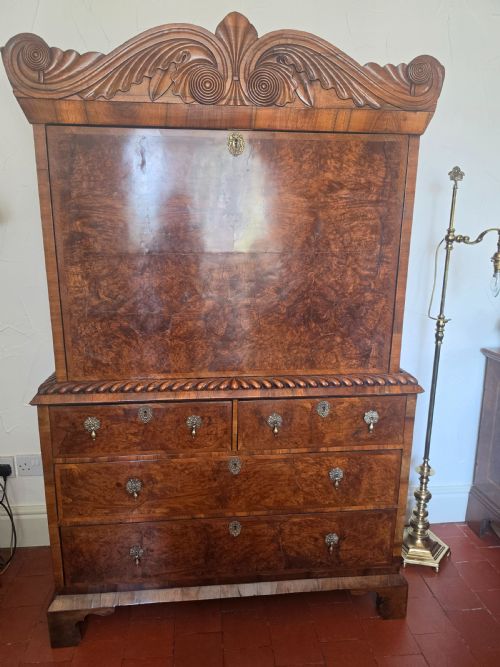
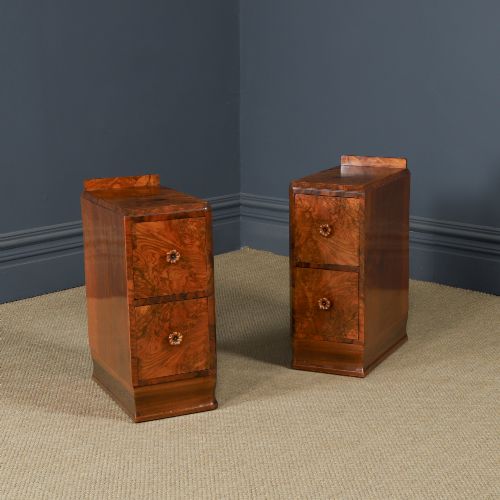
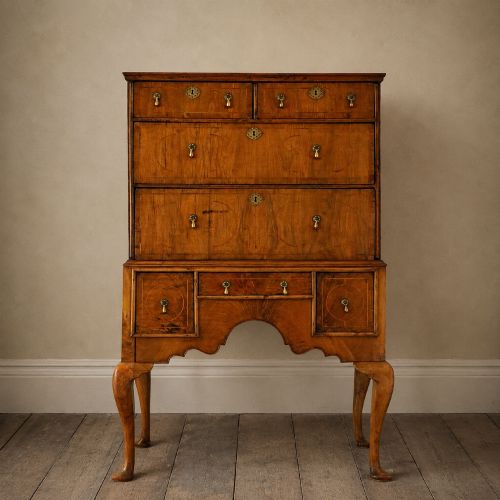
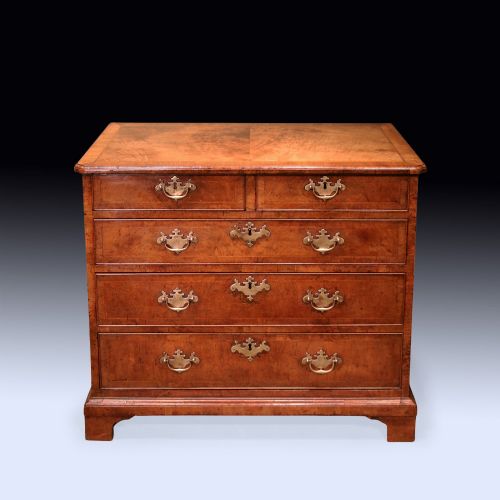
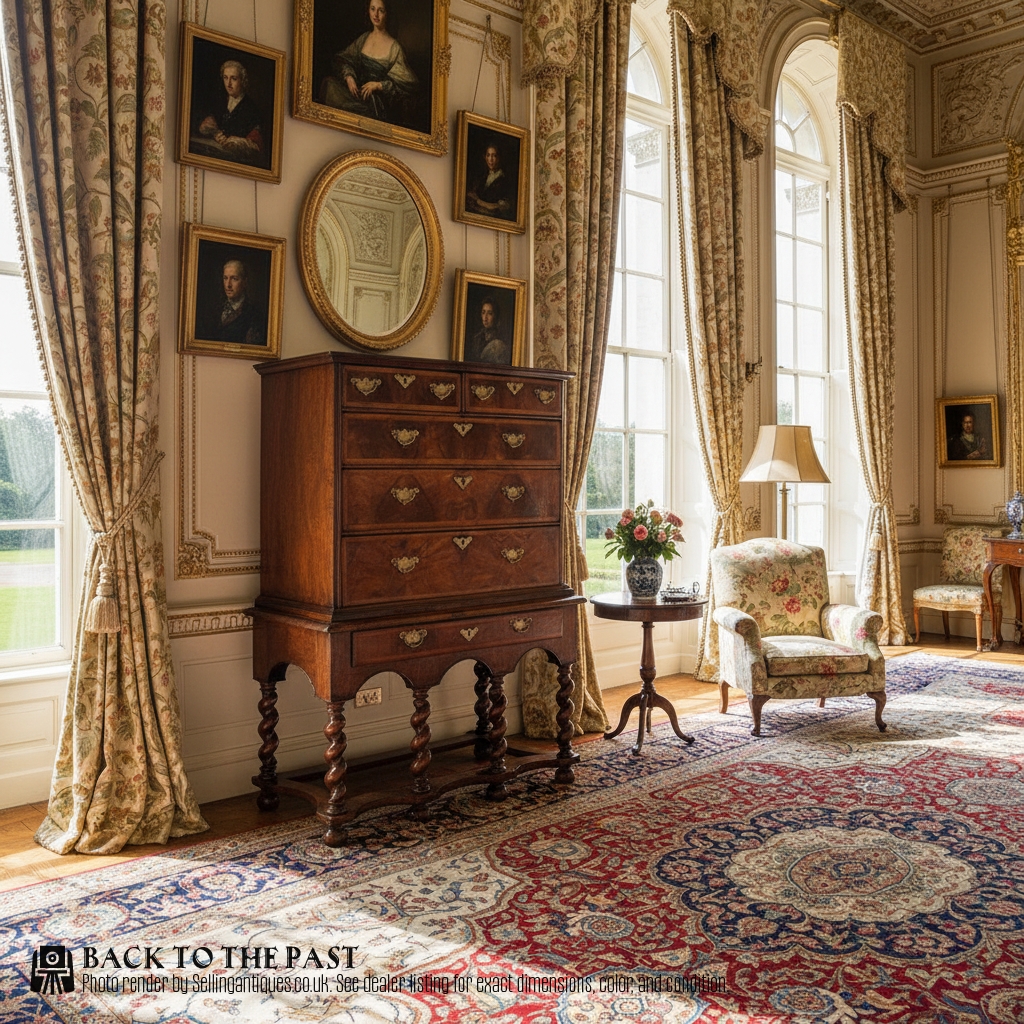
An english walnut chest encompasses low drawer units, tallboys, chests on stands, and compact bedside tables spanning several centuries of domestic storage. The form shifts from seventeenth-century William and Mary risers through eighteenth-century figured chests to nineteen-thirties Art Deco interpretations.
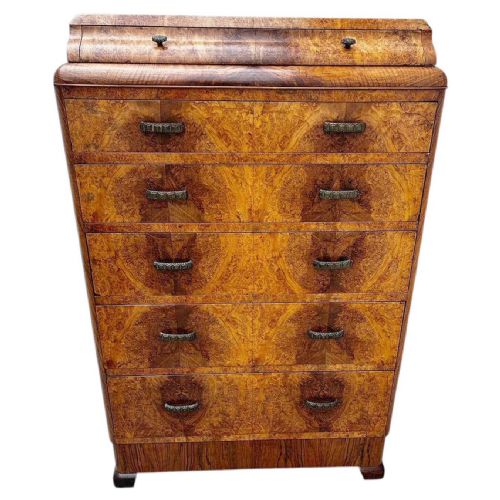
Early pieces frequently appear as chests on stands or multi-tiered tallboys, while nineteenth-century variations include fireside bins and Wellington cabinets. The twentieth-century selection introduces streamlined bedside pairs and five-drawer bow-fronted carcasses built from burr walnut veneer.
Materials and construction
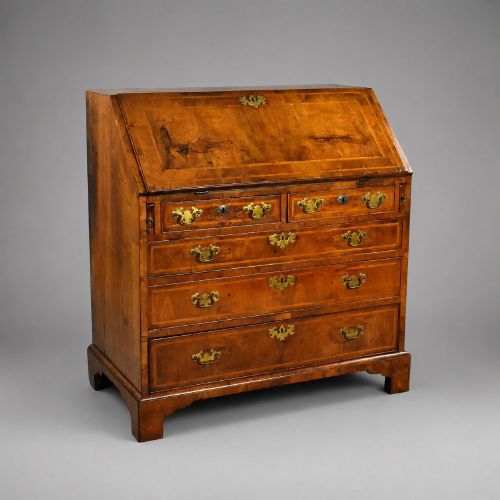
Carpenters built these carcasses using solid oak or pine as a stable secondary wood, applying fine walnut and burr walnut veneers to the primary exterior surfaces. Cross-banding and feather inlay decorate the drawer fronts of eighteenth-century examples.
Cabinet-makers incorporated original brass drop handles, escutcheons, and hinges, while secondary supports utilised turned legs, rope details, and integrated stands.
Retail Price Guide 2026
Typical UK retail prices for english walnut chest, calculated from the Sellingantiques database of over a million retail prices indexed since 2003. This retail price guide relies exclusively on Sellingantiques data; no external sources or auction records are used, so the figures do not describe the wider market.
Listings feature walnut, burr walnut, oak, and brass across pieces spanning the seventeenth century to the nineteen-thirties.
Judging quality and character
The distinction rests in the choice and matching of timber figures, where symmetrical burr walnut patterns and crisp cross-banding elevate the visual impact of the facade. Survival of original surface finishes and period brasswork indicates an intact pedigree.
Proportion and structural honesty separate restrained early execution from later revival work, with tight joints and clean drawer linings marking competent joinery across all periods.
Waring & Gillow
The English Walnut Chest Glossary
- Burr walnut
- A figured wood grain derived from the growths of the walnut tree, prized for its swirling, highly decorative patterns on drawer fronts.
- Tallboy
- A tall chest of drawers made in two sections, often combining a chest on a chest or a chest on a stand.
- Cross-banding
- A narrow strip of veneer laid around the border of a drawer front or top, with the grain running at right angles to the central panel.
- Feather inlay
- A delicate decorative banding technique where veneer pieces are arranged to resemble the spine of a feather.
- Chest on stand
- A cabinet raised above the floor on a separate frame with legs, typical of seventeenth and early eighteenth-century production.
Frequently Asked Questions
How do I date an English walnut chest?
Examine the secondary woods inside the drawers, such as oak in early pieces, alongside the construction of the dovetails and the style of the brass hardware. The presence of cross-banding and feather inlay typically points toward early eighteenth-century production.
Later revival pieces and nineteen-thirties Art Deco examples often display standardised drawer construction and burr veneers over modern carcass timbers. Comparing the feet, stands, and overall proportions against known period forms helps confirm the era.
What is a chest on stand?
A chest on stand is an elevated cabinet form where a primary drawer section rests upon an open frame with legs. This configuration originated in the late seventeenth and early eighteenth centuries.
The raised design kept textiles away from damp floors and created a lighter visual presence in formal rooms. Surviving examples often feature turned legs united by stretchers.
How should I care for burr walnut veneer?
Keep walnut furniture away from direct sunlight and heat sources to prevent the delicate surface veneers from drying out or lifting. Maintaining stable room humidity preserves the integrity of both the timber and the historic polish.
Apply a light microcrystalline wax occasionally to clean and protect the surface, avoiding harsh modern sprays or silicones. Gentle dusting with a soft, dry cloth is sufficient for routine maintenance.
What is the difference between a tallboy and a tallboy compactum?
A standard tallboy typically consists of a chest of drawers stacked vertically, designed primarily for linen and apparel storage. These tall carcasses maximise storage capacity while occupying a compact floor footprint.
A tallboy compactum incorporates enclosed cupboard doors alongside internal drawers, functioning as a combined wardrobe and chest. Both forms appeared across eighteenth-century workshops and later twentieth-century revivals.