

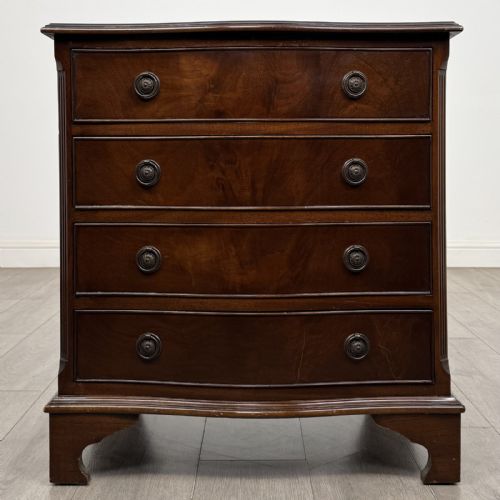
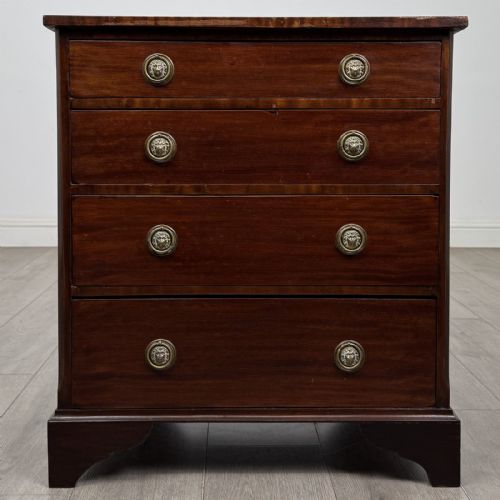
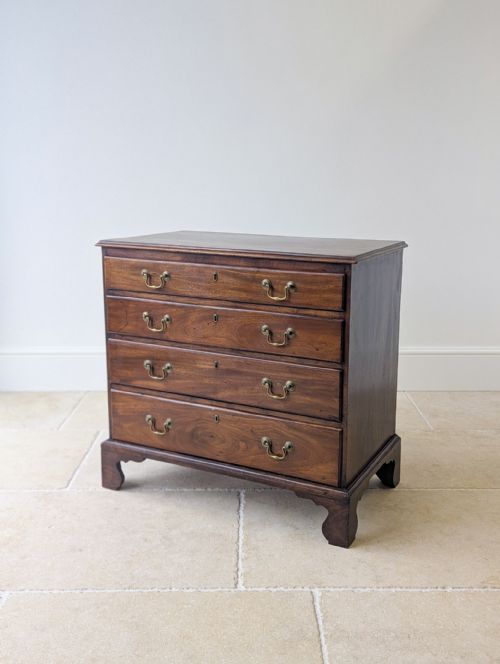
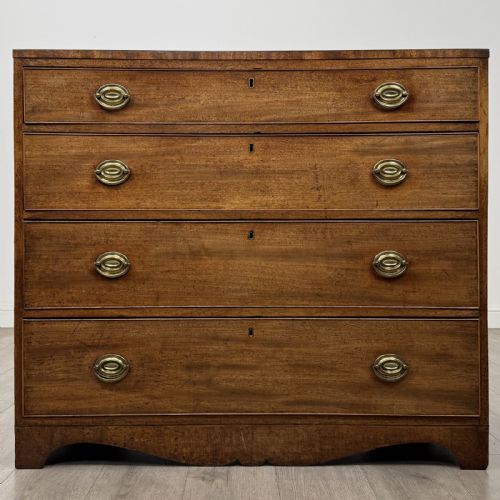
Bracket Foot Chest
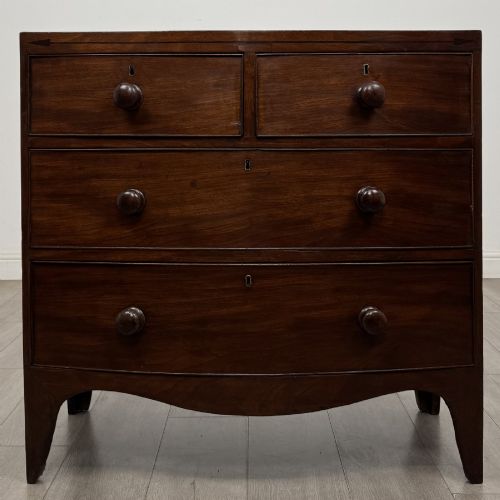
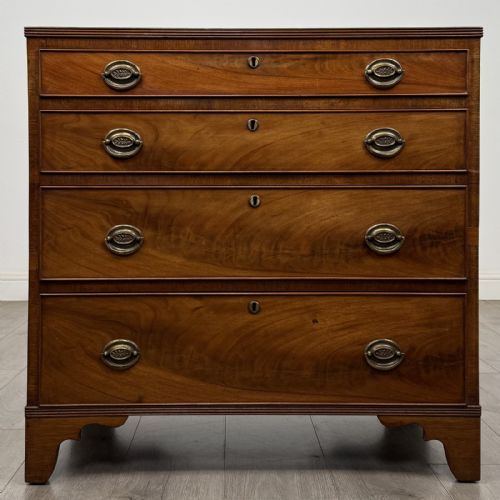
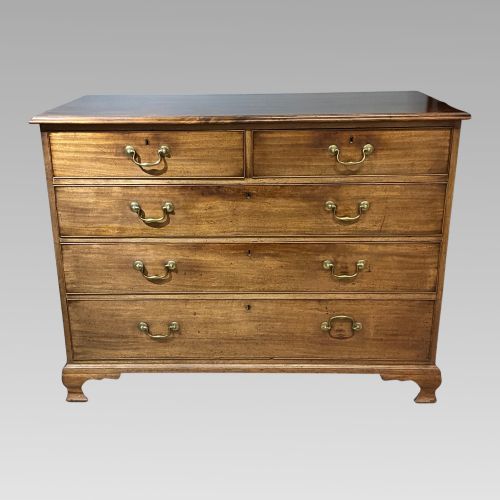
A bracket foot chest brings architectural grounding and capacious storage to a room, anchored firmly on shaped wooden bracket feet.
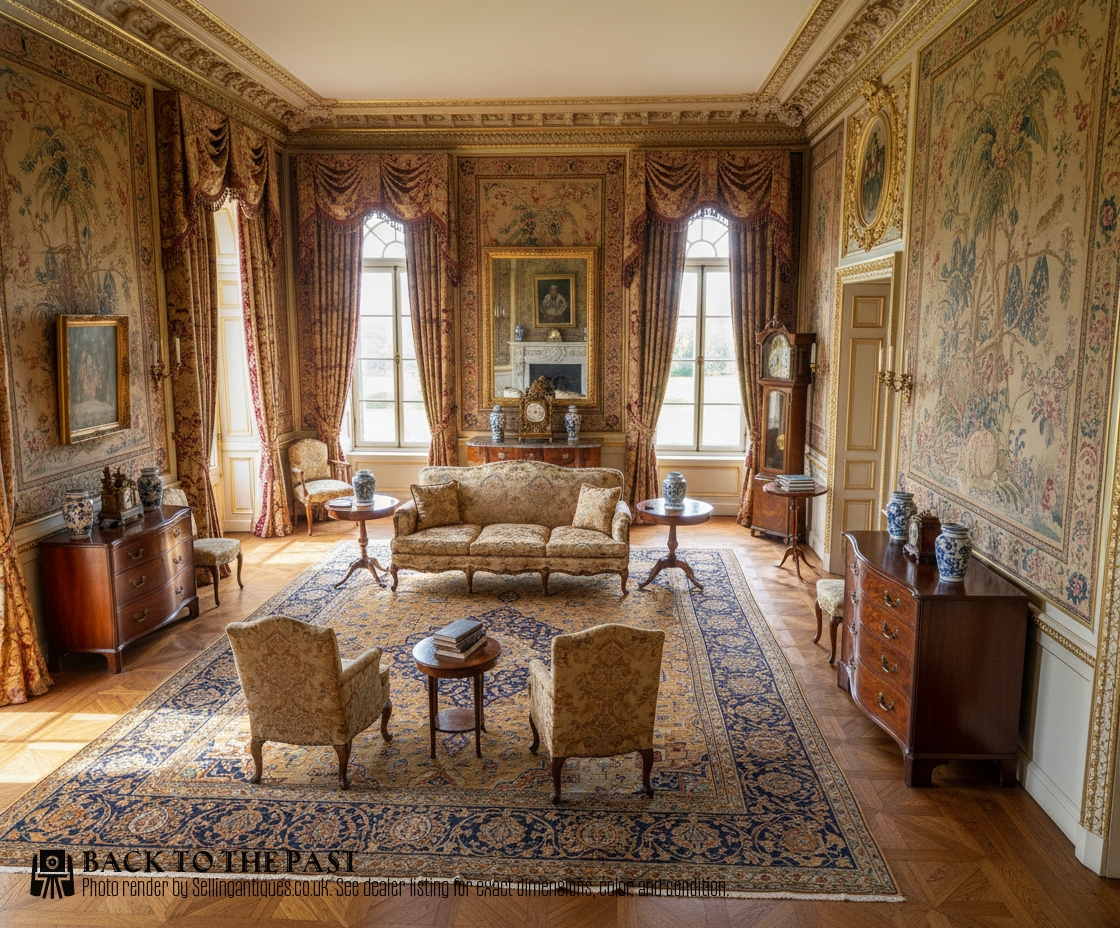
Bracket Foot Chest
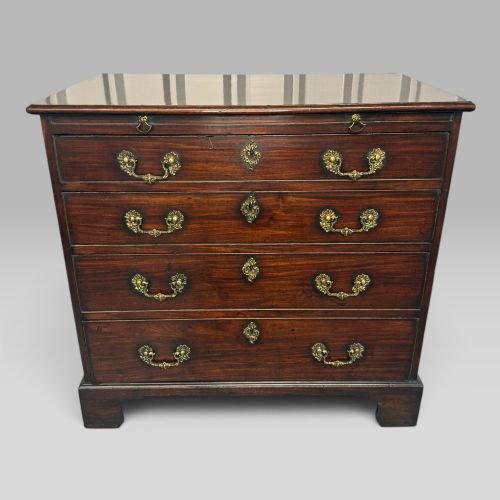
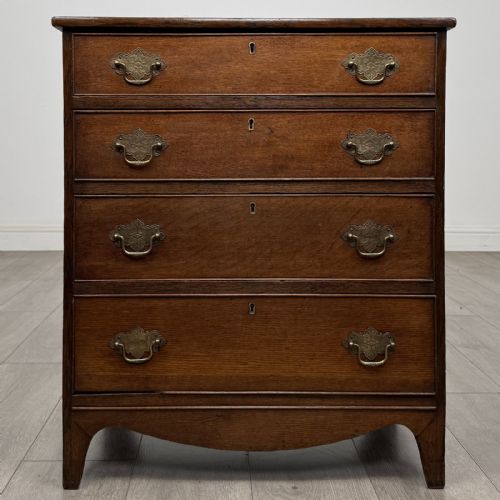
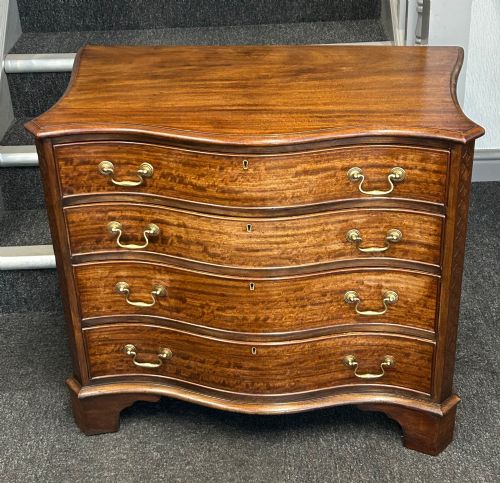
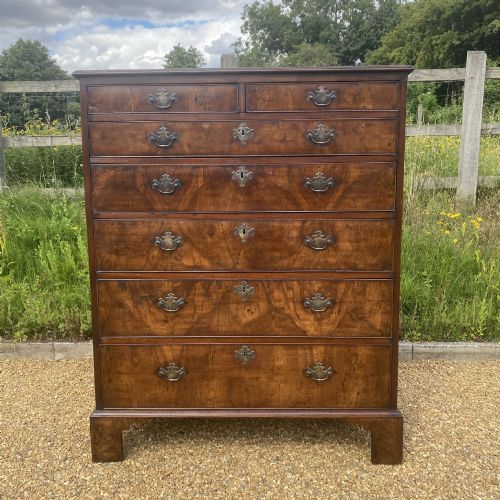
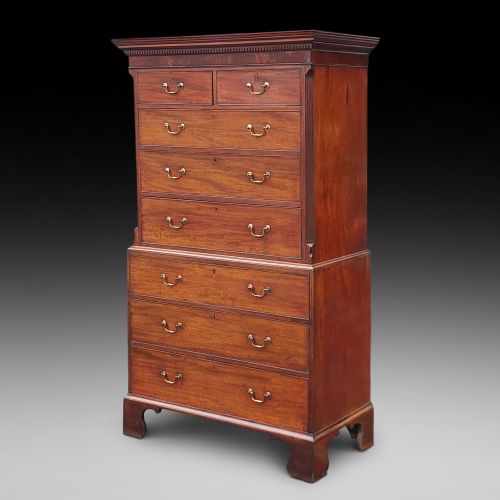
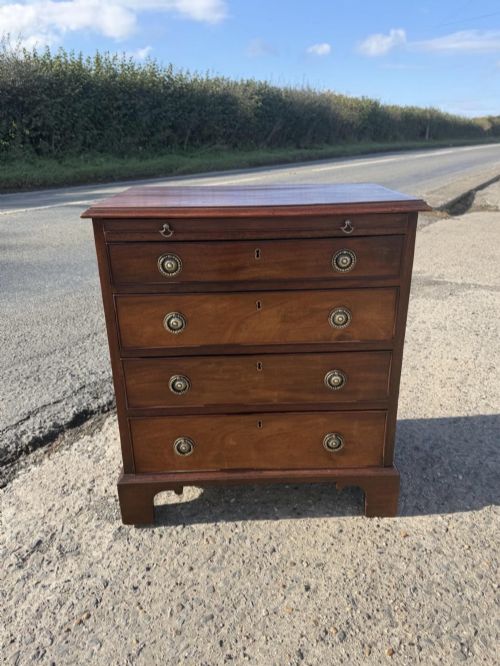
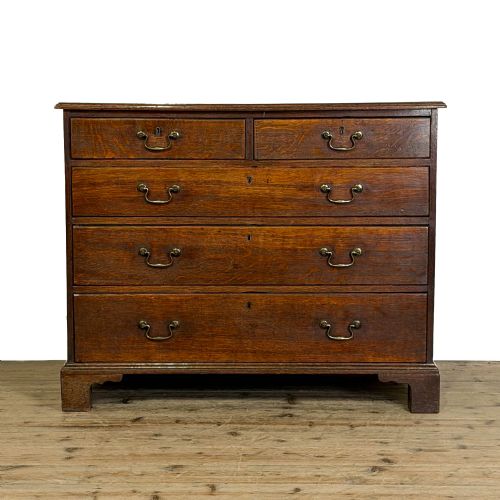
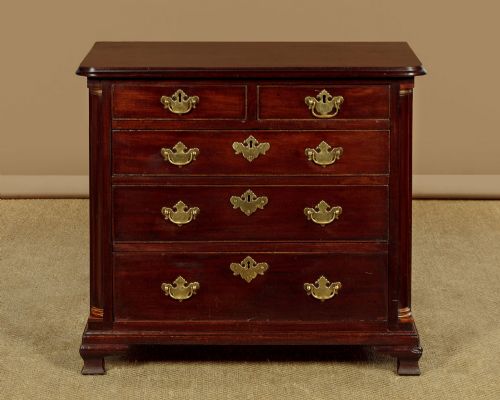
A bracket foot chest stands as a cornerstone of traditional British furniture, taking the form of a sturdy case piece designed primarily for storing clothing and linens. When searching for a bracket foot chest, a buyer encounters forms ranging from compact bedside chests and bachelor's writing chests to tall chests on chests and serpentine commodes. These pieces emerge predominantly from the eighteenth and nineteenth centuries, spanning Georgian, Regency, and Victorian periods.
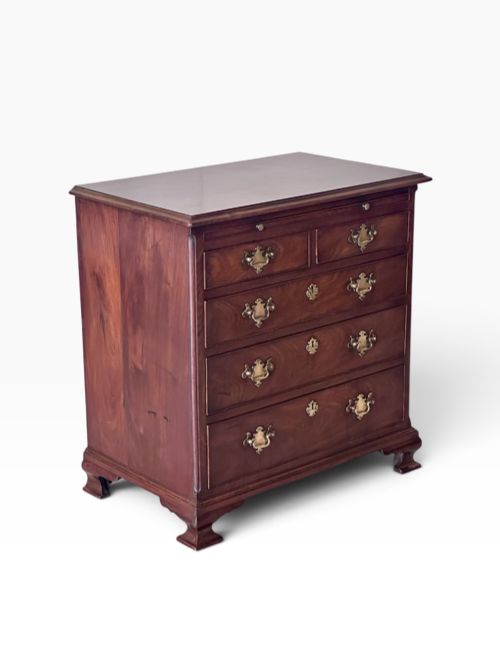
Mahogany and oak dominate the selections found on this page, accompanied by walnut, burr walnut, pine, and yew wood. Many examples incorporate period brass drop handles and escutcheons, whilst select iterations add a pull-out brushing slide above the primary drawer tiers. The bracket feet themselves provide a neat, cohesive corner support that elevates the heavy timber carcass gracefully off the floor.
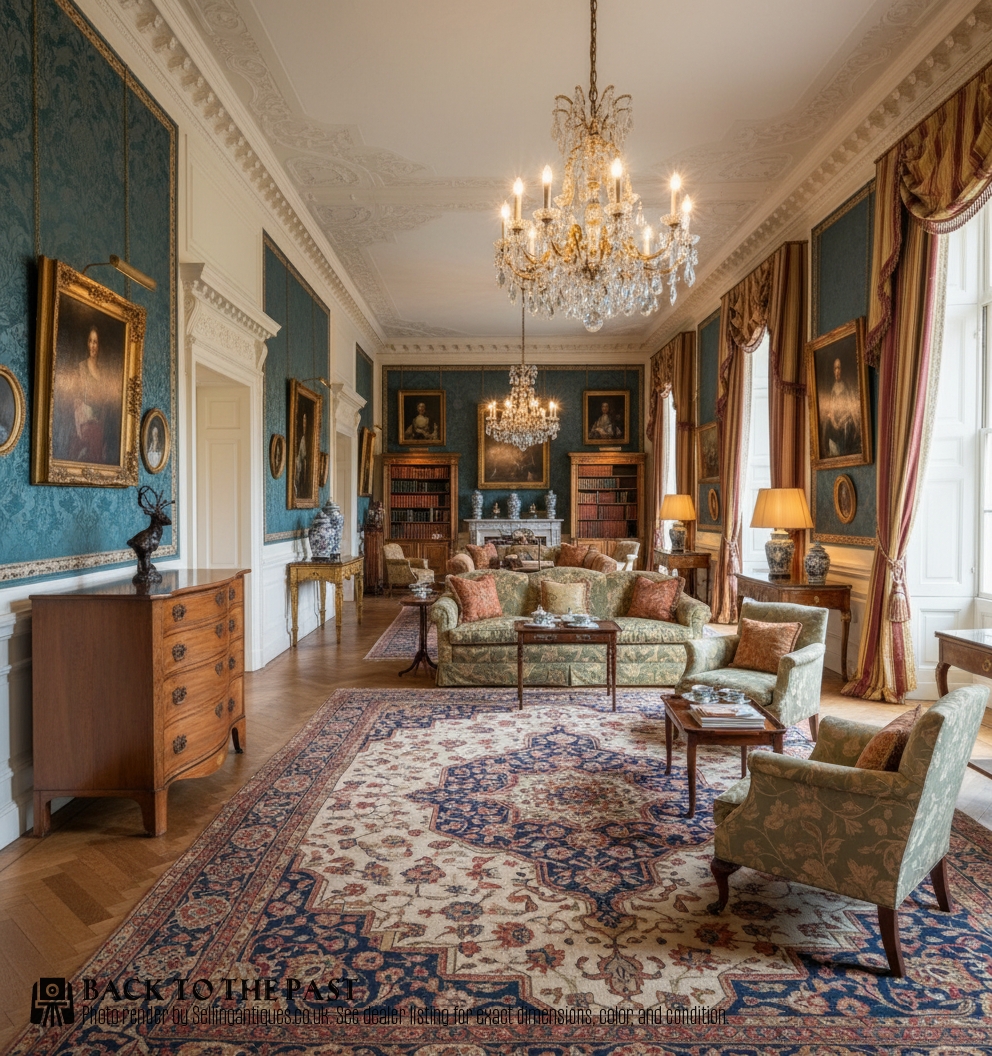
How they were made
Cabinetmakers constructed these carcases using dense native and imported timbers, employing solid oak and pine for internal drawer linings and structural framing. Fine veneers of mahogany, walnut, and burr walnut were laid over secondary woods, often finished with crossbanding and fruitwood inlay to create decorative geometric patterns on drawer fronts and top surfaces.
The distinctive bracket feet are typically mitered at the corners and secured with internal glue blocks to withstand the weight of the heavy timber body. Dovetail joints join the drawer corners with precision, ensuring durability and smooth operation across centuries of daily use.
Bracket Foot Chest Retail Price Guide 2026
Typical asking prices for bracket foot chest among the pieces listed under this phrase on Sellingantiques today, from the lower quarter to the upper quarter. They describe what is for sale here now, not the wider market.
Listings feature woods including mahogany, oak, walnut, burr walnut, pine, ebonised wood, and fruitwood inlay across eighteenth, nineteenth, and twentieth-century periods.
What varies in quality
The calibre of a piece rests heavily on the selection of timber and the dexterity of the cabinetmaker's hand. Highly figured walnut or richly grained mahogany veneers demonstrate superior material choice, whilst crisp hand-cut dovetails and intact original brass hardware elevate an example above standard utility pieces.
Proportion and silhouette dictate visual success, seen clearly in the gentle sweep of a serpentine front or the balanced arrangement of graduated drawers. Retaining original feet and undisturbed surface patination marks the distinction between an exceptional survival and a heavily restored specimen.
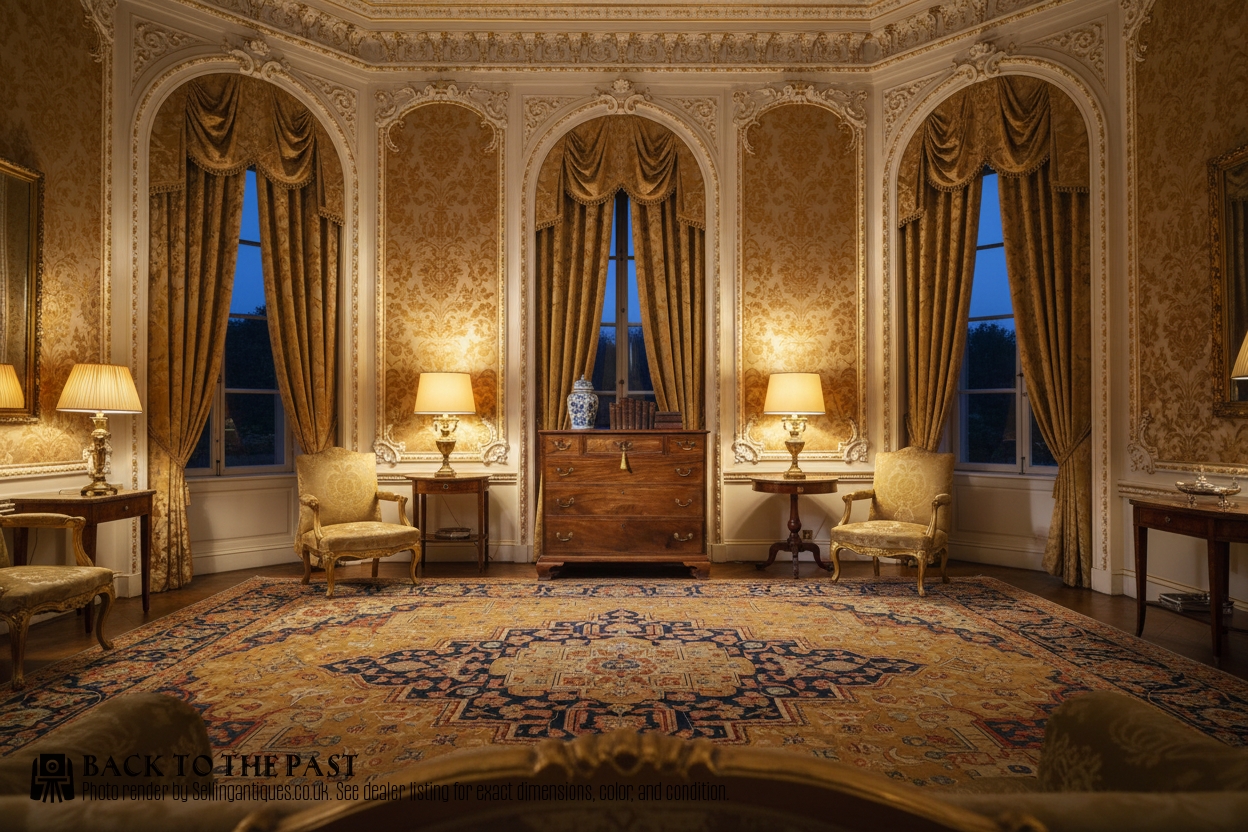
J Moorcroft
The Bracket Foot Chest Glossary
- Bracket foot
- A foot shaped like a small bracket, typically mitred at the corner and fixed to the base of a case piece. This foot style provides clean architectural lines without heavy protruding legs.
- Brushing slide
- A pull-out shelf integrated just beneath the top surface of a chest or bureau. It provided a clean, temporary wooden surface for grooming or sorting correspondence.
- Serpentine
- A curved shape featuring a convex centre flanked by concave ends, or vice versa. This undulating front profile demands advanced woodworking skill to execute properly.
- Chest on chest
- A tall case furniture form comprising a smaller chest stacked directly upon a larger base chest, creating substantial vertical storage. Also known as a tallboy.
- Crossbanding
- A narrow strip of veneer laid around the border of a drawer front or tabletop so that the grain runs perpendicular to the main panel. This technique frames the primary wood figure.
Bracket Foot Chest: Frequently Asked Questions
How do I date a wooden chest?
Dating a chest involves examining the secondary timbers, construction methods, and hardware styles used by the cabinetmaker. Hand-cut dovetails, timber shrinkage patterns, and period-appropriate brass handles offer reliable chronological clues.
Later Victorian and Edwardian interpretations often incorporate machine-cut elements or softer pine linings, whereas eighteenth-century Georgian examples utilise denser oak and hand-planed internal boards. Comparing the wood grain and finishing details against known historical periods helps narrow down the decade of manufacture.
How do I care for antique wood?
Caring for antique wood requires stable room humidity and protection from direct sunlight to prevent timber warping and veneer cracking. Regular dusting with a soft, dry cloth preserves the aged surface without stripping the natural patina.
Occasional application of appropriate wax polish nourishes the timber and maintains its soft lustre. Avoiding harsh chemical cleaners ensures the historic finish remains intact for future generations.
What is a bachelor chest?
A bachelor chest is a compact drawer chest that traditionally incorporates a fold-over top or a pull-out brushing slide. These versatile pieces were designed to serve multiple functions in smaller chambers.
They combine the drawer capacity of a standard chest with a convenient surface for writing or dressing. Their smaller proportions make them particularly adaptable for modern living spaces.