

Georgian Inlaid Chest Drawers
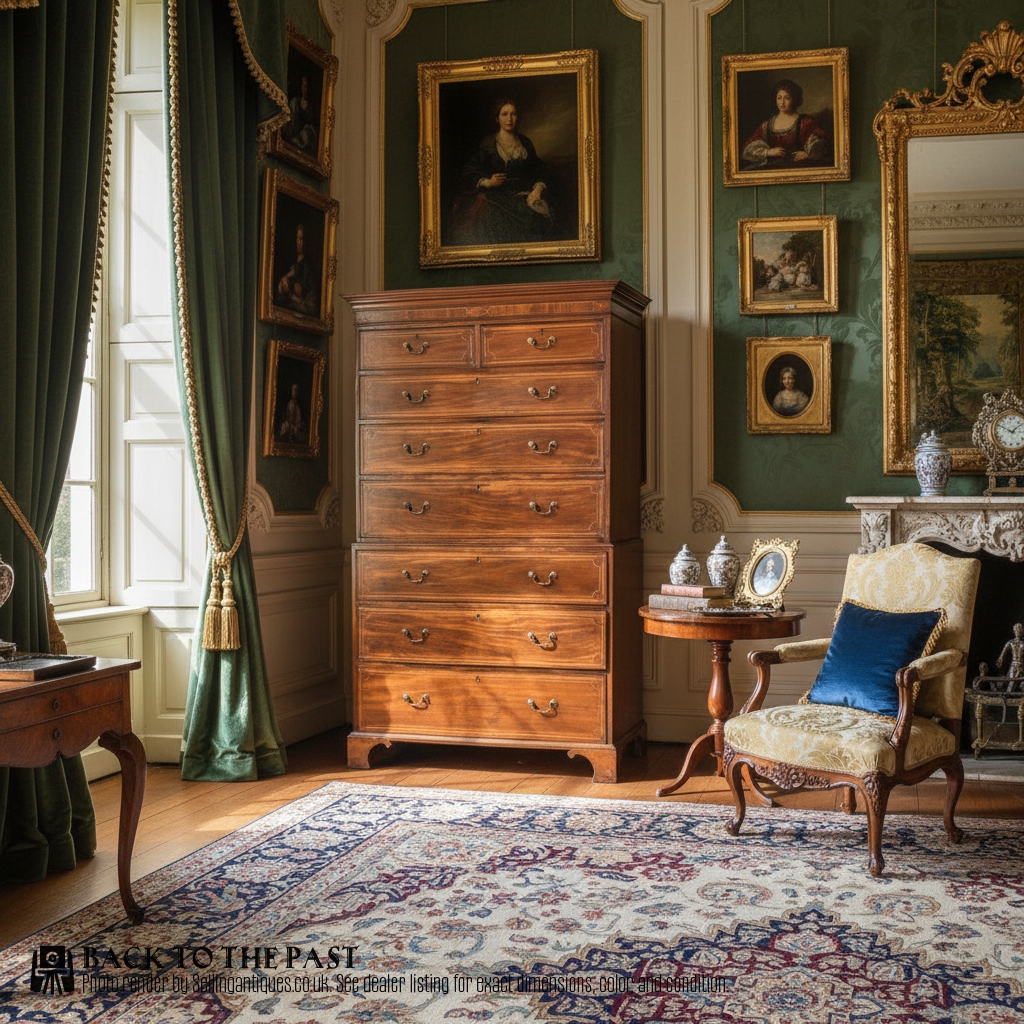
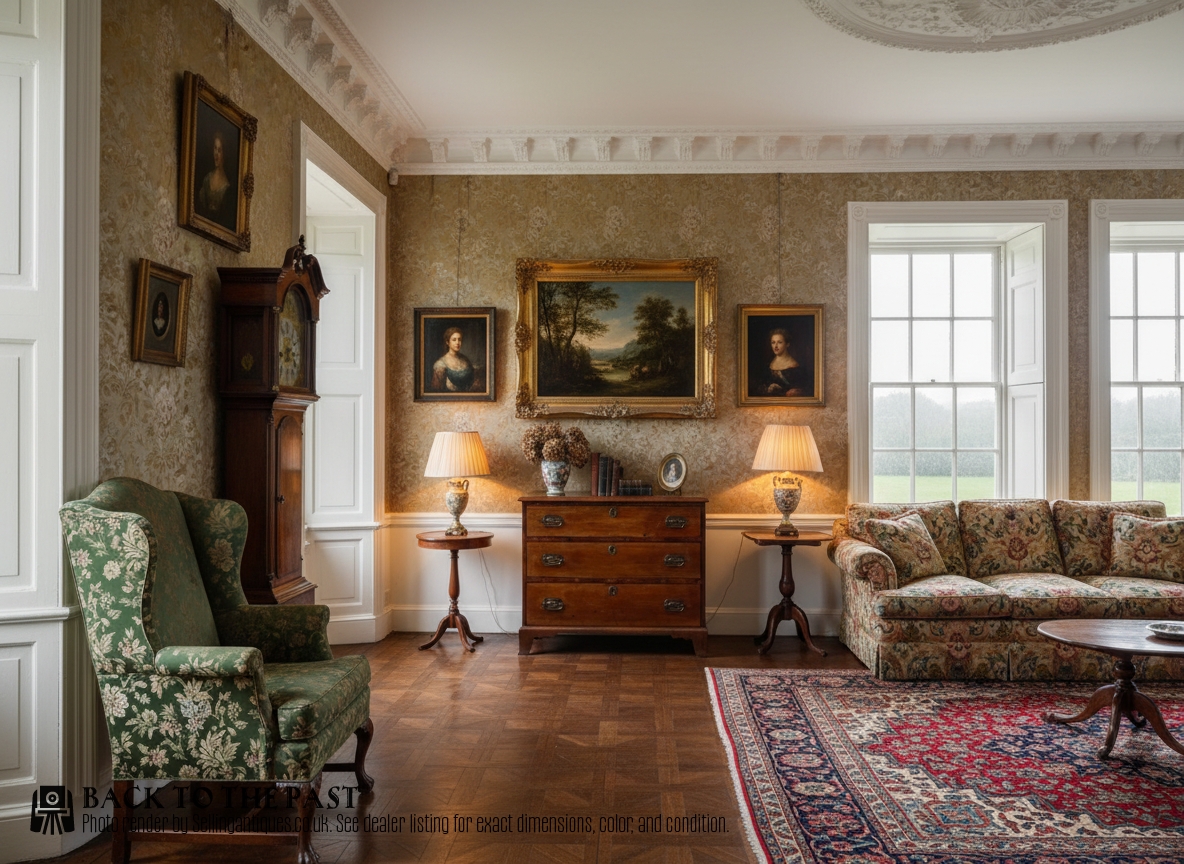
When you want georgian inlaid chest drawers, you are looking at substantial wooden storage pieces built to anchor a room.
The Form and Character of Georgian Inlaid Chest Drawers
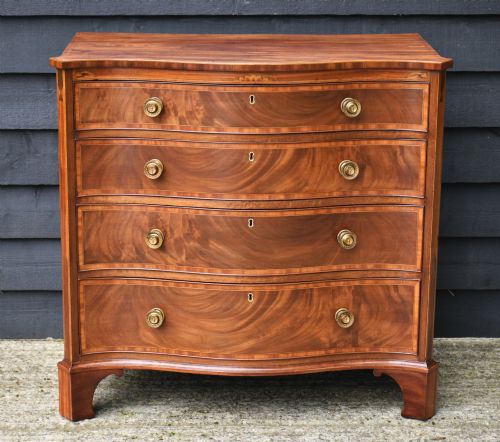
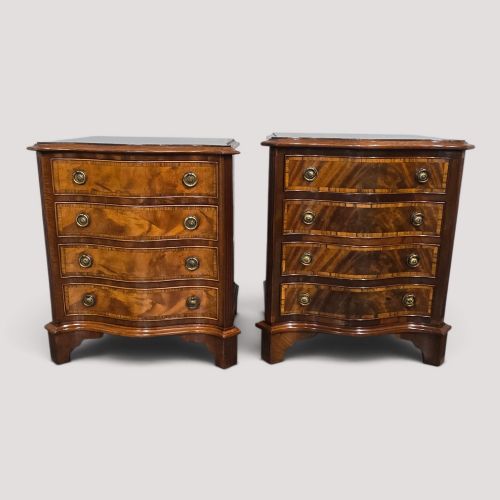
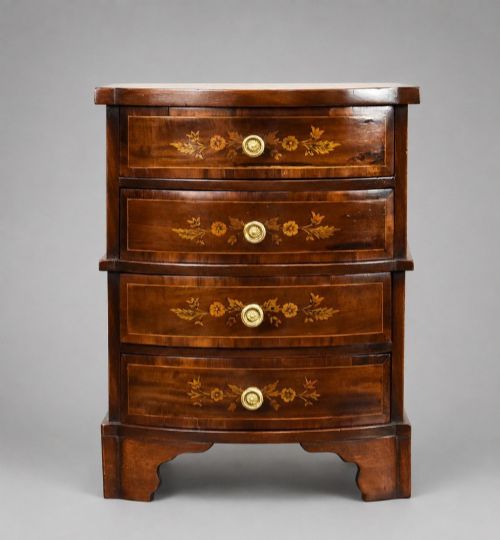
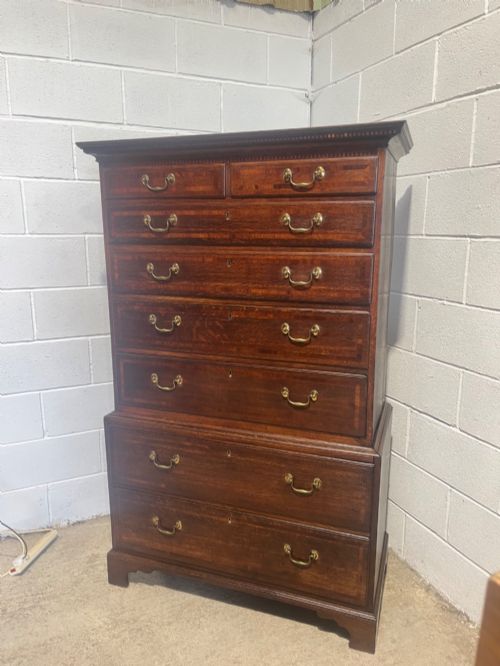
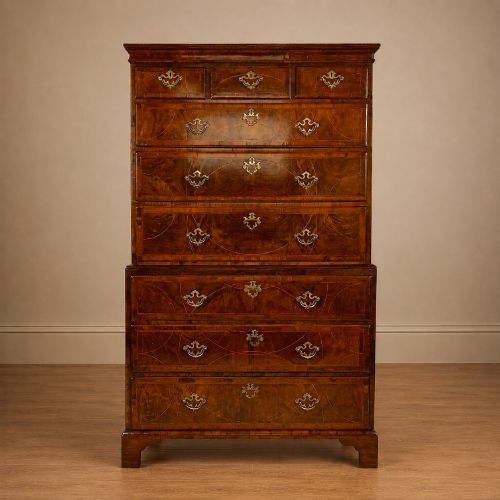
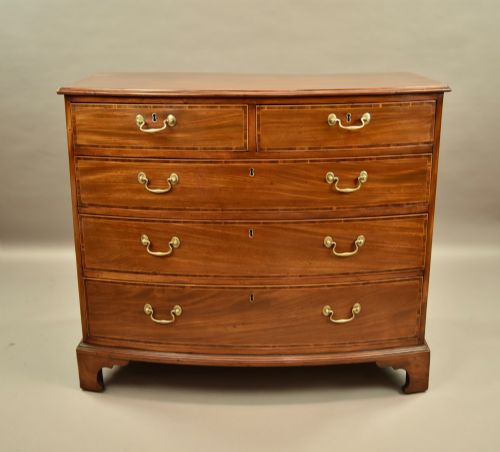
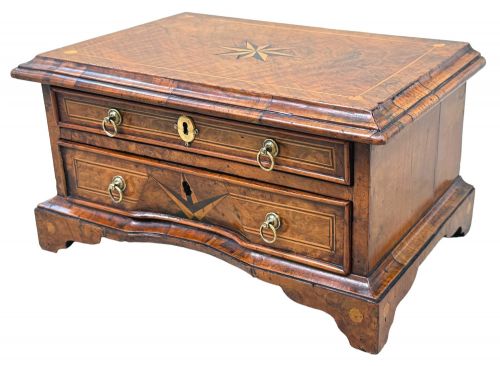
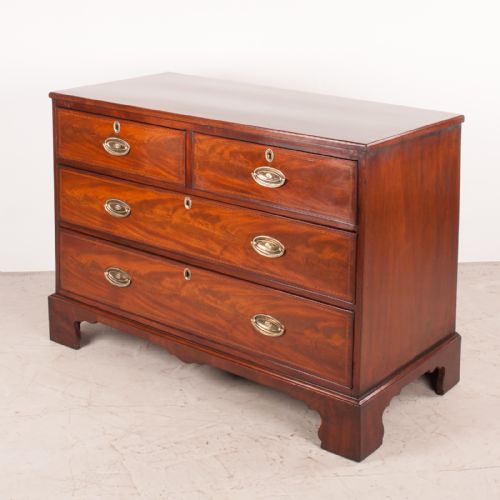
A georgian inlaid chest drawers is a domestic storage item designed with stacked horizontal drawers set within a timber carcase. The pieces appearing here span the eighteenth and nineteenth centuries, taking the form of straight-front, bow-front, and serpentine shapes.
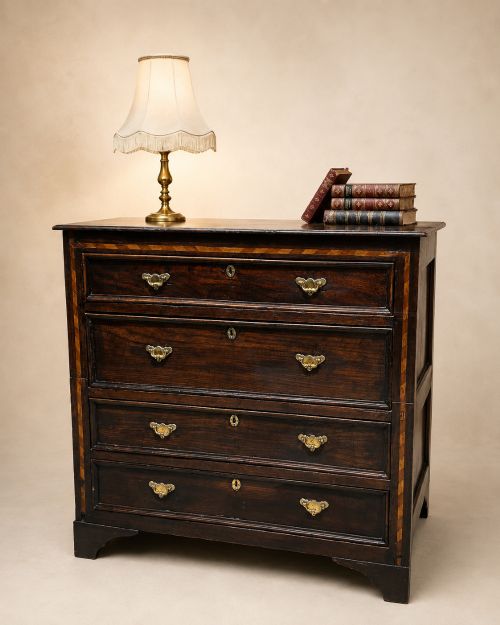
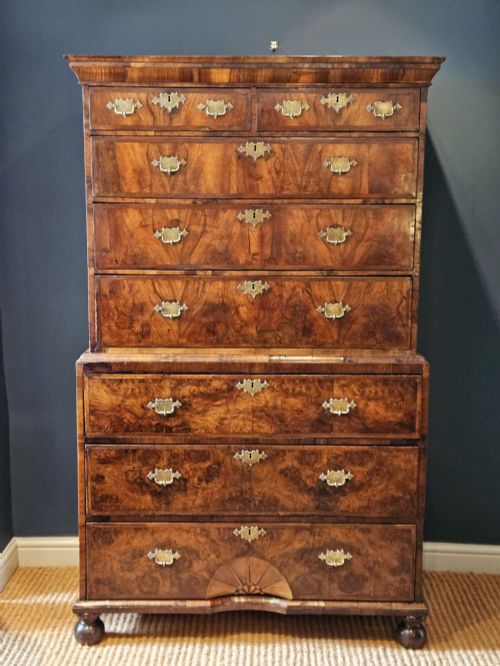
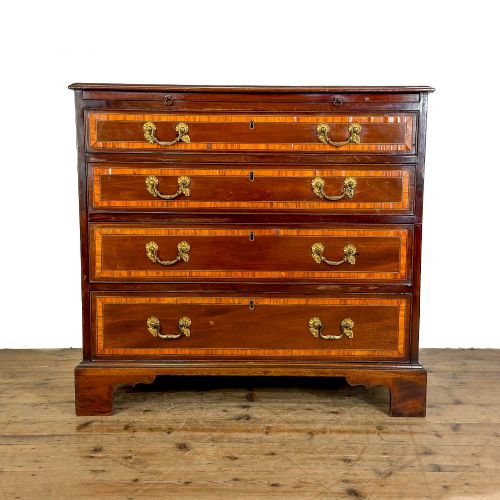
Buyers frequently encounter mahogany examples finished with decorative banding and fruitwood or boxwood lines. Earlier pieces appear in walnut and oak, showing the evolution of cabinet-making styles across the georgian period.
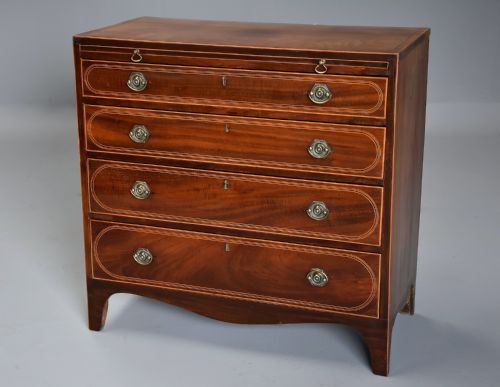
Specialised variations such as bachelors chests and caddy top forms also emerge through the archive. These pieces reflect the functional demands of domestic life alongside decorative woodcraft.

Materials and Construction Methods
Carpenters constructed these pieces using primary timbers like mahogany, walnut, and oak, supplemented by fruitwood and boxwood for inlay work. Brass hardware typically provided the handles and escutcheons for the drawer fronts.
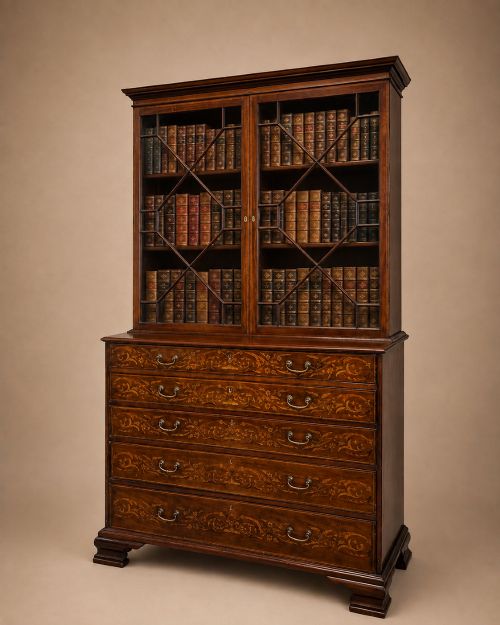
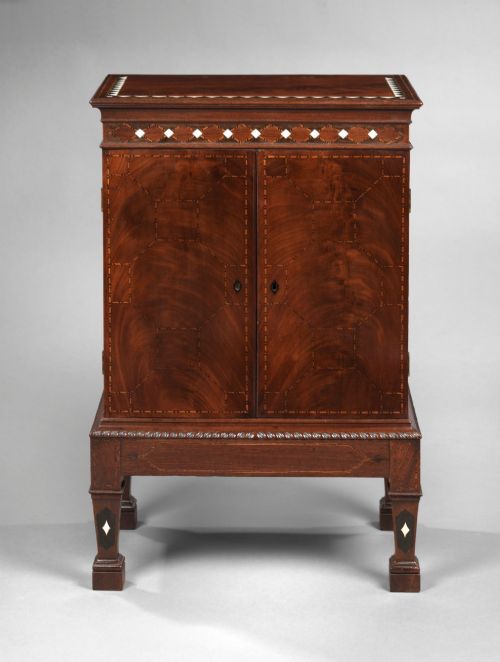
Inlay and cross-banding techniques defined the decorative surface treatment, often contrasting dark woods with lighter boxwood lines. Carcase construction relied on sturdy joinery to support heavy timber drawers over centuries of use.
Retail Price Guide 2026
Typical UK retail prices for georgian inlaid chest drawers, calculated from the Sellingantiques database of over a million retail prices indexed since 2003. This retail price guide relies exclusively on Sellingantiques data; no external sources or auction records are used, so the figures do not describe the wider market.
Some chests hid secret slides just above the drawers for a quick note.
Distinctions in Quality and Execution
The sophistication of the timber figure and the precision of the boxwood or fruitwood inlay set finer pieces apart from standard examples. Grain matching across drawer fronts and the subtlety of serpentine or bow-front curves indicate superior workshop execution.
The integrity of original brass handles, locks, and secondary timbers such as oak drawer linings influences the standing of a piece. Finer examples retain their structural proportions and crisp inlay without excessive timber replacement.
Gillows
The Georgian Inlaid Chest Drawers Glossary
- Bow front
- A convex curved chest front that projects outward in the centre, popular during the later eighteenth century.
- Serpentine front
- A undulating cabinet front featuring a convex centre flanked by concave sides, requiring advanced carpentry skill.
- Cross-banding
- A strip of veneer applied to the border of a drawer front so the wood grain runs perpendicular to the surrounding surface.
- Bachelors chest
- A compact form incorporating a fold-over top or a brushing slide above the primary storage drawers.
Frequently Asked Questions
How do I date a georgian chest?
Dating relies on timber choices, construction methods, and overall silhouette. Earlier pieces often utilise walnut and oak, while later eighteenth and nineteenth-century examples favour mahogany with detailed inlay.
Secondary woods inside the carcase and the style of the bracket feet or apron further help narrow the decade of manufacture.
What is a bachelors chest?
A bachelors chest is a smaller storage piece designed for compact rooms, often featuring a pull-out slide used for writing or placing items.
These pieces combine the utility of standard drawer storage with a convenient surface for daily tasks.
Where were these chests placed?
Historically, these items served as primary bedroom furniture for storing clothing and personal linen. Their finished timber surfaces and decorative inlay also suited them for placement in hallways and reception rooms.
Today, they adapt easily to modern living spaces as functional storage chests.
How do I care for antique mahogany?
Maintain the timber by keeping it away from direct sunlight and sudden temperature shifts, which can cause wood to split. Regular dusting with a soft cloth preserves the finish without chemical buildup.
Occasional application of appropriate wax helps nourish the dry grain of older wood surfaces.