




Dutch Floral Marquetry Cabinet
A dutch floral marquetry cabinet brings exuberant floral veneers and rich cabinet-making traditions into a room.

What dutch floral marquetry cabinet forms exist
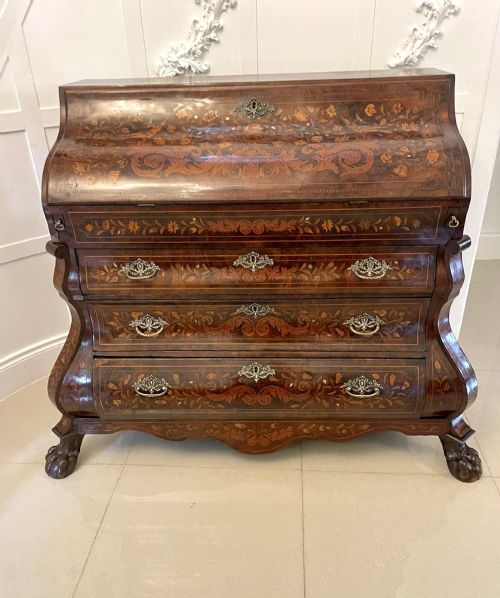
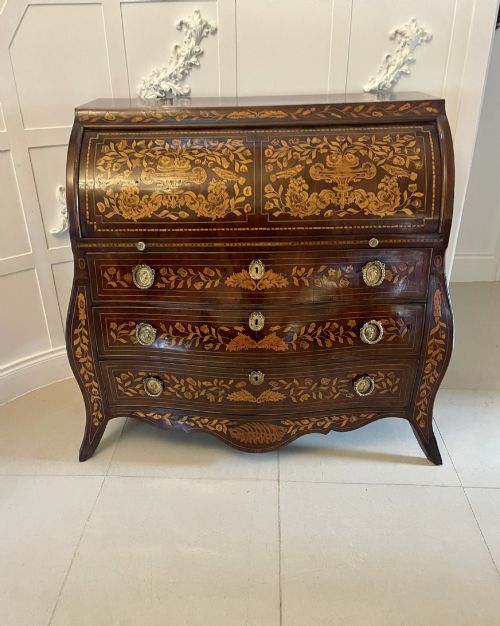
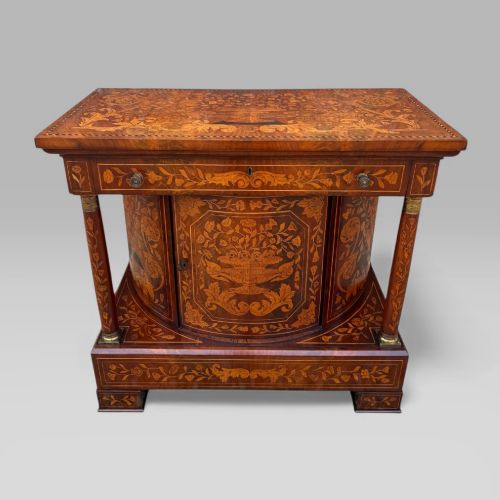
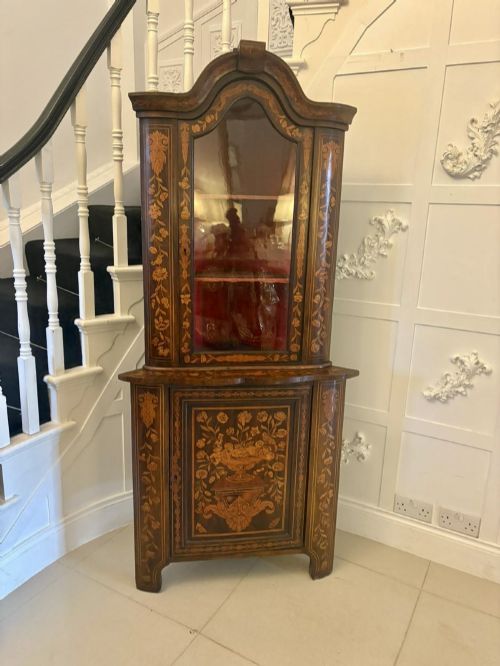
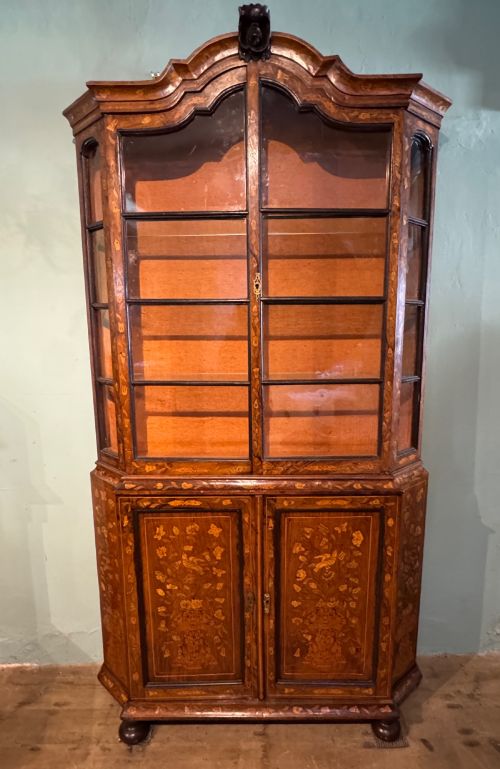
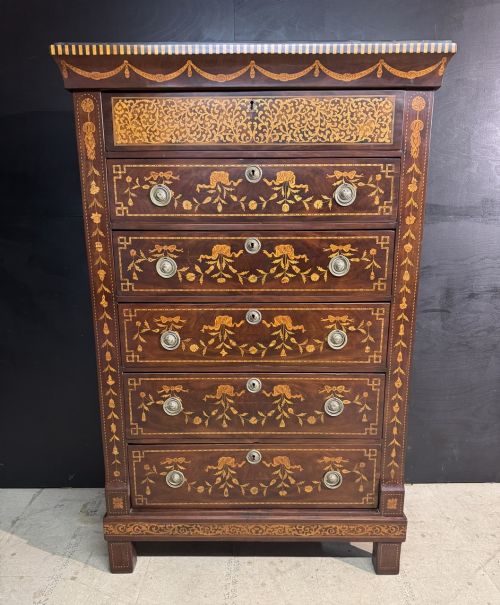
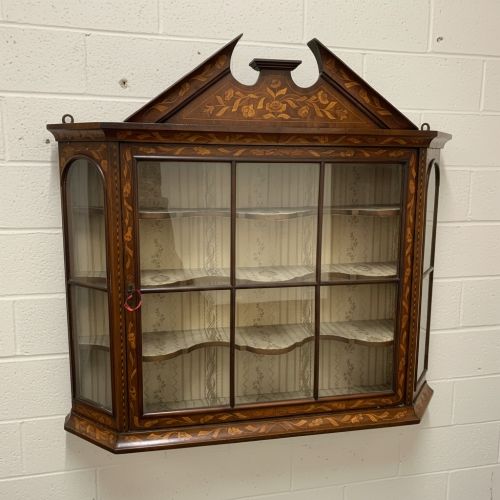
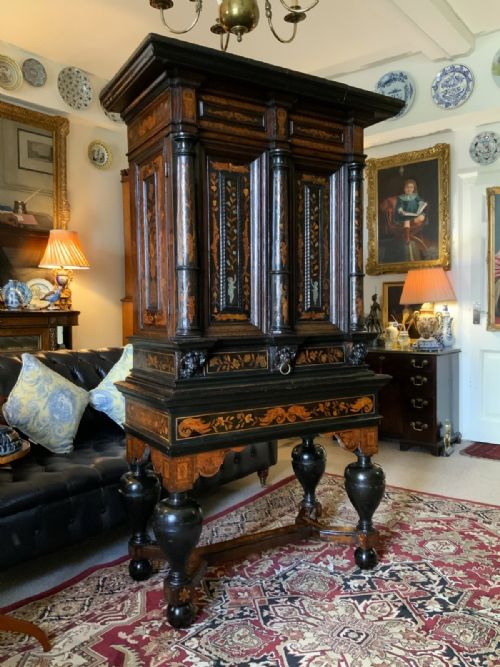
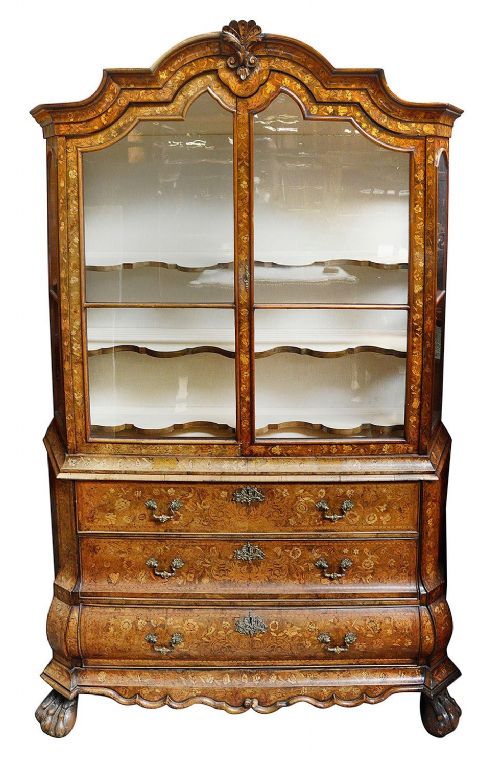
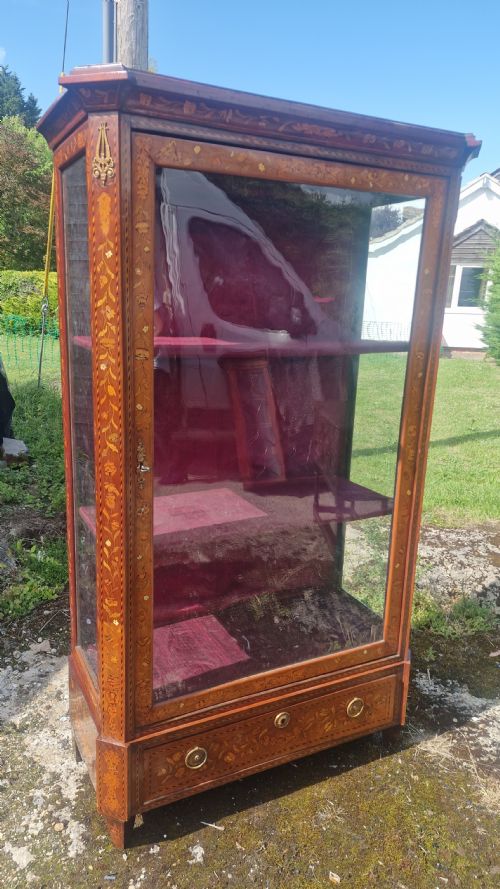
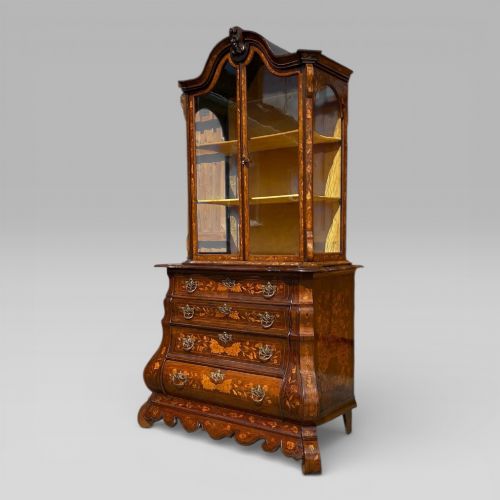
A dutch floral marquetry cabinet encompasses various forms designed for display and storage, ranging from tall chests of drawers to bureau bookcases and wall cabinets. These pieces often feature glass doors, glazed cupboards, or bombé profiles that showcase the elaborate wooden inlay work across the structure.
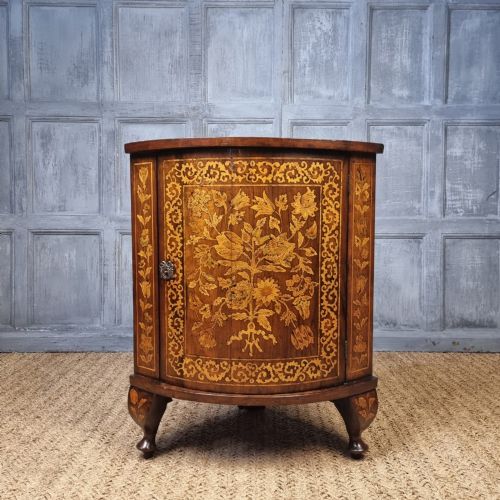
The examples found on this page span the eighteenth century and the nineteenth century, including revivals in Dutch Baroque, Dutch Rococo, and Dutch Neo-Classical styles. Buyers regularly encounter display cabinets, corner cabinets, and writing desks embellished with these distinctive floral motifs.
Makers and workshops constructed these items using substantial timbers like walnut, burr walnut, fruitwood, and oak, often providing deep contrasting backgrounds for the lighter inlaid floral designs.

Materials and construction methods
Cabinet-makers built the carcasses of a dutch floral marquetry cabinet from foundational woods like oak and mahogany, applying primary veneers of walnut and burr walnut over the surfaces. These foundational woods provided stable structural integrity for the heavy drawers and glazed display sections.
The decorative floral patterns utilise various fruitwoods cut into thin veneers, meticulously shaped and fitted into the background timber. Brass hardware and glass panels completed the doors and writing compartments, combining utility with elaborate surface decoration.
Retail Price Guide 2026
Typical UK retail prices for dutch floral marquetry cabinet, calculated from the Sellingantiques database of over a million retail prices indexed since 2003. This retail price guide relies exclusively on Sellingantiques data; no external sources or auction records are used, so the figures do not describe the wider market.
The available forms include display cabinets, corner cabinets, chests of drawers, wall cabinets, bureau bookcases, and writing desks.
Distinctions in craftsmanship and design
The visual impact of a dutch floral marquetry cabinet depends heavily on the complexity and depth of the inlaid floral scenes. Superior examples demonstrate intricate shading within the fruitwood petals and leaves, creating a lifelike three-dimensional effect across the burr walnut or walnut background.
Structural harmony also separates the work, where bombâ-shaped curves and well-proportioned glazed doors integrate seamlessly with the marquetry. Finer pieces maintain crisp lines in the cabinet mouldings and balanced compositions that span the entire surface without appearing crowded.
Edwards & Roberts
The Dutch Floral Marquetry Cabinet Glossary
- Marquetry
- A decorative technique where thin slices of wood, shell, or bone are applied to a structural carcass to form pictorial patterns. In these pieces, floral sprays and urn motifs dominate the design.
- Bombé
- A swelling or bulging contour found on the lower sections of chests and cabinets. This curved profile requires advanced woodworking skill to veneer successfully.
- Burr Walnut
- Timber taken from the wart or growth on a walnut tree, yielding swirling, highly figured grain patterns. It serves as a dramatic background for floral inlay.
- Vitrine
- A glass-fronted display cabinet used for showing porcelain and small collectibles. These glazed enclosures protect items while offering all-round visibility.
- Bureau Bookcase
- A combined writing desk and shelving unit featuring a sloping fall-front. The upper sections often incorporate glazed doors for displaying books or precious objects.
Frequently Asked Questions
What periods do these cabinets represent?
The pieces span the eighteenth century and the nineteenth century, encompassing original period construction alongside later nineteenth-century revivals. Styles range from Dutch Baroque and Rococo to Neo-Classical forms.
Cabinet-makers of both eras utilised traditional techniques, meaning stylistic markers often overlap across different decades of production.
How were these cabinets originally used?
Owners utilised them to store valuable possessions, display porcelain behind glass panels, and provide writing surfaces within formal rooms. Bureau bookcases combined workspaces with upper display shelving for books.
Display cabinets and vitrines functioned primarily as social focal points in parlours, showcasing the owner's taste and collection of curiosities.
What woods appear in the marquetry?
Craftsmen employed walnut, burr walnut, oak, mahogany, and various fruitwoods to create the contrasting colours needed for floral scenes. Dark walnut and burr walnut typically formed the background timber.
Lighter fruitwoods were dyed, shaded with hot sand, and cut to shape for the petals, stems, and leaves that characterise the marquetry.
Where should a cabinet be placed?
These pieces require stable indoor environments away from direct sunlight and sudden temperature shifts to protect the delicate fruitwood veneers and solid walnut structures. Placing them against interior walls preserves the wood.
Generous proportions mean large display cabinets and bureau bookcases need adequate floor space to allow their marquetry details to be fully appreciated.