




Marquetry Fall Front Desk
A marquetry fall front desk brings together intricate wood inlay and practical writing space, offering a striking centrepiece for any study.
What these pieces are
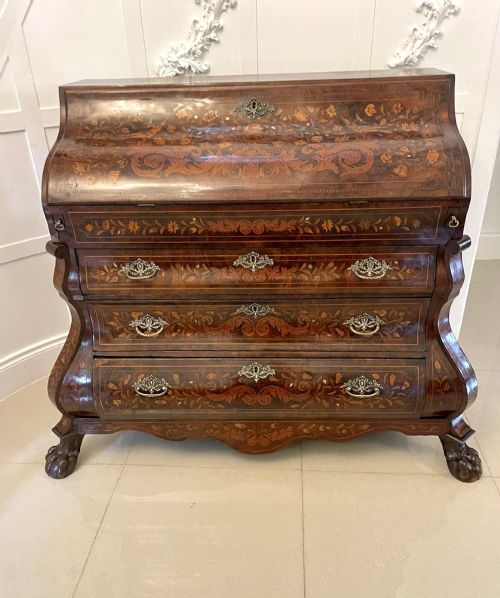
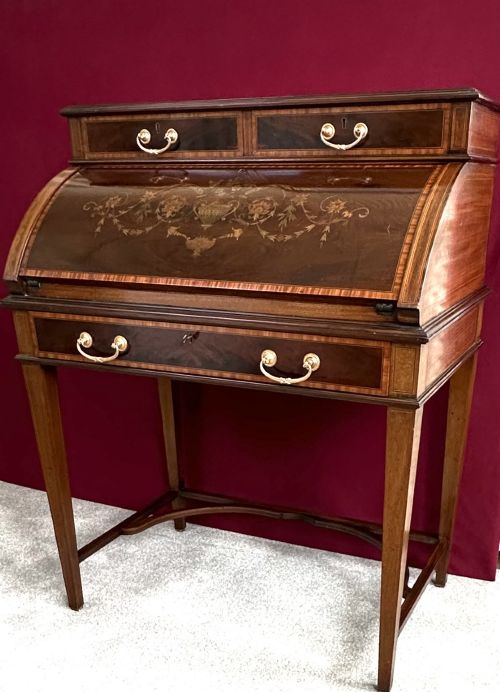
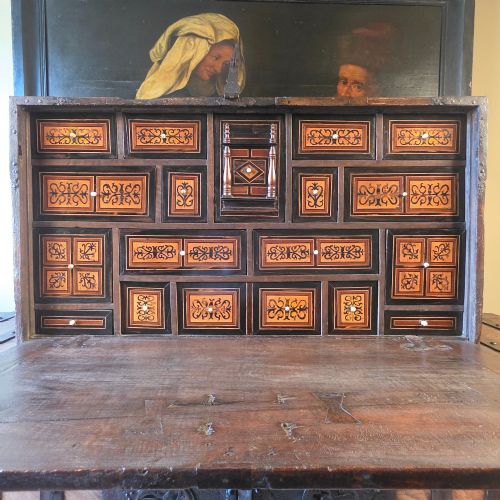
A marquetry fall front desk is a form of writing furniture where a hinged panel drops to reveal a fitted interior of small drawers and pigeonholes. These items appear across several distinct periods, including Georgian, Victorian, and the late nineteenth century.
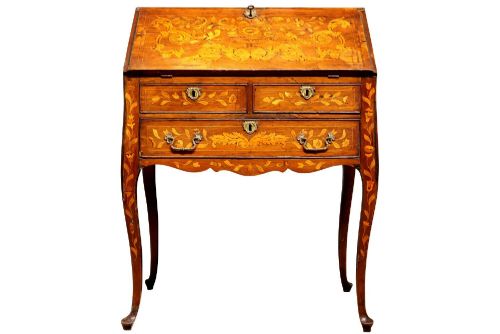
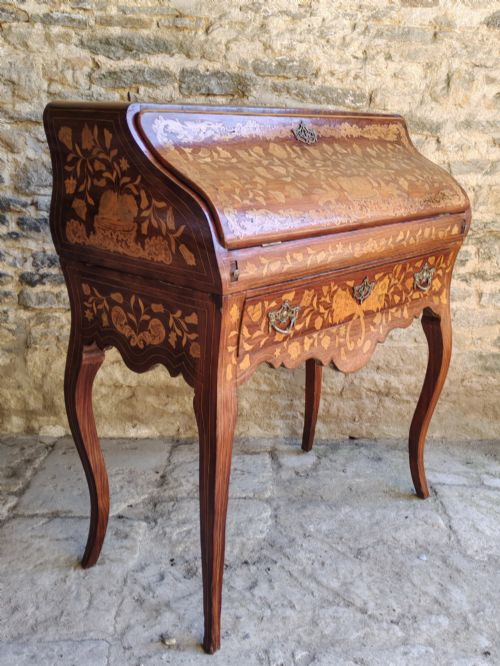
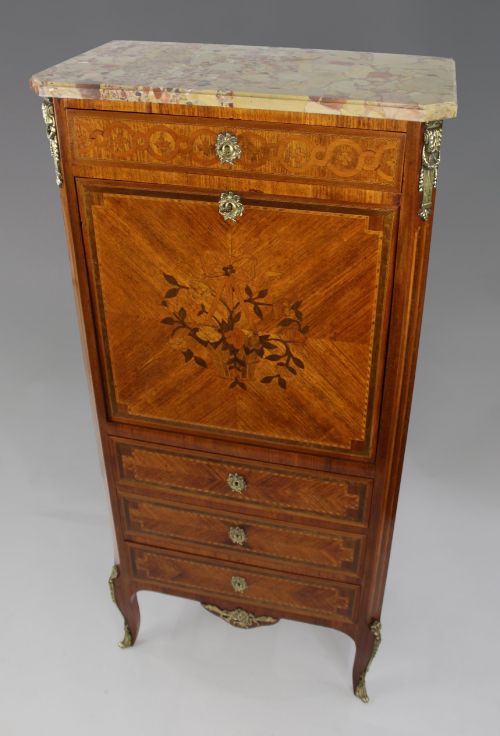
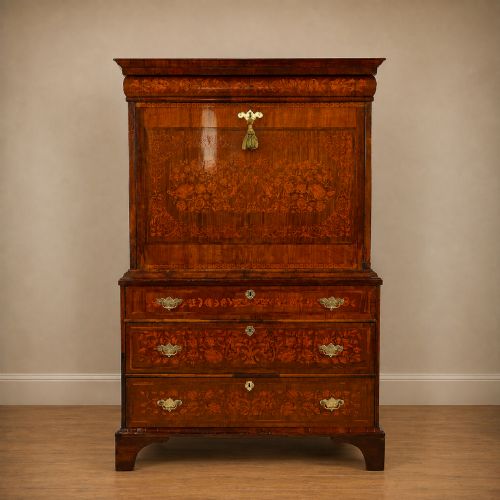
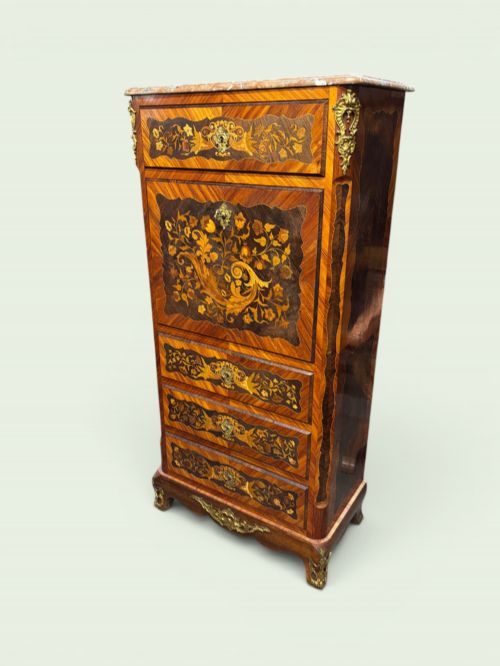
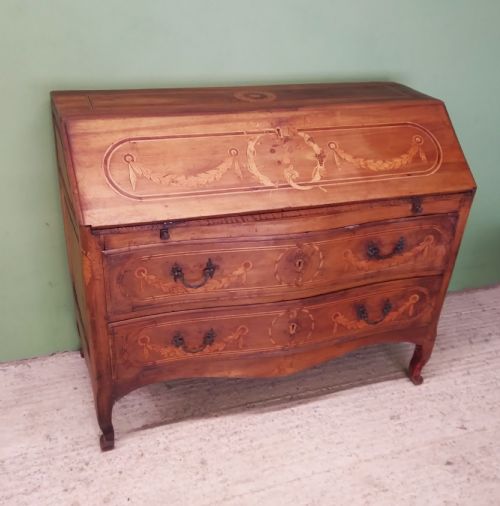
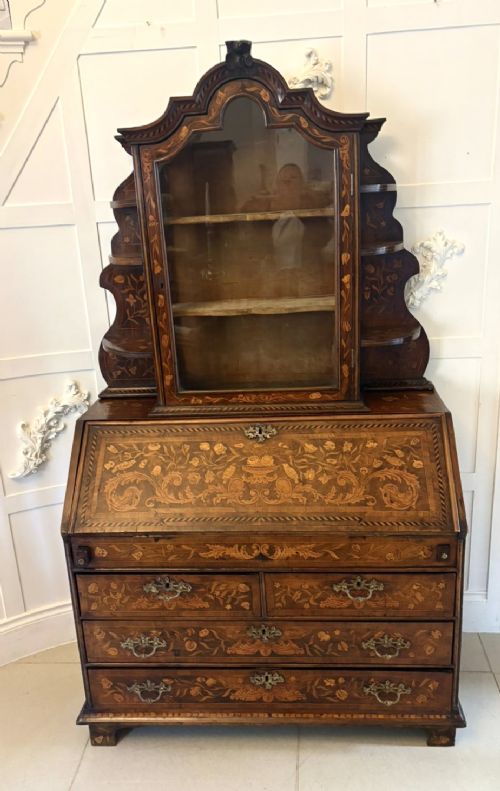
The selections on this page encompass various regional interpretations such as Dutch Baroque, French Rococo Revival, and Louis XVI Style. Forms range from compact pieces like the bureau de dame to larger bureau bookcases and escritoires.
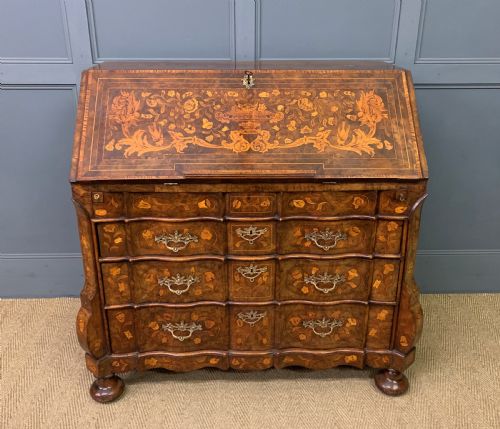
Maltese examples in fruitwood sit alongside Dutch floral marquetry in walnut and rosewood. Each piece balances a concealed writing surface with decorative patterned veneers across the exterior.
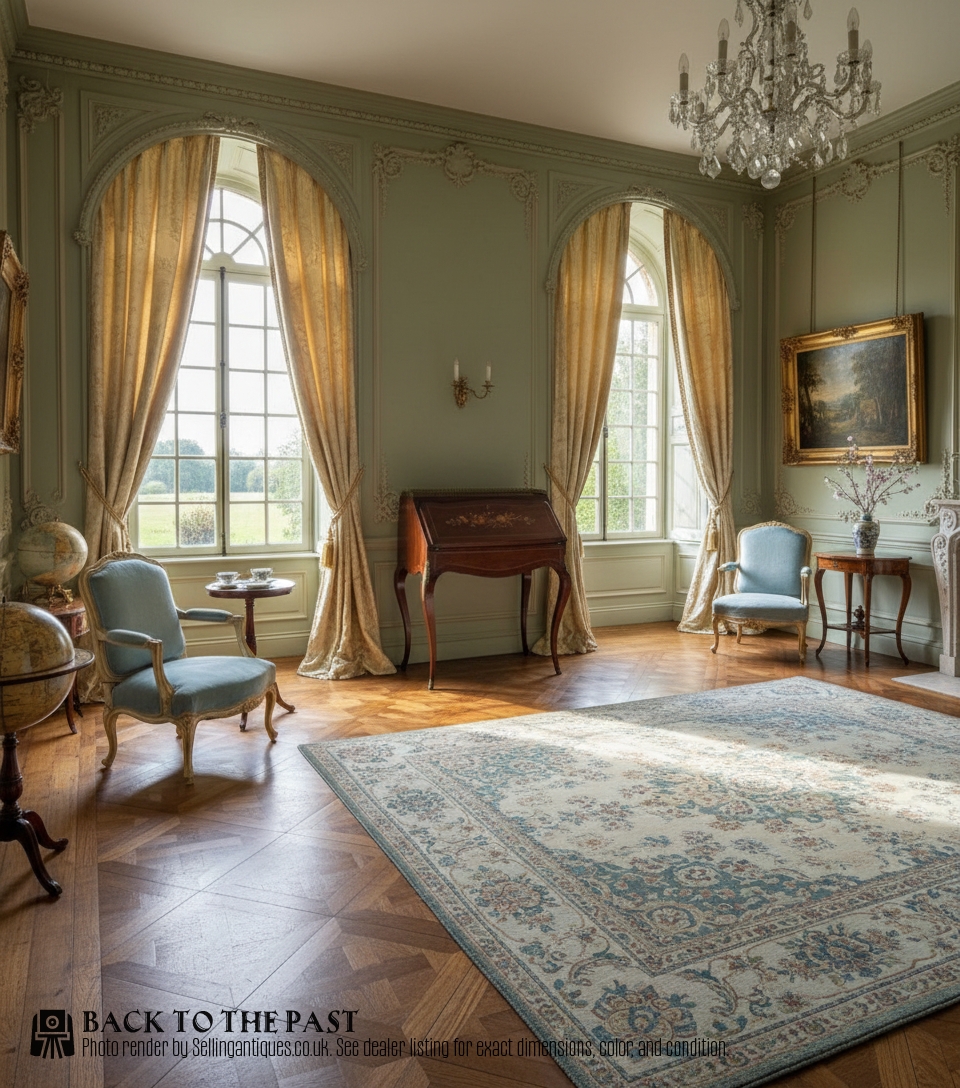
How they were made
Craftsmen built these desks using a carcase of sturdy timber such as mahogany or walnut, overlaid with finer veneers of fruitwood, rosewood, and walnut. Marquetry inlay was meticulously cut and fitted by hand to create elaborate floral and pictorial designs across the fall front and drawer fronts.
Metal components added both structural support and decorative contrast, utilising cast brass and bronze for handles, escutcheons, and mounts. Certain models incorporated marble tops to provide a heavier, durable writing or display surface.
Retail Price Guide 2026
Typical UK retail prices for marquetry fall front desk, calculated from the Sellingantiques database of over a million retail prices indexed since 2003. This retail price guide relies exclusively on Sellingantiques data; no external sources or auction records are used, so the figures do not describe the wider market.
Current listings feature pieces spanning the Georgian era through to 1910, employing walnut, rosewood, mahogany, and fruitwood.
What varies in quality
The refinement of the marquetry inlay distinguishes finer desks from simpler examples, particularly in the precision of the veneer joints and the shading achieved by scorching the wood. Superior execution shows seamless integration of multiple timber species forming complex pictorial scenes.
Structural complexity within the fitted interior also marks the upper tier of pieces, where secret compartments, serpentine drawer fronts, and heavily moulded fall fronts demonstrate advanced cabinet-making skill.
The Marquetry Fall Front Desk Glossary
- Marquetry inlay
- Decorative patterns formed by fitting contrasting veneers into a prepared wooden ground. This technique creates intricate pictorial or floral surfaces on the exterior of the desk.
- Fall front
- A hinged writing flap that drops down into a horizontal position for use. It conceals a collection of small drawers and pigeonholes when closed.
- Escritoire
- A writing cabinet featuring a fall front or sloping lid. The term often describes taller or more formal writing furniture.
- Bureau de dame
- A small ladies writing desk, frequently freestanding and delicately proportioned. These pieces often date from the nineteenth century.
- Bureau bookcase
- A writing desk surmounted by a glazed or panelled bookcase section. This dual-purpose form combines storage with a fold-down writing surface.
Frequently Asked Questions
What is a fall front desk?
A fall front desk is a piece of furniture with a hinged writing flap that pulls down to create a flat surface. When closed, the panel conceals internal compartments and drawers.
These desks were designed for correspondence and record-keeping, keeping writing materials neatly stored out of sight when not in use.
Where should I place this desk?
These desks suit studies, living rooms, or large hallways where the decorated fall front remains visible. Freestanding rosewood or walnut examples work well placed away from walls.
Ensure the room maintains stable humidity and temperature to protect the delicate wood veneers and marquetry inlay from movement.
What is a bureau de dame?
A bureau de dame is a small, elegant writing desk intended for female use, often featuring slender cabriole legs and delicate floral inlay. They originated in France and became popular during revival periods.
Their compact proportions allow them to fit into smaller reception rooms while still offering a functional writing surface.