

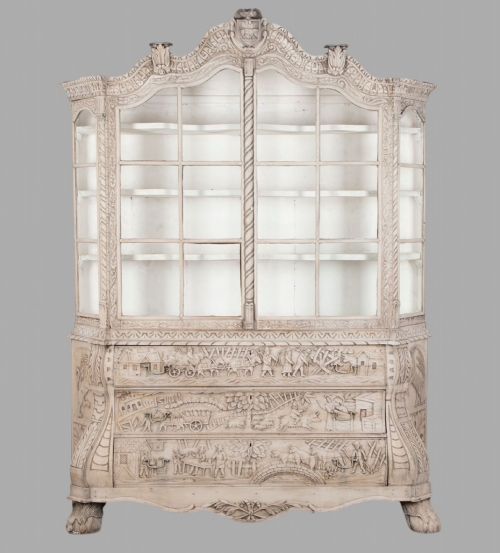
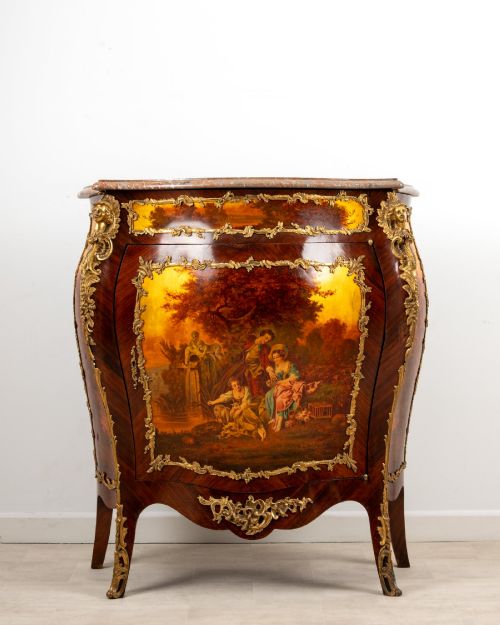
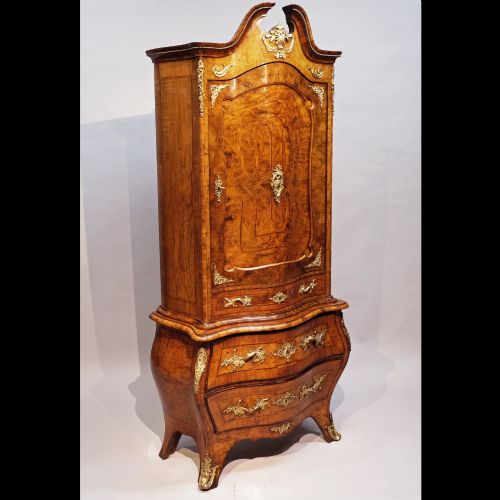
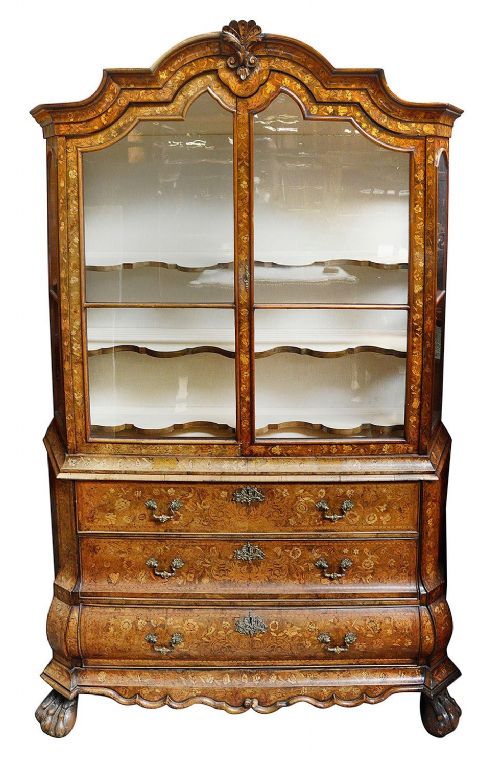
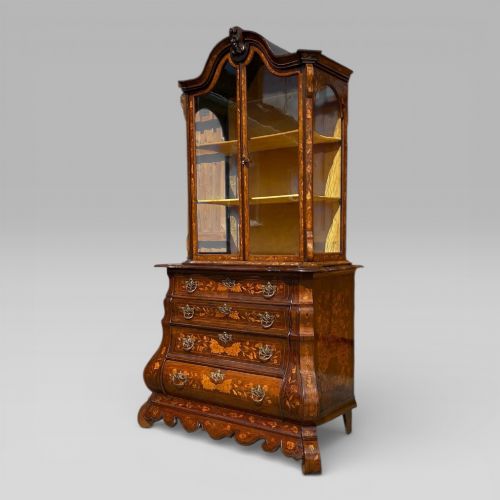


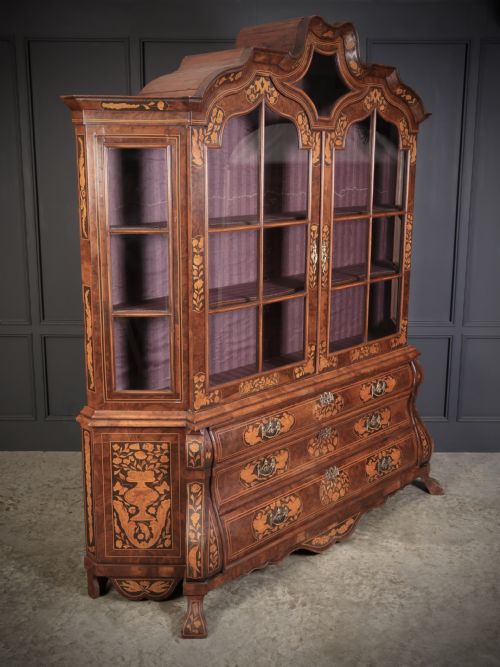


Bombe Chest Display Cabinet
A bombe chest display cabinet brings together swelling curved wooden forms and glass-fronted upper sections, offering a dramatic way to show off collected treasures.
Bombe Chest Display Cabinet
A bombe chest display cabinet combines a bulging, swelling lower chest with an upper cabinet or glazed display section, creating a commanding presence in a room. When you search for bombe chest display cabinet, you meet pieces originating across several centuries, from authentic 18th Century examples to later revivals from the 19th and early 20th centuries.
The aesthetic leans heavily towards continental European tastes, particularly Dutch Baroque, Dutch Rococo, and Louis XV Revival styles. These tall furniture forms frequently incorporate bureau bookcases and vitrines, balancing practical enclosed storage with elevated display space for porcelain and small objects.
Materials and construction
Cabinetmakers utilised rich timber veneers including walnut, burr walnut, oak, and fruitwood marquetry to cover the complex curved skeletons of these pieces. Floral and figurative marquetry inlays appear frequently, built from contrasting wood types to create detailed imagery across the swelling drawer fronts and doors.
Mounts cast in brass and ormolu accent the key corners and handles, while polished marble tops feature on specific continental interpretations. The glazed doors of the upper display sections rely on individual wooden framing to hold the glass panes securely above the robust lower chests.
The selection includes pieces spanning the 18th Century through to the 1930s, featuring walnut, oak, fruitwood marquetry, and ormolu.
Assessing the craftsmanship
The complexity and precision of the marquetry inlay set individual examples apart, distinguishing simple surface patterns from intricate, multi-toned botanical designs. Finer pieces demonstrate superior control over the difficult curving contours of the bombe shape, ensuring doors and drawers fit flush within their shaped surrounds.
The quality of the cast bronze or ormolu mounts and the selection of figured burr woods heavily influence the visual impact of a cabinet. Original glass panels, well-figured walnut grains, and substantial internal shelving reflect a higher standard of original workshop production.
Edwards and Roberts
The Bombe Chest Display Cabinet Glossary
- Bombé
- A swelling, outward-curving contour found on the lower sections of chests and cabinets. This dramatic bulging profile requires advanced woodworking skill to construct.
- Marquetry
- Decorative patterns formed by fitting together thin veneers of different coloured woods. Artisans use this technique to create elaborate floral motifs across cabinet doors and drawer fronts.
- Ormolu
- Gilt bronze mounts applied to furniture for decorative accent and protection of vulnerable corners. These gilded metal elements catch the light and punctuate dark wooden surfaces.
- Vitrine
- A glass-fronted display cabinet designed for showcasing porcelain, glass, and small decorative items. The glazed doors and sides allow light to enter from multiple angles.
- Bureau bookcase
- A multi-tier furniture form combining a sloping writing flap or desk lower section with upper shelving or display doors. It serves as both a workspace and a storage cabinet.
Bombe Chest Display Cabinet: Frequently Asked Questions
What is a bombe chest display cabinet?
A bombe chest display cabinet is a tall piece of furniture featuring a swelling, convex lower chest paired with an upper glass-fronted display case or bookcase. The combination provides both enclosed storage and prominent shelf space for decorative objects.
Originating largely from continental traditions, these pieces employ curved wooden profiles and rich veneers to create a strong visual statement. They function as both practical storage units and focal points within a traditional interior.
How do I date a marquetry cabinet?
Dating involves examining the timber species, the style of the marquetry inlay, and the construction methods used inside the drawers and carcass. Earlier 18th Century examples often show hand-cut dovetails and native European hardwoods, while later revivals from the 19th and early 20th centuries may incorporate different secondary woods.
Stylistic shifts also offer clues, as Dutch Baroque and Rococo designs differ significantly from the later Revival movements of the Victorian and Edwardian eras. Comparing the hardware, locks, and general proportion helps narrow down the period of manufacture.
Where should I place this cabinet?
Because of their height and substantial curved footprint, these cabinets require a secure wall position with sufficient floor space to accommodate the bulging lower section. Placing them in principal reception rooms or hallways allows the detailed marquetry and glass display areas to be fully appreciated.
Avoid positioning them in direct sunlight or close to intense heat sources to protect the delicate wood veneers and historic finishes from drying out. Adequate clearance ensures the doors and drawers operate smoothly without obstruction.
How do I care for walnut veneer?
Walnut veneer benefits from a stable indoor environment with minimal humidity fluctuations and protection from direct sunlight. Regular dusting with a soft, dry cloth prevents particle buildup without introducing moisture to the historic timber.
Occasional applications of appropriate wax help nourish the wood and maintain a soft sheen across the surface. Avoid using silicone-based sprays or harsh chemical cleaners that can degrade the original polish.