1,117  PAGES BROWSED TODAY PAGES TODAY 0 ANTIQUES UPLOADED TODAYNEW ARRIVALS
LATEST STOCK
Sort Order
Items Per Page
Browse Categories
Sort order
Relevant Links
Items per page
ID #SA1209220
FOR SALE
£2,950
Email
Save
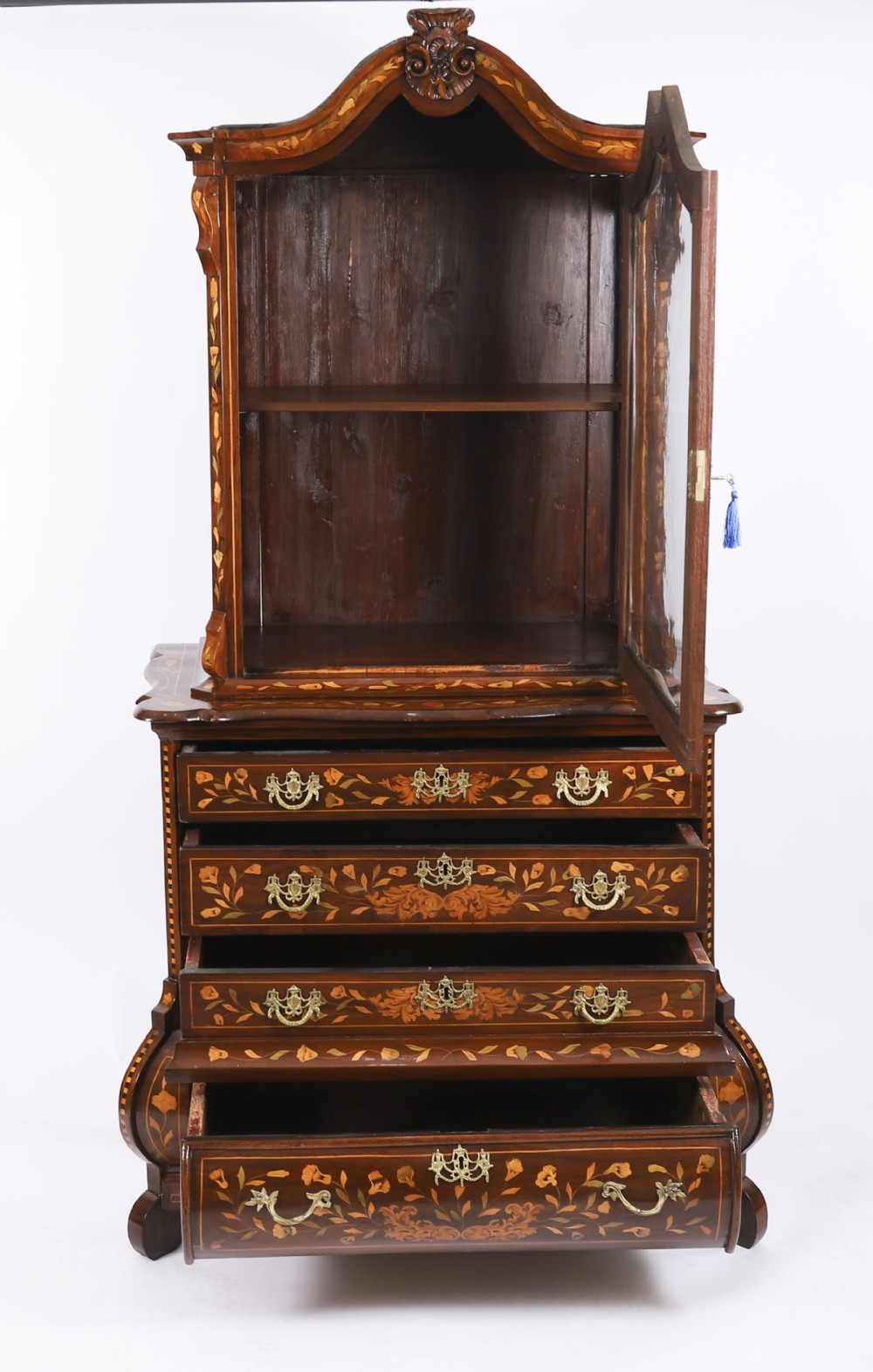
Antique Dutch Marquetry Walnut Cabinet on Chest 18th Century
Regent Antiques
for sale €3,452     $3,747
£2,950
Regent Antiques

Regent Antiques

Sellingantiques Verified Since Sep 2016
View Dealers Stock Page
  • About Us
    We specialise in english and continental furniture, silver, porcelain and decorative items.
  • Trade Associations
    Regent Antiques is a registered member of LAPADA  CINOA
Id #SA1209220
PDF SHARE
SAVE

Antique Dutch Marquetry Walnut Cabinet on Chest 18th Century

18th century
For Sale by Regent Antiques
Description

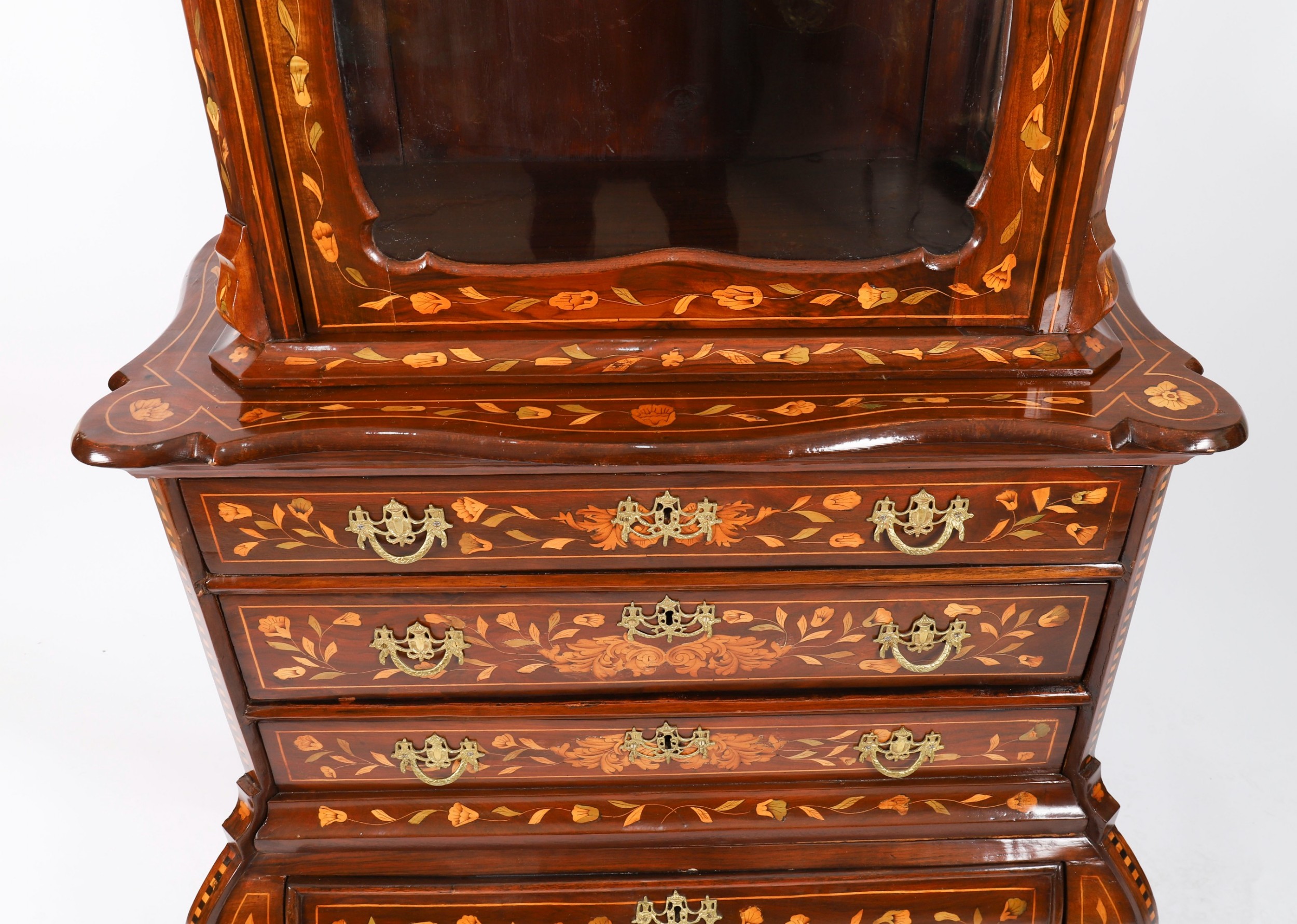
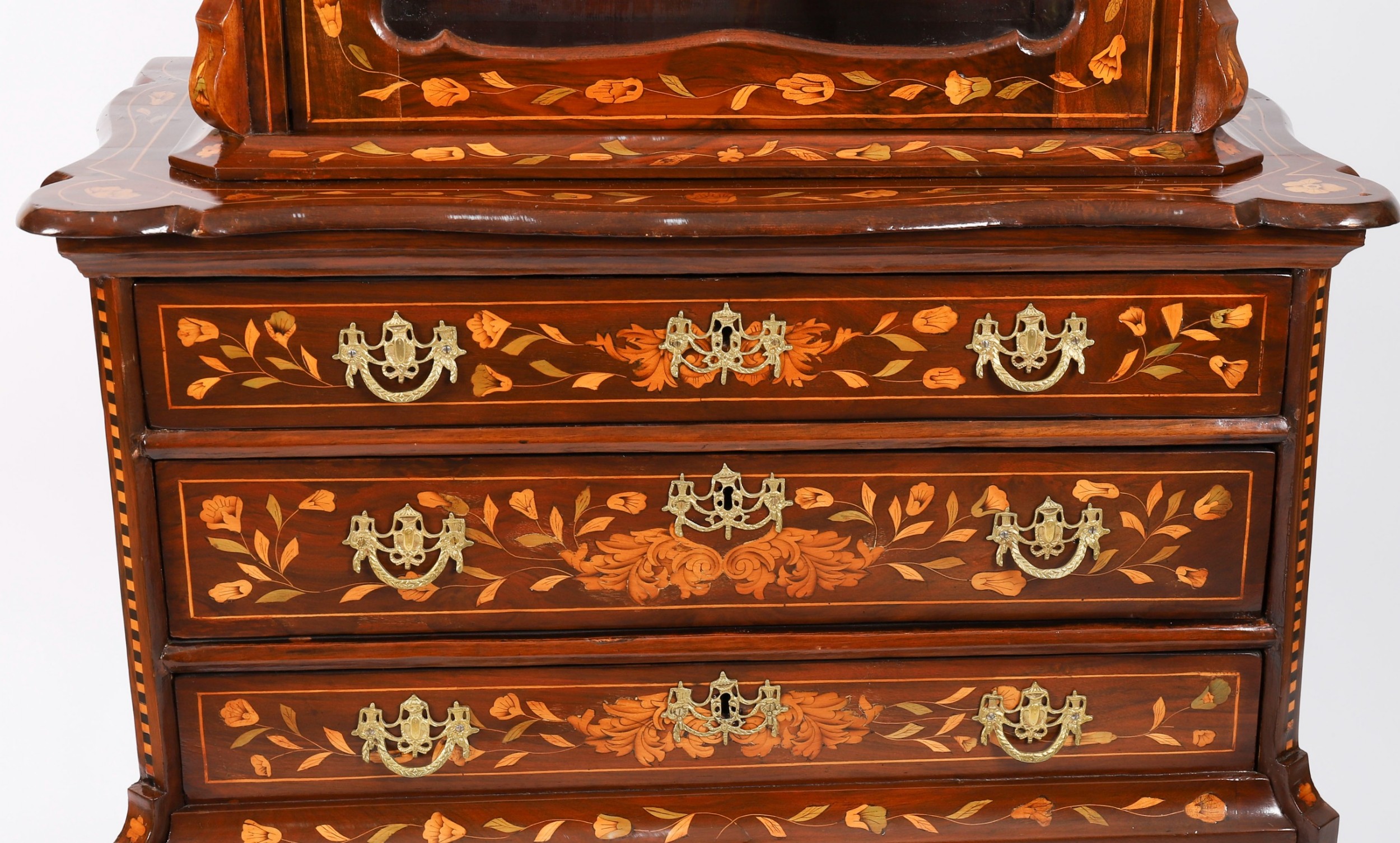
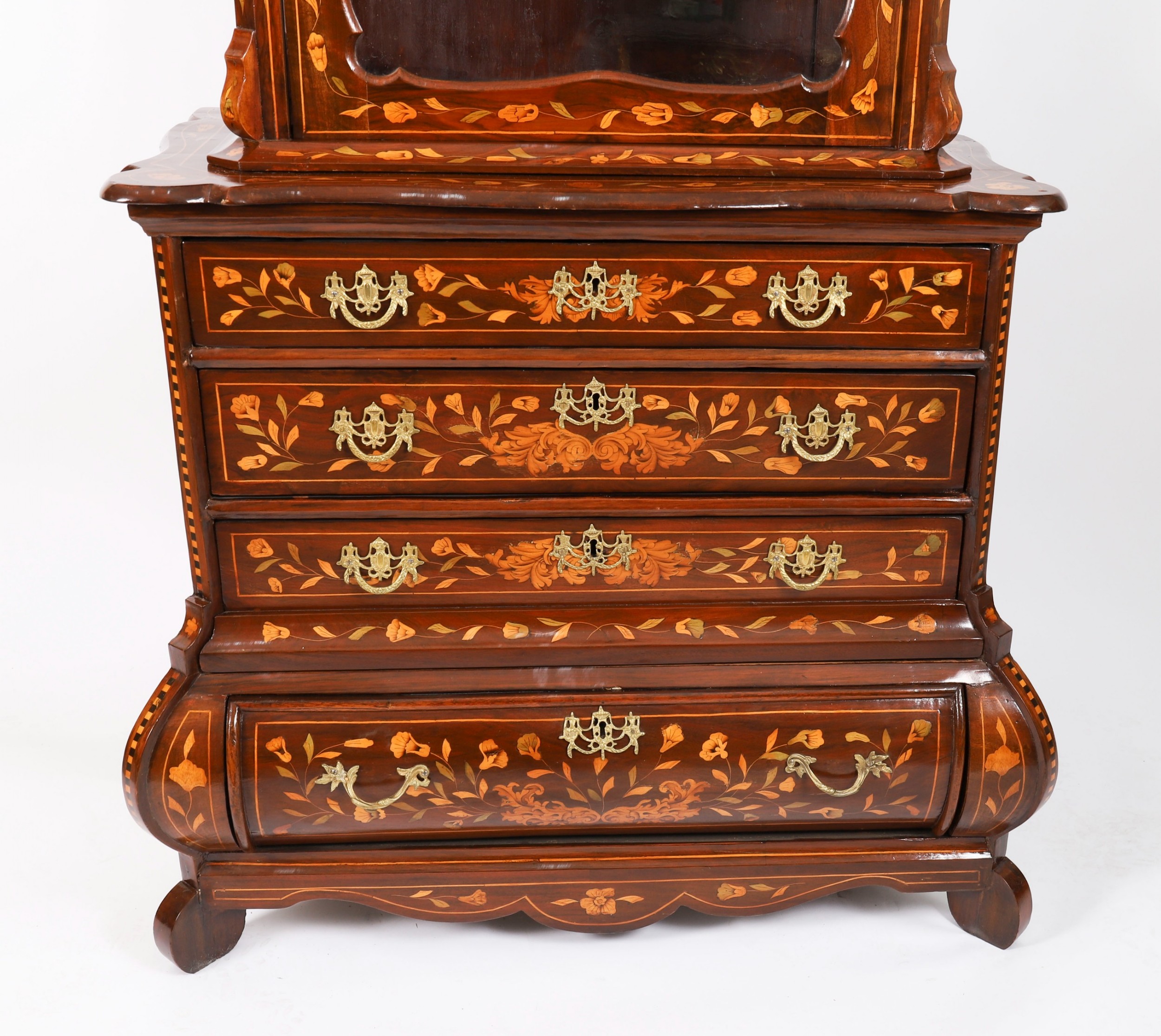
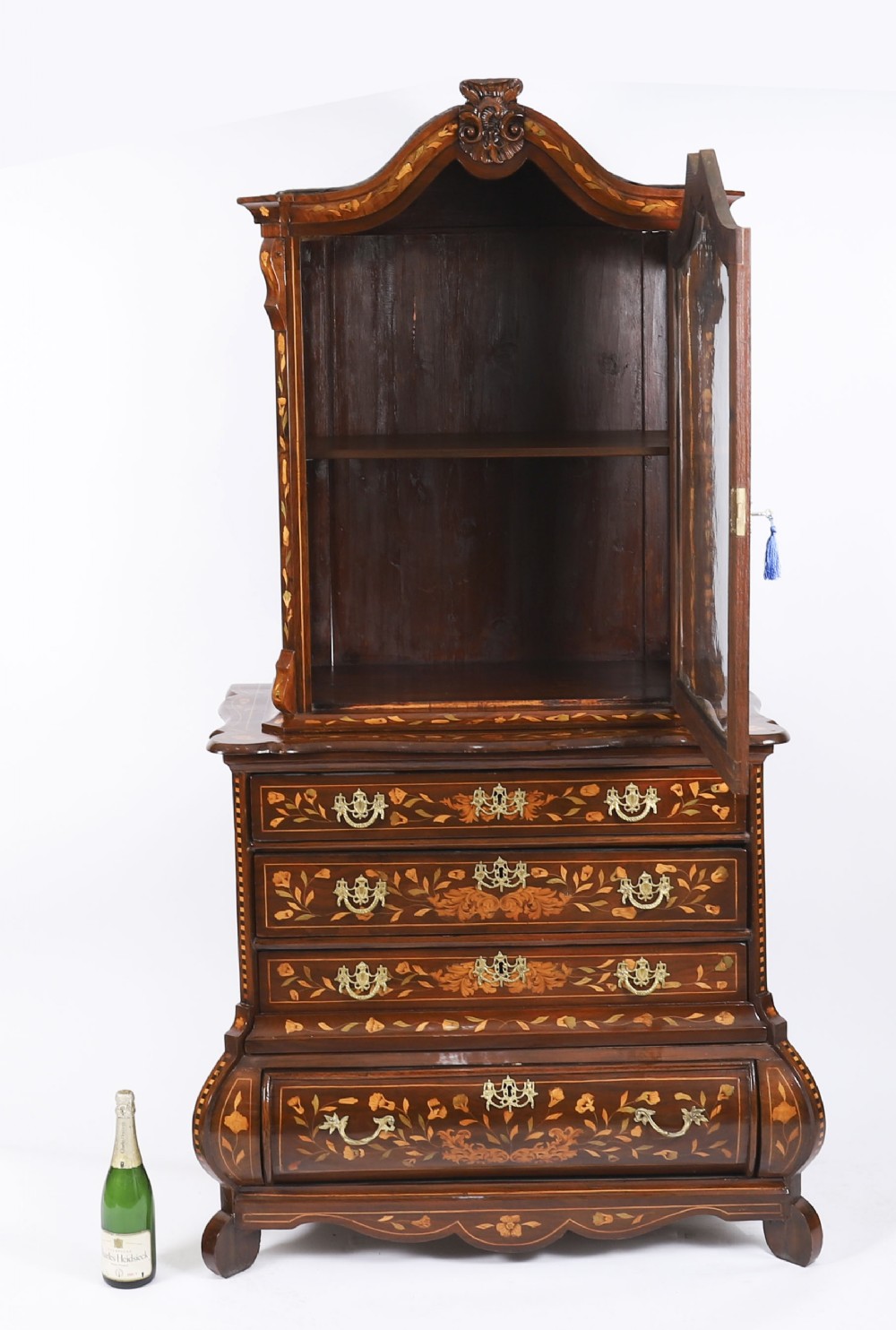
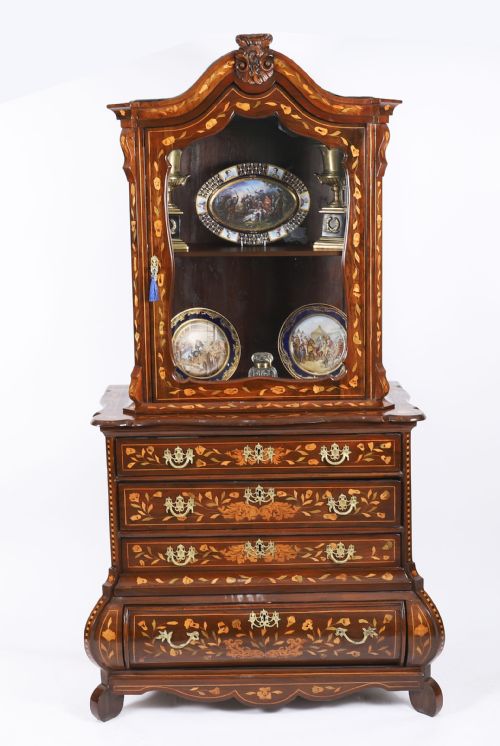
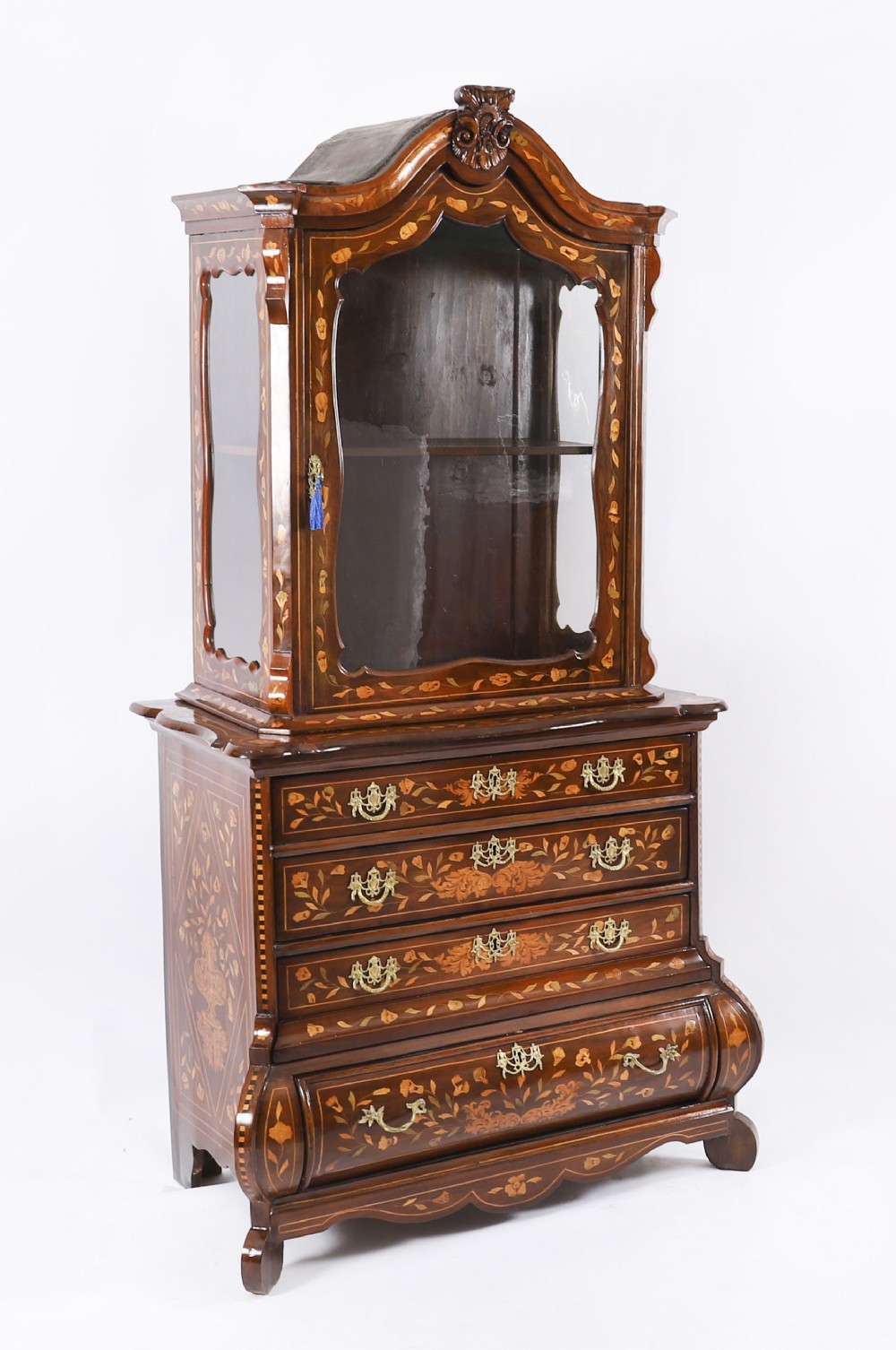
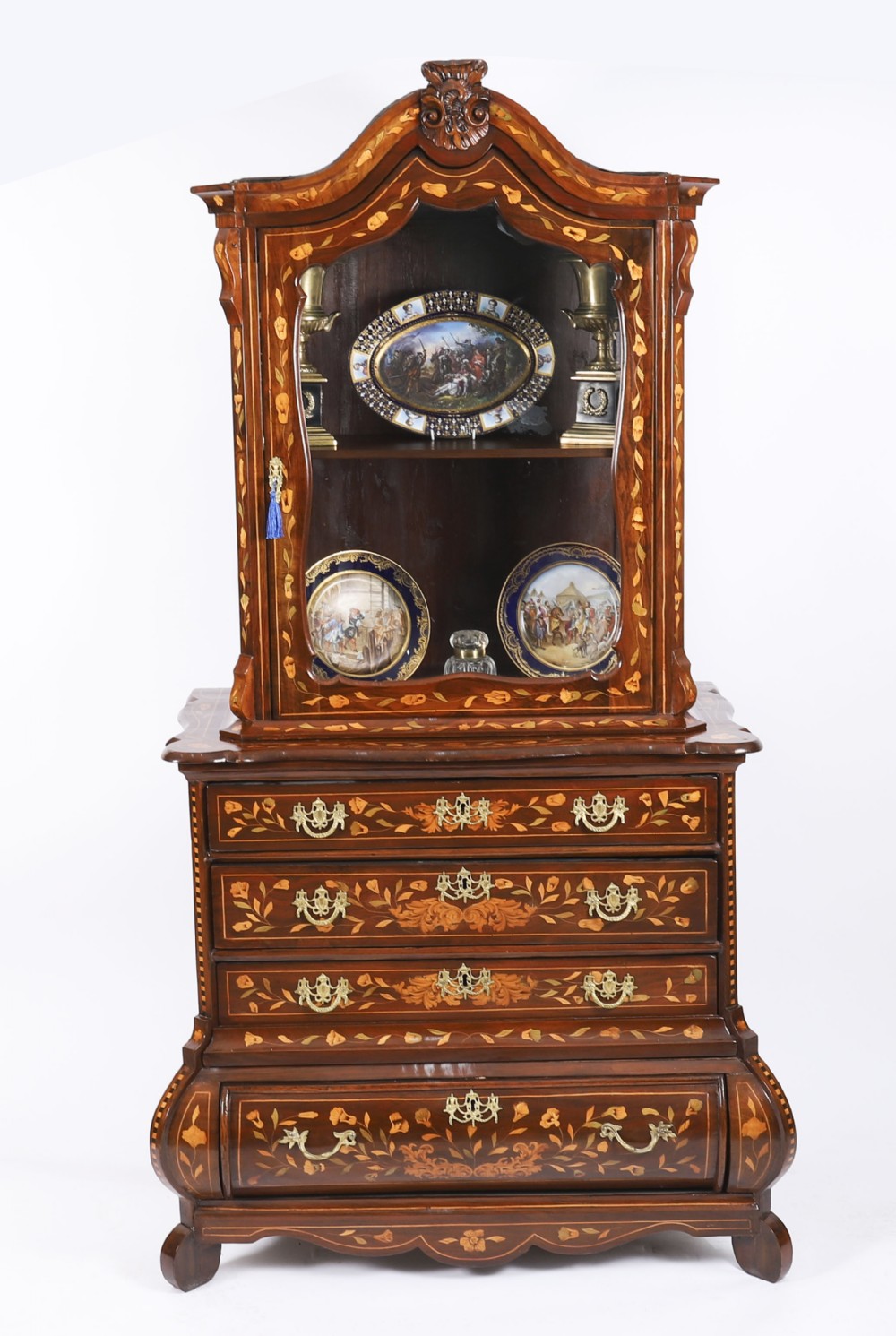
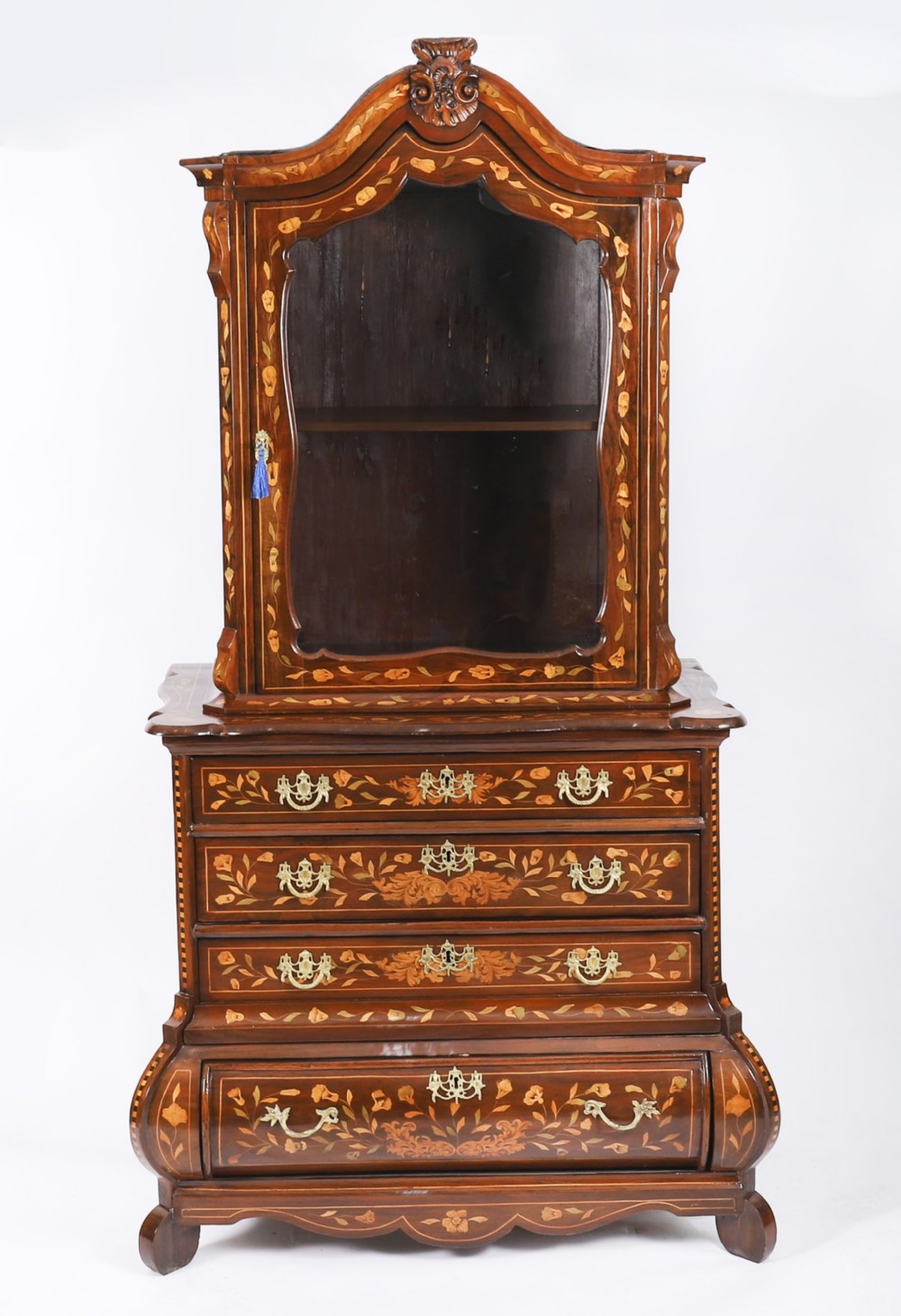
This is a stunning antique Dutch marquetry walnut cabinet on chest, circa 1780 in date.

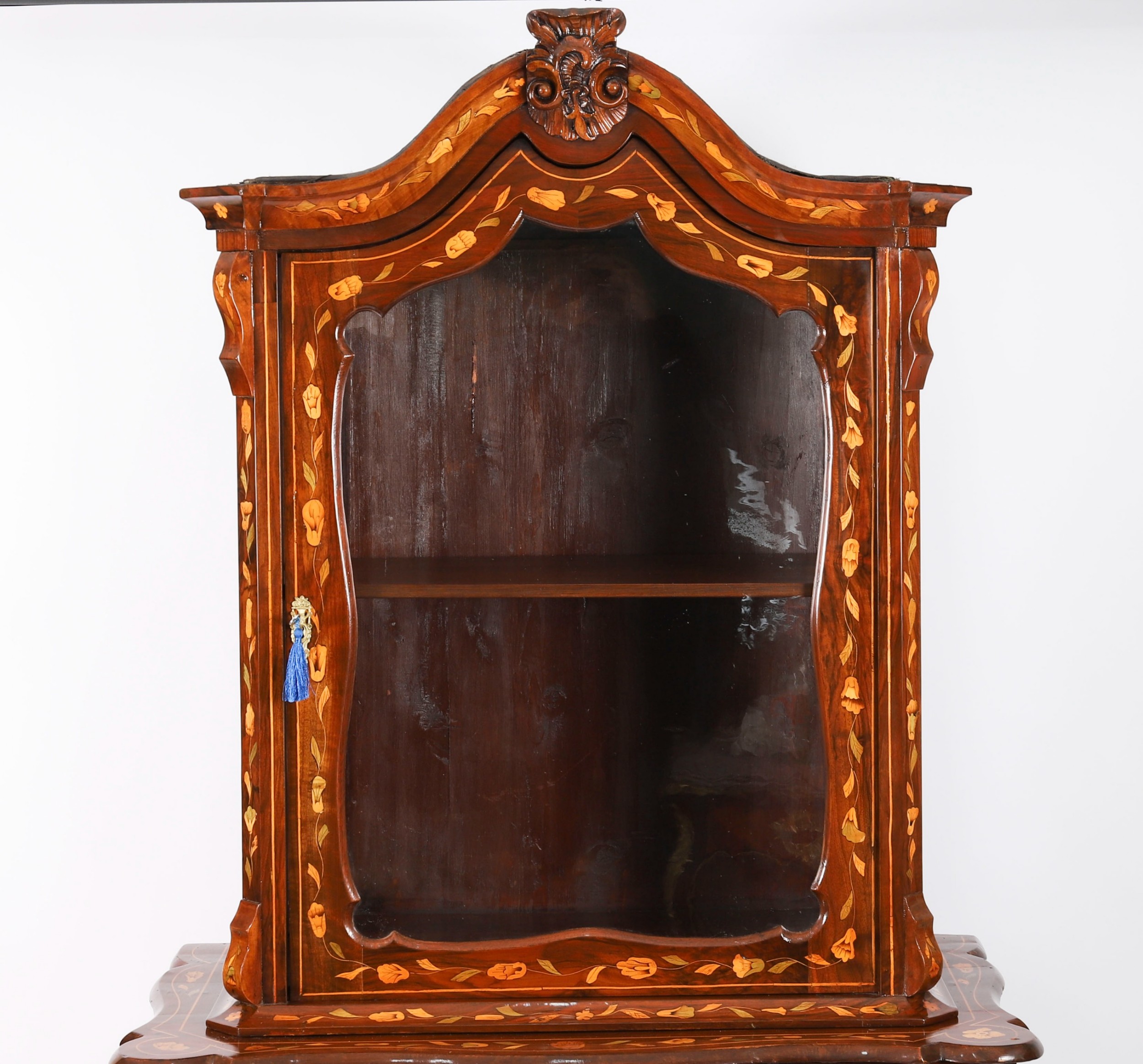
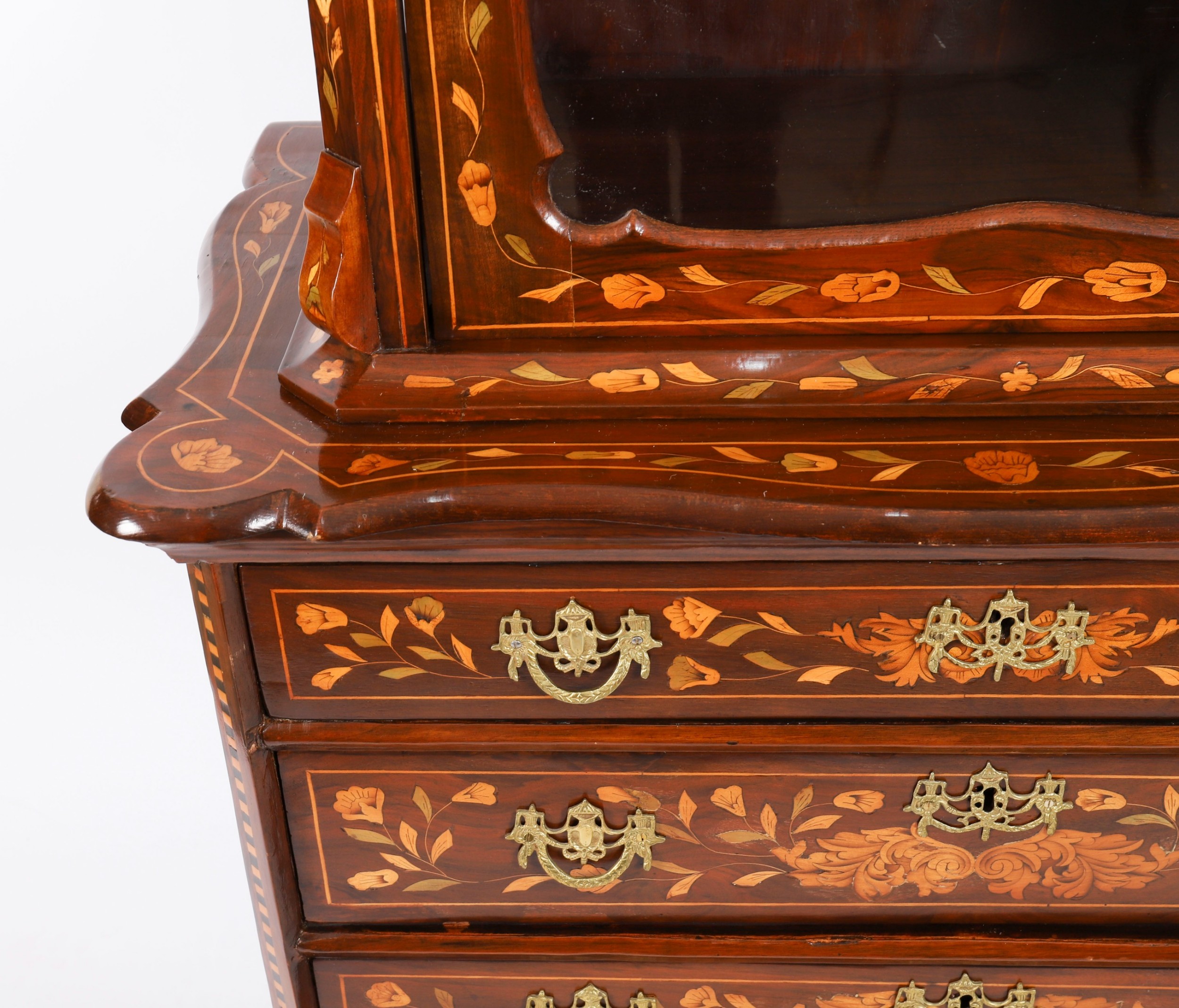
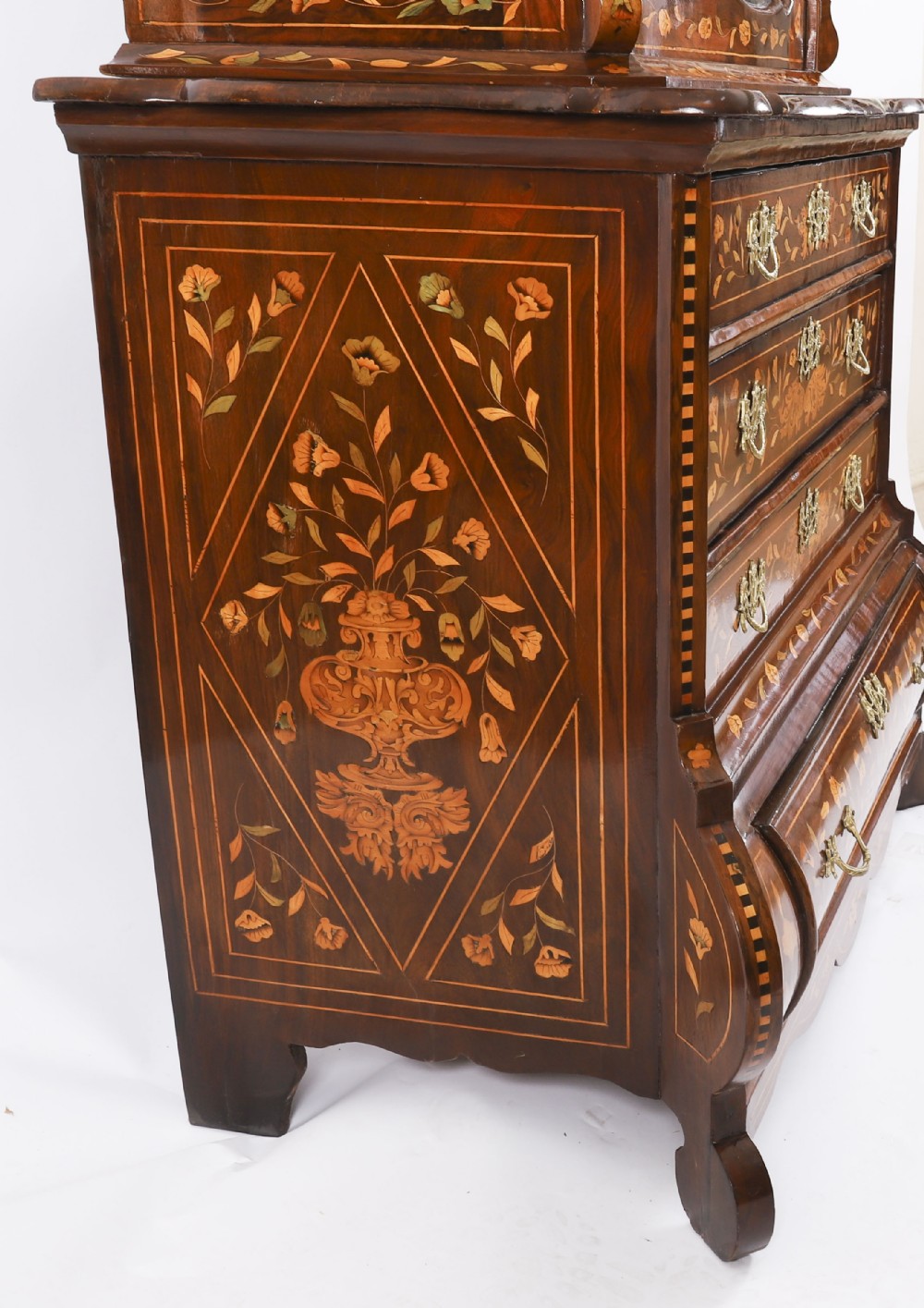
It has been accomplished in walnut with exquisite hand-cut boxwood and fruitwood floral marquetry typical of the period.

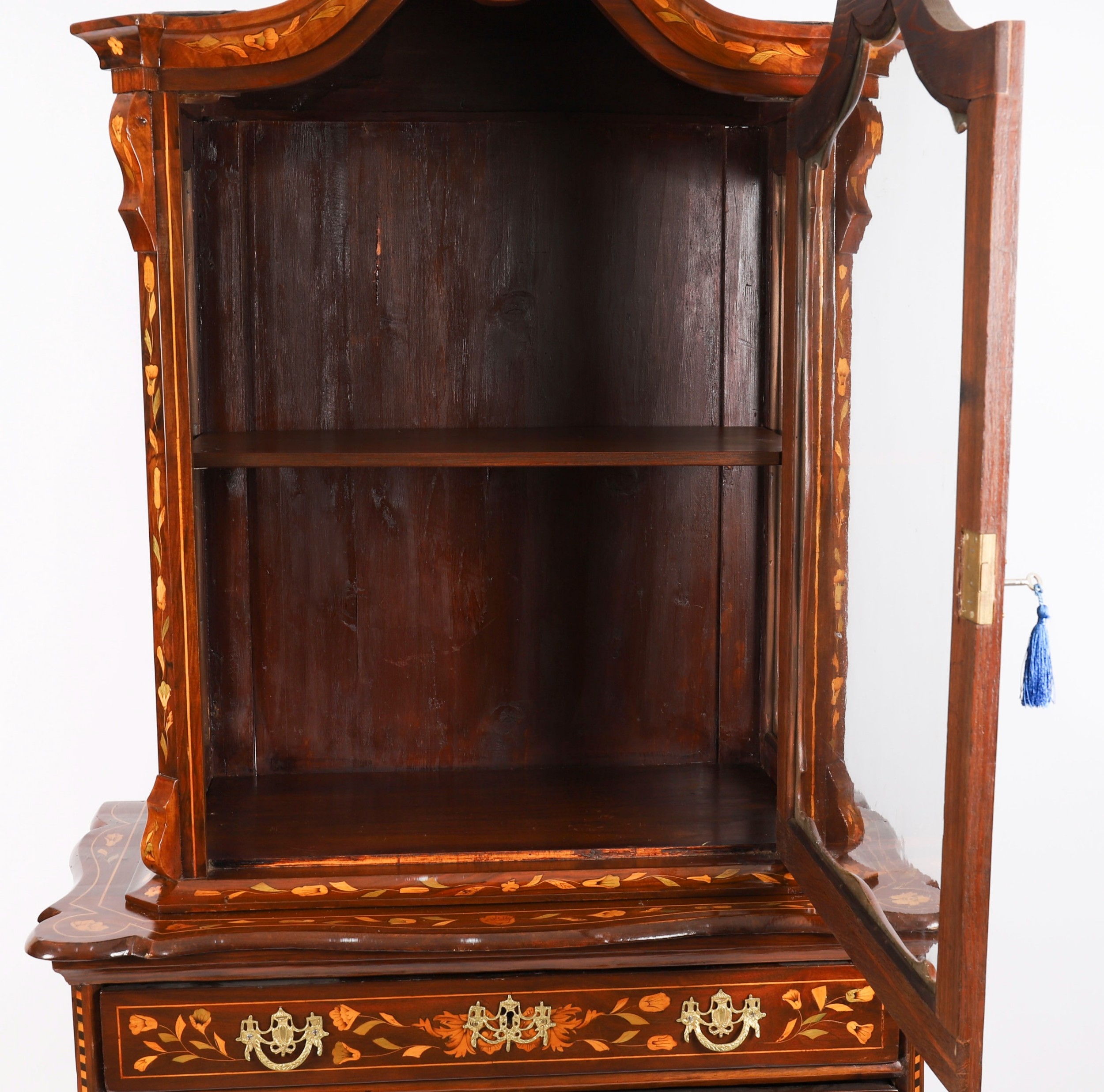
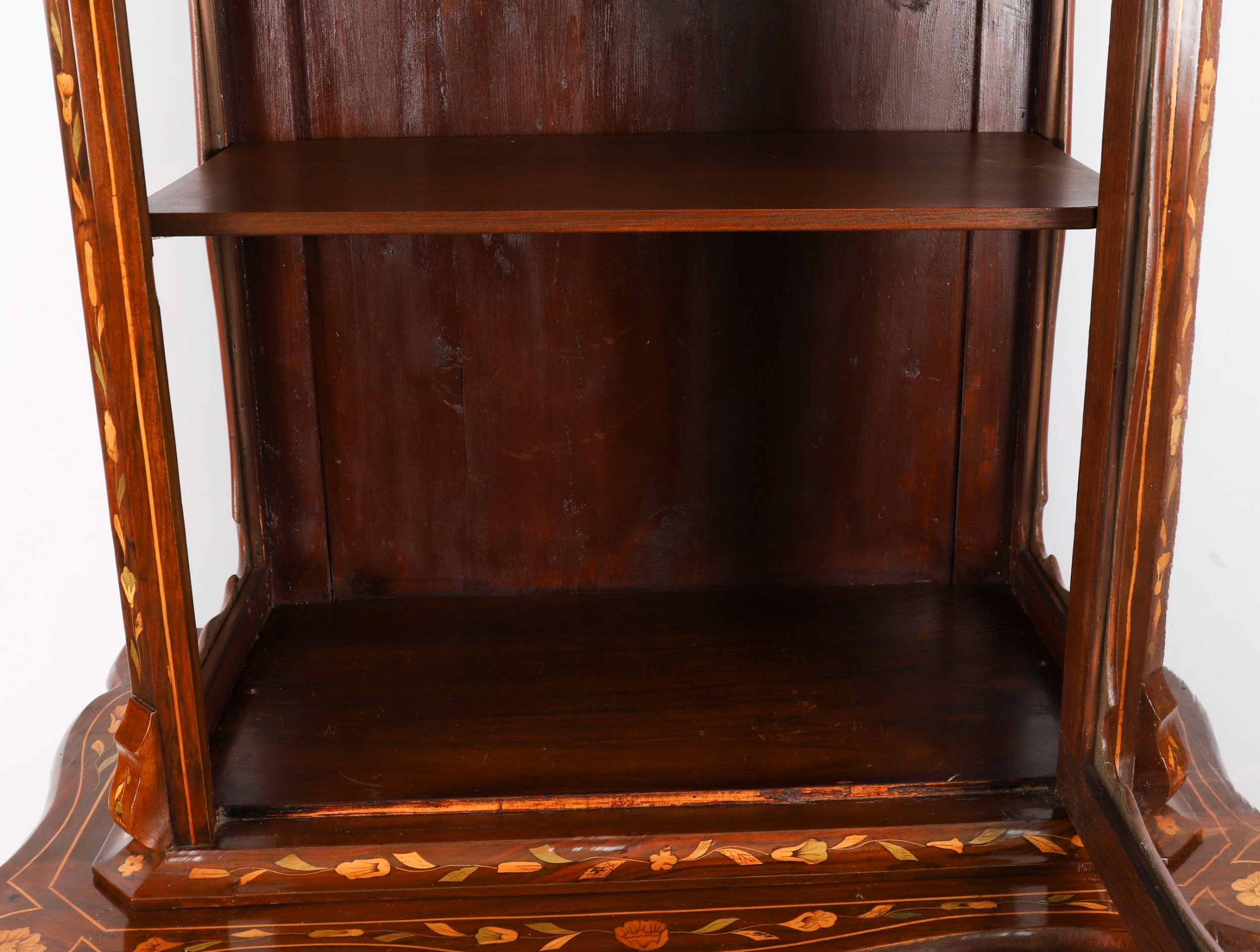
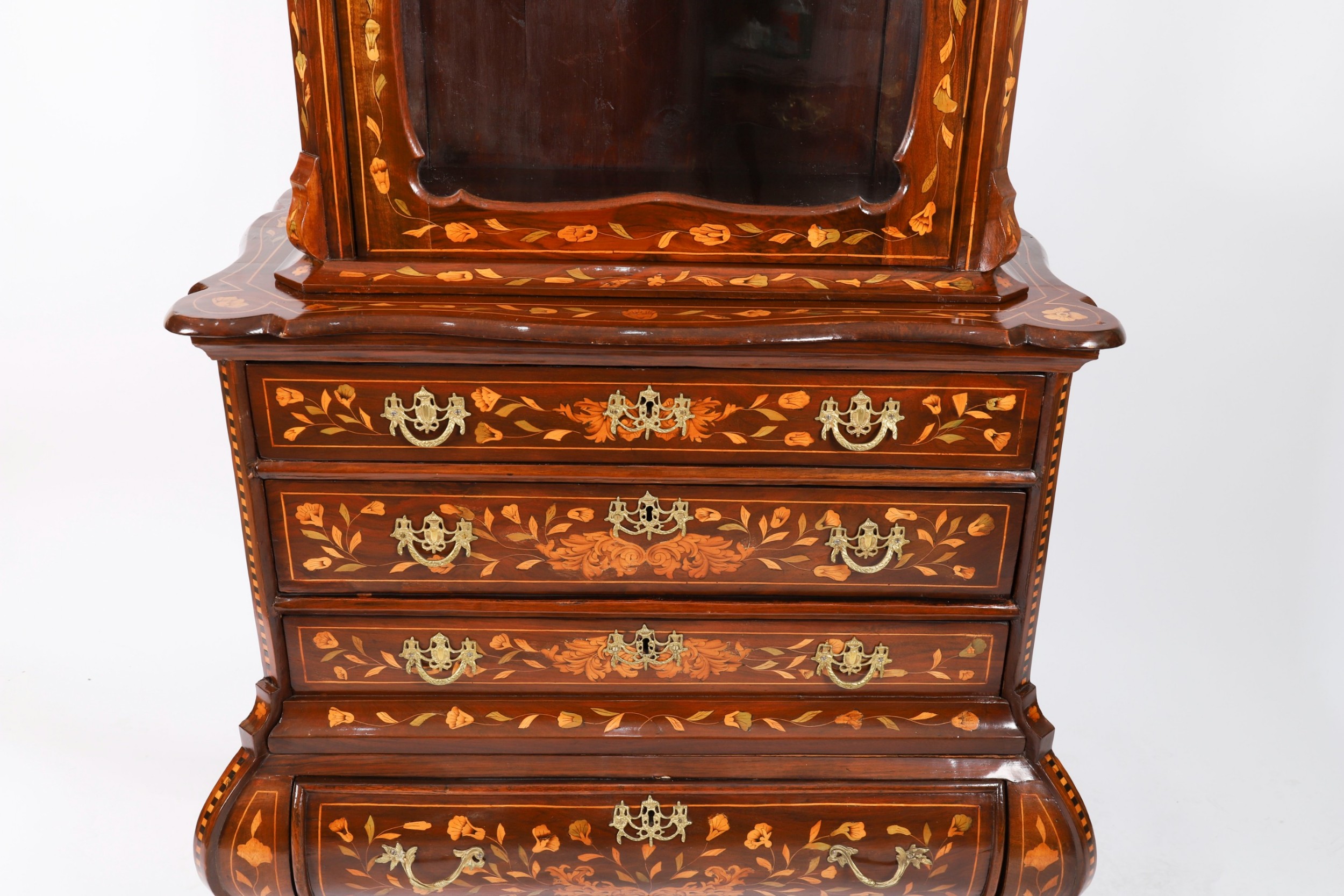
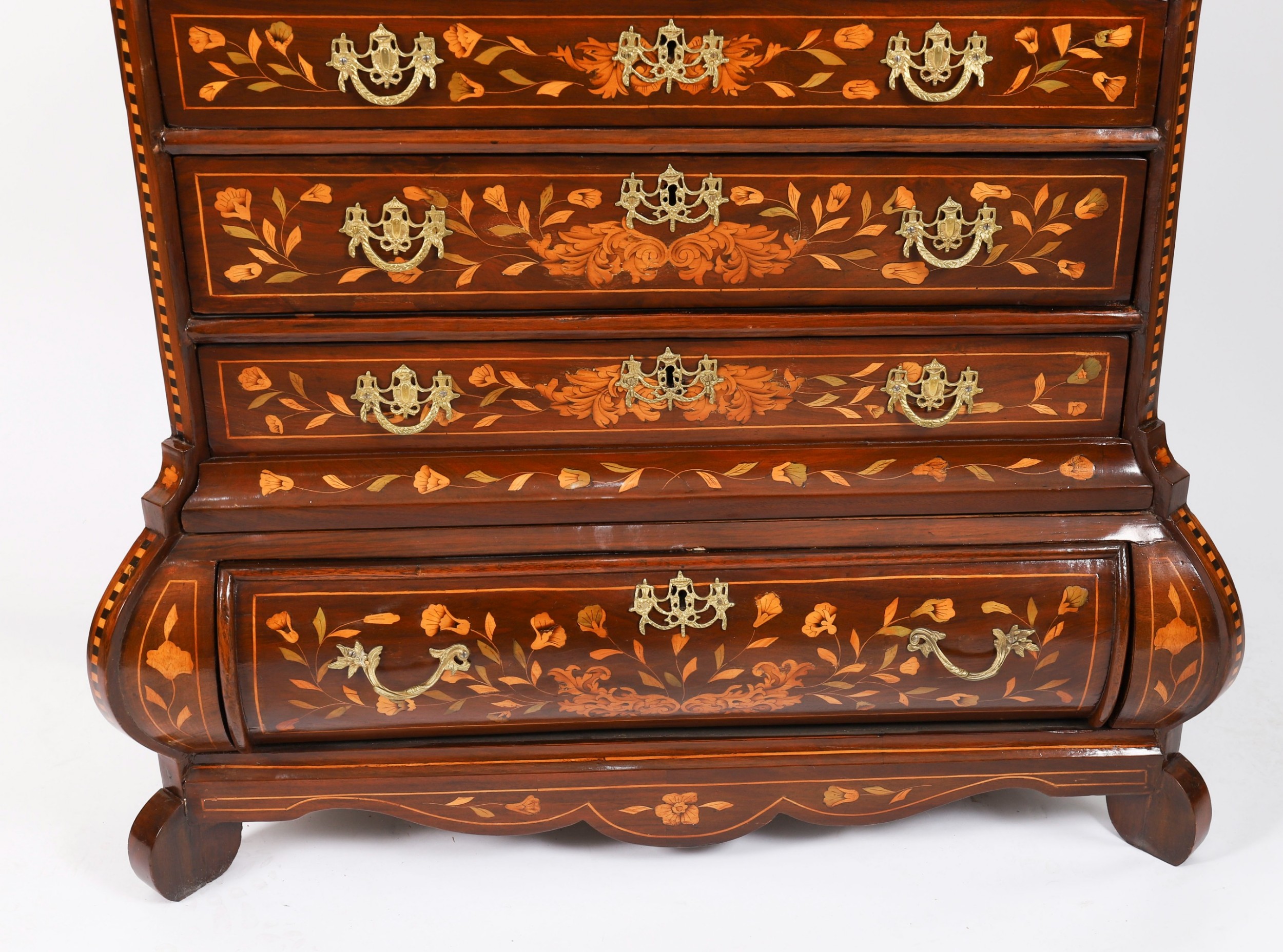
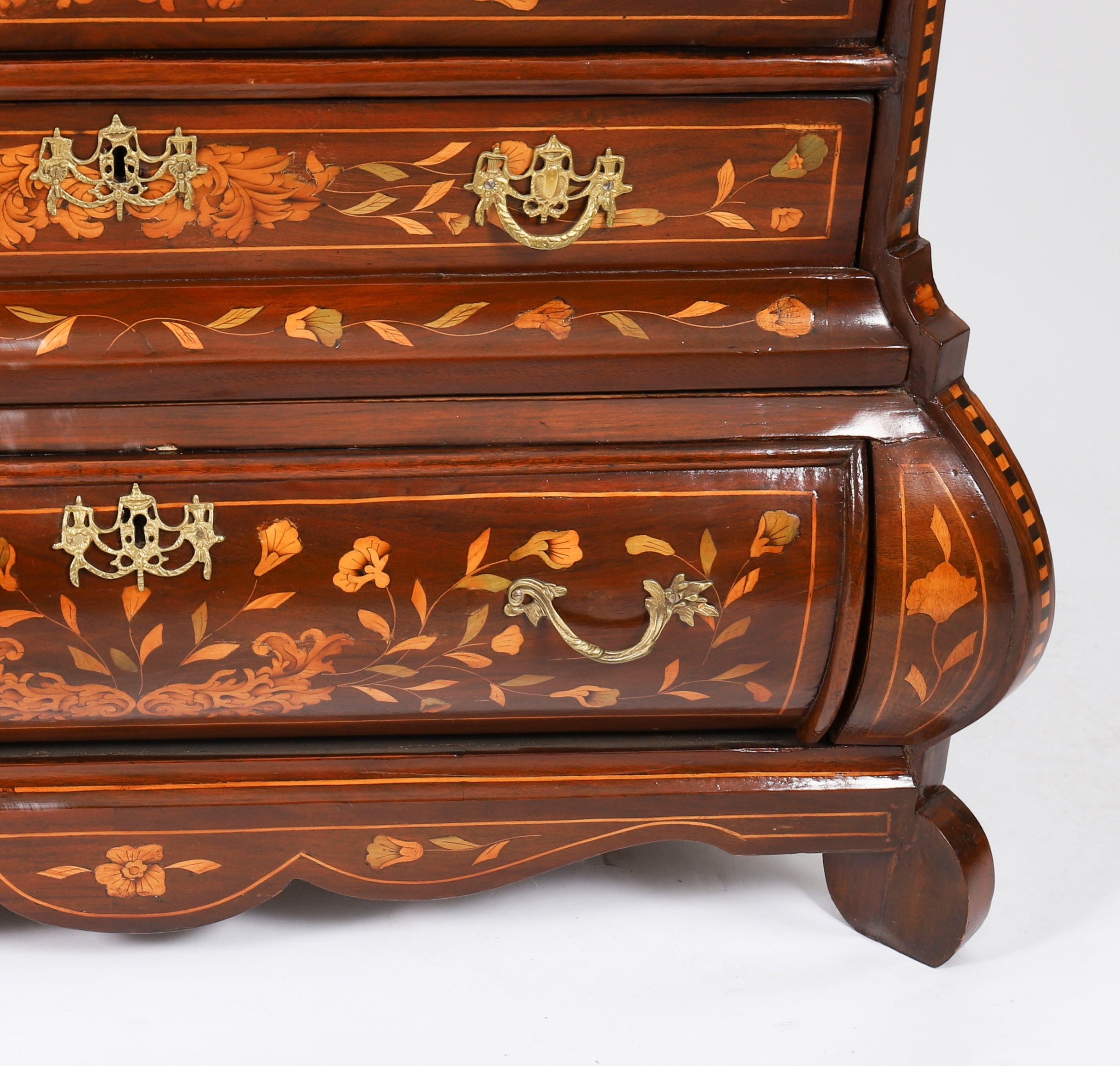
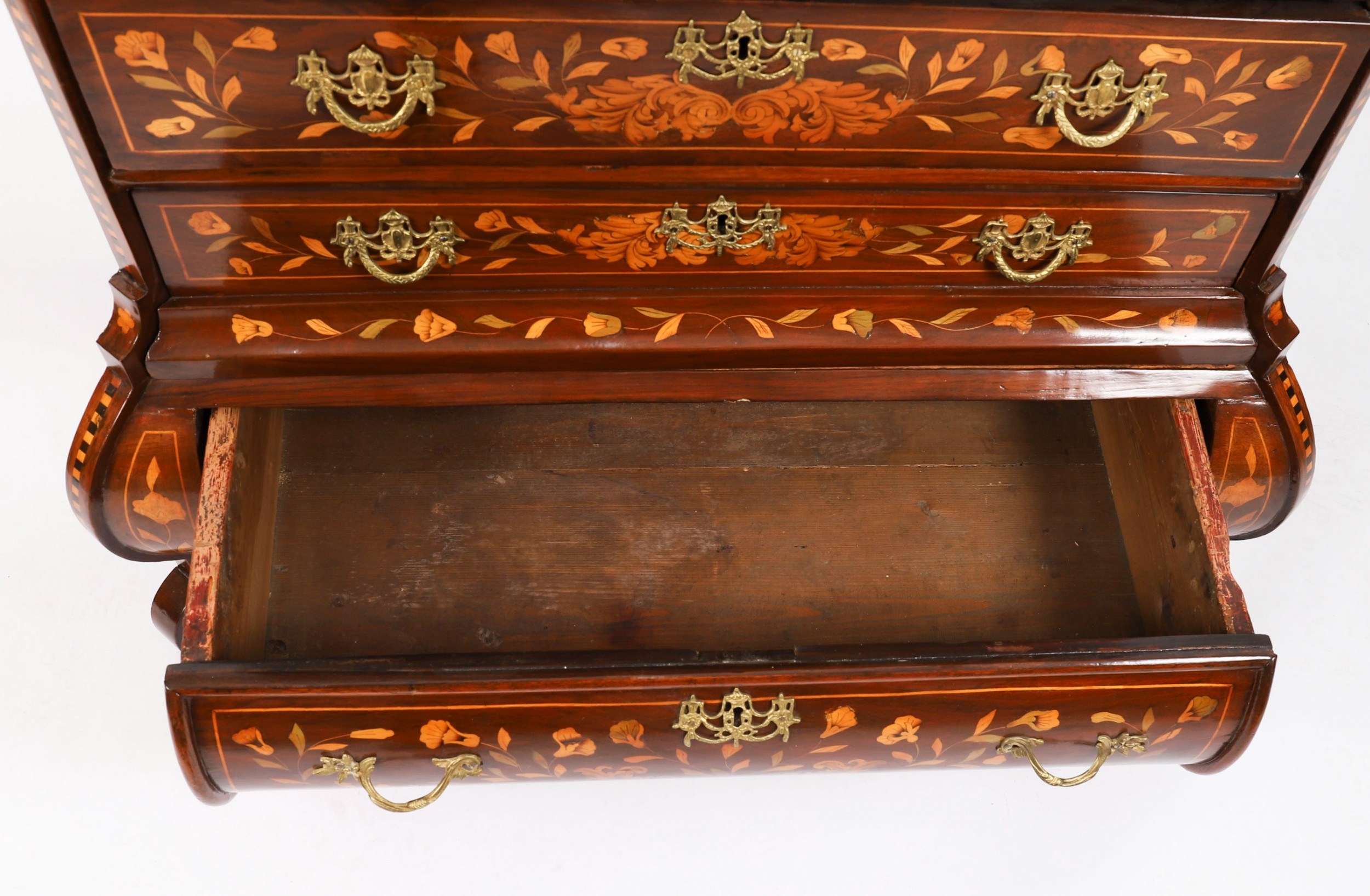
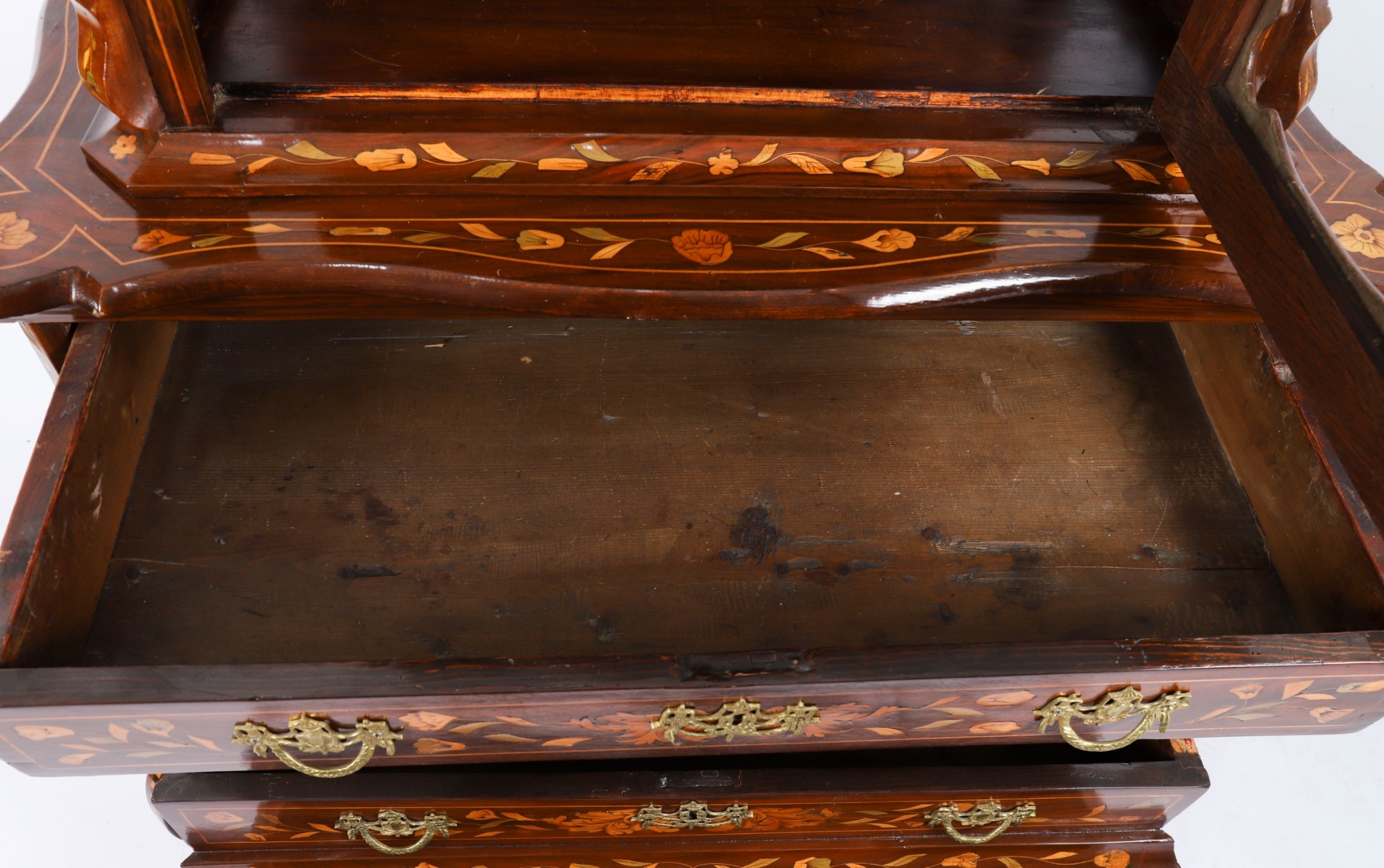
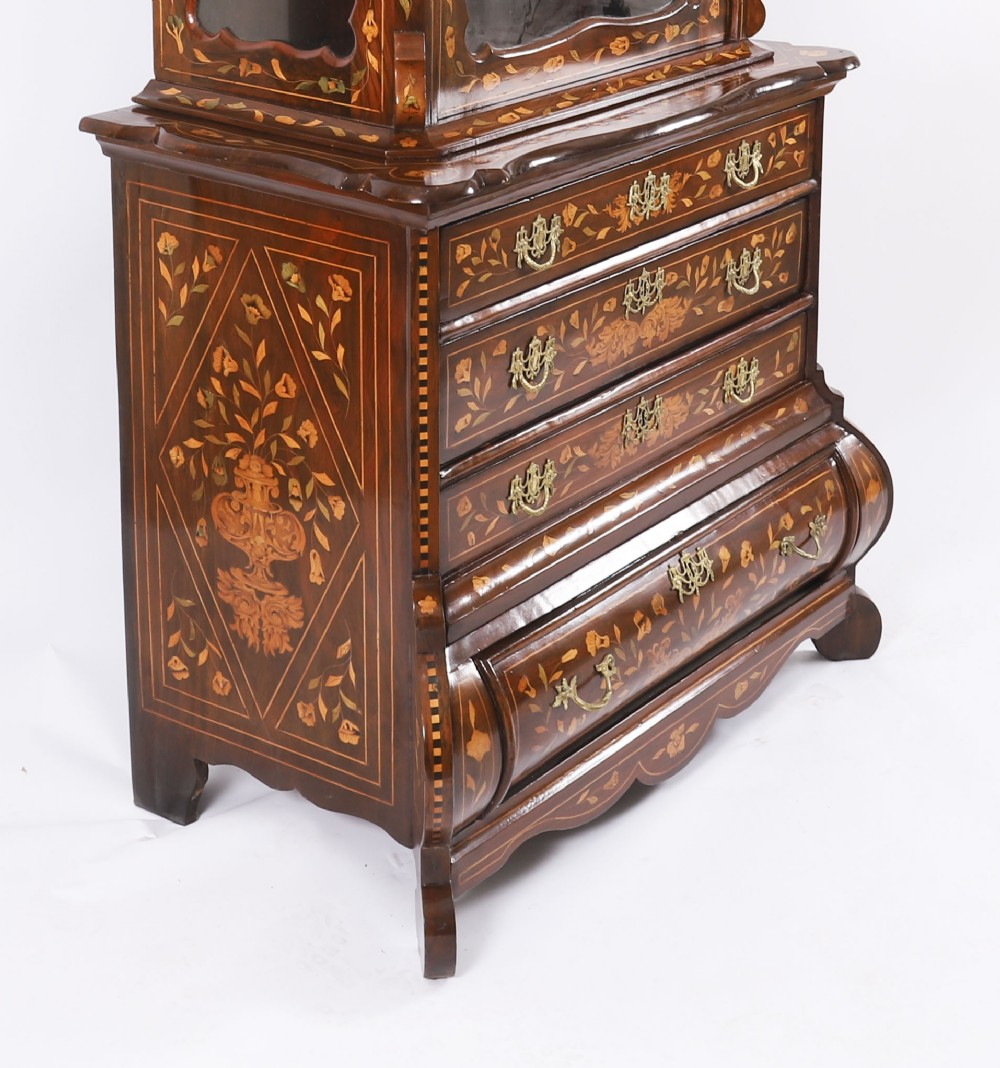
The cabinet has a single-glazed door and glazed sides and it stands on a bombe serpentine fronted marquetry chest of drawers. The chest features fabulous marquetry decoration of floral bouquets on each side which highlight the beauty of this piece.

It has chased ormolu handles and escutcheons and is complete with the original working steel locks and keys.

This exceptional piece represents a fantastic example of 18th-century Dutch marquetry cabinetry at its very finest.


Condition:

In really excellent condition having been beautifully cleaned, polished and waxed in our workshops, please see photos for confirmation.

Dimensions in cm:

Height 192 cm x Width 113 cm x Depth 57 cm

Dimensions in inches:

Height 6 foot, 4 inches x Width 3 foot, 8 inches x Depth 1 foot, 10 inches

Fruitwood

is the wood of any of numerous fruit-bearing trees, such as the cherry, pear or apple used mainly in cabinetmaking. Most of the fruitwoods have fine, smooth texture and good shaping features and are considered to be the best cabinet woods.

Marquetry

is decorative artistry where pieces of material of different colours are inserted into the surface wood veneer to form intricate patterns such as scrolls or flowers.

The technique of veneered marquetry had its inspiration in 16th-century Florence. Marquetry elaborated upon Florentine techniques of inlaying solid marble slabs with designs formed of fitted marbles, jaspers and semi-precious stones. This work, called opere di commessi, has medieval parallels in Central Italian "Cosmati"-work of inlaid marble floors, altars and columns. The technique is known in English as pietra dura, for the "hardstones" used: onyx, jasper, cornelian, lapis lazuli and colored marbles. In Florence, the Chapel of the Medici at San Lorenzo is completely covered in a colored marble facing using this demanding jig-sawn technique.

Techniques of wood marquetry were developed in Antwerp and other Flemish centers of luxury cabinet-making during the early 16th century. The craft was imported full-blown to France after the mid-seventeenth century, to create furniture of unprecedented luxury being made at the royal manufactory of the Gobelins, charged with providing furnishings to decorate Versailles and the other royal residences of Louis XIV. Early masters of French marquetry were the Fleming Pierre Golle and his son-in-law, André-Charles Boulle, who founded a dynasty of royal and Parisian cabinet-makers (ébénistes) and gave his name to a technique of marquetry employing brass with pewter in arabesque or intricately foliate designs.

Walnut & Burr Walnut

Walnut is a hard, dense, tight- grained wood that polishes to a very smooth finish. It is a popular and attractive wood whose colour ranges from near white in the sapwood to a dark hew in the heartwood. When dried in a kiln, walnut wood tends to develop a dull brown colour, but when air-dried can become a rich purplish-brown. Because of its colour, hardness and grain, it is a prized furniture and carving wood. Walnut veneer was highly priced and the cost would reflect the ‘fanciness’ of the veneer – the more decorative, then the more expensive and desirable.

Burr walnut refers to the swirling figure present in nearly all walnut when cut and polished, and especially in the wood taken from the base of the tree where it joins the roots. However the true burr is a rare growth on the tree where hundreds of tiny branches have started to grow. Burr walnut produces some of the most complex and beautiful figuring you can find.

Our reference: 07076x

Physical Dimensions
Height
192cm (75.59")
Width
113cm (44.49")
Depth
57cm (22.44")
Declaration

Regent Antiques has dated this Dutch Marquetry Walnut Cabinet to the 18th Century.
Reference Numbers
Sellingantiques Reference
SA1209220
Dealers Internal Reference
07076x
Description
This is a stunning antique Dutch marquetry walnut cabinet on chest, circa 1780 in date.
It has been accomplished in walnut with exquisite hand-cut boxwood and fruitwood floral marquetry typical of the period.
Regent Antiques
fig 1. An 18th-century Dutch walnut cabinet on chest featuring detailed floral marquetry inlay, an arched bonnet top with glass doors, and four brass-handled drawers.
fig 1. Antique Dutch Marquetry Walnut Cabinet on Chest 18th Century

The cabinet has a single-glazed door and glazed sides and it stands on a bombe serpentine fronted marquetry chest of drawers. The chest features fabulous marquetry decoration of floral bouquets on each side which highlight the beauty of this piece.
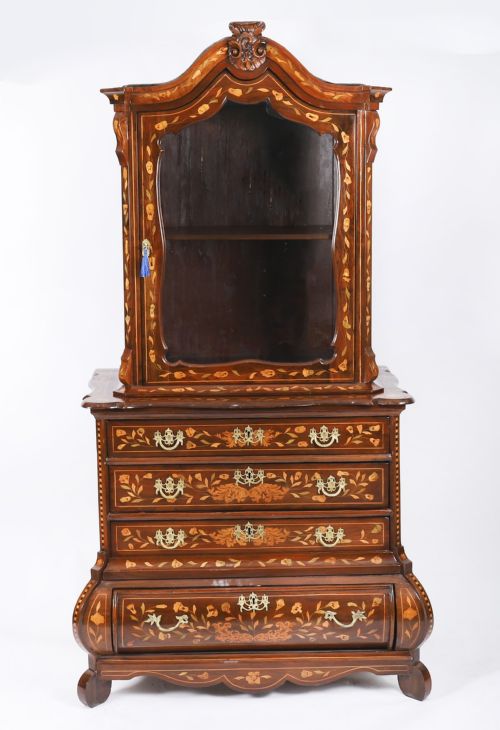
fig 2. An 18th-century Dutch walnut cabinet on chest featuring detailed floral marquetry inlay, an arched bonnet top with glass doors, and four brass-handled drawers.
fig 2. Antique Dutch Marquetry Walnut Cabinet on Chest 18th Century

It has chased ormolu handles and escutcheons and is complete with the original working steel locks and keys.

This exceptional piece represents a fantastic example of 18th-century Dutch marquetry cabinetry at its very finest.
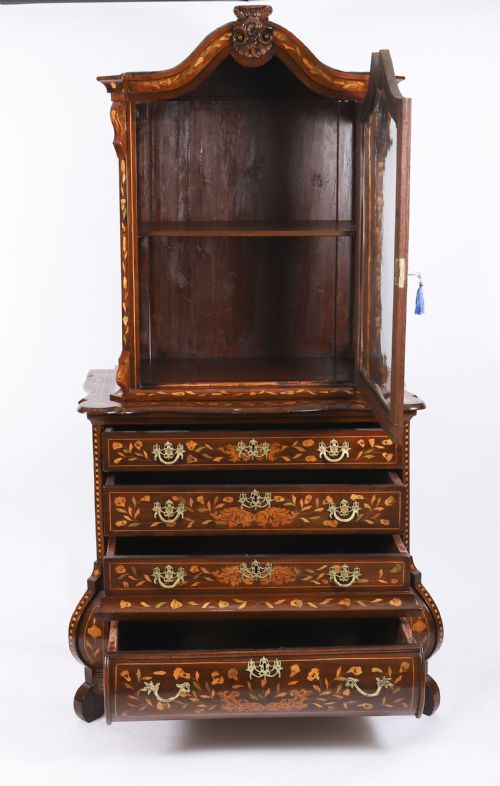
fig 3. An 18th-century Dutch walnut cabinet on chest featuring detailed floral marquetry inlay, an arched bonnet top with glass doors, and four brass-handled drawers.
fig 3. Antique Dutch Marquetry Walnut Cabinet on Chest 18th Century


Condition:

In really excellent condition having been beautifully cleaned, polished and waxed in our workshops, please see photos for confirmation.

Dimensions in cm:

Height 192 cm x Width 113 cm x Depth 57 cm
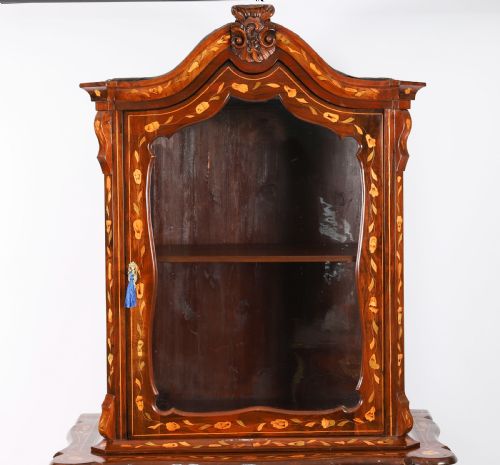
fig 4. An 18th-century Dutch walnut cabinet on chest featuring detailed floral marquetry inlay, an arched bonnet top with glass doors, and four brass-handled drawers.
fig 4. Antique Dutch Marquetry Walnut Cabinet on Chest 18th Century

Dimensions in inches:

Height 6 foot, 4 inches x Width 3 foot, 8 inches x Depth 1 foot, 10 inches

Fruitwood

is the wood of any of numerous fruit-bearing trees, such as the cherry, pear or apple used mainly in cabinetmaking. Most of the fruitwoods have fine, smooth texture and good shaping features and are considered to be the best cabinet woods.
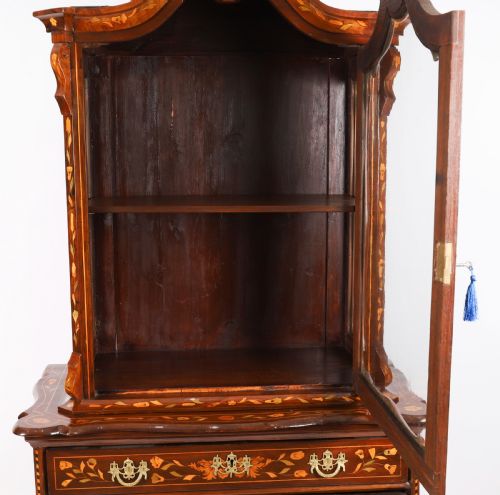
fig 5. An 18th-century Dutch walnut cabinet on chest featuring detailed floral marquetry inlay, an arched bonnet top with glass doors, and four brass-handled drawers.
fig 5. Antique Dutch Marquetry Walnut Cabinet on Chest 18th Century

Marquetry

is decorative artistry where pieces of material of different colours are inserted into the surface wood veneer to form intricate patterns such as scrolls or flowers.

The technique of veneered marquetry had its inspiration in 16th-century Florence. Marquetry elaborated upon Florentine techniques of inlaying solid marble slabs with designs formed of fitted marbles, jaspers and semi-precious stones. This work, called opere di commessi, has medieval parallels in Central Italian "Cosmati"-work of inlaid marble floors, altars and columns. The technique is known in English as pietra dura, for the "hardstones" used: onyx, jasper, cornelian, lapis lazuli and colored marbles. In Florence, the Chapel of the Medici at San Lorenzo is completely covered in a colored marble facing using this demanding jig-sawn technique.
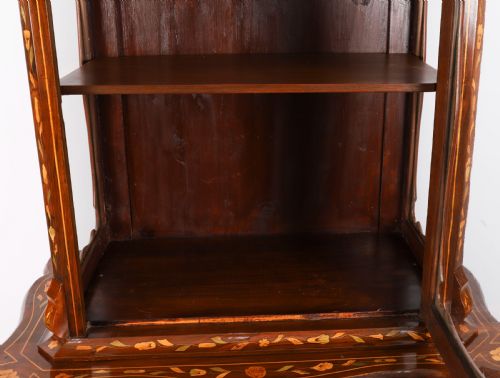
fig 6. An 18th-century Dutch walnut cabinet on chest featuring detailed floral marquetry inlay, an arched bonnet top with glass doors, and four brass-handled drawers.
fig 6. Antique Dutch Marquetry Walnut Cabinet on Chest 18th Century

Techniques of wood marquetry were developed in Antwerp and other Flemish centers of luxury cabinet-making during the early 16th century. The craft was imported full-blown to France after the mid-seventeenth century, to create furniture of unprecedented luxury being made at the royal manufactory of the Gobelins, charged with providing furnishings to decorate Versailles and the other royal residences of Louis XIV. Early masters of French marquetry were the Fleming Pierre Golle and his son-in-law, André-Charles Boulle, who founded a dynasty of royal and Parisian cabinet-makers (ébénistes) and gave his name to a technique of marquetry employing brass with pewter in arabesque or intricately foliate designs.
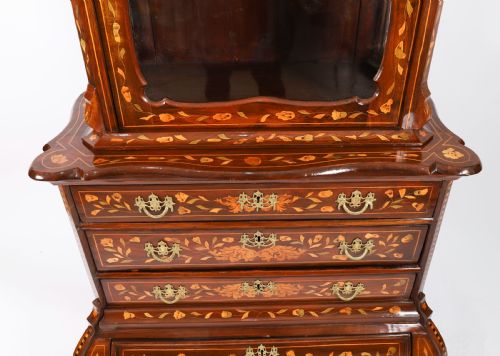
fig 7. An 18th-century Dutch walnut cabinet on chest featuring detailed floral marquetry inlay, an arched bonnet top with glass doors, and four brass-handled drawers.
fig 7. Antique Dutch Marquetry Walnut Cabinet on Chest 18th Century

Walnut & Burr Walnut

Walnut is a hard, dense, tight- grained wood that polishes to a very smooth finish. It is a popular and attractive wood whose colour ranges from near white in the sapwood to a dark hew in the heartwood. When dried in a kiln, walnut wood tends to develop a dull brown colour, but when air-dried can become a rich purplish-brown. Because of its colour, hardness and grain, it is a prized furniture and carving wood. Walnut veneer was highly priced and the cost would reflect the ‘fanciness’ of the veneer – the more decorative, then the more expensive and desirable.
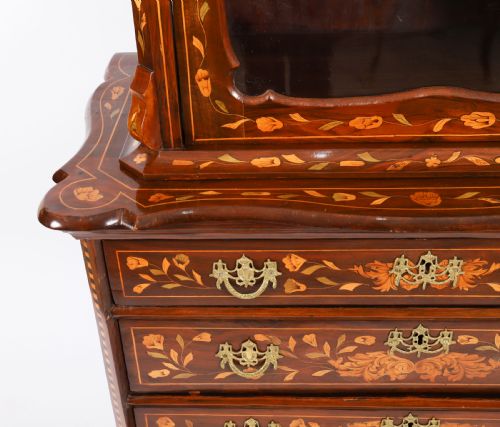
fig 8. An 18th-century Dutch walnut cabinet on chest featuring detailed floral marquetry inlay, an arched bonnet top with glass doors, and four brass-handled drawers.
fig 8. Antique Dutch Marquetry Walnut Cabinet on Chest 18th Century

Burr walnut refers to the swirling figure present in nearly all walnut when cut and polished, and especially in the wood taken from the base of the tree where it joins the roots. However the true burr is a rare growth on the tree where hundreds of tiny branches have started to grow. Burr walnut produces some of the most complex and beautiful figuring you can find.

Our reference: 07076x

Height
192cm (75.59")
Width
113cm (44.49")
Depth
57cm (22.44")
Date of Manufacture

Regent Antiques has dated this Dutch Marquetry Walnut Cabinet to the 18th Century.

Reference Numbers
Sellingantiques Ref
SA1209220
Dealers Internal Ref
07076x
Regent Antiques
Regent Antiques
Sellingantiques verified Since Sep 2016

We specialise in english and continental furniture, silver, porcelain and decorative items.

Dealer Profile

You can view the stock and full dealer information on the Regent Antiques Profile Page

Trade Associations

Regent Antiques is a registered member of LAPADA  CINOA
PDF SHARE
SAVE
An 18th-century Dutch walnut cabinet on chest featuring detailed floral marquetry inlay, an arched bonnet top with glass doors, and four brass-handled drawers.
1 / 19
Archive I An 18th-century Dutch walnut cabinet on chest featuring detailed floral marquetry inlay, an arched bonnet top with glass doors, and four brass-handled drawers.

Antique Dutch Marquetry Walnut Cabinet on Chest 18th Century
Archive II An 18th-century Dutch walnut cabinet on chest featuring detailed floral marquetry inlay, an arched bonnet top with glass doors, and four brass-handled drawers. View II
Archive III An 18th-century Dutch walnut cabinet on chest featuring detailed floral marquetry inlay, an arched bonnet top with glass doors, and four brass-handled drawers. View III
Archive IV An 18th-century Dutch walnut cabinet on chest featuring detailed floral marquetry inlay, an arched bonnet top with glass doors, and four brass-handled drawers. View IV
Archive V An 18th-century Dutch walnut cabinet on chest featuring detailed floral marquetry inlay, an arched bonnet top with glass doors, and four brass-handled drawers. View V
Archive VI An 18th-century Dutch walnut cabinet on chest featuring detailed floral marquetry inlay, an arched bonnet top with glass doors, and four brass-handled drawers. View VI
Archive VII An 18th-century Dutch walnut cabinet on chest featuring detailed floral marquetry inlay, an arched bonnet top with glass doors, and four brass-handled drawers. View VII
Archive VIII An 18th-century Dutch walnut cabinet on chest featuring detailed floral marquetry inlay, an arched bonnet top with glass doors, and four brass-handled drawers. View VIII
Archive IX An 18th-century Dutch walnut cabinet on chest featuring detailed floral marquetry inlay, an arched bonnet top with glass doors, and four brass-handled drawers. View IX
Archive X An 18th-century Dutch walnut cabinet on chest featuring detailed floral marquetry inlay, an arched bonnet top with glass doors, and four brass-handled drawers. View X
Archive XI An 18th-century Dutch walnut cabinet on chest featuring detailed floral marquetry inlay, an arched bonnet top with glass doors, and four brass-handled drawers. View XI
Archive XII An 18th-century Dutch walnut cabinet on chest featuring detailed floral marquetry inlay, an arched bonnet top with glass doors, and four brass-handled drawers. View XII
Archive XIII An 18th-century Dutch walnut cabinet on chest featuring detailed floral marquetry inlay, an arched bonnet top with glass doors, and four brass-handled drawers. View XIII
Archive XIV An 18th-century Dutch walnut cabinet on chest featuring detailed floral marquetry inlay, an arched bonnet top with glass doors, and four brass-handled drawers. View XIV
Archive XV An 18th-century Dutch walnut cabinet on chest featuring detailed floral marquetry inlay, an arched bonnet top with glass doors, and four brass-handled drawers. View XV
Archive XVI An 18th-century Dutch walnut cabinet on chest featuring detailed floral marquetry inlay, an arched bonnet top with glass doors, and four brass-handled drawers. View XVI
Archive XVII An 18th-century Dutch walnut cabinet on chest featuring detailed floral marquetry inlay, an arched bonnet top with glass doors, and four brass-handled drawers. View XVII
Archive XVIII An 18th-century Dutch walnut cabinet on chest featuring detailed floral marquetry inlay, an arched bonnet top with glass doors, and four brass-handled drawers. View XVIII
Archive XIX An 18th-century Dutch walnut cabinet on chest featuring detailed floral marquetry inlay, an arched bonnet top with glass doors, and four brass-handled drawers. View XIX
Enlarged Archival View
Location
Manor Warehouse
318 Green Lanes
London
N4 1BX
United Kingdom
Verified Since Sep 2016
Items For Sale 649
Items Sold 2,631
Regent Antiques
Regent Antiques
Verified Since Sep 2016
View Dealer Info
Location: Manor Warehouse, 318 Green Lanes, London, N4 1BX, United Kingdom
Verified
Sep 2016
For Sale
649
Sold
2,631
An 18th-century Dutch walnut cabinet on chest featuring detailed floral marquetry inlay, an arched bonnet top with glass doors, and four brass-handled drawers.
Antique Dutch Marquetry Walnut Cabinet on Chest 18th Century
Ref: SA1209220
An 18th-century Dutch walnut cabinet on chest featuring detailed floral marquetry inlay, an arched bonnet top with glass doors, and four brass-handled drawers.
Detail View 1
Detail View 2
Detail View 3
Detail View 4
Detail View 5
Detail View 6
Detail View 7
Detail View 8
Detail View 9
Detail View 10
Detail View 11
Detail View 12
Detail View 13
Detail View 14
Detail View 15
Detail View 16
Detail View 17
Detail View 18
Archival Detail
Every single antique dealer on our platform is individually approved by our internal team. We verify their professional trade history, ethical standards, and photographic quality to ensure a secure, high-standard buying environment. Upon joining, every dealer agrees to a strict 9-point code of conduct. While issues can occasionally arise, our dealers typically resolve them swiftly and directly with the buyer. In fact, since our founding in 2002, Sellingantiques has only had to step in to help resolve an issue on roughly five occasions—a true testament to the quality of our dealers and their dedication to your happiness.
Our dealers are highly experienced in packing and shipping fragile, high-value antiques. Because you are in direct contact with the dealer, you will be able to easily go through all available shipping and insurance options together to ensure your item arrives safely.
Antiques are the ultimate green purchase. By choosing historical pieces over newly manufactured goods, you completely eliminate the carbon footprint of modern mass production while preserving exceptional, timeless craftsmanship.

A Dutch marquetry cabinet on chest is a two-part piece of storage furniture originating from the Netherlands during the 17th and 18th centuries. It combines an upper display cabinet or bookcase with a lower chest of drawers, decorated with intricate wood veneer marquetry.

These cabinets were constructed primarily using walnut, oak, and native fruitwoods. The decorative floral patterns were formed using contrasting wood veneers, while handles and escutcheons were cast in brass.

Authentic period pieces feature hand-cut dovetail joinery, solid oak drawer linings, and natural hand-cut irregularities in the veneer. The marquetry designs typically depict floral urns, foliage, or birds set into figured walnut backgrounds.

Positioning this substantial piece against a neutral or dark painted wall creates a focal point in a dining room, hallway, or drawing room. Modern ambient lighting highlights the detailed timber grain and inlaid wood patterns.

Maintain the finish by keeping the timber away from direct sunlight and heat sources to prevent veneer lifting. Apply a high-quality natural beeswax polish along the grain annually and dust regularly with a soft cloth.
items
Add keywords to the filter
Price
£100
£250000
Era
Movements
Material
Origin
Stock Location
Freshness
Online Payments
Categories