


Dutch Walnut Vitrine
A dutch walnut vitrine is a stately display piece that brings rich timber figure and elegant glazed framing to any room.

Dutch Walnut Vitrine
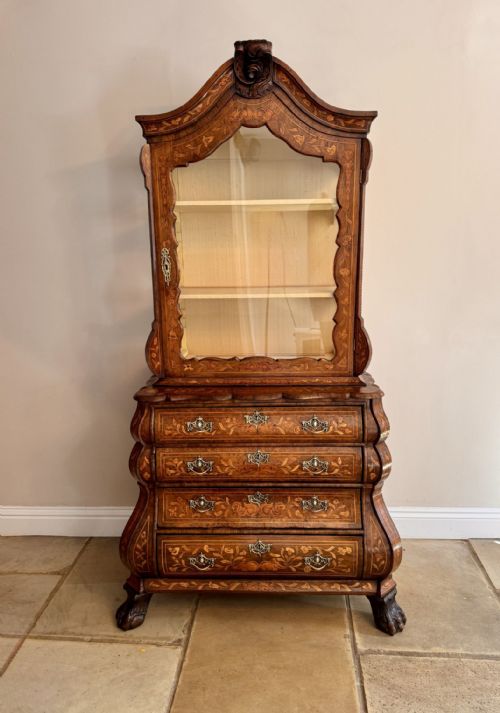
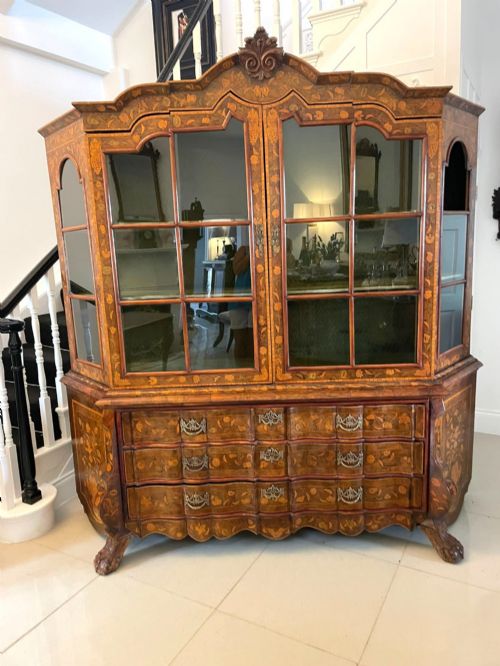
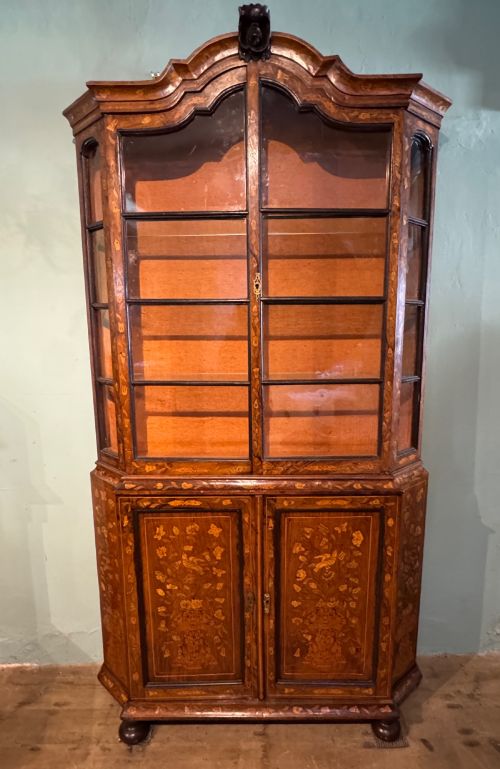
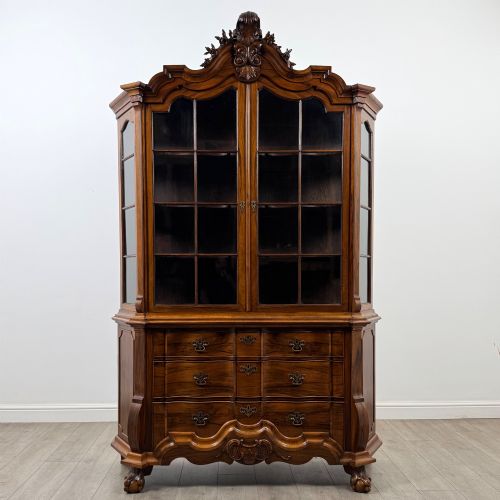
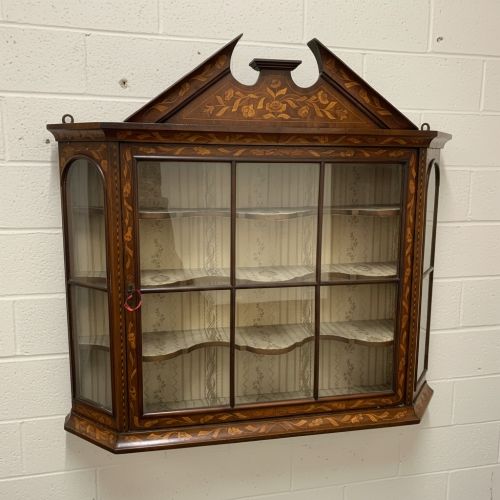
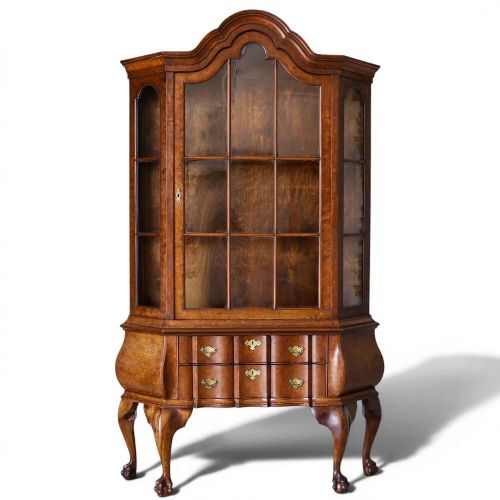
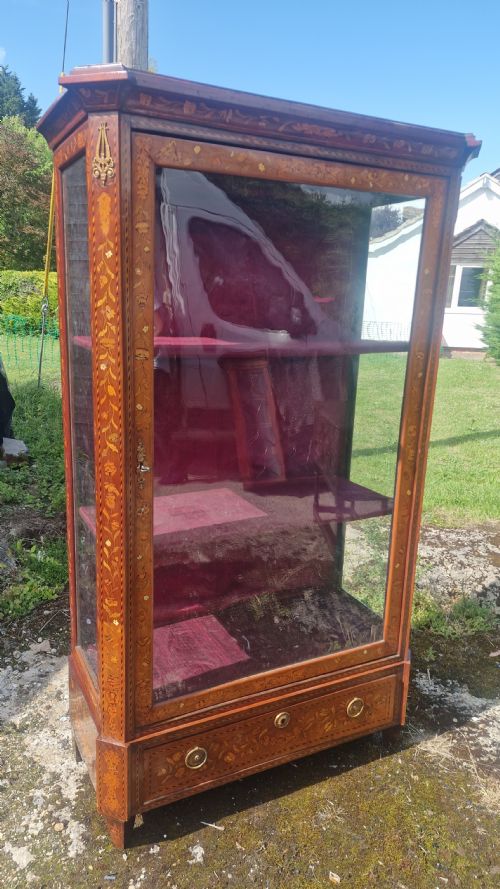
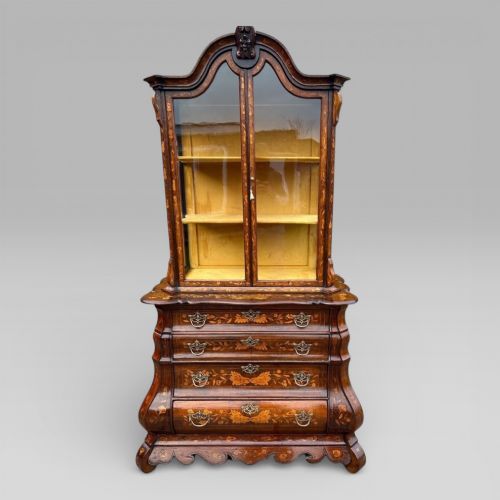
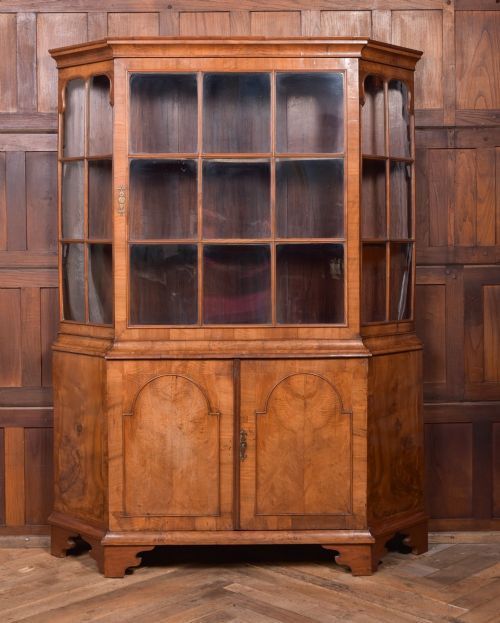
A dutch walnut vitrine combines practical storage with a glazed enclosure designed to showcase prized objects. These cabinets appear across several distinct periods, most notably the eighteenth and nineteenth centuries, alongside later twentieth-century revivals. Buyers encounter diverse forms, ranging from tall wall cabinets and corner cupboards to impressive display cabinets on chests.
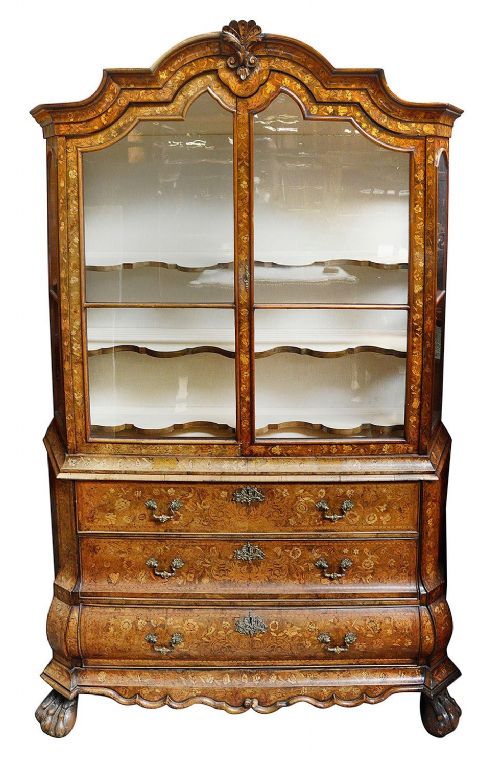
Marquetry and bombé profiles define a large portion of these pieces. Floral inlay in fruitwood and lighter timbers often contrasts deeply against dark walnut grounds. The scale spans from compact corner units to exceptionally large cabinets with canted sides.
How They Were Made
Cabinet makers utilised solid walnut and burr walnut veneers applied over secondary woods like oak and fruitwood. Marquetry panels demanded precise hand-cutting of intricate floral motifs from contrasting timbers, which were then fitted flush into the surface.
Glazing bars divided the glass doors into neat geometric panes, while brass hardware secured the doors and drawers. Bombe shapes required expert steam-bending and carving of the structural framework to achieve the characteristic swelling serpentine curves.
Listings feature walnut, burr walnut, fruitwood, and oak across eighteenth-century, nineteenth-century, and twentieth-century periods.
What Varies in Quality
The refinement of the marquetry inlay sets superior pieces apart from simpler examples. Crisp execution of floral details and balanced composition across the cabinet doors indicate high workshop skill.
Figure and tone in the timber create considerable distinction. Burr walnut veneers with deep chatoyancy and warm patination elevate the visual presence of a cabinet far above plain timber surfaces.
Edwards & Roberts
The Dutch Walnut Vitrine Glossary
- Vitrine
- A glass-fronted cabinet designed for the display of curiosities and porcelain. These pieces protect delicate items while offering clear all-round visibility.
- Bombé
- A swelling, outwardly curved furniture profile that is wider at the base than at the top. This voluptuous contour requires advanced carpentry techniques.
- Marquetry
- Decorative veneer patterns formed by fitting together small pieces of various coloured woods. Craftsmen use this technique to create elaborate floral or pictorial scenes.
- Burr Walnut
- Timber taken from the wart-like growth on a walnut tree, yielding highly swirled and mottled grain patterns. Cabinet makers prize this wood for its decorative impact.
- Canted
- Bevelled or sloped at an edge or corner rather than meeting at a square ninety-degree angle. This shaping softens the heavy silhouette of large display furniture.
Dutch Walnut Vitrine: Frequently Asked Questions
How do I date a dutch walnut vitrine?
Dating relies on examining construction methods, timber choice, and decorative style markers. Eighteenth-century examples often display deep bombé shaping and intricate hand-cut marquetry.
Later nineteenth- and twentieth-century pieces frequently adopt revival styles with modified hardware and secondary timbers that reflect the manufacturing techniques of their era.
How should I clean a marquetry surface?
Maintenance requires gentle dusting with a dry, soft cloth to protect the delicate veneer and inlaid fruitwood details. Avoid moisture and harsh chemical polishes that can degrade the historic finish.
Applying microcrystalline wax occasionally helps nourish the walnut and preserve the underlying patina without harming the timber.
Where should I place a bombé cabinet?
These prominent pieces require adequate floor space to accommodate their swelling curved profiles and substantial proportions. Placing them away from direct sunlight protects the walnut veneers and internal fabric linings from fading.
Pairing a vitrine with neutral walls allows the intricate floral marquetry and burr grain patterns to remain the visual focal point of the room.