
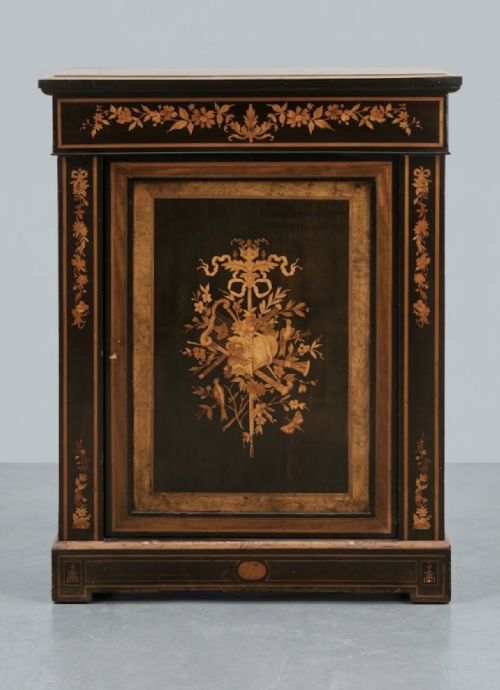

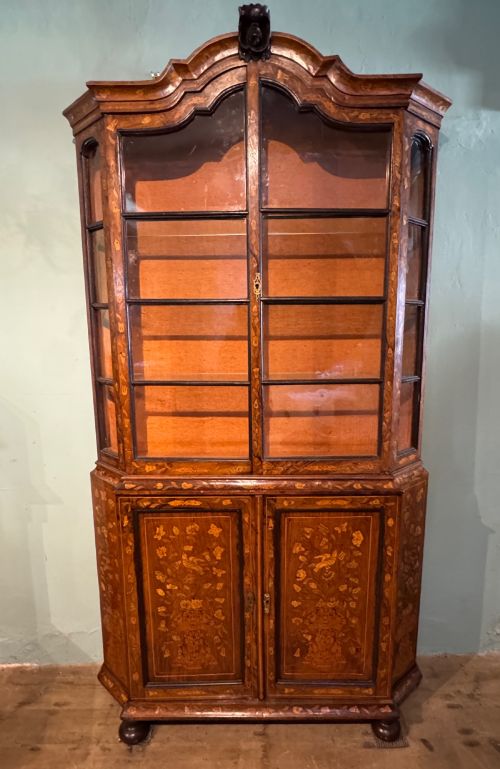
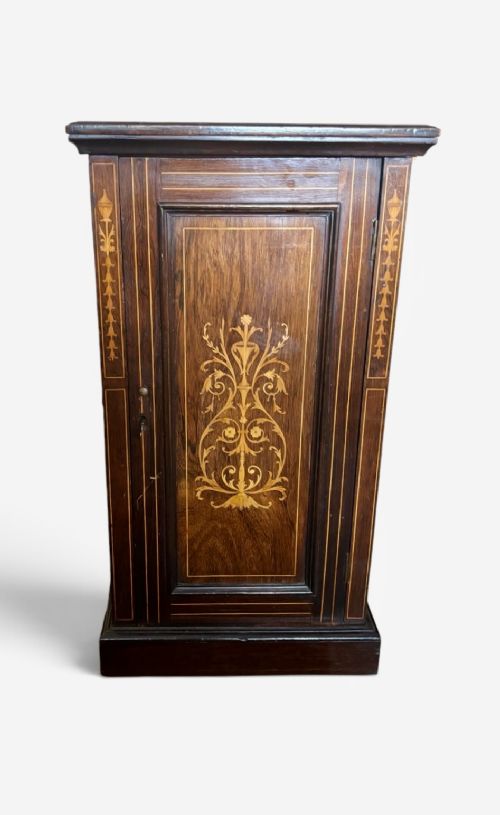
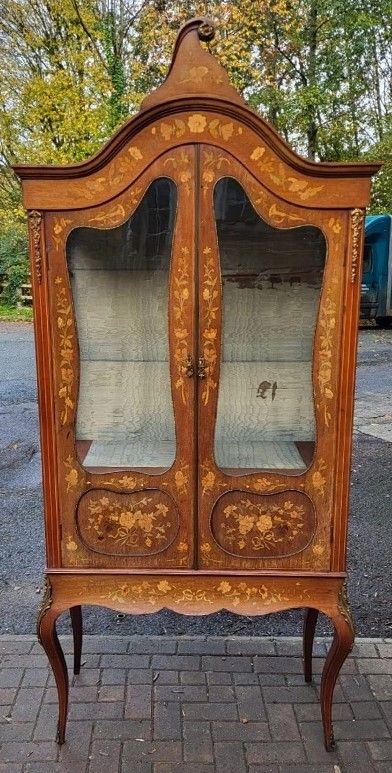
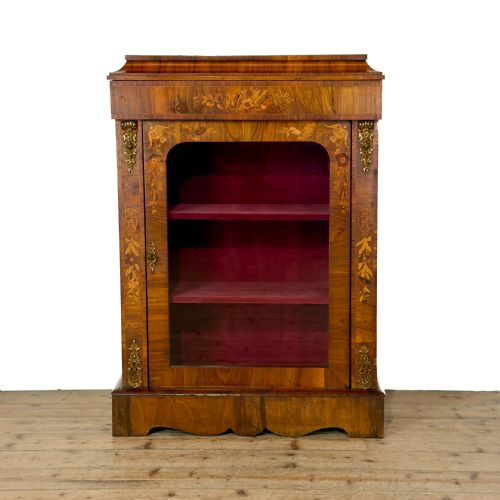

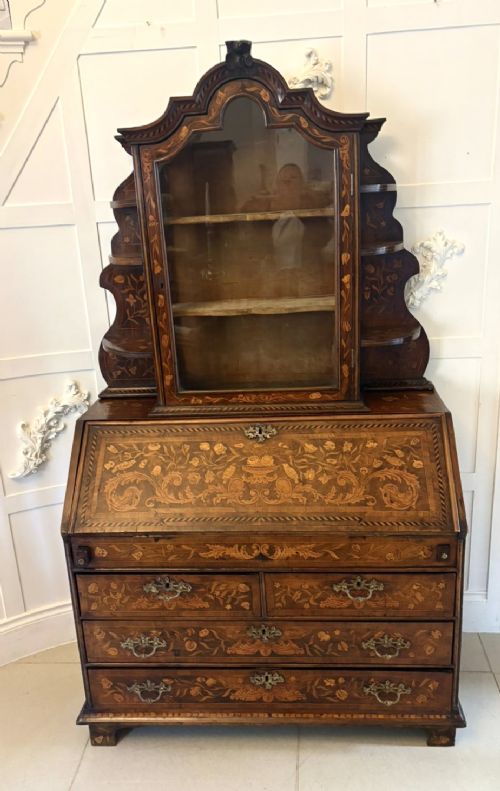


Floral Marquetry Bookcase
These floral marquetry bookcase pieces combine timber and glass with intricate inlaid flora, offering both display space and storage.

Floral Marquetry Bookcase
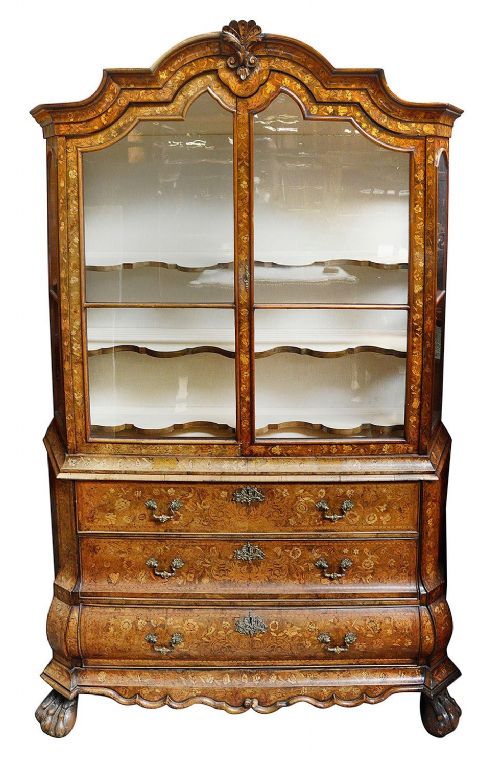
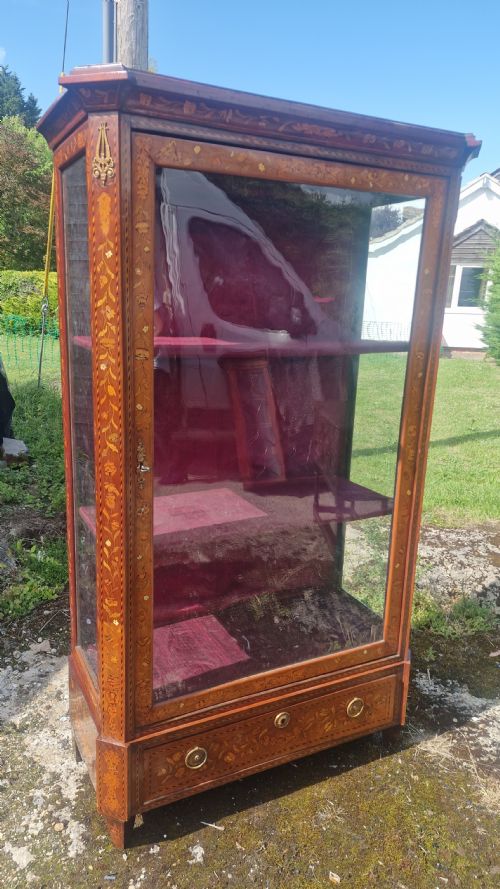
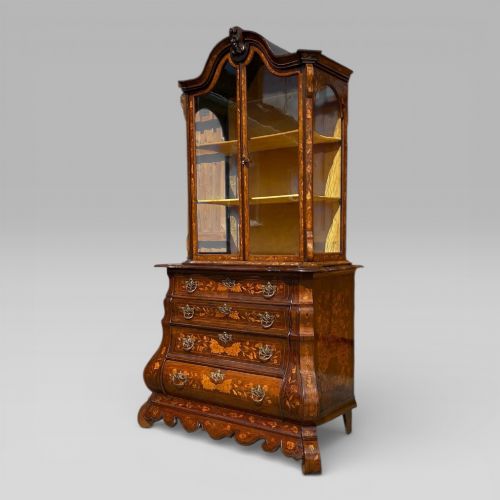
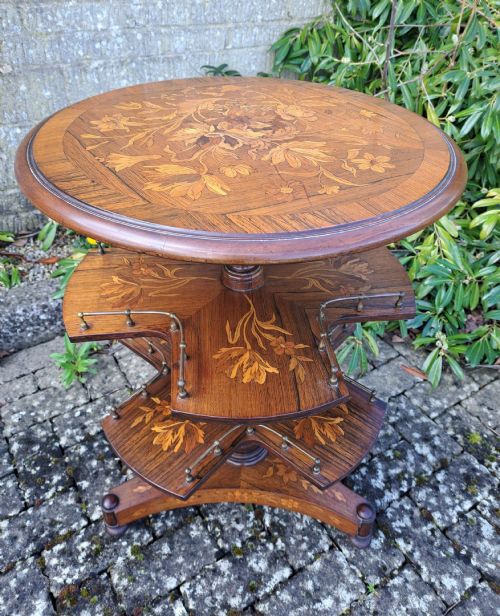
A floral marquetry bookcase serves as a storage and display piece, ornamented with detailed botanical veneer work across its wooden surfaces. These items appear in forms ranging from tall bureau bookcases and display cabinets to pier cabinets and vitrines.
Most examples found on this page trace their origins to the eighteenth and nineteenth centuries, with notable pieces demonstrating Dutch styles and Victorian workmanship. Walnut, burr walnut, and mahogany form the primary carcass woods for these items, often paired with glazed doors and brass fittings.
How they were made
Cabinet makers utilised solid timbers like walnut and mahogany for the main structures, applying thin veneers to create stable flat surfaces and curved bombé fronts. Fruitwood inlay was then hand-cut and pieced together to form elaborate floral motifs across the exterior doors and panels.
Glazing bars divided the glass panels on display sections, while ormolu mounts and brass details provided structural edge protection and decorative contrast. Interior shelves utilised matching timbers, supported by adjustable wooden racks or fixed wooden brackets.
Floral Marquetry Bookcase Retail Price Guide 2026
Typical asking prices for floral marquetry bookcase among the pieces listed under this phrase on Sellingantiques today, from the lower quarter to the upper quarter. They describe what is for sale here now, not the wider market.
Periods represented span from the eighteenth century through the Edwardian era, encompassing Dutch baroque and Victorian revivals.
What varies in quality
The precision and density of the floral marquetry dictate much of the visual distinction across these items, separating simpler geometric borders from deeply layered botanical scenes. Craftsmanship in the execution of curved bombé carcasses and matched burr walnut veneers also signals higher workshop standards.
Hardware choice, such as chased ormolu mounts and original brass hinges, reflects the original tier of production. Structural integrity in the joints of large bureau bookcases and display cabinets further determines how well the piece survives centuries of use.
Edwards & Roberts
The Floral Marquetry Bookcase Glossary
- Marquetry
- Decorative veneer work cut and fitted together to form pictures or patterns on a wooden ground. This technique uses various coloured woods to create floral designs.
- Bombé
- A swelling, outward-curved shape found on the front and sides of certain cabinets. This bulging profile requires skilled woodworking to apply veneer evenly.
- Vitrine
- A glass-fronted cabinet designed for displaying porcelain, books, or curiosities. These glazed enclosures protect contents while offering light from multiple angles.
- Pier Cabinet
- A narrow cabinet built to fit the wall space between windows. These slim display pieces often feature glazed doors and inlaid wooden surfaces.
- Bureau Bookcase
- A combination furniture form featuring a sloping desk flap below upper shelving or cupboard doors. These hybrid pieces provide both a writing surface and enclosed storage.
Floral Marquetry Bookcase: Frequently Asked Questions
How do I date a marquetry bookcase?
Dating relies on examining the carcass construction, timber selection, and prevailing furniture styles visible in the piece. Eighteenth-century models often feature Dutch baroque influences and burr walnut, while Victorian examples introduce darker polished finishes and rosewood or satinwood.
Secondary woods inside drawers and backboards also provide clues regarding the period of manufacture. Regional construction methods help narrow down the decade of production.
Where should I place a display cabinet?
These cabinets suit reception rooms, libraries, or studies where controlled humidity and stable temperatures protect antique timbers. Keeping them away from direct sunlight prevents the fruitwood inlay and walnut veneers from fading.
Allowance must be made for the clearance of large doors and drop-front desk sections. Adequate floor support is necessary for large bureau bookcases laden with books.
How do I clean floral marquetry?
Maintenance requires dusting with a dry, soft lint-free cloth to prevent abrasive particles from scratching the polished wood surface. Wax polishes formulated for antique furniture help nourish the timber without building up heavy residues.
Harsh chemical cleaners or excess moisture must be avoided near the inlaid fruitwood sections. Professional conservation is recommended if veneer lifting occurs.