






Dutch Baroque Cabinet
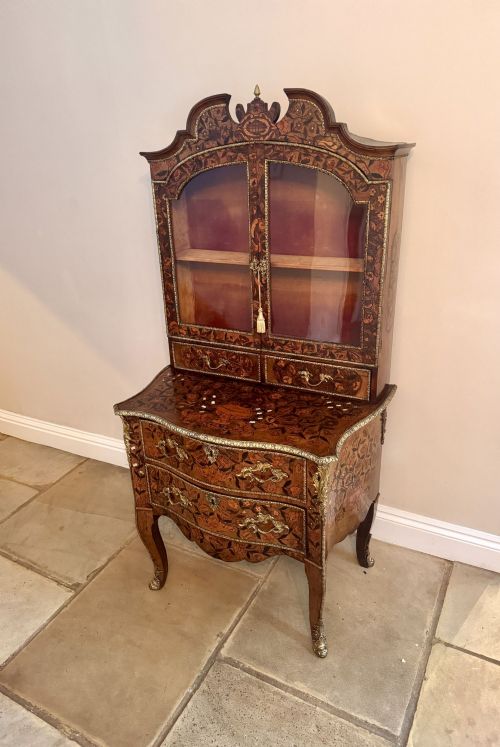
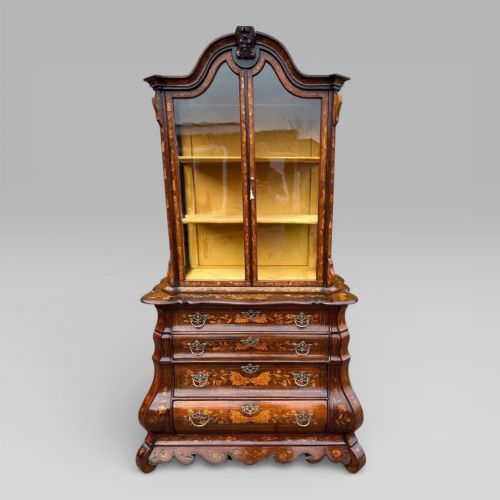
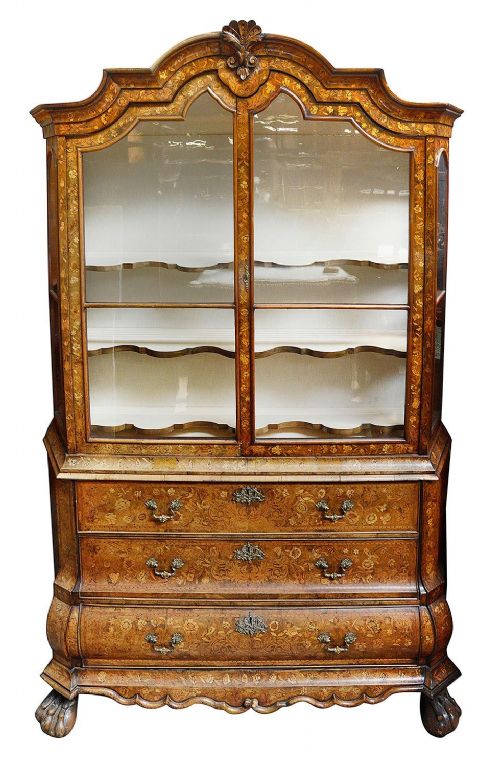
A dutch baroque cabinet brings rich walnut veneer, floral marquetry, and substantial architectural presence into a room.
Dutch Baroque Cabinet
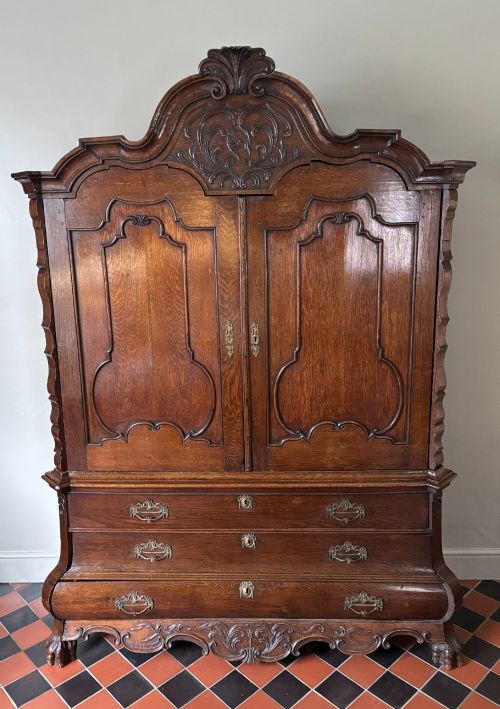
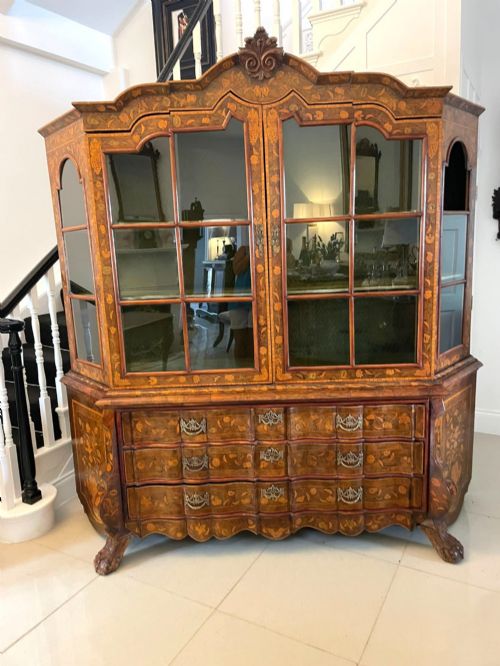
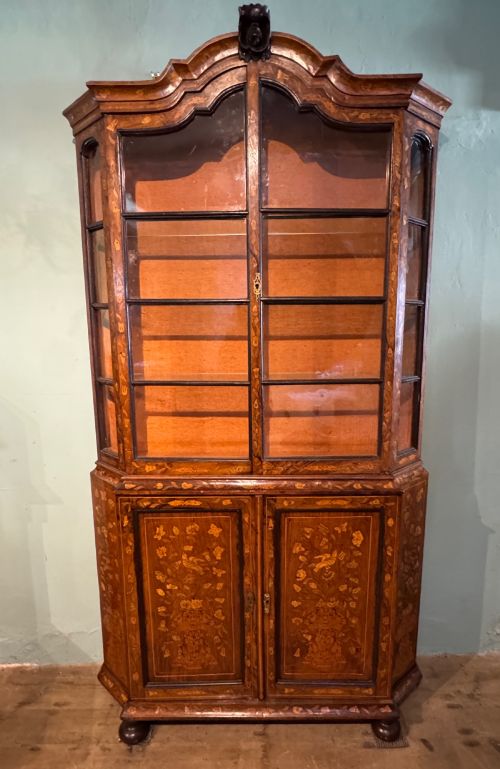
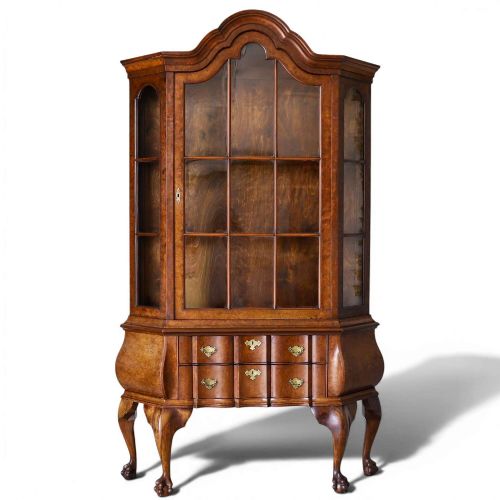
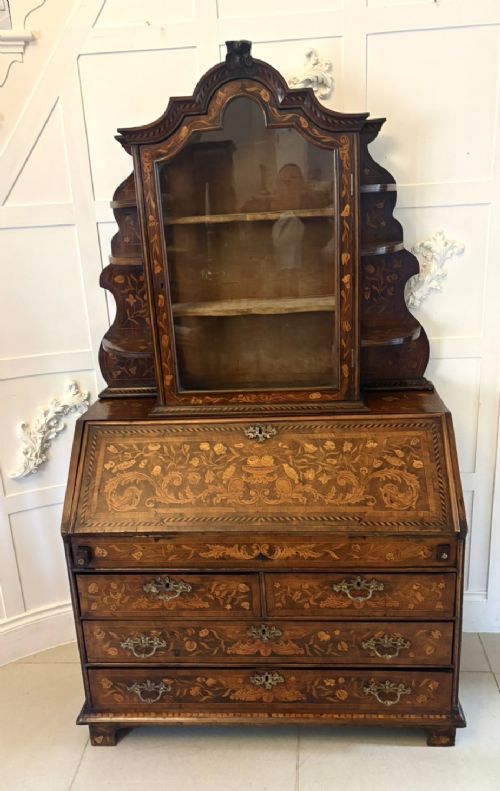
A dutch baroque cabinet is a substantial storage or display piece originating from the seventeenth and eighteenth centuries, though revival versions appear from later periods. Buyers encounter varied forms on this page, ranging from grand linen presses and bureau bookcases to display cabinets, corner cupboards, and armoires.
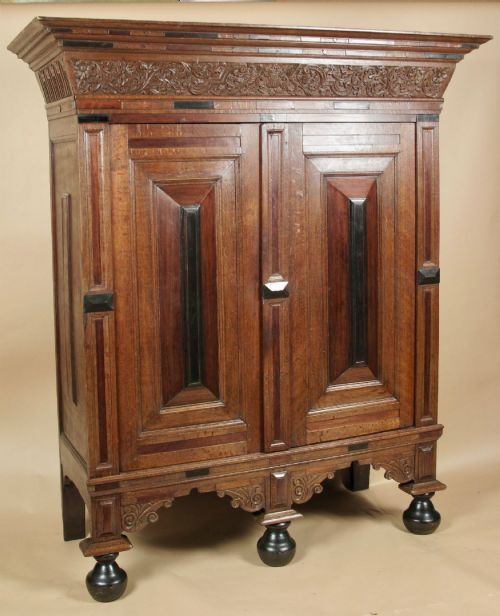
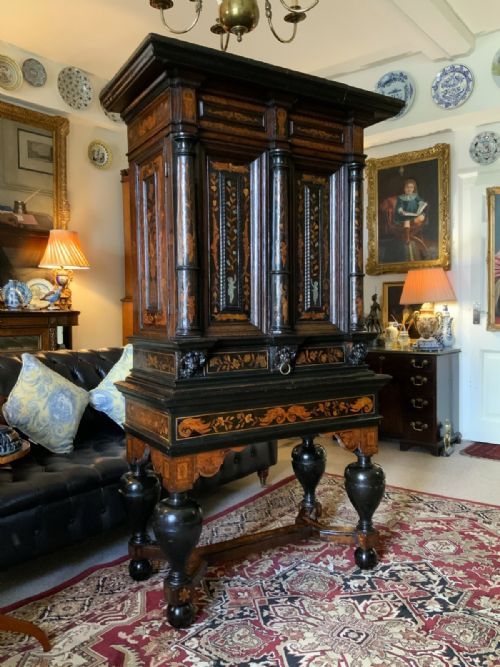
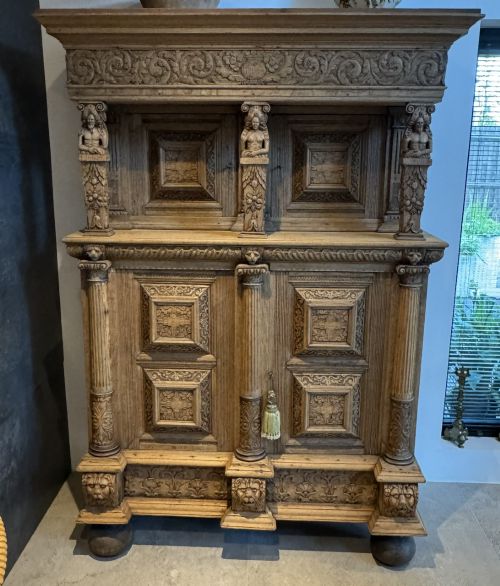
The aesthetic bridges domestic utility with sculptural ornamentation, frequently employing bombé shaping or tall architectural cornices. Examples span heavy oak kasten from the seventeenth century to lighter walnut and marquetry pieces produced across the eighteenth century.
Markers of distinction
Quality rests upon the crispness and complexity of the marquetry inlay, where densely detailed floral motifs demonstrate superior craftsmanship compared to simpler geometric arrangements. The choice of timber also dictates standing, with figured burr walnut and exotic woods commanding particular attention.
Proportion and architectural balance define the superior examples, particularly where bombé curves maintain structural harmony or where carved mouldings retain their original definition without softening.
Dutch Baroque Cabinet Retail Price Guide 2026
Typical asking prices for dutch baroque cabinet among the pieces listed under this phrase on Sellingantiques today, from the lower quarter to the upper quarter. They describe what is for sale here now, not the wider market.
Listings feature pieces spanning from the seventeenth century through to the 1930s revival period, constructed in oak, walnut, fruitwood, and ebony.
Edwards and Roberts
The Dutch Baroque Cabinet Glossary
- Marquetry
- Decorative inlay work using various tinted woods to create pictorial designs, most often elaborate floral arrangements across the drawer fronts and doors of these cabinets.
- Bombé
- A swelling, outward-curved profile found on the lower sections of certain cabinets and chests, creating a strong three-dimensional presence.
- Kast
- A large, two-door freestanding cupboard or wardrobe of Dutch or Flemish origin, traditionally used for linen storage.
- Vitrine
- A glass-fronted display cabinet designed to showcase porcelain, glassware, or small decorative objects.
- Bureau bookcase
- A combination form featuring a sloping fall-front desk compartment below a shelved upper bookcase or cabinet section.
Dutch Baroque Cabinet: Frequently Asked Questions
What is a dutch baroque cabinet used for?
These pieces served primarily for domestic storage, holding household linen, clothing, books, or displaying valued porcelain and glassware behind glass panels. Bureau variants provided a dedicated writing surface alongside compartmentalised storage.
In modern interiors, they function as statement storage furniture, anchoring living rooms, dining spaces, or studies while offering substantial concealed shelving.
How do I date a dutch baroque cabinet?
Dating relies on identifying timber choices, construction methods, and stylistic evolution between the seventeenth and nineteenth centuries. Seventeenth-century pieces typically utilise heavy oak and ebony with simpler geometric panelling, whereas eighteenth-century examples favour walnut veneers and intricate floral marquetry.
Revival pieces from later periods often display machine-cut internal elements or different secondary woods beneath the primary veneer layers, helping distinguish them from period originals.
What is a kasten?
A kasten is a traditional large Dutch or Flemish wardrobe or linen press featuring substantial double doors and deep internal storage space. These early pieces often stand on heavy bun feet and possess a commanding architectural scale.
They represent some of the earliest forms of case furniture found in this tradition, built with thick timbers to withstand heavy domestic use.
How should I care for walnut veneer?
Walnut veneer requires stable indoor humidity levels and protection from direct sunlight to prevent timber drying, fading, and lifting at the edges. Regular dusting with a soft, dry cloth maintains the surface without introducing moisture.
Avoid placing these cabinets near direct heat sources or rapid temperature fluctuations, which place stress on old glues and foundational wood.