





Dutch Cabinet on Chest
A Dutch cabinet on chest combines grand storage with intricate floral marquetry, offering a commanding presence for any serious interior.
Dutch Cabinet on Chest
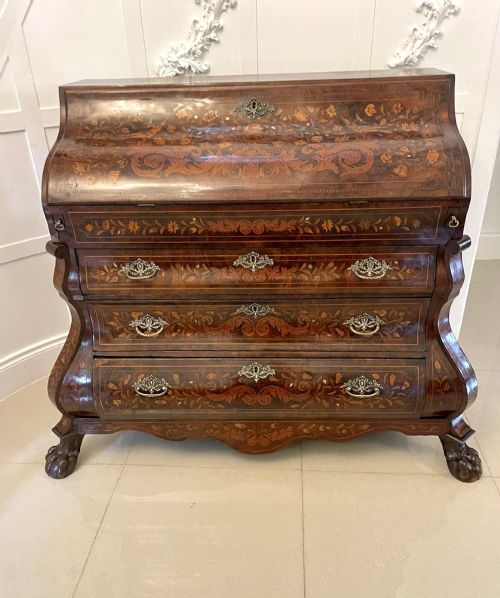
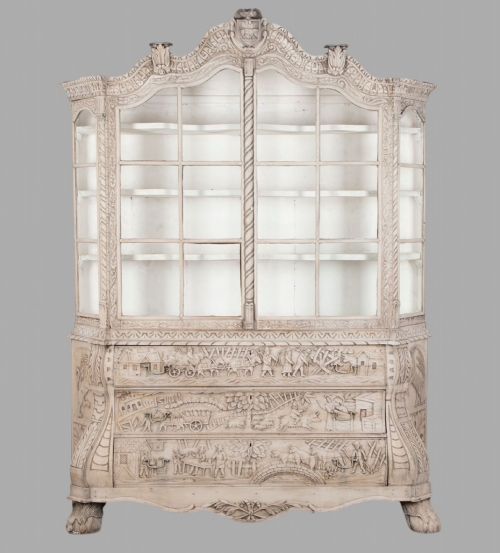
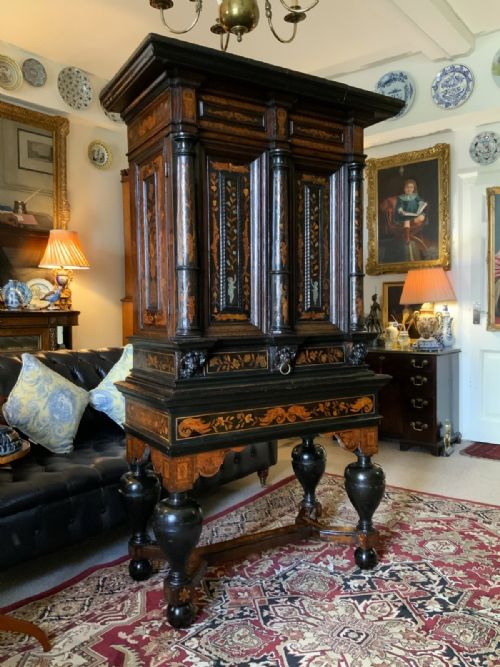
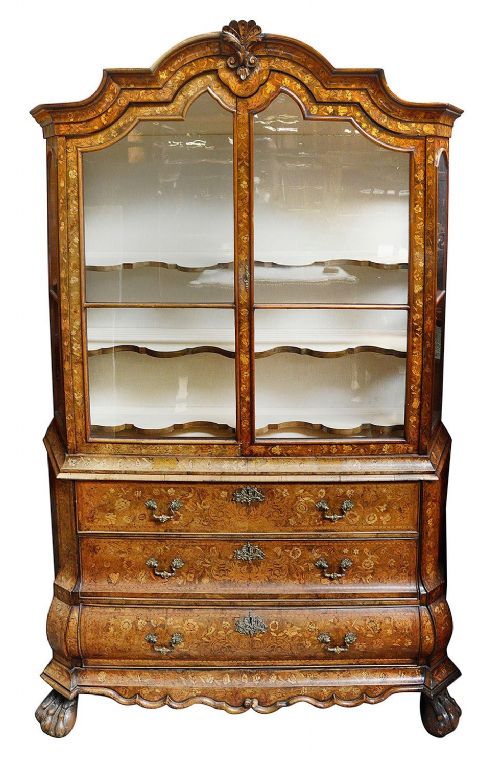
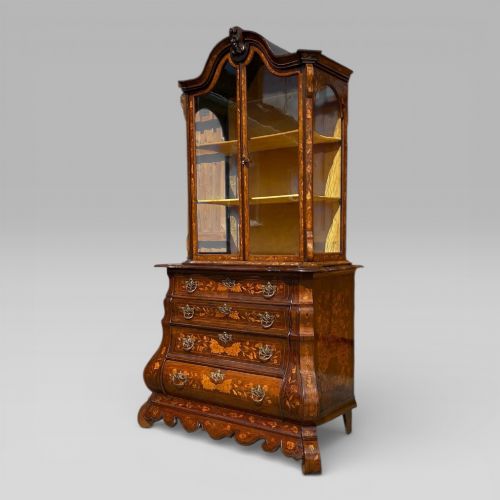
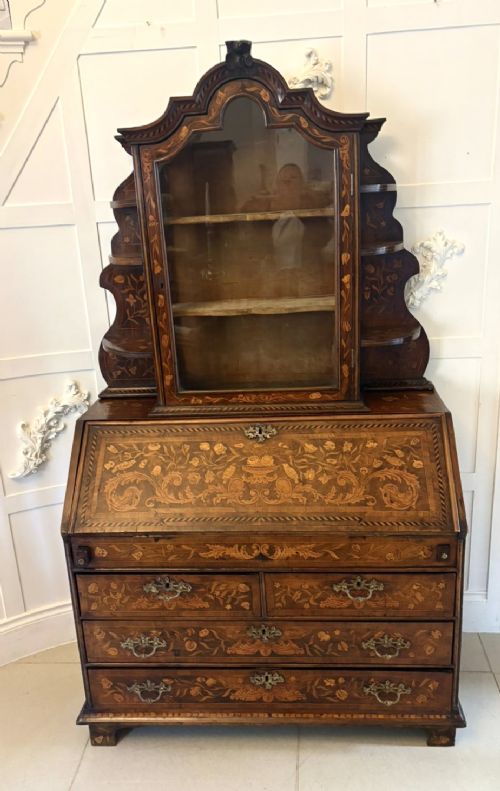
A dutch cabinet on chest pairs a glazed display vitrine or enclosed shelving upper section with a substantial lower chest of drawers, often resting on shaped feet. These imposing pieces serve both practical storage and display functions within domestic settings.
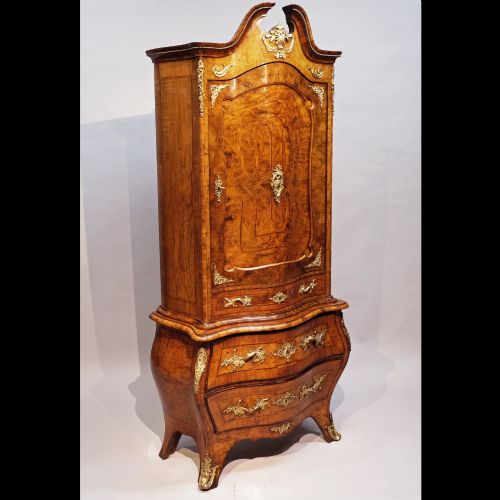
The versions most commonly met on this page date from the eighteenth and nineteenth centuries, exhibiting distinct regional forms such as bombé silhouettes and flat-fronted carcases. Walnut and oak form the primary structural foundations for these dual-part assemblies.
Originating predominantly from Dutch workshops, these items reflect broader European stylistic shifts including baroque, rococo, and neoclassical design movements. Makers frequently combined architectural proportions with organic floral ornamentation across the combined facade.
Materials and Technique
Carcase construction relies on solid timbers like oak and walnut, providing a stable frame to support heavy upper cabinet sections. Artisans applied rich veneers of burr walnut and mahogany over these primary woods.
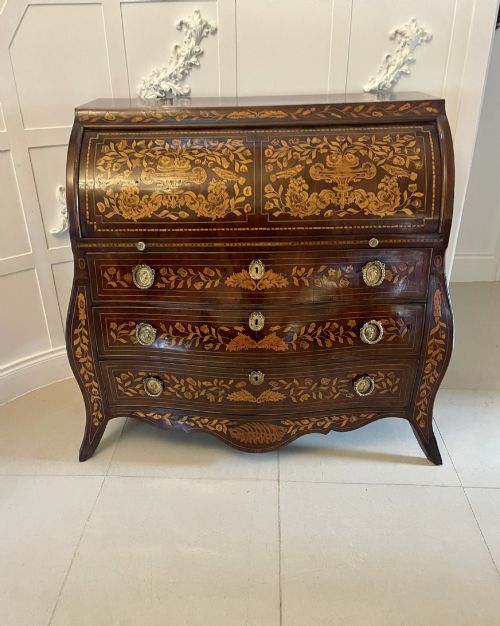
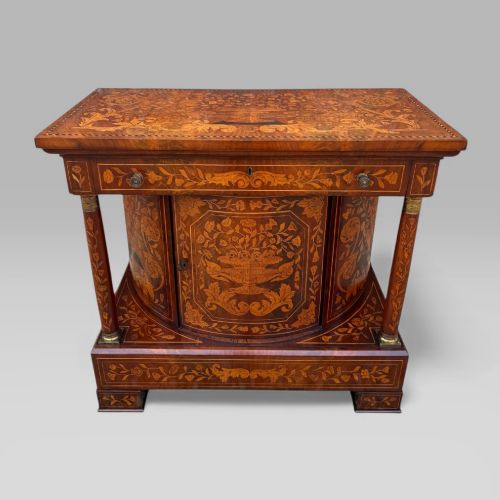
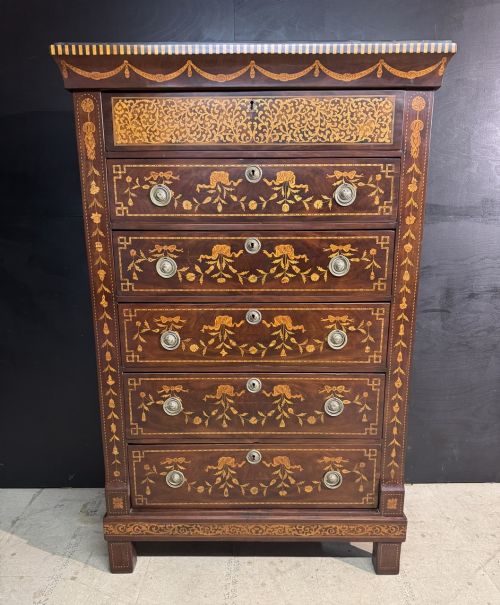
Marquetry technique defines the decorative surface, employing fruitwood and pewter inlays to form elaborate floral and urn motifs. These intricate veneers are meticulously cut and fitted across drawers, doors, and slanted desk fronts.
Listings feature walnut, burr walnut, fruitwood, and oak, frequently embellished with intricate floral marquetry and pewter inlay.
Evaluating Execution
Quality rests in the precision of the marquetry and the choice of burl veneers, where tightly figured grain patterns create deep visual movement. The crispness of carved details on bombé drawer fronts and cornice mouldings further separates standard examples from exceptional ones.
Structural integrity of the stacked sections and the original fit of brass hardware indicate the skill of the original workshop. Finer pieces maintain balanced proportions between the upper cabinet and the lower chest without distortion in the curved outlines.
Edwards and Roberts
The Dutch Cabinet on Chest Glossary
- Bombé
- A swelling, outward-curving contour found on the front and sides of furniture bases. This undulating shape requires advanced woodworking skill to veneer accurately.
- Marquetry
- The art of applying decorative pieces of wood veneer to a structural structure to form pictorial patterns. Floral designs and urns frequently appear in these compositions.
- Vitrine
- A glass-fronted cabinet designed for displaying precious objects and porcelain. These glazed upper sections often feature wooden or brass framing bars.
- Linen Press
- A tall storage cupboard originally used for household textiles and folded garments. Upper doors typically conceal sliding trays rather than hanging space.
- Parquetry
- Geometric mosaic woodwork arranged in repeating patterns such as cubes or herringbones. This technique contrasts with the organic curves of floral marquetry.
Dutch Cabinet on Chest: Frequently Asked Questions
How do I date a Dutch cabinet on chest?
Dating relies on examining secondary woods, veneer choices, hardware styles, and overarching design motifs such as baroque curves or neoclassical symmetry. Eighteenth-century examples often feature dense fruitwood marquetry and rich walnut timbers, while later nineteenth-century pieces may display simpler mahogany construction.
Construction methods inside the drawer boxes and the type of hinges or locks also provide reliable chronological markers. Examining archival records and comparing known workshop signatures helps narrow the period of manufacture.
Where should I place a cabinet on chest?
These tall pieces require a secure wall placement in a principal room with stable ambient humidity and temperature levels. Their imposing height and visual weight make them ideal focal points in dining rooms, libraries, or spacious hallways.
Keep them away from direct sunlight and heat sources to protect delicate veneers and fruitwood marquetry from drying and splitting. Ensure the floor surface is level to prevent stress on the stacked joints between upper and lower sections.
How do I care for marquetry furniture?
Maintain marquetry surfaces by dusting regularly with a soft, dry cloth and applying high-quality beeswax sparingly to nourish the wood. Avoid using liquid polishes or silicone sprays, which can penetrate hairline cracks in the veneer and damage the adhesive beneath.
Maintain consistent indoor humidity to prevent the thin fruitwood and pewter inlays from lifting or shrinking away from the walnut carcase. Professional restoration should be sought immediately if any veneer lifting occurs.