
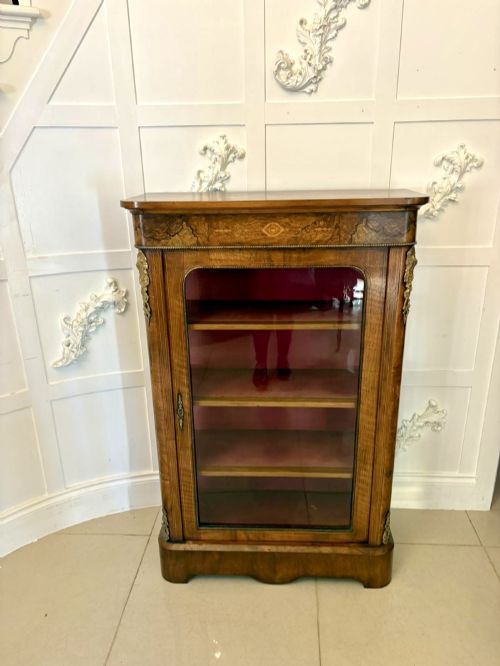
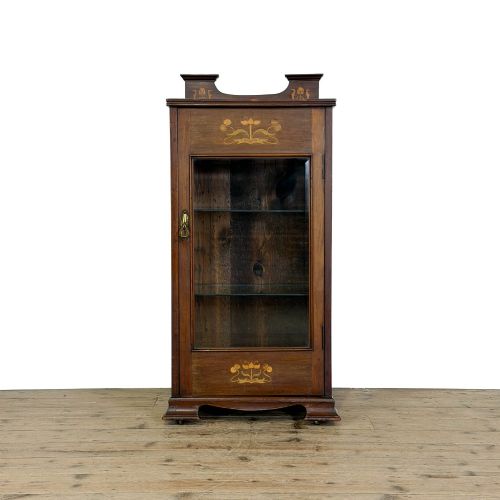
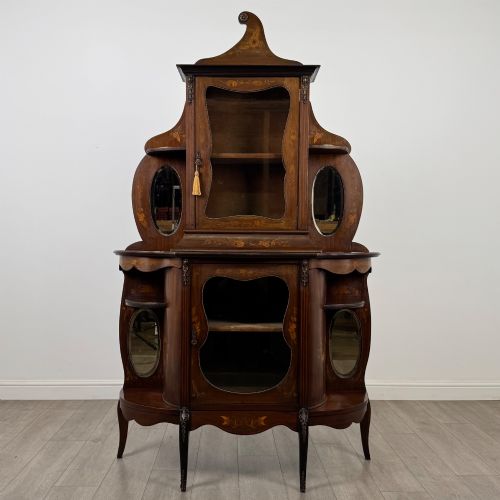
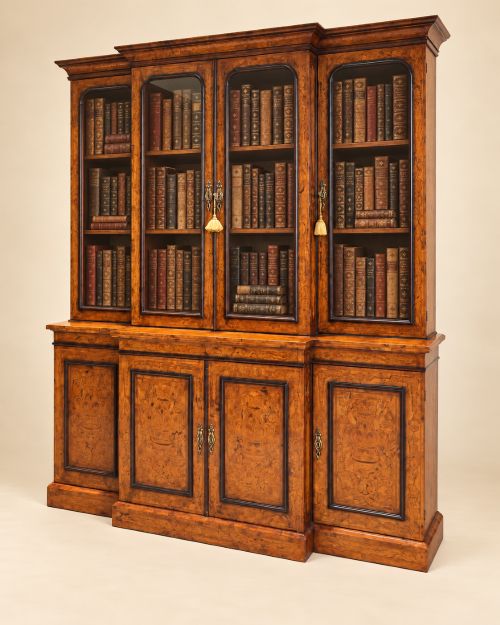

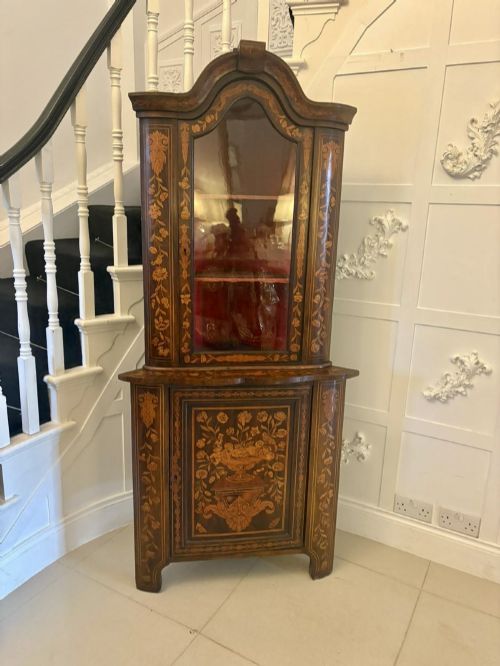
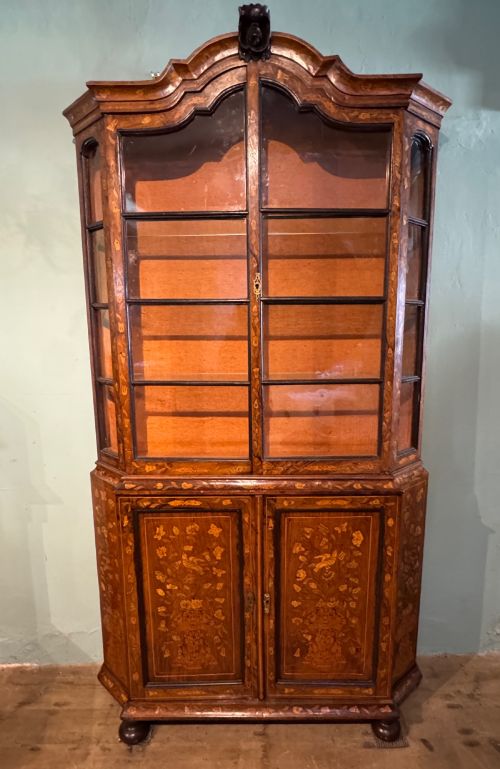
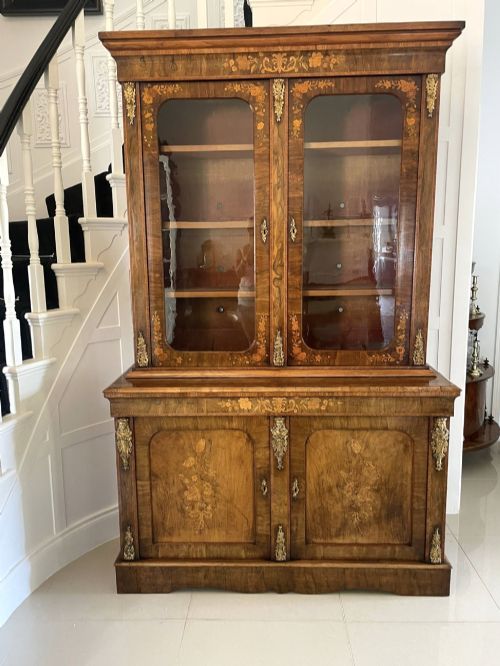
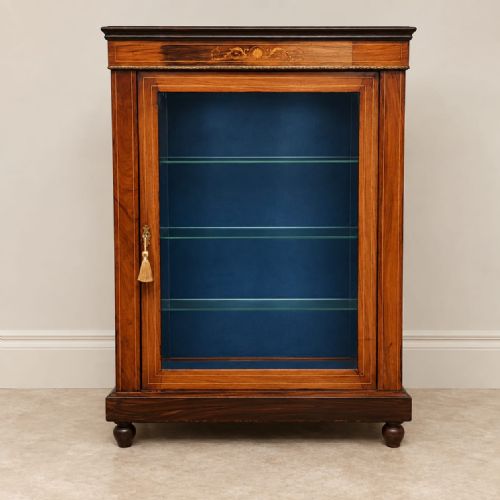
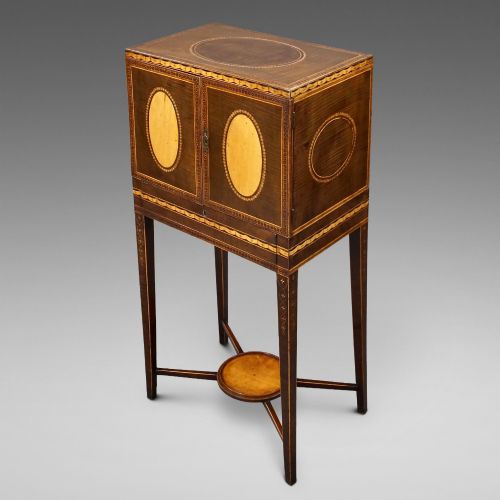
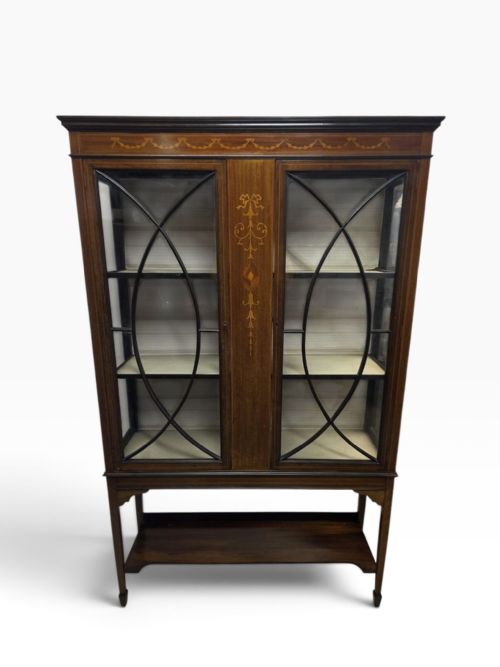
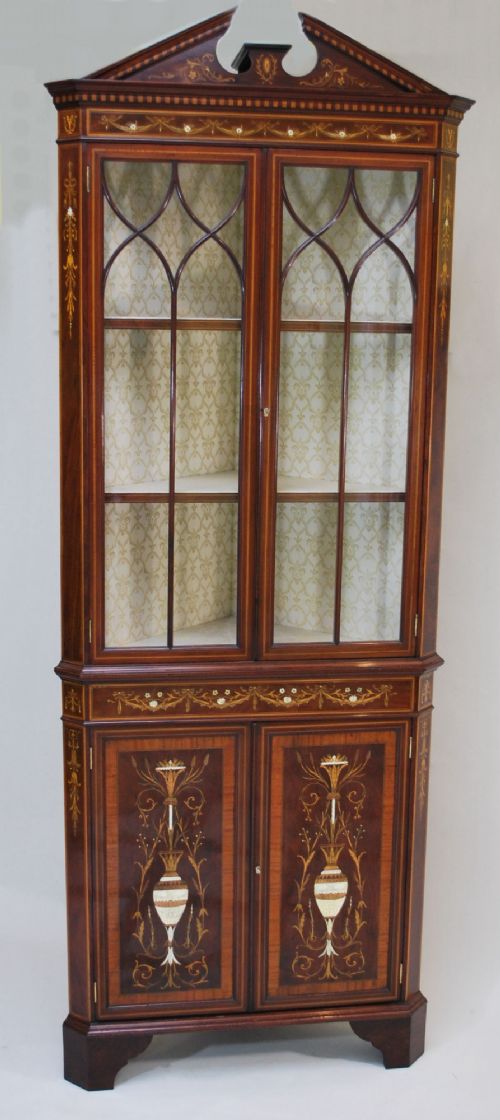
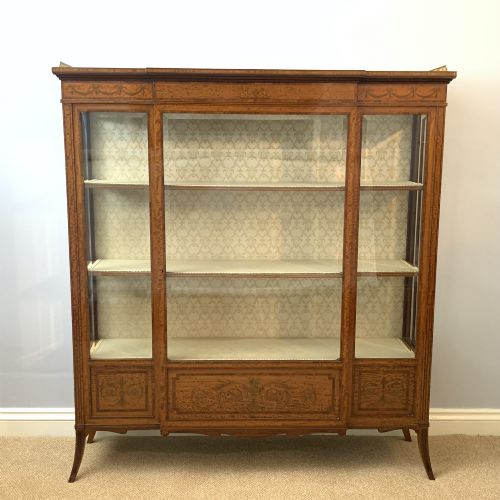
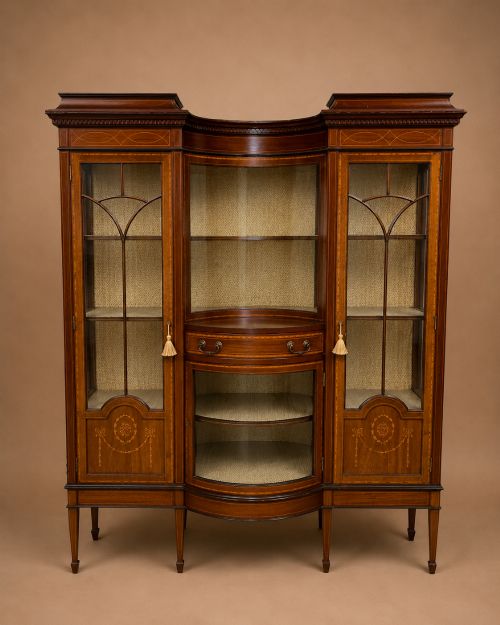
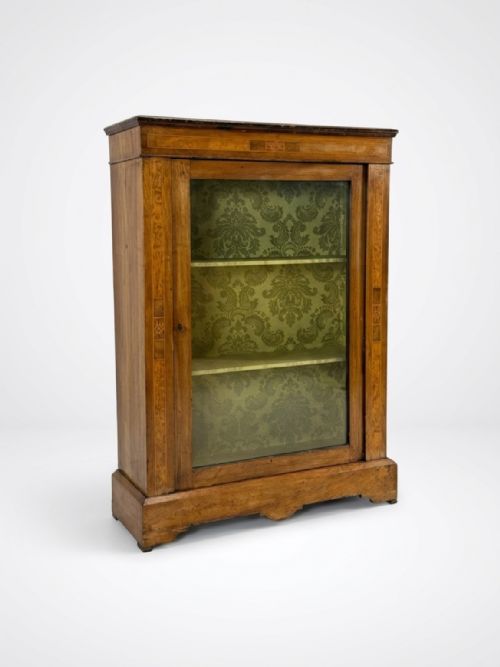
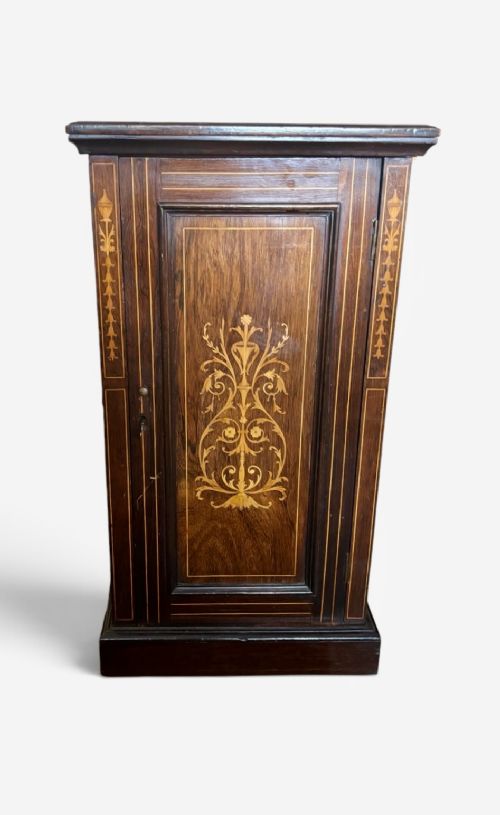
Marquetry Display Cupboard
These marquetry display cupboards combine intricate wood inlay with glazed storage, offering collectors a striking way to showcase ceramics and silver.
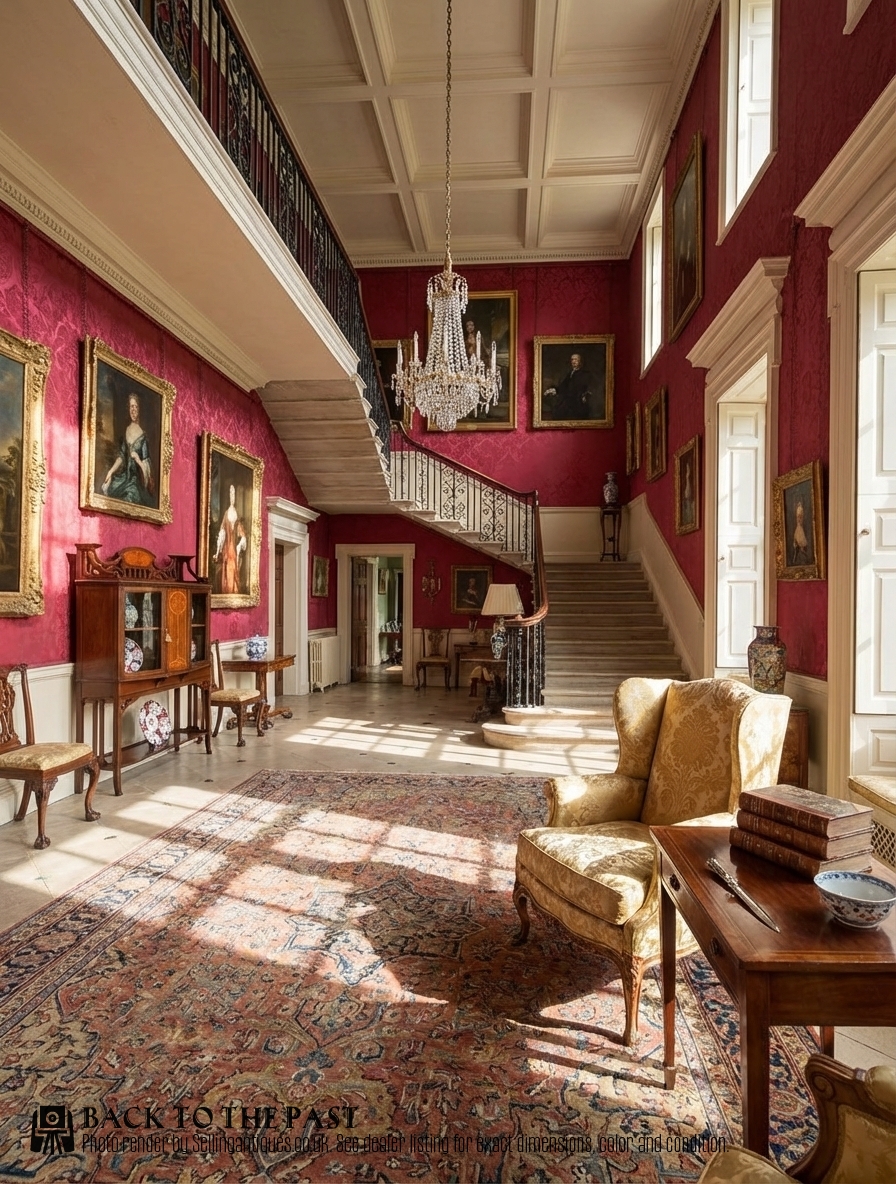
Understanding marquetry display cupboards
A marquetry display cupboard brings together detailed wood inlay and visible shelving, providing a practical yet decorative storage solution for fine objects. The examples on this page span several eras, from eighteenth-century pieces to Victorian and Edwardian interpretations.
Buyers frequently encounter corner cabinets, pier cabinets, and larger vitrines finished in walnut, mahogany, or satinwood. These forms range from tall double-height standing units to compact hanging and side cabinets suited for smaller rooms.
Stylistic influences vary significantly across the selection, encompassing Dutch Baroque and Dutch Baroque Revival alongside Aesthetic Movement and Art Nouveau designs. This diversity allows collectors to match a cabinet precisely to their interior scheme.
Materials and construction methods
Cabinetmakers utilised primary structural timbers such as mahogany and walnut, often applying burr veneers to create rich surfaces. Secondary woods and structural frames support the heavier glazed sections and internal shelving.
The decorative surfaces rely on precise wood inlay, fruitwood inlay, and satinwood detailing to form floral or geometric patterns. Brass mounts, glass panes, and occasionally fabric linings complete the interior and exterior presentation.
Retail Price Guide 2026
Typical UK retail prices for marquetry display cupboard, calculated from the Sellingantiques database of over a million retail prices indexed since 2003. This retail price guide relies exclusively on Sellingantiques data; no external sources or auction records are used, so the figures do not describe the wider market.
Current listings and past archives feature pieces spanning the 18th Century through the Edwardian period, utilising walnut, mahogany, and satinwood.
Assessing quality and craftsmanship
The sophistication of the wood inlay largely dictates the standing of a piece, with finely shaded fruitwood and intricate botanical motifs marking out superior workshops. Simpler geometric patterns or heavier, less refined floral arrangements typically indicate more commercial production.
Construction details such as timber selection, the handling of burr veneers, and the integration of brass mounts differentiate standard Victorian items from exceptional maker-signed cabinets. The clarity of the glass and the stability of the glazed doors further reflect the original maker's investment of time and skill.
Maple & Co.·Edwards and Roberts
The Marquetry Display Cupboard Glossary
- Marquetry
- The art of applying small pieces of veneer to a structure to form decorative patterns. This technique creates pictorial designs using various natural woods.
- Vitrine
- A glass-fronted cabinet designed for displaying fine objects or curiosities. These pieces often feature glazed sides to maximise light.
- Pier cabinet
- A narrow cabinet built to stand against the wall space between windows. Victorian examples frequently utilised burr-walnut and glass doors.
- Burl
- A woody growth on a tree that produces highly figured veneer when sliced. Furniture makers prized this material for its swirling grain patterns.
- Satinwood
- A durable, yellowish timber often used for contrasting inlay work and fine cabinet fronts. It became particularly popular during the late nineteenth and early twentieth centuries.
Frequently Asked Questions
What rooms suit a corner display cabinet?
Corner cabinets utilise awkward angles efficiently, making them ideal for dining rooms or drawing rooms where floor space is limited. Their glazed doors allow for the safe exhibition of porcelain or glassware without dominating the room.
They also work well in hallways or studies, providing height and visual interest to otherwise neglected corners of an interior.
How do I distinguish Dutch Baroque from Victorian?
Dutch Baroque pieces often feature deeply curved outlines, substantial walnut carcases, and exuberant floral marquetry depicting urns, birds, and flowers. They generally date from the eighteenth century or reflect that specific revival period.
Victorian cabinets tend towards tighter proportions, incorporating burr-walnut veneers or ebonised details alongside more restrained glass framing and classical motifs.
What is the difference between a pier cabinet and a vitrine?
A pier cabinet is typically a low, single-door unit specifically designed to fit the narrow wall space between two windows. These pieces frequently incorporate mirror-backed interiors and delicate wood inlays.
A vitrine functions more broadly as a standing display case, often featuring glazed panels on all sides to showcase decorative objects from multiple angles.
How should I care for antique marquetry surfaces?
Marquetry surfaces require stable indoor humidity levels away from direct sunlight, which can fade delicate fruitwood inlays and dry out older timbers. Regular dusting with a soft cloth helps maintain the finish without the need for heavy modern polishes.
Applying a traditional beeswax sparingly can nourish the wood and preserve the subtle tonal variations between the different veneers.