



Dutch Bombe Cabinet
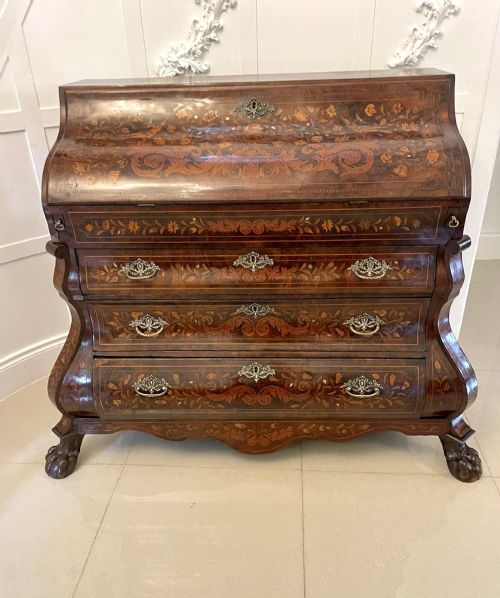
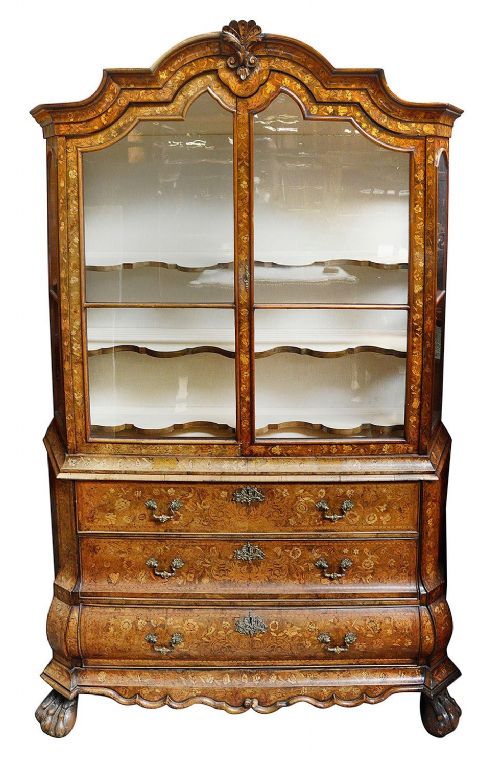
A Dutch bombe cabinet brings unmistakable sculptural presence to a room through its swelling, curvaceous silhouette and rich timber surfaces.

What a Dutch bombe cabinet is
A Dutch bombe cabinet presents a bold, swelling silhouette that distinguishes it instantly from straight-sided case furniture. These pieces combine practical storage or display with dramatic serpentine and bulging forms derived from continental cabinet-making traditions.
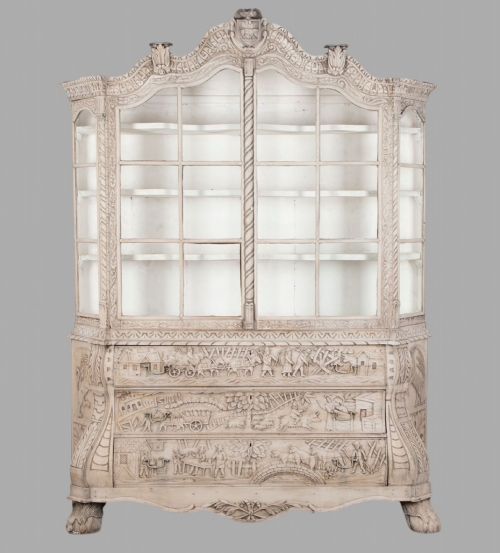
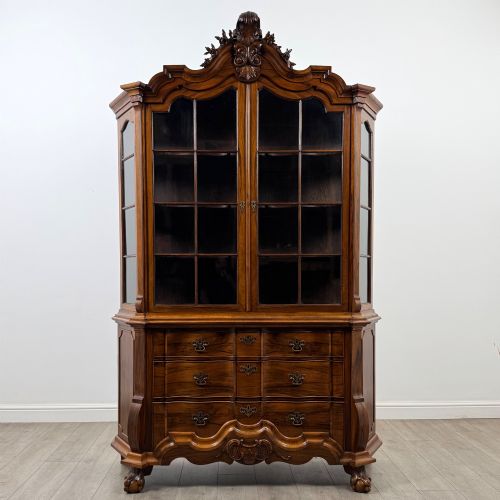
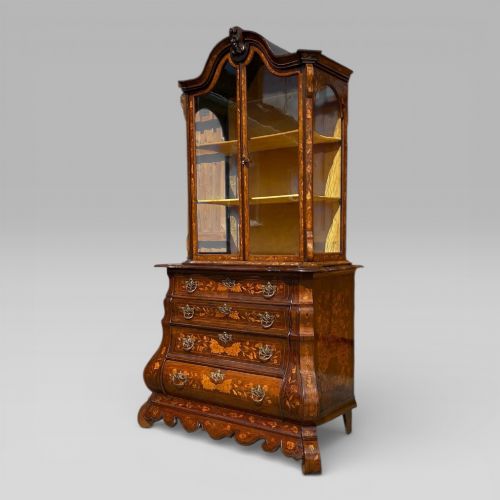
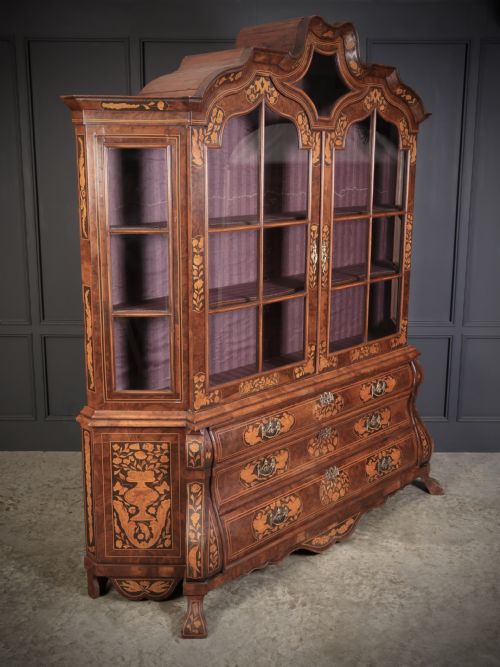
The version most commonly met on this page is the display cabinet or vitrine, often featuring glazed upper doors or open shelving mounted on a bombé base. Walnut and burr walnut dominate the forms, frequently enriched with marquetry inlay or painted surfaces spanning periods from the eighteenth century through to the early twentieth century.
Makers and workshops across these periods drew on Dutch Baroque and Rococo styles, producing two-part cabinets, cupboards, and commode bases. The scale ranges from monumental display bookcases to more compact vitrines designed to showcase porcelain and curiosities.
How they were made
Carpenters constructed these carcasses primarily in oak and pine as secondary timbers, veneered with figured walnut, burr walnut, and elaborate floral marquetry inlay. The swelling bombé contours required complex steaming and shaping of timber to achieve the characteristic convex curves.
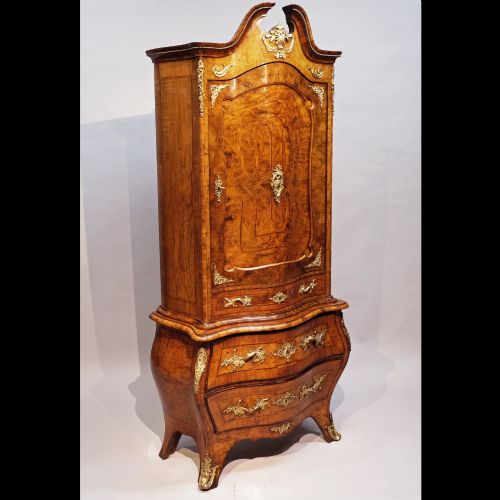
Mounts in cast brass and ormolu accent the corners, key escutcheons, and feet, providing structural protection and visual contrast to the dark wood. Glazed doors incorporate individual wooden panes, while two-part construction allowed heavy display cabinets to be transported in sections.
Retail Price Guide 2026
Typical UK retail prices for dutch bombe cabinet, calculated from the Sellingantiques database of over a million retail prices indexed since 2003. This retail price guide relies exclusively on Sellingantiques data; no external sources or auction records are used, so the figures do not describe the wider market.
Listings feature walnut, burr walnut, oak, and glass, alongside brass and ormolu mounts across periods spanning the eighteenth century to the 1930s.
What varies in quality
Quality rests in the fluency of the bombé sweep and the precision of the veneer work, where superior examples display symmetrical, continuous grain patterns across the swelling drawer fronts and sides. The complexity and execution of the marquetry inlay also mark the tier of a piece, with botanical and floral motifs demanding high technical skill.
The integration of original ormolu and brass mounts dictates distinction, as finely chased hardware complements the cabinetwork rather than merely filling a functional requirement. Interior joinery, timber thickness, and the retention of period glass further separate standard production from exceptional cabinet-making.
The Dutch Bombe Cabinet Glossary
- Bombé
- A swelling, convex curved profile characteristic of eighteenth-century continental furniture design. This curvaceous form requires advanced woodworking techniques to build out the sides and drawer fronts.
- Marquetry inlay
- Decorative patterns formed by fitting contrasting veneers into a prepared wood ground. Floral and botanical designs frequently appear on these walnut surfaces.
- Ormolu
- Gilt-bronze mounts applied to furniture for decorative accent and edge protection. These metallic elements highlight the structural lines of the cabinet.
- Vitrine
- A glass-fronted display cabinet designed to exhibit porcelain, silver, or curiosities. These upper sections sit upon chests or bombé bases.
- Burr walnut
- Timber taken from the wart-like growths on walnut trees, yielding highly figured, swirling grain patterns. Cabinet-makers used these veneers on primary display surfaces for decorative impact.
Frequently Asked Questions
How do I date a Dutch cabinet?
Dating relies on examining the secondary timbers, construction methods, and stylistic details like hardware and marquetry motifs. Eighteenth-century examples often display hand-cut joinery and specific Rococo or Baroque carving styles.
Later nineteenth-century and Edwardian interpretations may incorporate machine-sawn elements or Revival styling while retaining the traditional walnut and burr walnut finishes.
Where should I place a display cabinet?
These cabinets work best in principal reception rooms or hallways where their sculptural forms and glazed doors can be fully appreciated. Ensure the floor is level, as the heavy two-part construction requires stable placement.
Keep them away from direct sunlight and heat sources to protect the sensitive walnut veneers and polished wood surfaces from drying out.
How are two-part cabinets constructed?
Many examples are built as two separate sections, with a glazed display cabinet or bookcase sitting atop a bombé commode base. This modular construction made heavy furniture easier to transport.
The sections align using dowels, weight distribution, or small locking brackets concealed within the timber framework.