

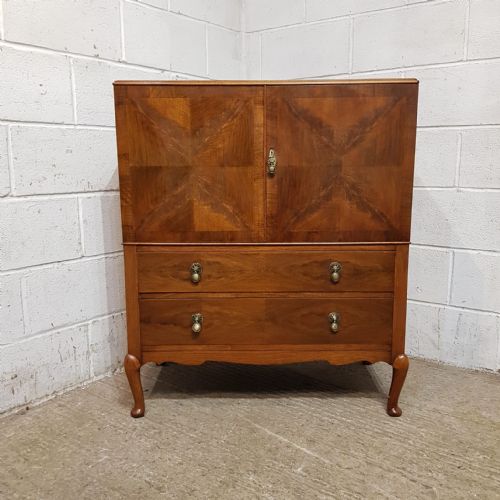
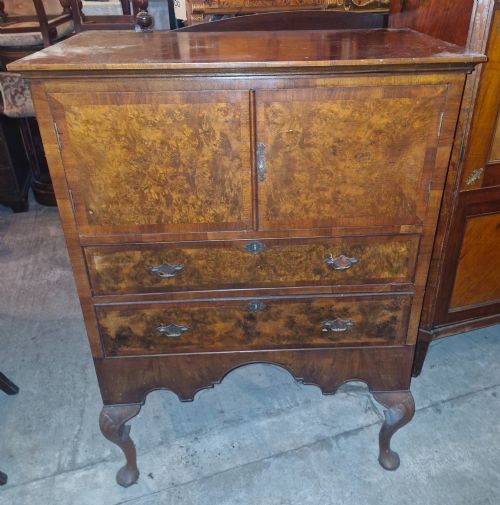
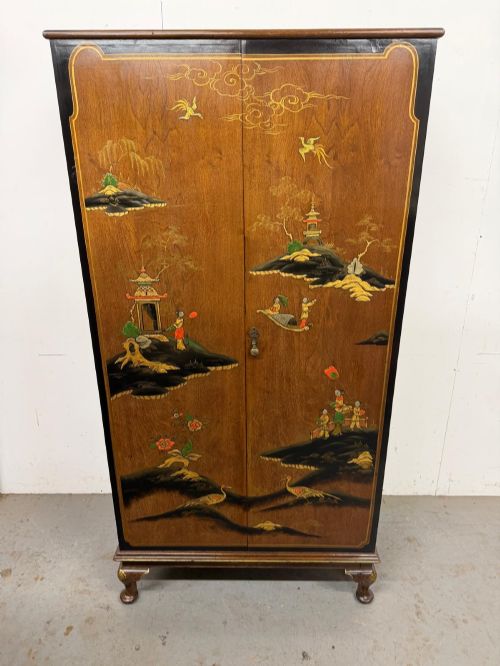
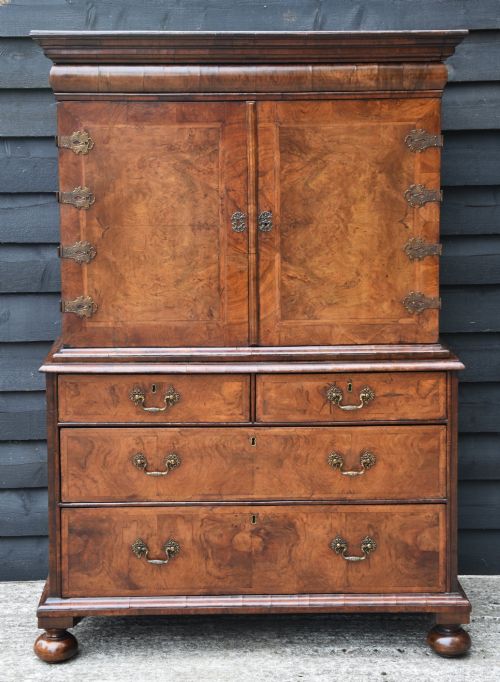
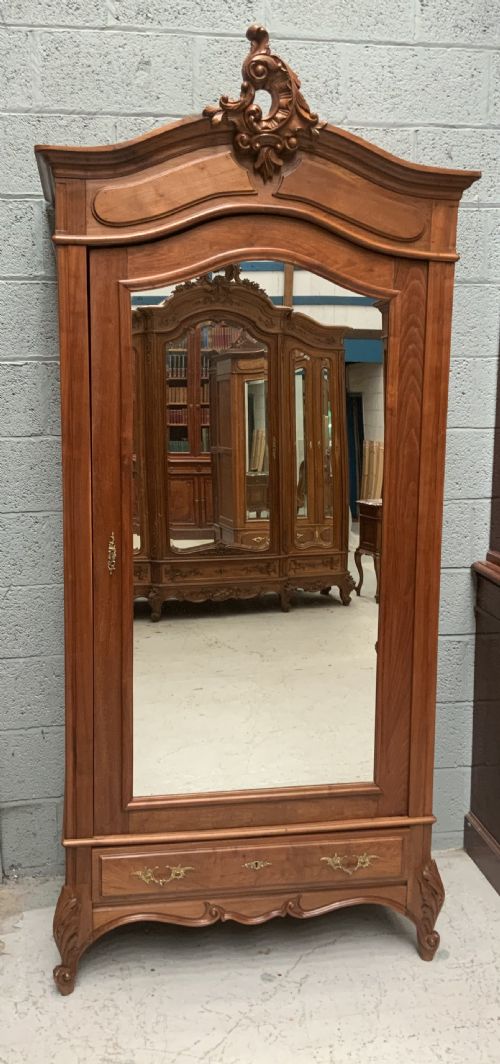
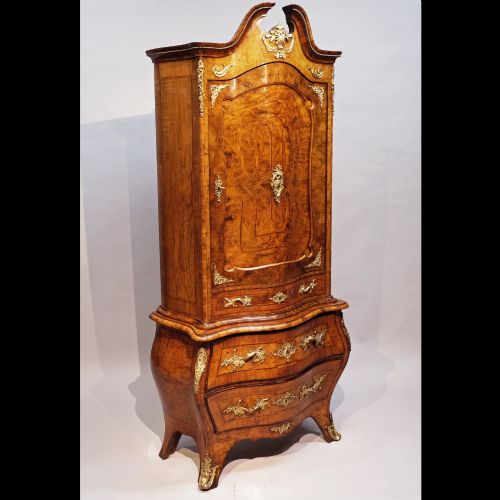
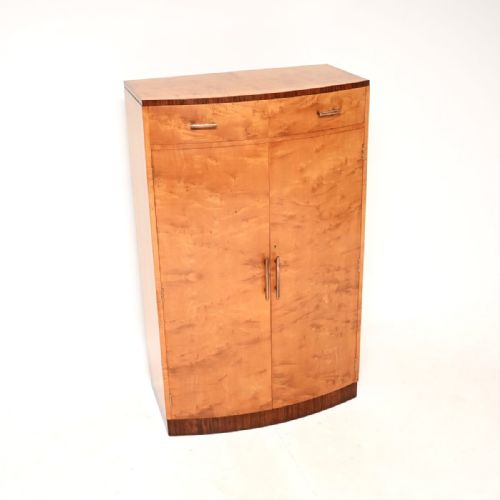
Walnut Linen Press
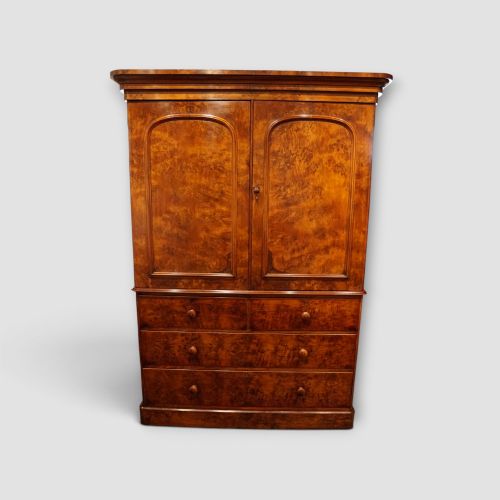
A walnut linen press is a substantial storage piece combining upper cupboard doors with lower drawers, designed to hold folded textiles.

Walnut Linen Press
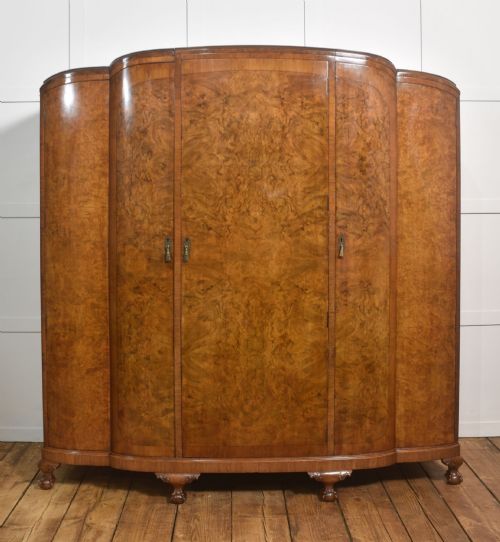
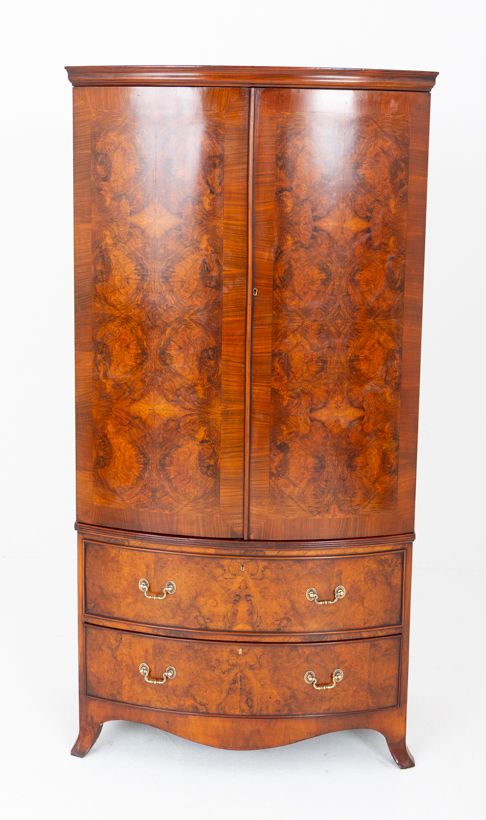
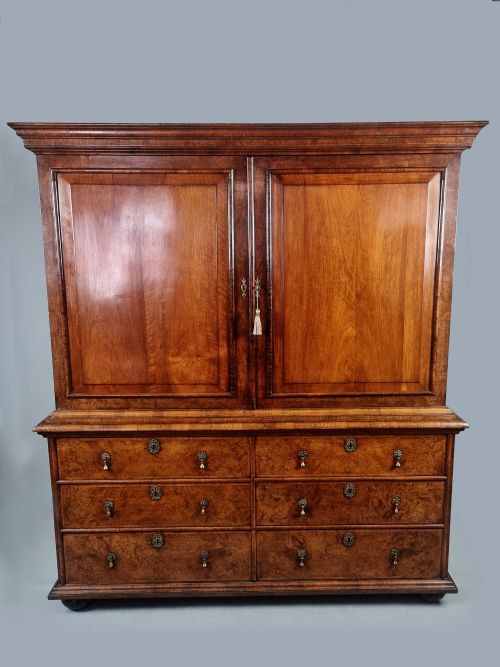
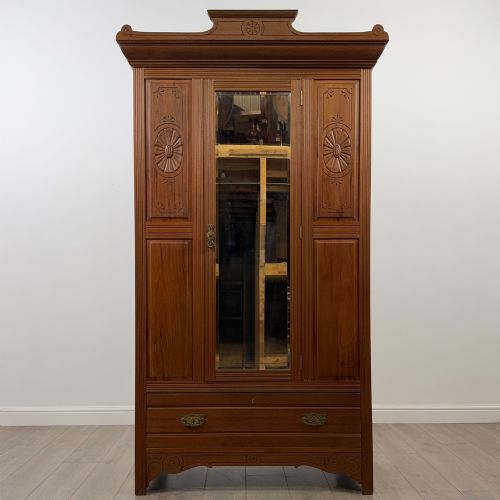
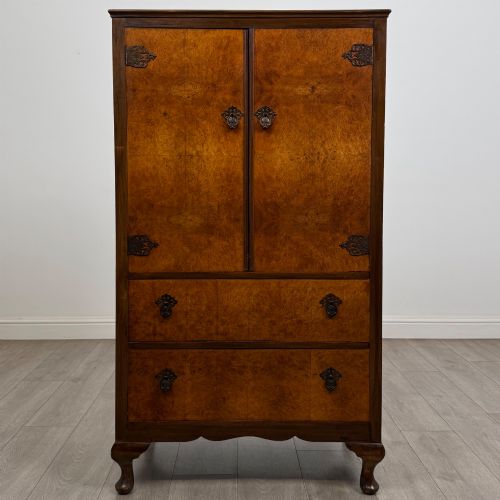
A walnut linen press stands as a commanding storage form, combining deep upper cupboard doors designed for sliding trays with a chest of drawers beneath. When considering a walnut linen press, one encounters pieces originating from the 17th century through to the Art Deco period, with Victorian and Edwardian examples appearing frequently.
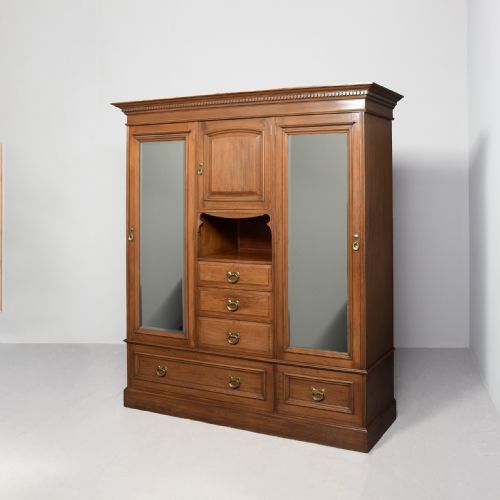
The layout typically separates linen storage from garments, though many examples share interior space with hanging rails or compactum fittings. English, Dutch and French variants reveal regional preferences in scale and moulding profiles, from Queen Anne styles with arched cornices to geometric 1930s forms.
Materials and Construction
Makers utilised solid timber frames combined with figured walnut veneers, selecting burr and straight-grained walnut to create decorative panel patterns across large flat surfaces. Secondary woods such as oak and pine provide structural stability inside drawer carcases and internal partitions.
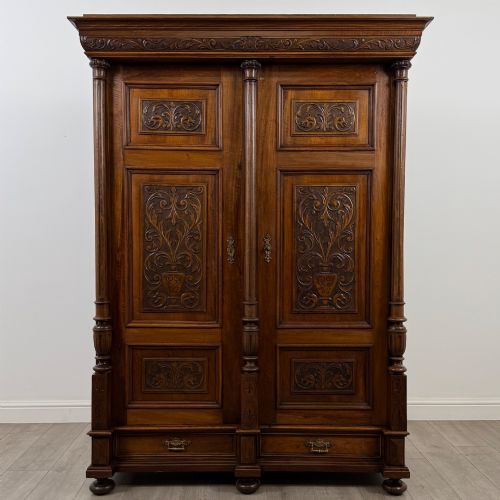
Brass hardware, including escutcheons and drop handles, secures operational doors and drawers, while marquetry inlay and glass elements occasionally appear on continental examples from the 18th century.
Walnut Linen Press Retail Price Guide 2026
Typical asking prices for walnut linen press among the pieces listed under this phrase on Sellingantiques today, from the lower quarter to the upper quarter. They describe what is for sale here now, not the wider market.
Finding faint tailor chalk marks inside a press reminds you of the workshop hands who fitted the original sliding trays centuries ago.
Judging Quality and Execution
Quality rests upon the selection and matching of the burr walnut veneer, where symmetrical grain patterns across doors demonstrate superior cabinet-making. The crispness of carved mouldings, the integration of dust boards between drawers, and the retention of original brass fittings further distinguish finer examples.
Proportion dictates visual success, separating heavy, utilitarian carcases from balanced pieces possessing refined cornices and well-scaled bracket feet or plinths.
Maple and Co·Waring and Gillow·Howard and Sons
The Walnut Linen Press Glossary
- Linen press
- A tall storage cabinet featuring upper sliding trays for folded textiles above a base of lower drawers. This form evolved to protect household linens from dust before fitted wardrobes became standard.
- Burr walnut
- A figured wood veneer harvested from tree growths, yielding intricate swirling grain patterns. Cabinet-makers prized this material for decorative door panels.
- Compactum
- A fitted wardrobe containing specialised internal compartments, shelves, and hanging space. This multi-purpose configuration gained popularity during the Edwardian and Art Deco eras.
- Marquetry
- The art of applying decorative veneer pieces to a structural surface to form pictorial or geometric designs. Artisans frequently utilised contrasting woods for floral motifs.
- Tallboy
- A stacked furniture form comprising a chest of drawers set upon a matching chest base. This vertical configuration maximises storage capacity while occupying a minimal floor footprint.
Walnut Linen Press: Frequently Asked Questions
What is a walnut linen press?
A walnut linen press is a tall piece of furniture designed specifically for storing folded household textiles and garments. It pairs upper cupboard doors concealing sliding shelves with a chest of drawers positioned below.
These pieces combine decorative walnut veneers with practical internal storage, making them a striking focal point in a bedroom or dressing room.
How were linen presses used?
Historically, households used linen presses to store freshly laundered sheets, tablecloths, and garments flat on internal wooden trays. This method prevented creases and protected textiles from dust and light.
Today, they adapt easily into modern interiors as versatile wardrobes, general storage cabinets, or media units.
How do I date a walnut linen press?
Dating relies on observing structural characteristics, timber usage, and stylistic details. Pieces from the Queen Anne and William & Mary periods feature herringbone banding and bracket or bun feet, while Victorian and Edwardian examples display heavier proportions and machine-sawn secondary timbers.
Art Deco versions from the 1930s utilise streamlined geometry and striking book-matched veneers without traditional historical revival ornamentation.
Are linen presses difficult to move?
Linen presses are heavy, tall items typically constructed in two sections - an upper cupboard and a lower chest base - to facilitate transport. Dismantling the upper doors and removing internal sliding trays reduces weight significantly before relocation.
Securing the piece to a wall is recommended for safety, given the height and top-heavy nature of larger 18th-century and Victorian examples.