


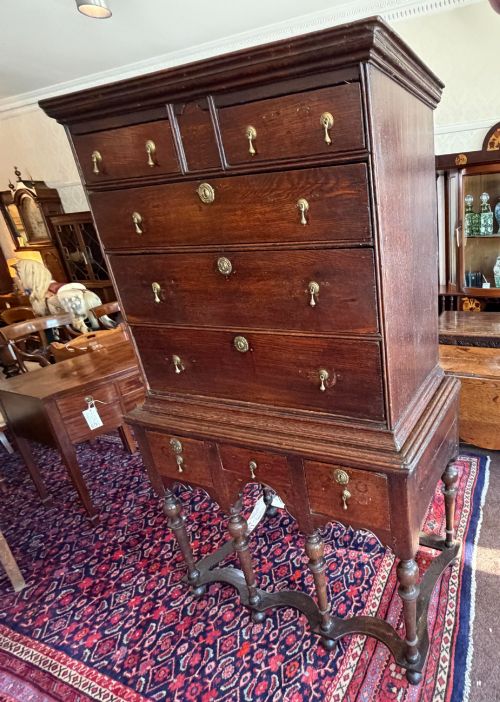
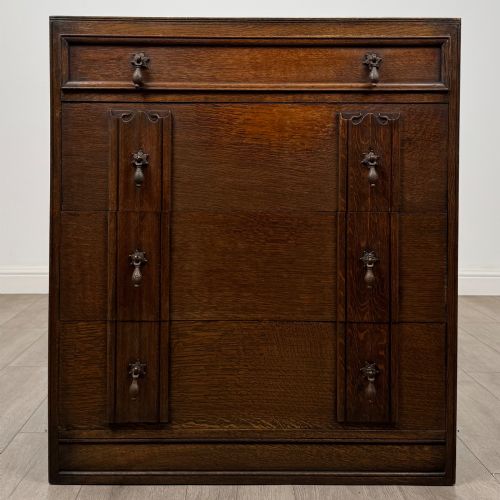
Brown Oak Chest of Drawers
A brown oak chest of drawers brings rich tone and sturdy utility to a room through deep-grained timber and traditional craftsmanship.
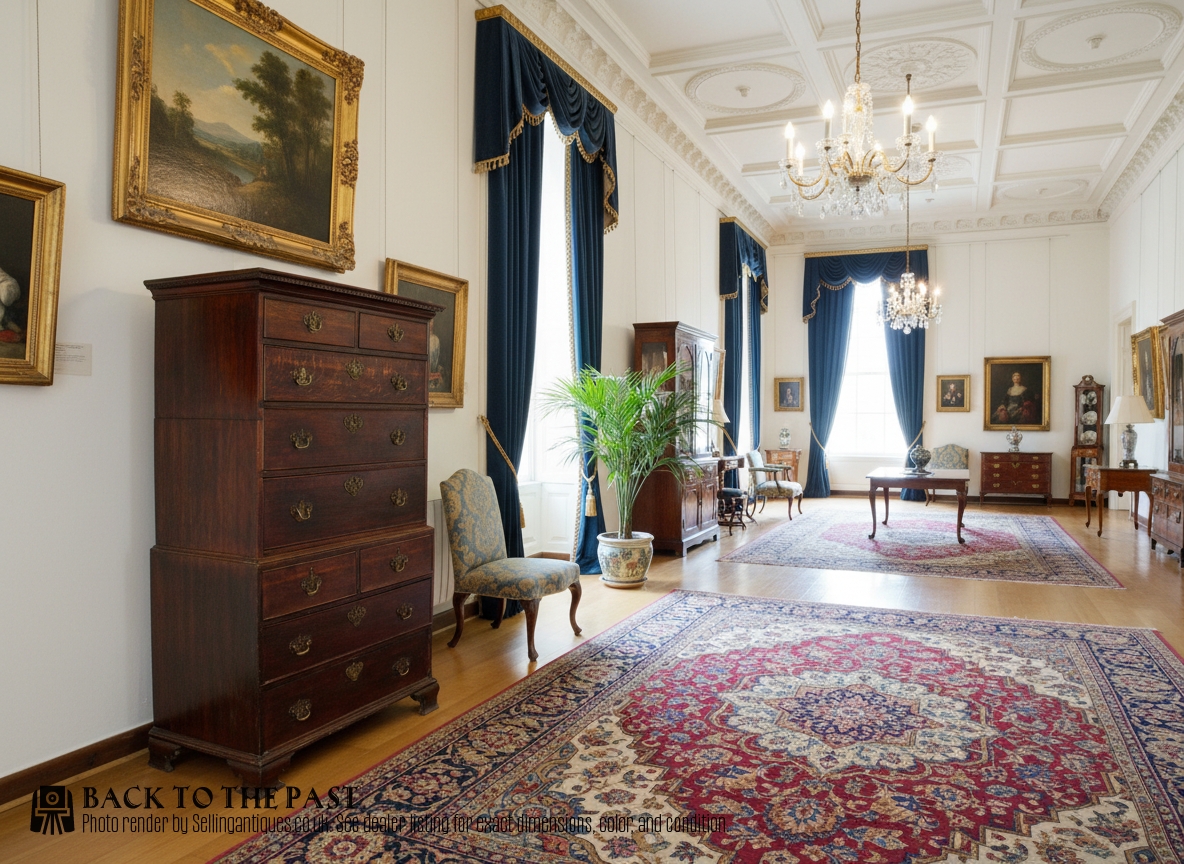
Brown Oak Chest of Drawers
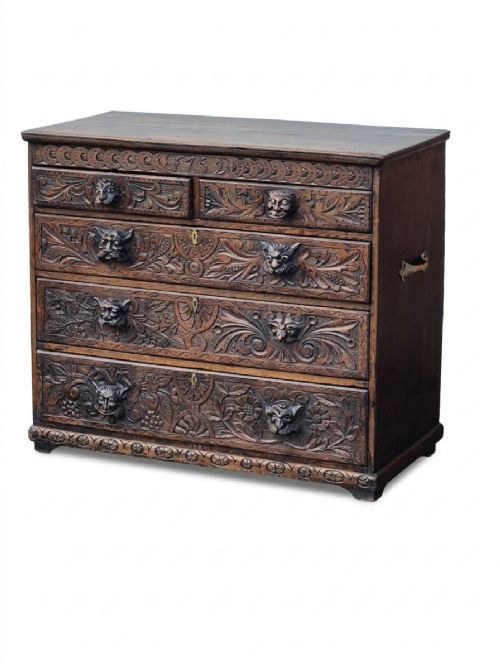
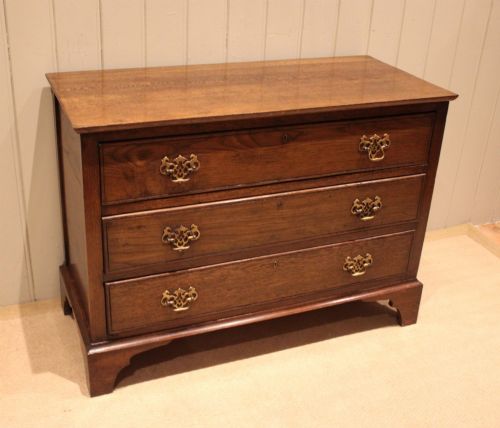
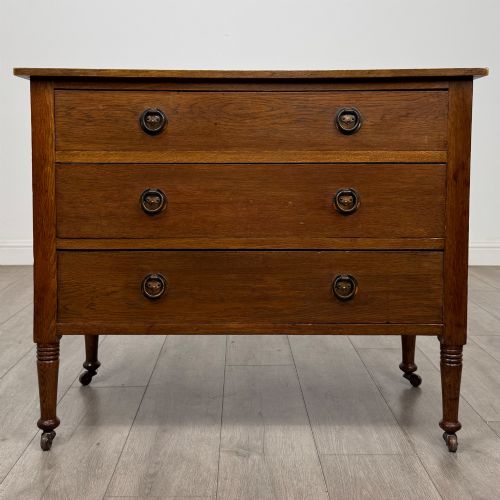
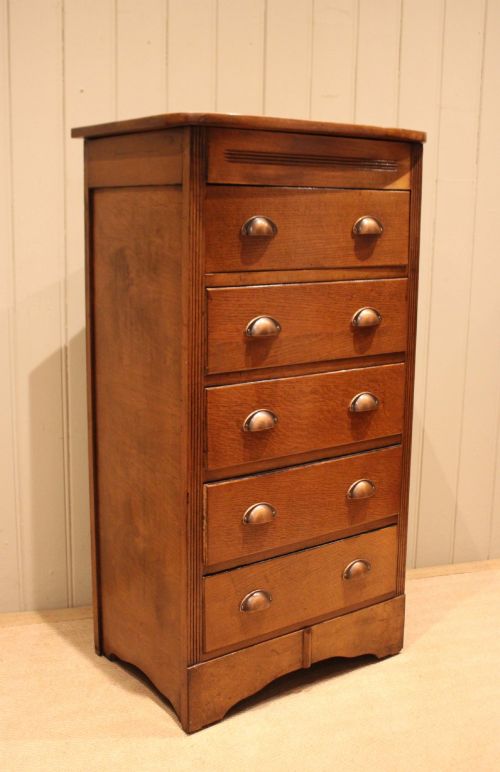
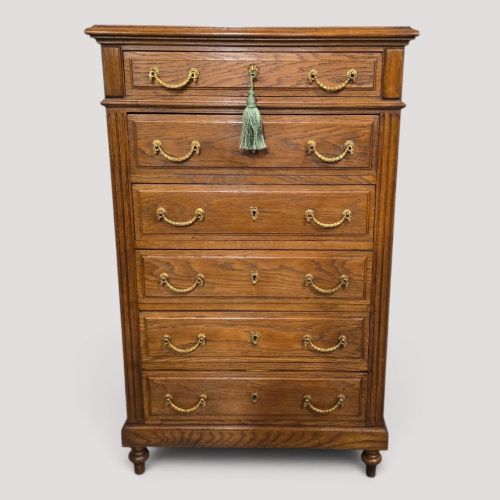
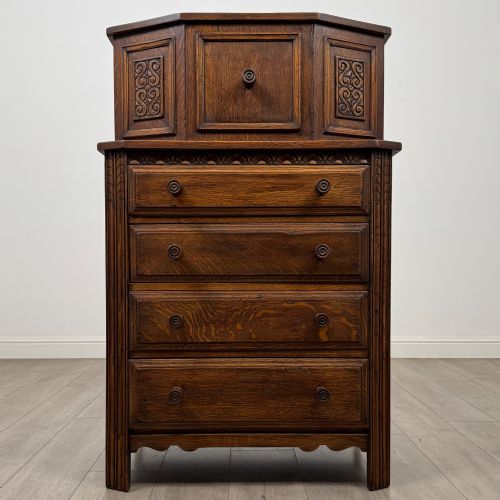
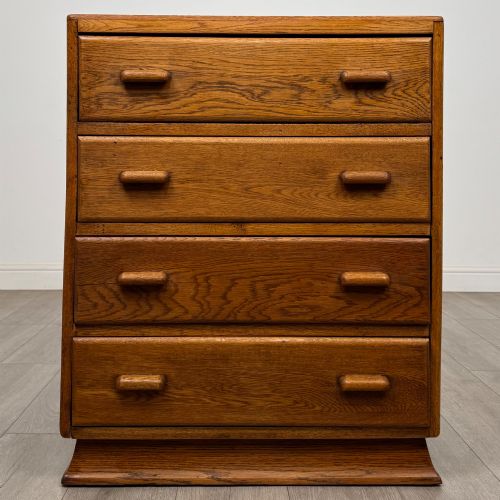
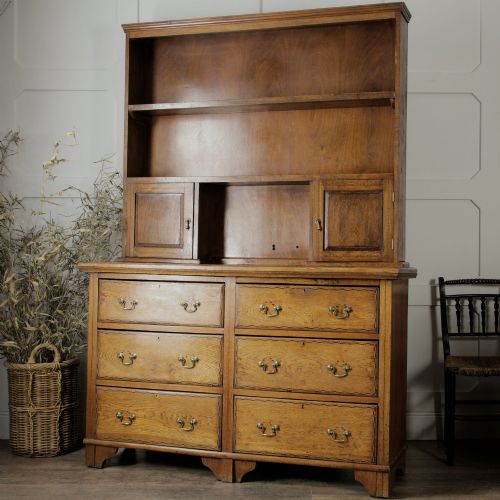
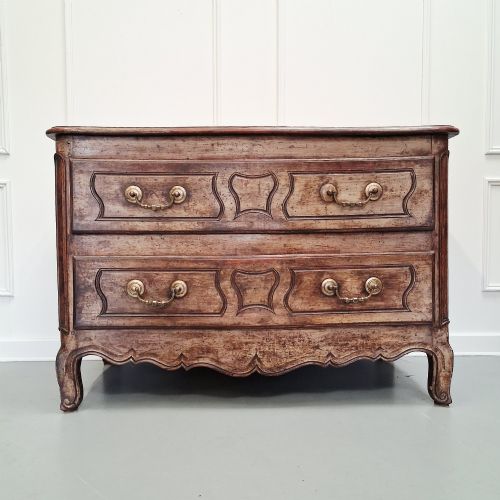
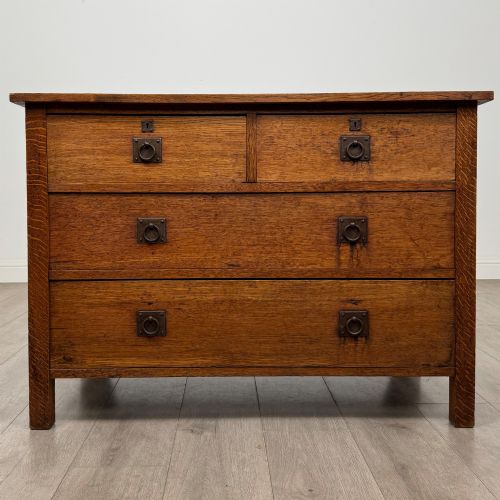
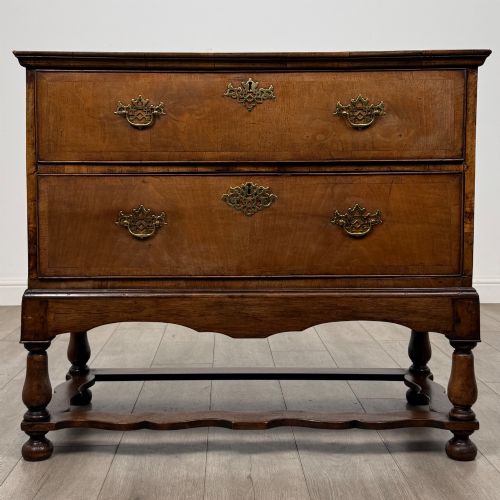
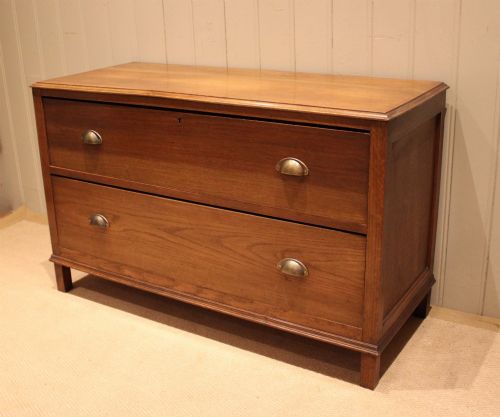
A brown oak chest of drawers is a storage unit built primarily from figured oak, appearing in forms ranging from low proportions to tall upright formats, and occasionally elevated on stands. These pieces surface from periods spanning the seventeenth century through the Georgian era, the Victorian period, and into early twentieth-century revivals.
Materials and construction
Constructed predominantly from solid oak and occasionally accented with walnut, mahogany, or wood inlay, these chests utilise durable timber frames. Metal and brass hardware, including original drop handles and escutcheons, secure the drawer fronts.
Cabinetmakers employed techniques such as geometric mouldings, carving, and oyster veneering to ornament the surfaces. Drawers were built into sturdy frames designed to support heavy daily use over centuries.
Listings span seventeenth-century styles through to Edwardian and 1930s interpretations, utilising oak, walnut, mahogany, and brass.
Assessing quality
Quality rests in the depth of the timber grain, the crispness of period carved details like geometric mouldings, and the survival of original brass metalwork. Pieces showing considered joinery and uncompromised structural timber command greater interest.
The sophistication of the period style, whether Jacobean, William and Mary, or Georgian, dictates the architectural refinement of the piece. Untouched patination on the oak surface further separates standard utility furniture from finer examples.
The Brown Oak Chest of Drawers Glossary
- Brown oak
- Timber derived from oak trees affected by a fungus that imparts a rich, deep brown coloration to the heartwood. This wood is highly prized for cabinetmaking.
- Geometric moulding
- Raised wooden profiling applied to drawer fronts in repeating symmetrical patterns. It is characteristic of seventeenth-century joinery.
- Chest on stand
- A case of drawers raised upon a distinct support frame with legs. This form lifts the storage compartment higher off the floor.
- Oyster veneering
- The practice of slicing branches or small stems across the grain to produce circular or oval patterns resembling oyster shells. This technique creates decorative patterned surfaces.
- Crossbanding
- A narrow strip of veneer laid around the border of a drawer front with the grain running perpendicular to the centre panel. It frames the primary wood.
Brown Oak Chest of Drawers: Frequently Asked Questions
What periods do these chests come from?
These pieces originate from the seventeenth, eighteenth, nineteenth, and early twentieth centuries. The selection includes seventeenth-century carved designs, Georgian pieces, and Edwardian interpretations.
Craftsmanship and detailing shift across these eras, moving from geometric mouldings in the earliest centuries to simpler upright formats by the twentieth century.
How do I identify a seventeenth-century piece?
Seventeenth-century examples often feature geometric mouldings, hand-carved ornamentation, and sturdy framed construction in English oak. Charles II and William and Mary styles belong to this era.
Later Edwardian pieces often revive these earlier Jacobean motifs, so examining the interior timber construction and fixings helps determine the true age.
Where should I place this chest?
A brown oak chest of drawers suits bedrooms, hallways, or living spaces where durable wooden storage is required. Low and tall variants accommodate different room layouts.
The deep brown tones of the timber pair well with both traditional and contemporary interiors, adding warmth and texture to the space.
What hardware is typically fitted?
Original brass drop handles, backplates, and metal key escutcheons are commonly found on period examples. These metal fittings secure the drawers and complement the dark wood.
Survival of original hardware contributes to the historical integrity of the furniture.