





Ogee Foot Chest
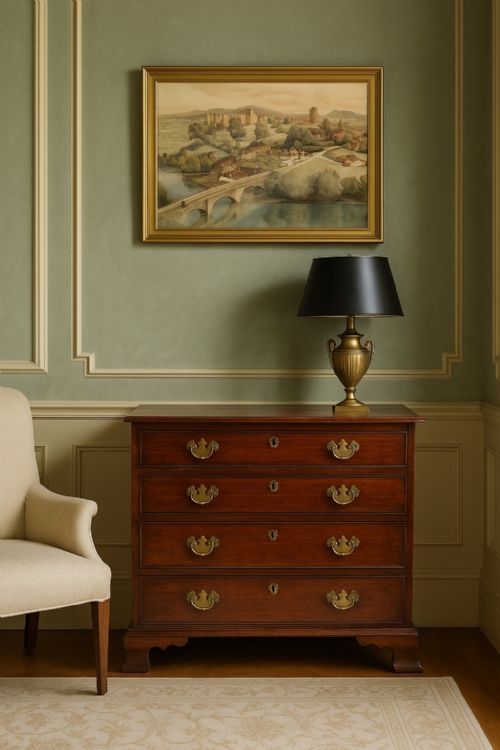
An ogee foot chest brings sculptural movement to traditional storage, offering the distinctive S-curve bracket support that grounds eighteenth- and nineteenth-century case pieces.
Ogee Foot Chest
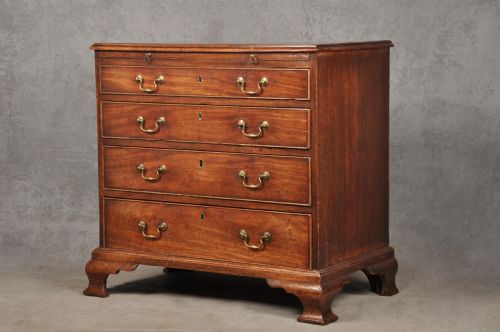
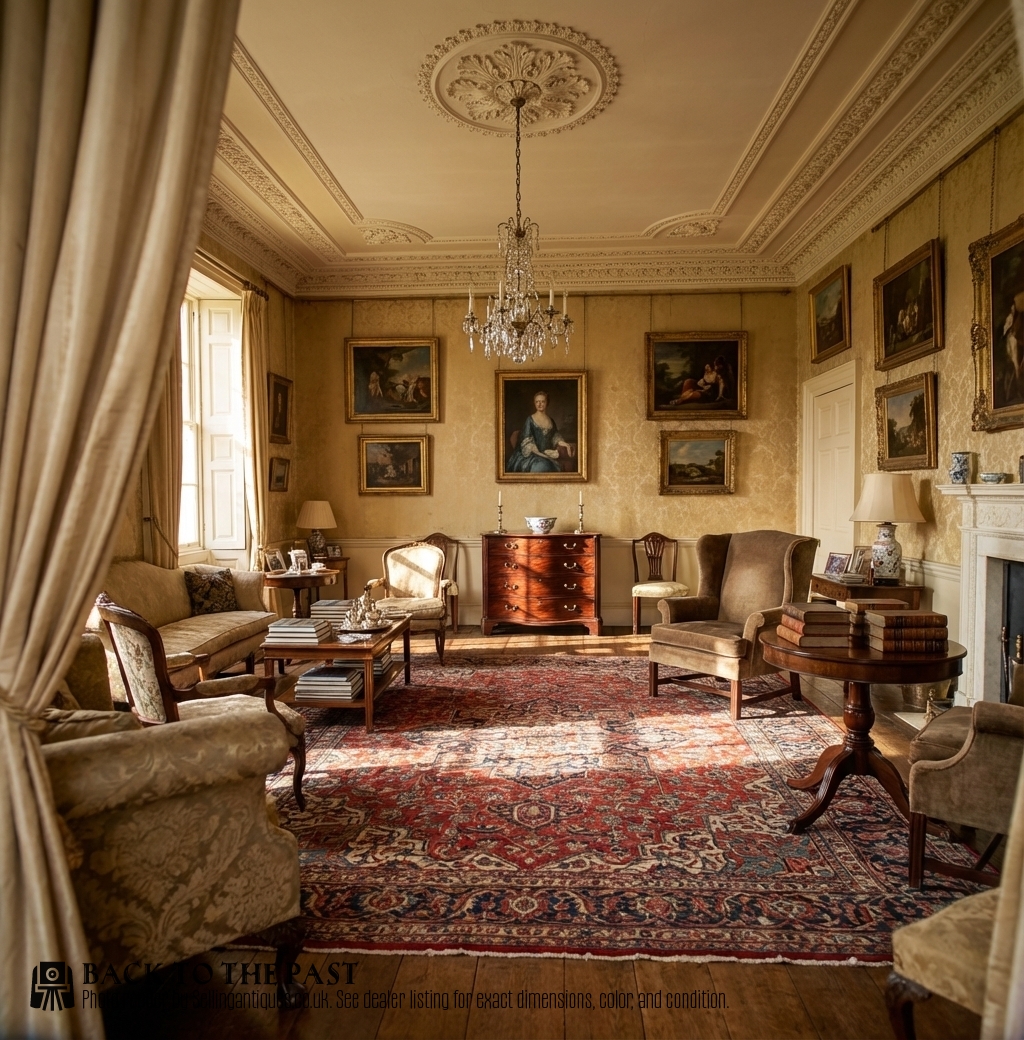
When you search for an ogee foot chest, you are looking at substantial case furniture designed to elevate practical storage into architectural proportion. These pieces primarily take the form of chests of drawers, alongside related desk and mule chest variations.
The versions you are most likely to meet on this page span the Georgian and George III periods, stretching from the early seventeen-hundreds through to late nineteenth-century revivals. Mahogany dominates the selection, accompanied by occasional examples in oak and fruitwood inlay.
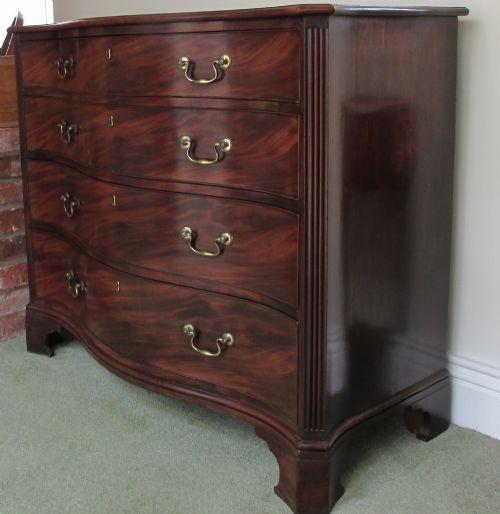
Formats range from compact five-drawer chests and serpentine fronts to grander chest on chest configurations. Each piece displays the characteristic bracket foot that curves outward before sweeping inward to the floor.
How they were made
Cabinetmakers constructed these chests predominantly using solid timber veneers over robust carcases of oak and pine. Mahogany provides the rich primary surfaces seen across the majority of Georgian examples.
Detailing often incorporates fruitwood inlay to accent drawer fronts and top edges. Brass hardware, including swing handles and escutcheons, completes the structural assembly.
The listings span from seventeen hundred through the nineteenth century, featuring mahogany, oak, pine, and brass.
What varies in quality
The sophistication of the timber selection dictates the visual impact, with figured mahogany and crisp fruitwood inlay marking out the superior examples. The execution of the ogee bracket foot itself reveals the hand of the maker, requiring precise curvature and proportion to balance the heavy carcase above.
The Ogee Foot Chest Glossary
- Ogee foot
- A bracket foot shaped with a double curve resembling an S, moving outward then inward. This moulding profile provides a graceful transition between the heavy chest body and the floor.
- Serpentine front
- A furniture front curving outward in the centre and inward at the sides. This fluid shape demands advanced woodworking skill to match drawer geometry.
- Mule chest
- A storage trunk featuring one or more drawers at the base beneath a hinged lid compartment. These pieces bridge the evolution between traditional blanket boxes and standard drawer chests.
- Chest on chest
- A tall storage unit formed by stacking a smaller chest directly upon a wider base chest. Also known as a tallboy, this dual-carcase form maximises vertical storage.
Ogee Foot Chest: Frequently Asked Questions
What periods do these chests cover?
The pieces span from the early eighteenth century through the Georgian era and into late nineteenth-century revivals. This covers centuries of cabinetmaking tradition.
Craftsmen adapted the forms across these periods while maintaining the signature foot profile.
Which woods are most common?
Mahogany forms the primary material for the vast majority of these listings. Oak and pine appear as secondary woods and in specific regional pieces.
Fruitwood inlay often accents the primary mahogany surfaces on finer examples.
How do I care for the wood?
Keep the timber away from direct heat sources and sudden humidity shifts to prevent warping. Regular dusting with a soft cloth maintains the natural finish.
Occasional applications of appropriate wax nourish the historical surface without building up residue.
Are these chests practical for modern homes?
The robust drawer configurations offer generous storage capacity for everyday belongings. Their compact footprints allow them to fit comfortably into bedrooms and hallways.
These functional antiques integrate easily beside contemporary interior furnishings.