
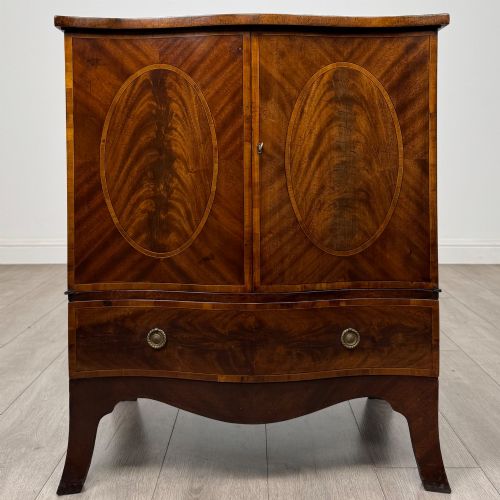
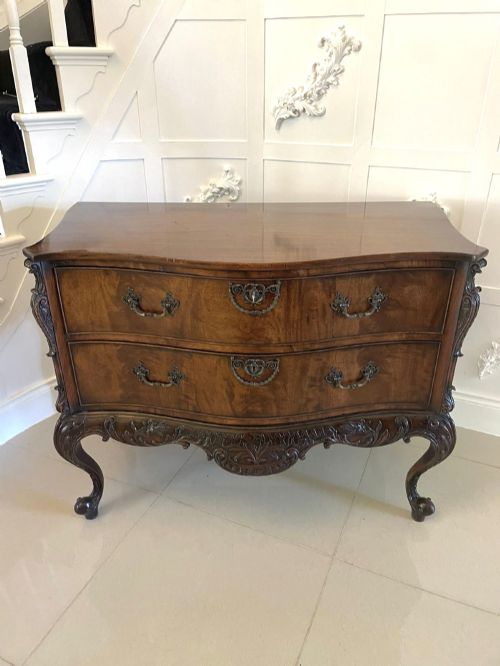
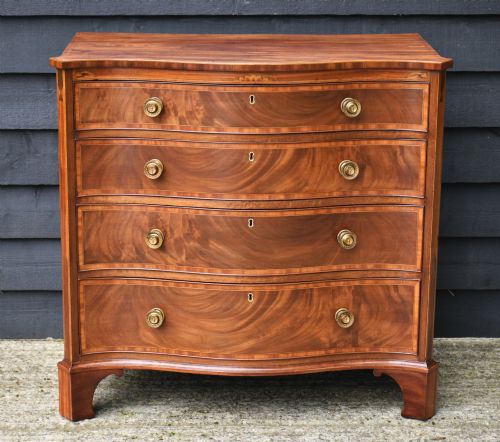
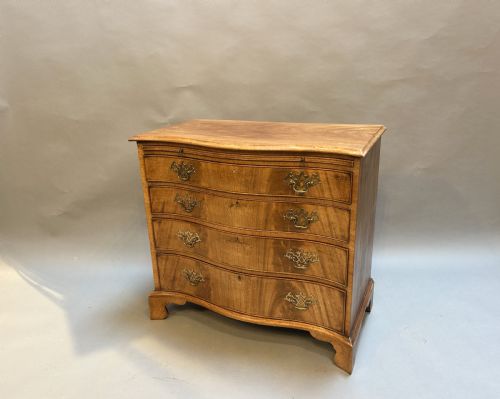
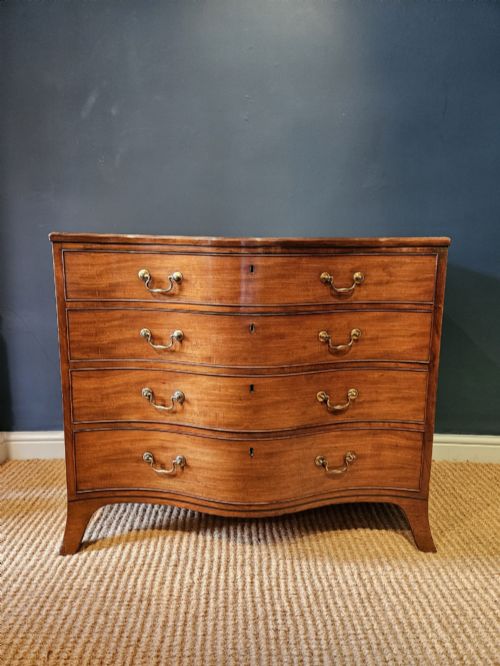
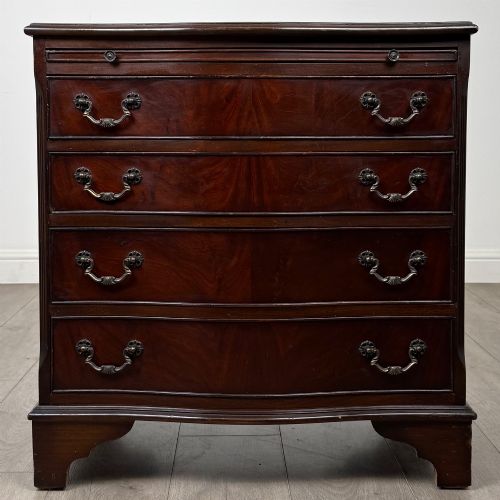
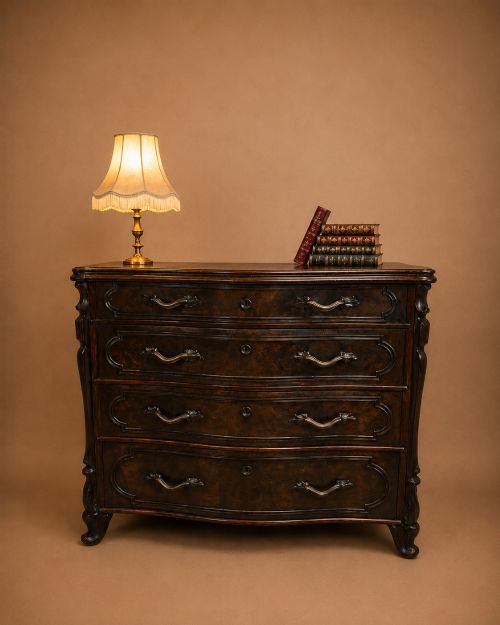
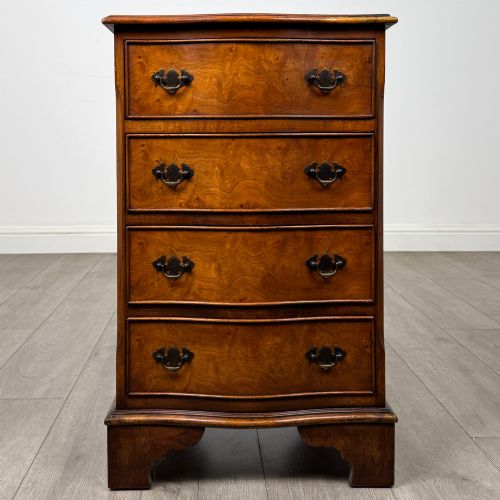
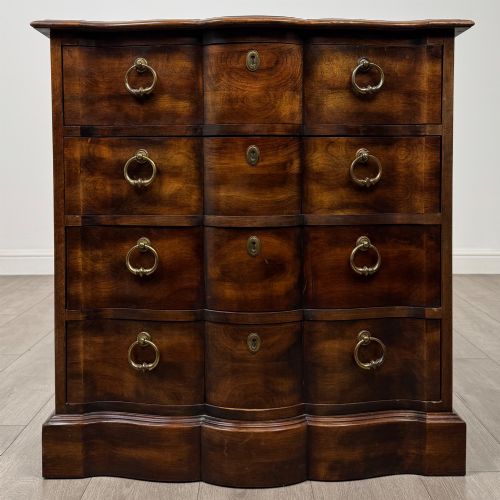
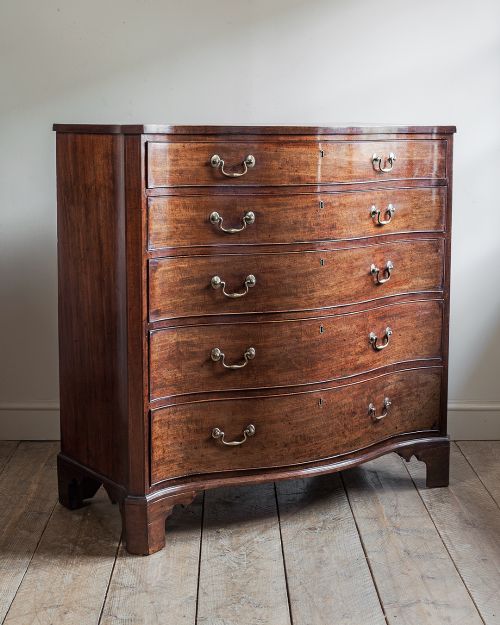
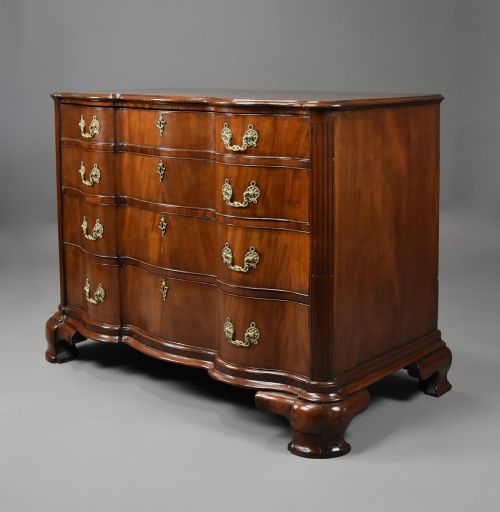
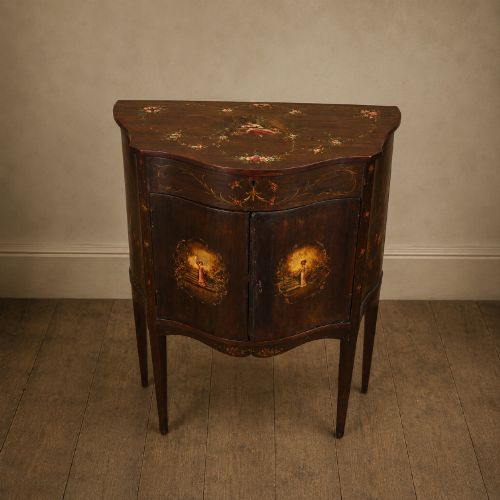
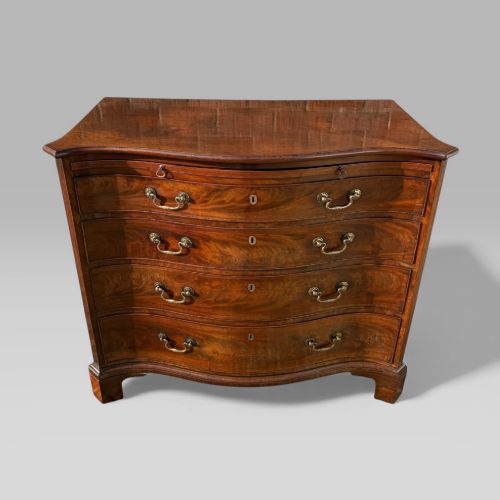
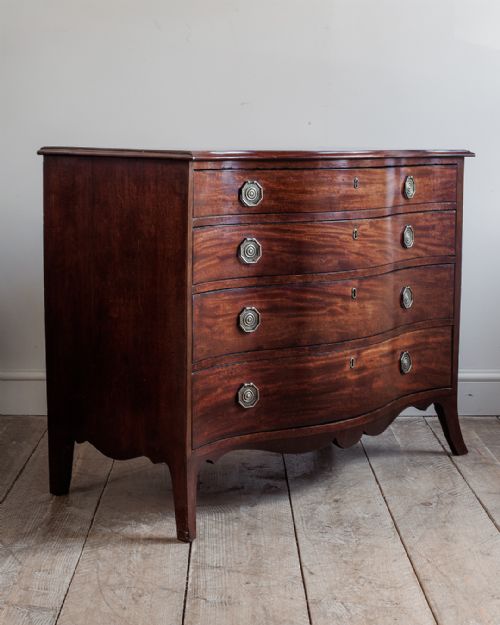
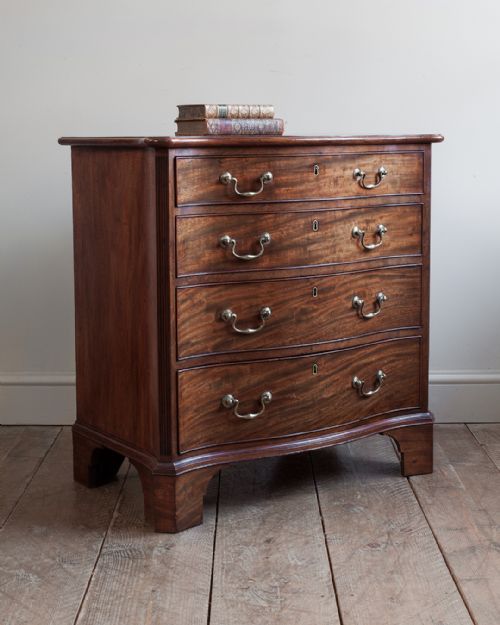
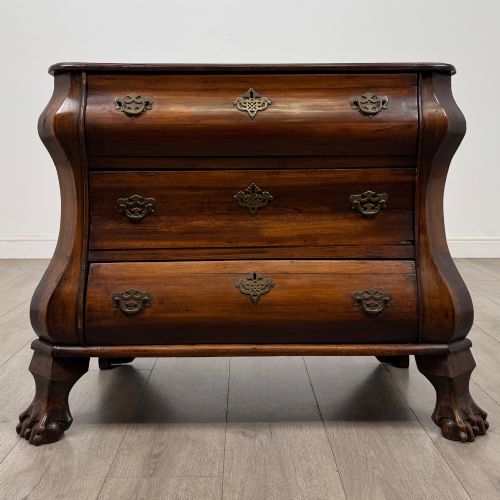
Serpentine Mahogany Commode
A serpentine mahogany commode brings sophisticated 18th-century curves and rich timber into a room.

Understanding the serpentine mahogany commode
A serpentine mahogany commode is a substantial case piece defined by its undulating, curving front and choice timber. When you search for a serpentine mahogany commode, you encounter sophisticated forms designed for prominent rooms in period homes.
The pieces on this page span the 18th century, the Georgian era, and later revival periods including Edwardian and Victorian interpretations. You will find standard drawer configurations alongside tray-top designs and cabinet variants.
Continental examples and British George III models dominate the early periods, while 19th-century revivals bring satinwood details and marquetry into the mix.
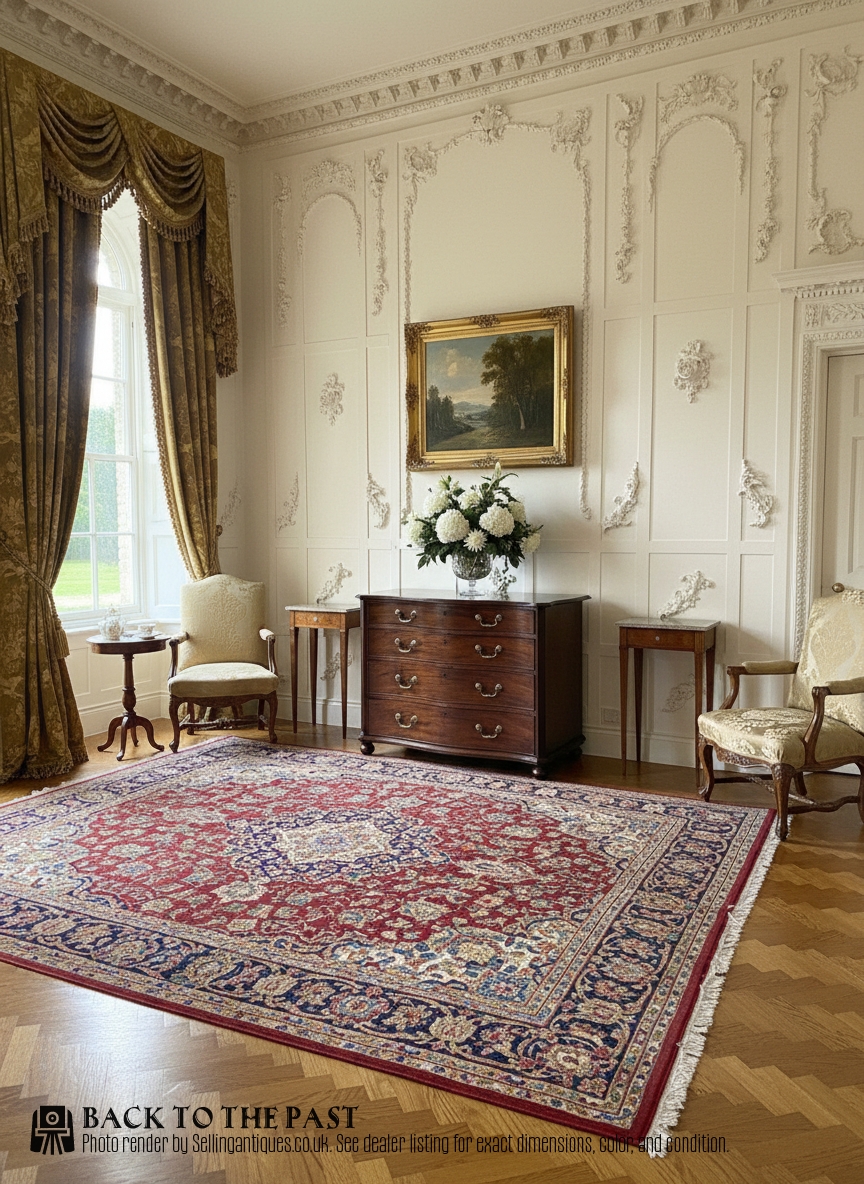
Indicators of quality
Quality rests in the precision of the curved mahogany fronts and the crispness of the boxwood or satinwood inlay work. Superior examples demonstrate careful timber selection that maintains consistent grain flow across complex undulating surfaces.
The integration of original brass mounts and the refinement of internal drawer construction distinguish the finest pieces from later revival or standard production.
Retail Price Guide 2026
Typical UK retail prices for serpentine mahogany commode, calculated from the Sellingantiques database of over a million retail prices indexed since 2003. This retail price guide relies exclusively on Sellingantiques data; no external sources or auction records are used, so the figures do not describe the wider market.
Some commodes hide secret compartments within their mahogany frames, offering a discreet spot for your valuables.
Henry Hill Of Marlborough·Edwards and Roberts
The Serpentine Mahogany Commode Glossary
- Serpentine
- A front contour characterised by a convex centre flanked by concave curves. This shaping requires expert cabinet-making to ensure drawers close flush along the undulating line.
- Marquetry
- The art of applying decorative veneer pieces in geometric or pictorial patterns. This technique frequently employs satinwood and boxwood on a mahogany ground.
- Tray-top
- A raised rim surrounding the upper surface of a commode. This feature prevents items placed on top from sliding off.
- Commode
- A decorative storage chest or cabinet standing on legs or feet. In this context, it refers to high-status drawer units rather than sanitary furniture.
Frequently Asked Questions
What is a serpentine mahogany commode?
It is a decorative chest of drawers or cabinet featuring a distinctive undulating front curve and built primarily from mahogany.
These pieces range from authentic 18th-century Georgian designs to later revival interpretations.
How do I date a serpentine commode?
Dating relies on examining the timber species, construction methods, inlay styles, and secondary woods used inside the drawers.
Georgian and 18th-century pieces display hand-cut dovetails and period handles, whereas Victorian and Edwardian revivals show different secondary framing.
Where should I place it?
A serpentine commode suits a formal living room, a hallway, or a bedroom as a statement storage piece.
Its curved silhouette allows it to soften the corners of a room while providing practical drawer space.
Are all these pieces Georgian?
No, while many date from the Georgian period and the 18th century, the selection also includes later 19th-century and Edwardian revival pieces.
Styles span George III originals alongside Chippendale style and Victorian inlaid versions.