




Chippendale Serpentine Chest
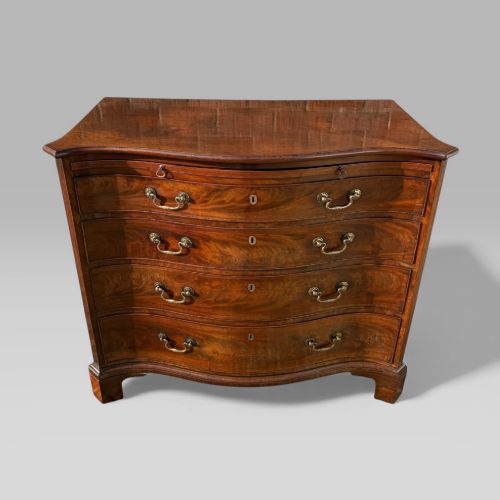
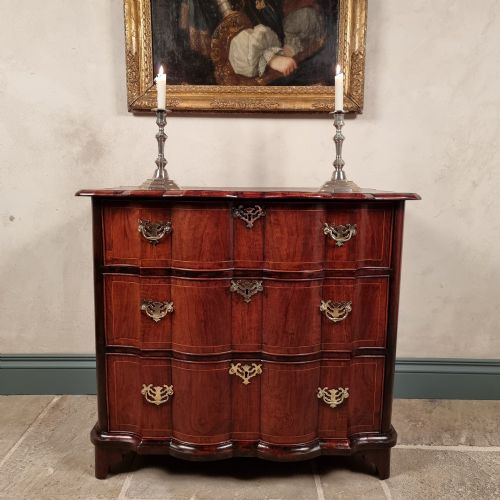
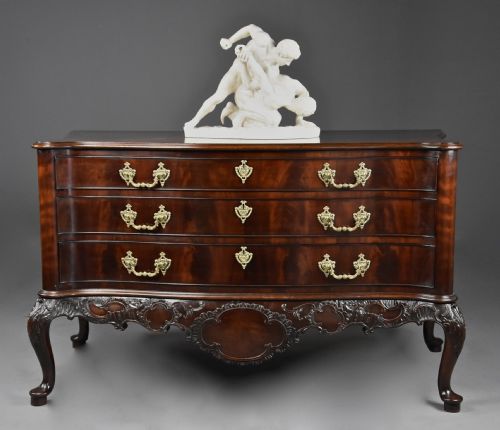
These chippendale serpentine chest examples combine fluid drawer fronts with rich mahogany timbers, offering collectors classic Georgian craftsmanship.
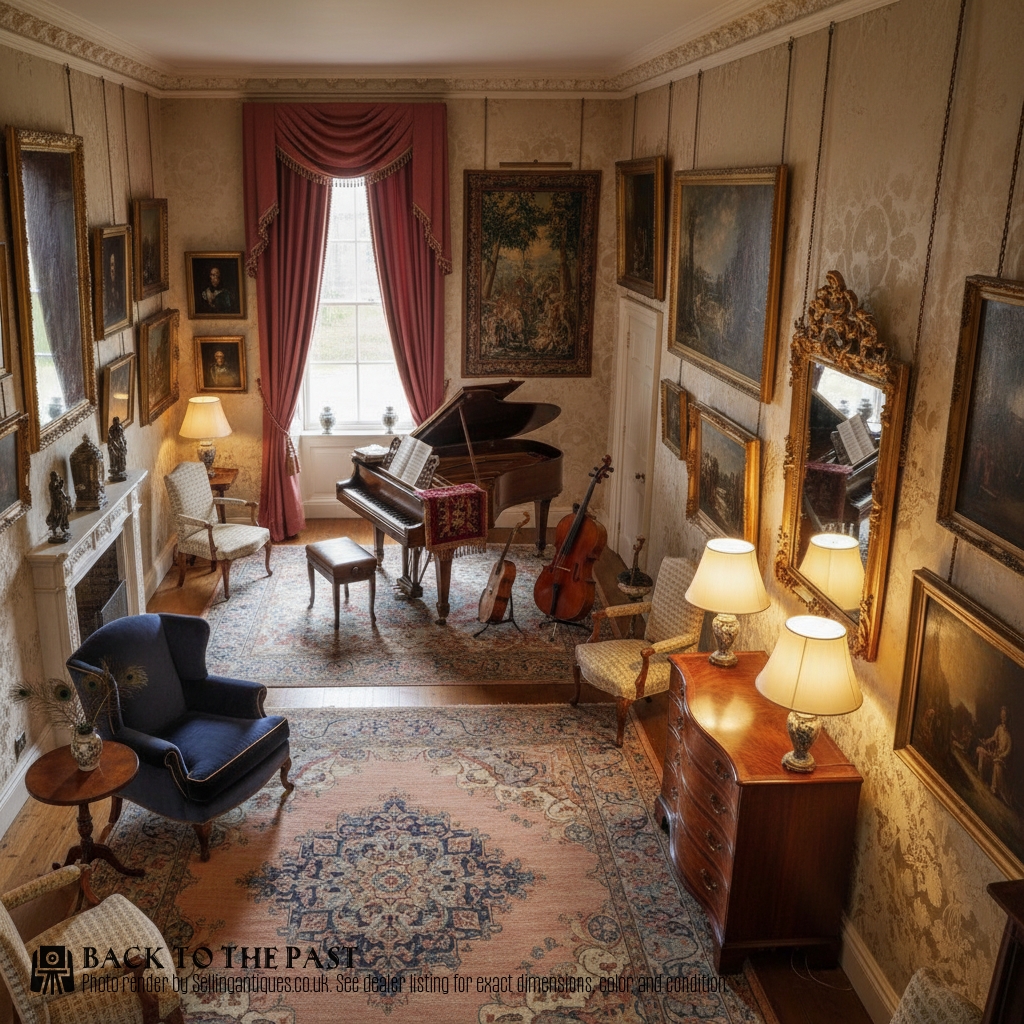
Identifying the Chippendale serpentine chest
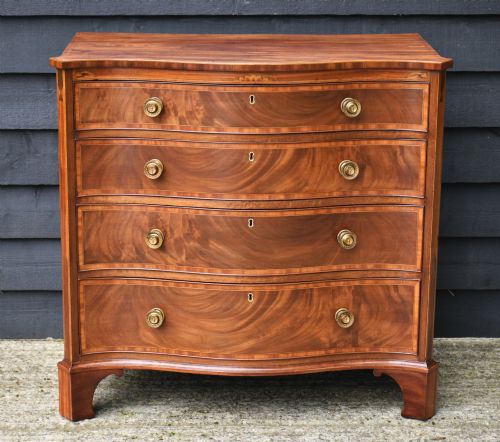
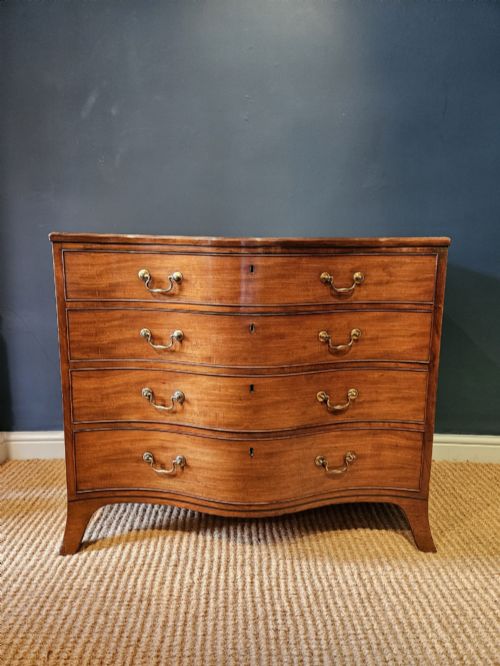
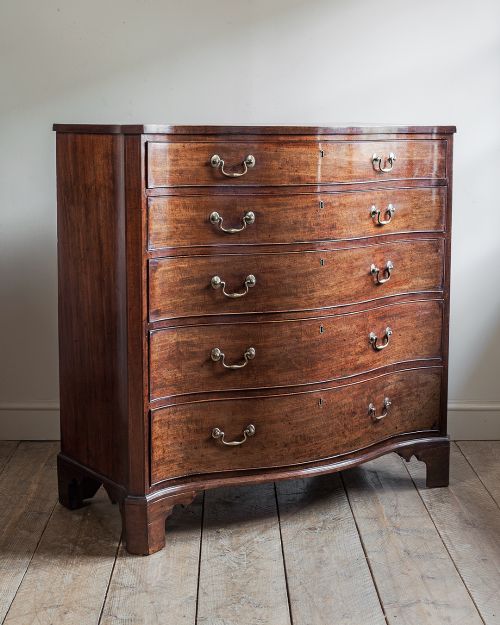
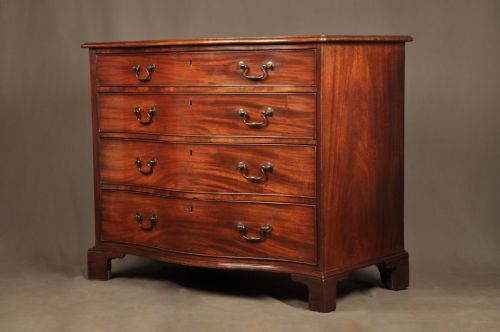
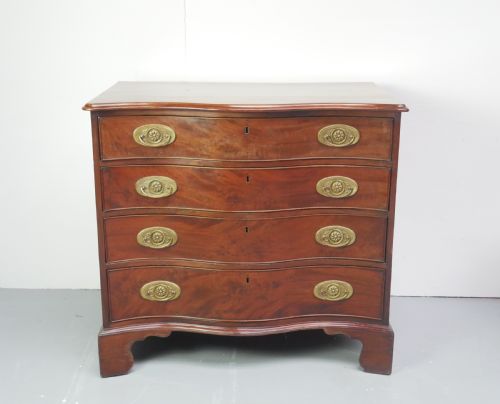
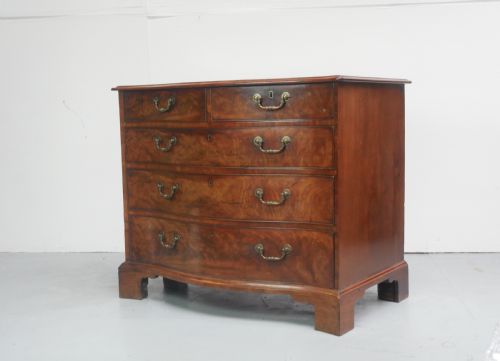
When you search for a chippendale serpentine chest, you encounter case furniture defined by its undulating, curving front and substantial 18th Century pedigree. The chests of drawers on this page span the Georgian and George III eras, alongside later Chippendale Revival interpretations from 1890.
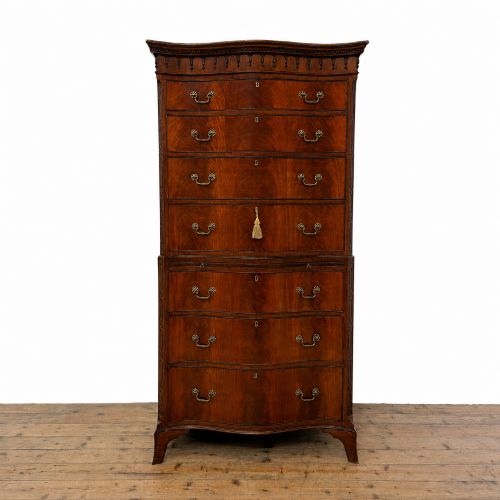
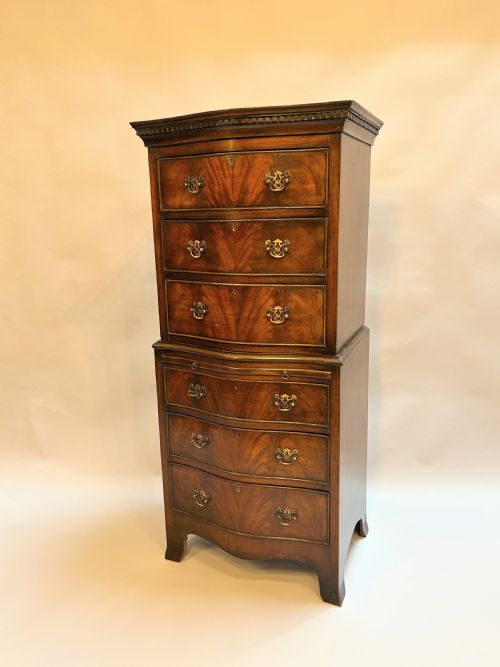
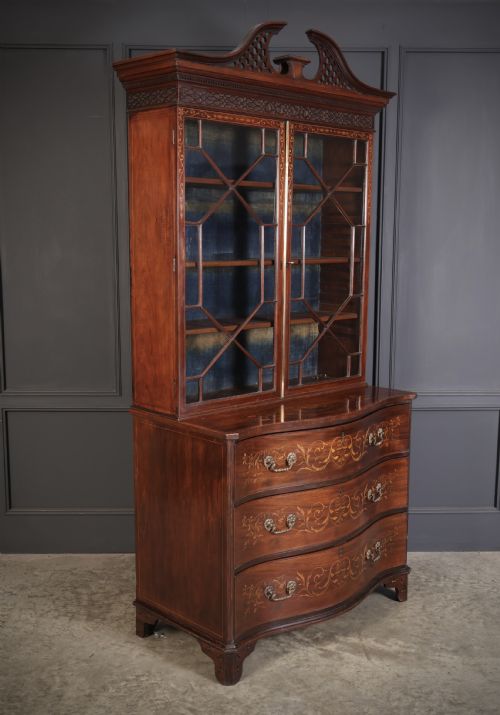
Most examples appear as traditional chests of drawers, whilst variations include bachelors chests fitted with slides, tallboys, and commodes. Surviving pieces present distinct configurations, from standard four-drawer formats to specialised fitted interiors.
The aesthetic relies entirely upon the interplay between the outward and inward curves of the serpentine drawer fronts and the warm figuring of the timber. Finding the right piece involves balancing the integrity of the period against the desired cabinet form.
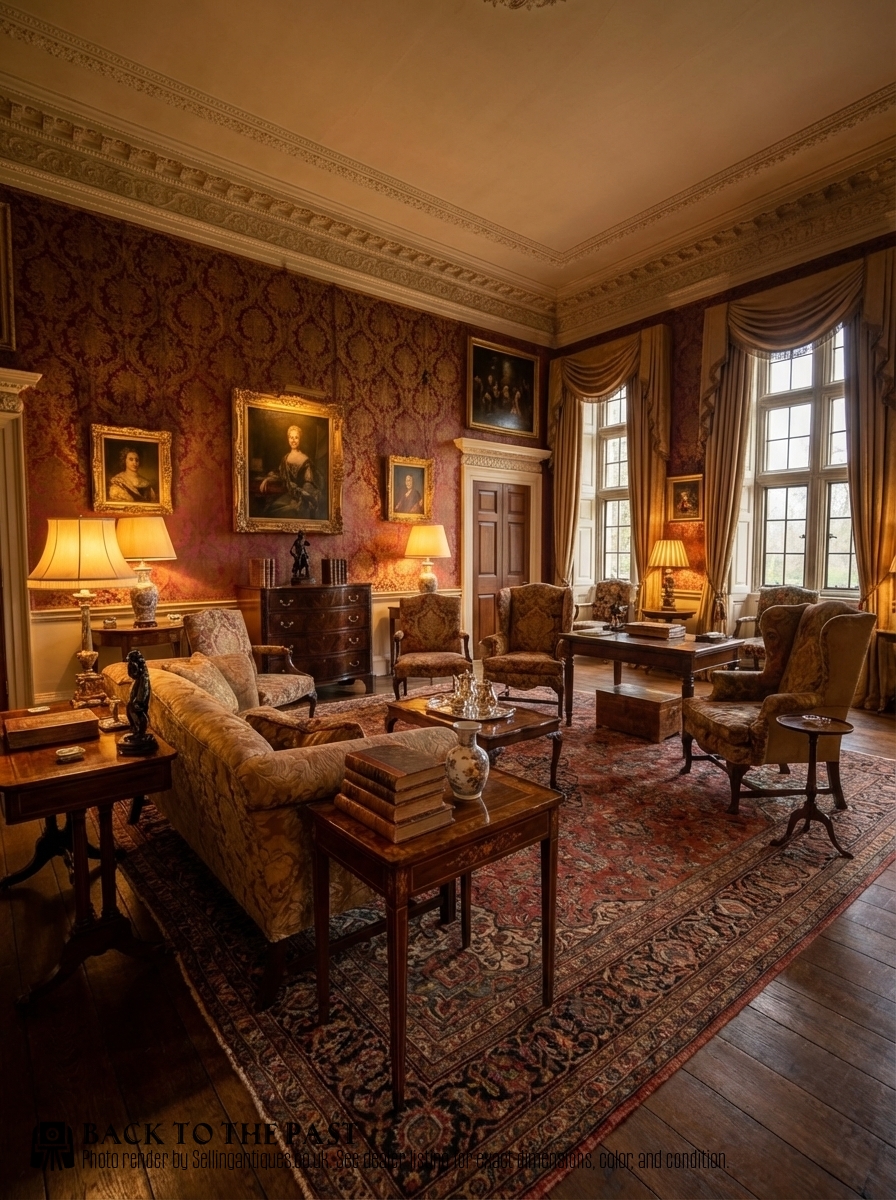
Materials and construction
Cabinet makers constructed these pieces primarily from solid and veneered mahogany, sometimes enhanced by flame mahogany grain and boxwood inlay. The curved fronts required exceptional skill to shape from thick timber without compromising structural stability.
Original hardware includes cast brass handles and escutcheons secured to the drawer faces. Internal elements incorporate dovetailed drawer construction and secondary softwoods typical of 18th Century and later workshop practices.
Retail Price Guide 2026
Typical UK retail prices for chippendale serpentine chest, calculated from the Sellingantiques database of over a million retail prices indexed since 2003. This retail price guide relies exclusively on Sellingantiques data; no external sources or auction records are used, so the figures do not describe the wider market.
Several examples include hidden writing slides designed for hasty correspondence before breakfast.
Distinguishing quality levels
Quality rests in the rhythm and sweep of the serpentine curve across the drawer fronts, where master carvers achieved balanced proportions that lesser workshops missed. The choice of timber also dictates standing, with select flame mahogany veneers creating dynamic visual depth.
Secondary details such as crisp boxwood inlay and the retention of original brass fittings elevate certain pieces above standard production. The precision of the joinery around the curved drawer edges separates superior cabinet work from routine manufacture.
Thomas Chippendale
The Chippendale Serpentine Chest Glossary
- Serpentine front
- A furniture front characterised by a central convex curve flanked by two concave curves, creating an undulating silhouette. This shape demands advanced cabinet-making techniques to execute correctly.
- Flame mahogany
- A veneer cut from timber where the branch meets the trunk, producing a distinctive flame-like pattern. It was frequently utilised on high-end Georgian case furniture.
- Bachelors chest
- A small chest of drawers featuring a pull-out writing slide or brush slide above the top drawer. These pieces served dual functions for writing and storage in domestic settings.
- Tallboy
- A tall chest of drawers built in two stacked sections, also known as a chest on chest. This form maximised vertical storage capacity in period bedchambers.
- Boxwood inlay
- Contrasting light wood inserted into recesses within the darker mahogany surface to create geometric borders or decorative motifs. It highlights the structural lines of the cabinet.
Frequently Asked Questions
What is a serpentine chest?
A serpentine chest is a set of drawers featuring a front edge curved in a wave-like pattern, alternating convex and concave sections.
Cabinet makers of the 18th Century adopted this shape to bring dynamic movement and sophisticated design to standard storage furniture.
How do I date a mahogany chest?
Dating relies on examining construction methods, timber selection, hardware styles, and overall proportions. 18th Century and Georgian pieces exhibit hand-cut dovetails and specific cabinet-making traits distinct from 1890 revival equivalents.
Comparing secondary woods and internal drawer construction helps establish the correct period of manufacture.
Where were bachelors chests used?
Bachelors chests functioned primarily in private bedchambers or dressing rooms as compact storage and writing desks. The integrated slide provided a surface for correspondence without requiring a separate table.
Their smaller scale made them adaptable to various domestic spaces within traditional homes.
What is flame mahogany?
Flame mahogany is a highly figured wood veneer derived from specific sections of the mahogany tree. The grain pattern resembles flickering flames, adding visual movement to the flat surfaces of case furniture.
Cabinet makers reserved this material for the most prominent areas, such as top boards and drawer fronts.