
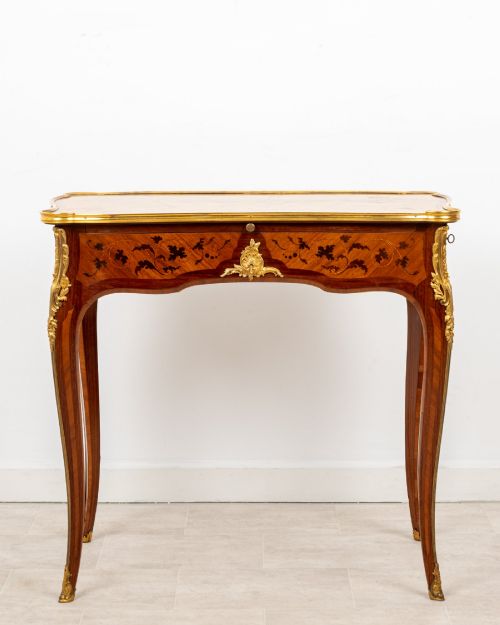
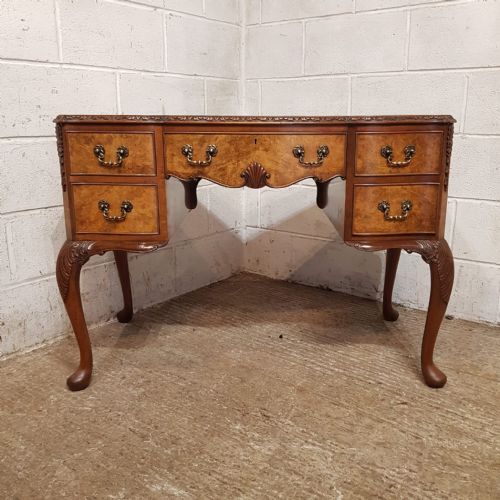
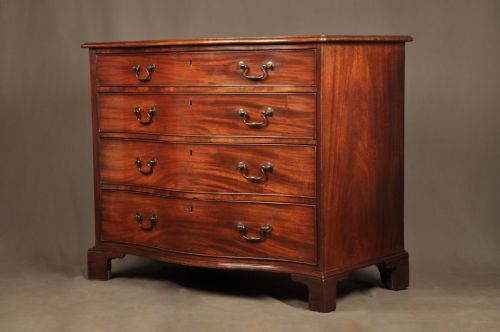
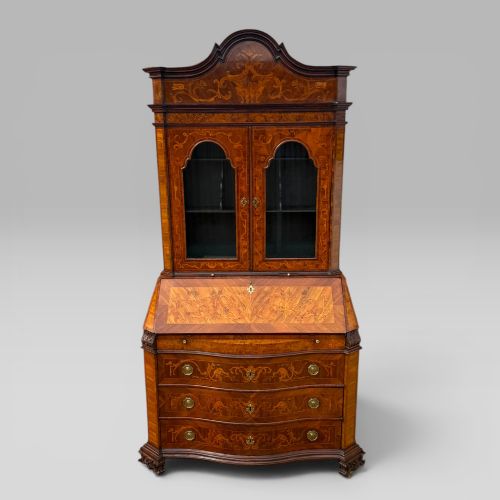
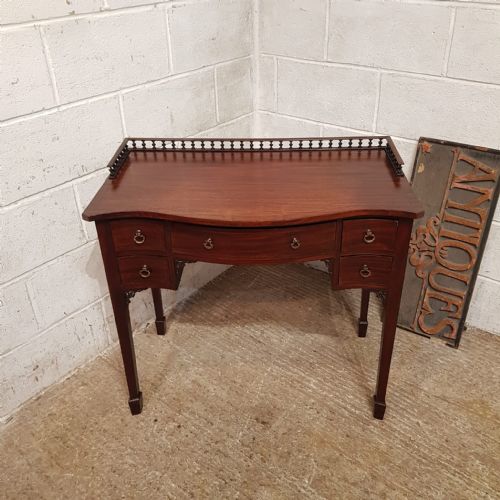


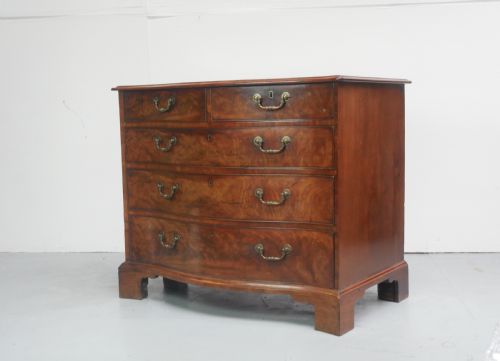
Serpentine Front Bureau
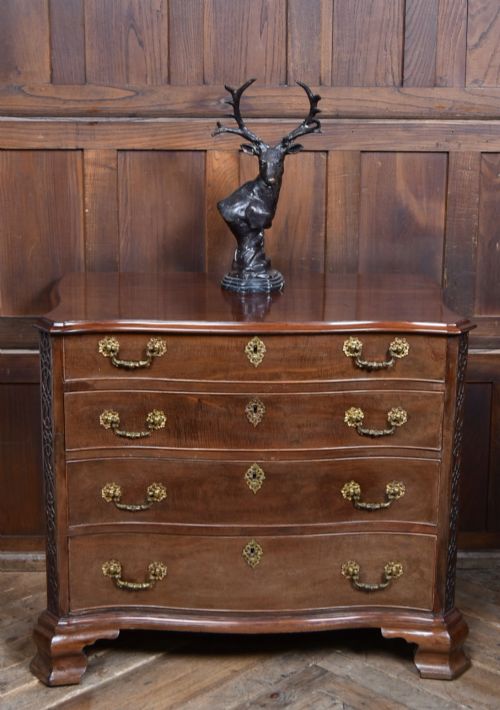
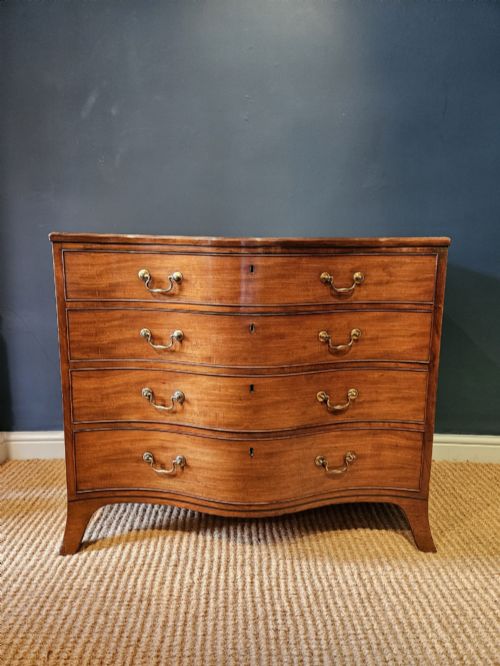
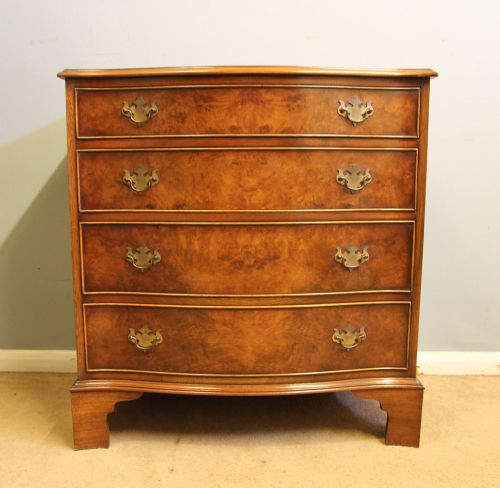
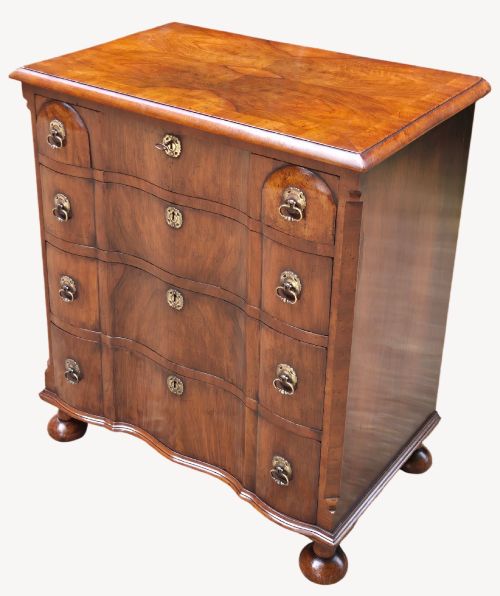
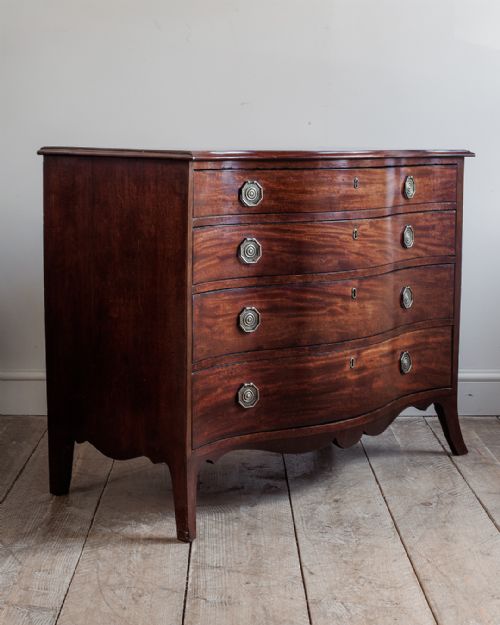
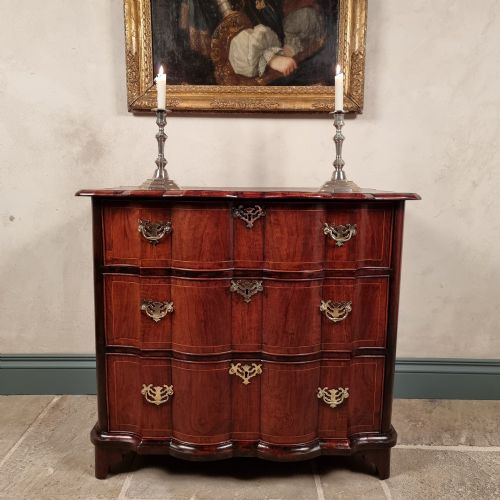
A serpentine front bureau offers a graceful undulating silhouette combined with practical writing or storage space, drawing the eye with its curved drawer fronts and fitted interiors.
Serpentine Front Bureau
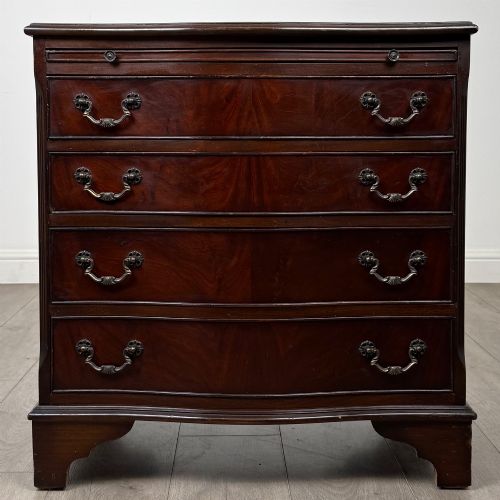
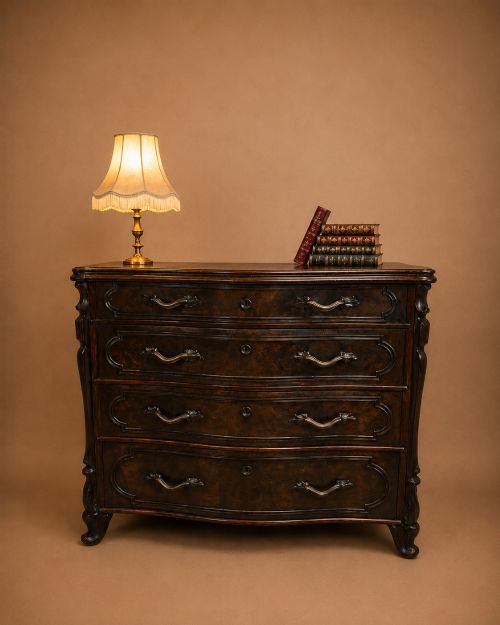
When searching for a serpentine front bureau, a buyer encounters pieces distinguished by a convex centre flanked by concave ends, creating a flowing three-dimensional facade.
The selections span from 18th-century Georgian originals in mahogany to later Edwardian and 1920s revival iterations in burr walnut and oak.
Forms vary from practical chests of drawers and writing tables to elaborate bureau bookcases with fitted interior compartments.
How they were made
Cabinetmakers constructed these undulating forms using dense timbers such as mahogany, walnut, and satinwood, frequently enhanced by decorative veneers and marquetry.
Shaping the curved drawer fronts required skilled timber selection and precise joinery to ensure the grain followed the sweeping contours without distortion.
Some kneehole desks hide a central concealed compartment behind a dummy drawer.
What varies in quality
The standard of timber figure and veneer matching dictates visual success, particularly on burr walnut or inlaid mahogany surfaces.
Precision in the shaping of the serpentine curve and the intricacy of internal pigeonholes and small drawers separate standard production from superior cabinet work.
Maple & Co.·Durand
The Serpentine Front Bureau Glossary
- Serpentine front
- A furniture front characterised by a central convex curve between two concave ends. This undulating contour defines the visual rhythm of the piece.
- Bureau bookcase
- A writing cabinet featuring a fall-front desk section beneath upper shelving enclosed by doors. These taller forms combine workspace with display capacity.
- Bureau plat
- A freestanding French writing table without an upper bookcase or desk superstructure. They typically feature multiple drawers beneath a finished writing surface.
- Marquetry
- Decorative patterns formed by fitting together thin slices of various coloured woods and other materials. It creates pictorial or geometric ornamentation on drawer fronts and tabletops.
- Fiddleback
- A type of timber figure displaying horizontal ripples resembling the back of a violin. It appears on selected mahogany surfaces.
Serpentine Front Bureau: Frequently Asked Questions
What is a serpentine front bureau?
A serpentine front bureau is a writing desk or cabinet featuring an undulating curved front where the centre pushes outward and the sides curve inward.
These pieces combine functional writing surfaces or drawer storage with sophisticated cabinetmaking, appearing across Georgian, Edwardian, and later periods.
How do I date a serpentine bureau?
Dating relies on timber choice, construction methods, hardware, and stylistic details such as bracket feet or inlaid decoration.
Georgian examples typically employ solid mahogany with hand-cut dovetails, whereas 20th-century revival pieces often utilise burr walnut veneers over secondary woods.
Where were these bureaus placed?
These pieces served as functional writing and storage furniture in principal reception rooms, studies, and bedrooms.
Freestanding writing tables and kneehole desks allowed placement away from walls, while bureau bookcases stood against main walls to display books and conceal writing materials.
How do I care for walnut veneer?
Walnut surfaces require protection from direct sunlight and extreme humidity changes to prevent timber movement and veneer lifting.
Regular dusting with a dry cloth and occasional application of appropriate wax maintain the polished finish without harming the grain.