



Golden Walnut Drawers
Golden walnut drawers bring rich timber grain and warmth to a room, spanning periods from the seventeenth century through to the art deco era.
Golden Walnut Drawers
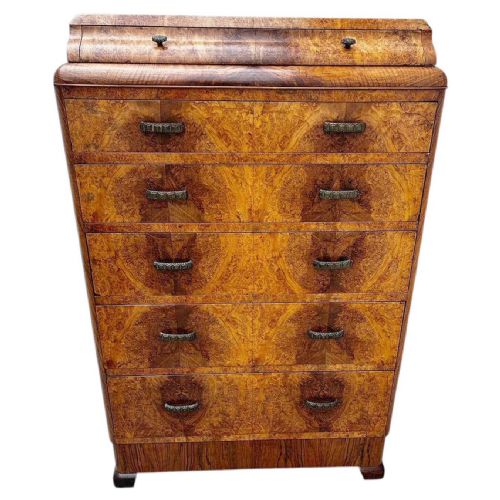
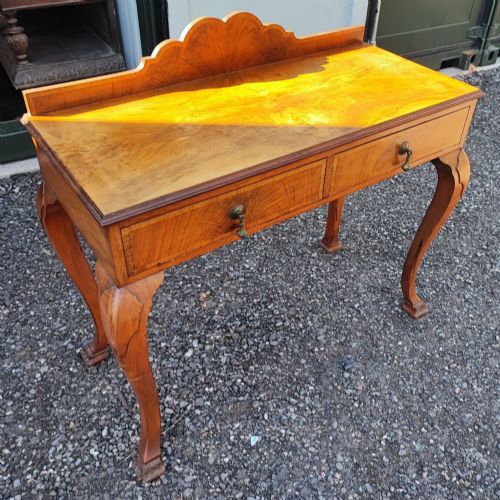
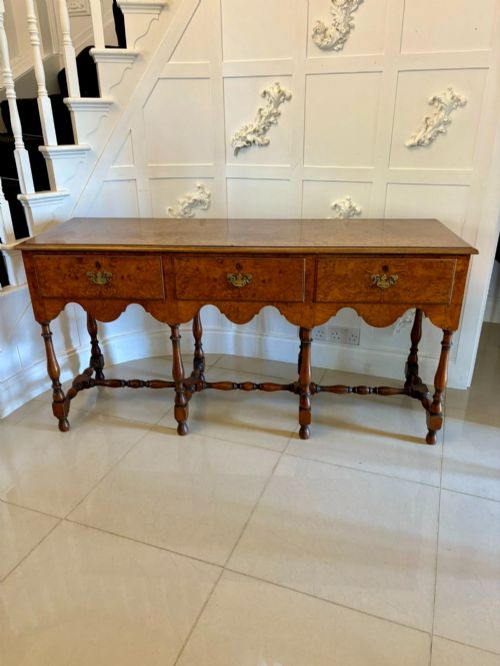
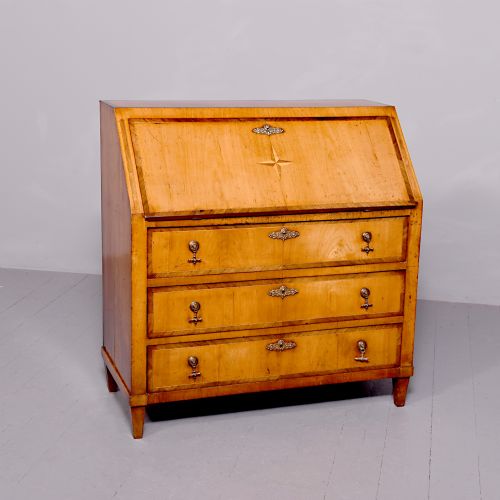
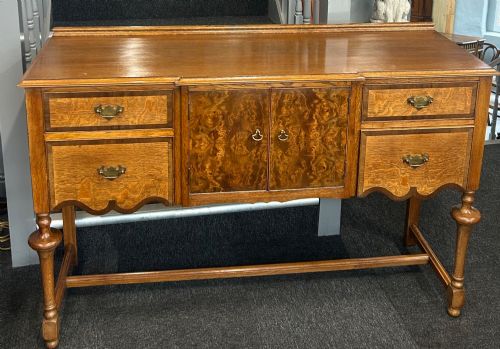
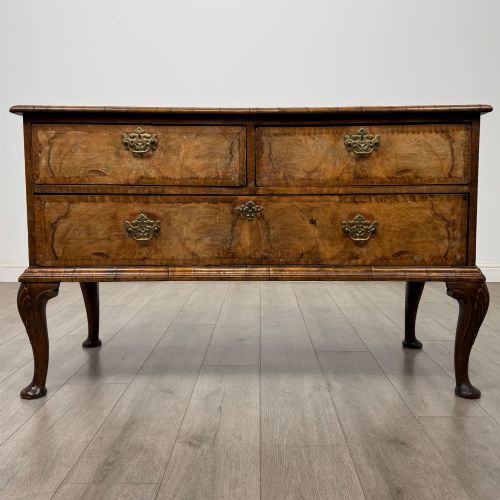
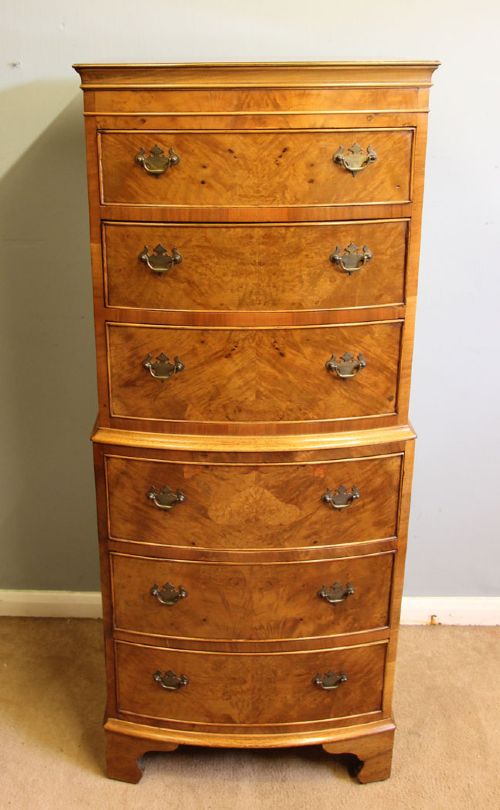
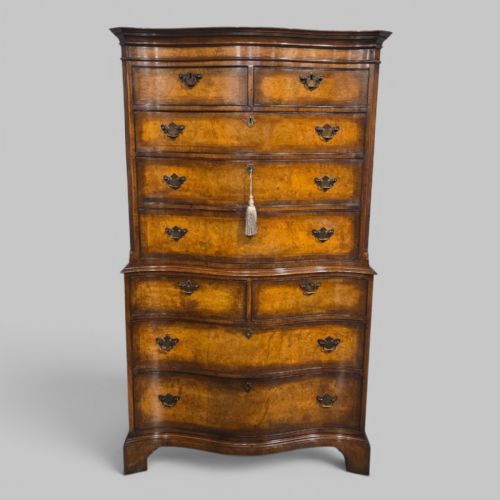
When you search for golden walnut drawers, you encounter a variety of storage forms including chests of drawers, desks, bureaux, and sideboards. These pieces originate from multiple periods such as the Georgian and Victorian eras, alongside twentieth-century Art Deco interpretations.
The most common examples you meet are chests of drawers and bedside cabinets showcasing the distinctive rich tones of walnut timber. Pieces range from simple satin walnut side tables to elaborate burr walnut chests on chests.
Craftsmanship spans British workshops as well as Continental origins including Swedish and German makers. Buyers select these items for their functional storage combined with striking figured wood patterns.
What varies in quality
Quality separates through the selection of timber figures, where symmetrical burr patterns and rich natural colour command higher regard. The precision of the cabinet work, particularly in the matching of veneers across multiple drawer fronts, indicates superior craftsmanship.
Originality of surface finish and hardware dictates much of the standing of a piece. Untouched surfaces displaying deep patination hold more authority among collectors than heavily restored or stripped examples.
Some nineteenth-century writing slopes hide secret compartments beneath the stationery wells for holding private correspondence.
Heals·Morison of Edinburgh·Gillows·James Winter and Son
The Golden Walnut Drawers Glossary
- Burr walnut
- A prized veneer sliced from the growth warts of walnut trees, yielding intricate swirling patterns. It forms the decorative focus on many high-end drawer fronts.
- Bureaux
- A sloping desk form that lifts or drops to reveal internal small drawers and pigeonholes. They often sit atop a larger chest base.
- Serpentine
- A gently undulating front curve popular in eighteenth-century and revival commodes. This shape requires advanced woodworking skill to execute properly.
- Kneehole desk
- A compact writing desk featuring a central recessed space for the legs flanked by columns of small drawers. George first examples display fine proportions.
- Wellington chest
- A tall, narrow chest of drawers secured by a hinged locking side stile. It typically contains seven drawers.
Golden Walnut Drawers: Frequently Asked Questions
How do I clean walnut furniture?
Dust surfaces regularly with a soft, dry cloth to prevent particle buildup. Avoid modern silicone sprays that can damage antique polishes.
Apply a traditional beeswax sparingly when the timber appears dry, buffing gently to maintain the natural sheen.
What is burr walnut?
Burr walnut comes from a tree growth abnormality that produces dense clusters of bud knots. When sliced into thin veneers, these knots create swirling, highly decorative patterns.
Cabinet makers apply these veneers to drawer fronts and tabletops to achieve a striking visual impact.
How do I date a walnut chest?
Examine the construction methods of the drawer linings and timber thickness. Hand-cut dovetails and native secondary woods like oak often point towards earlier Georgian or seventeenth-century origins.
Stylistic cues such as brass hardware styles and foot shapes also help place the piece within periods like Victorian or Art Deco.
Where should I place a walnut chest?
Position these pieces away from direct sunlight and heat sources to prevent the walnut veneer from drying or cracking. Stable room temperatures protect the timber and historic joints.
Allow enough clearance for drawers to open fully without striking surrounding furniture.