

Antique Storage Chests
A lidded wooden box for storing linen, clothes, grain or valuables, and in its travelling forms for moving them by coach, ship and rail.
Antique Storage Chests
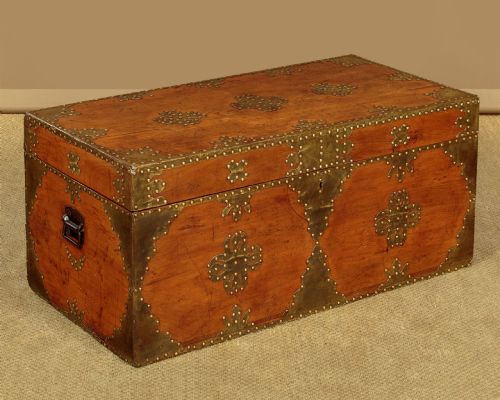
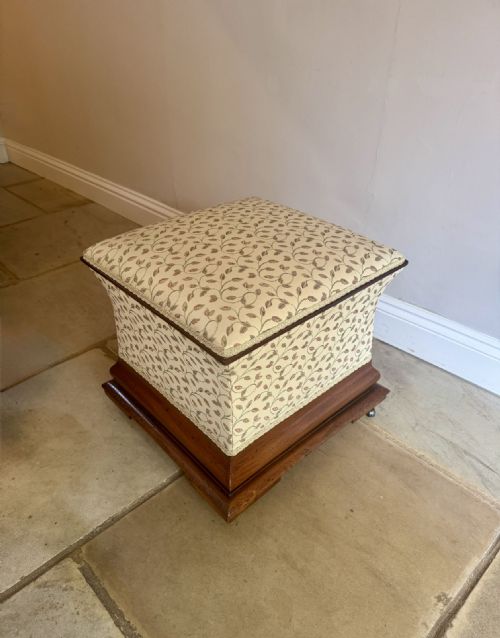
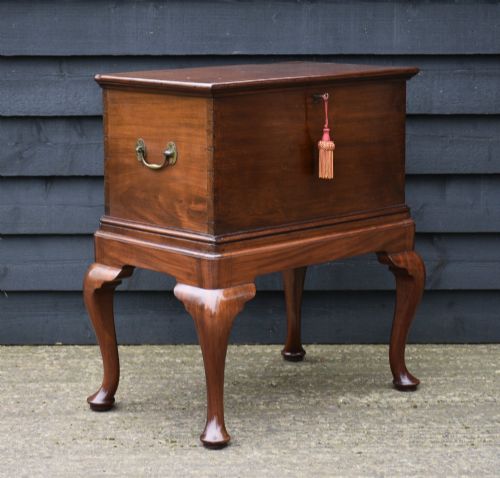
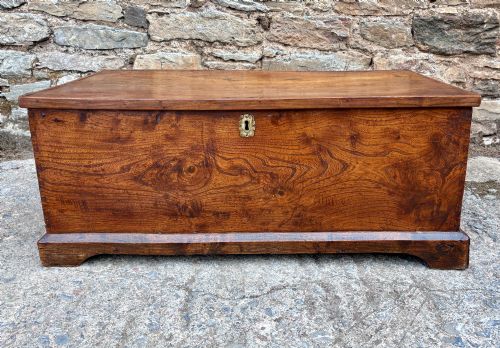
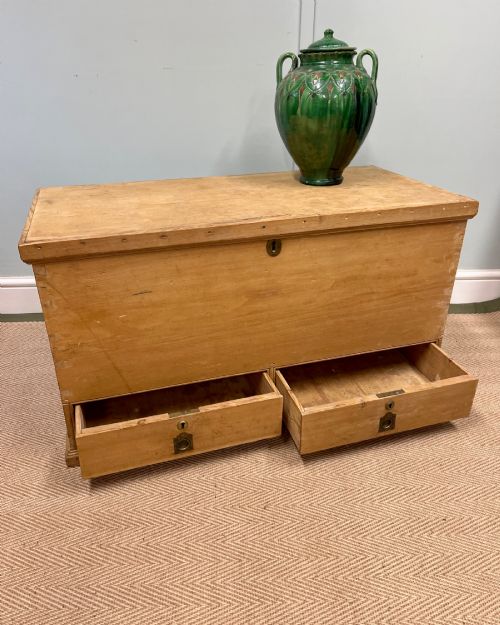
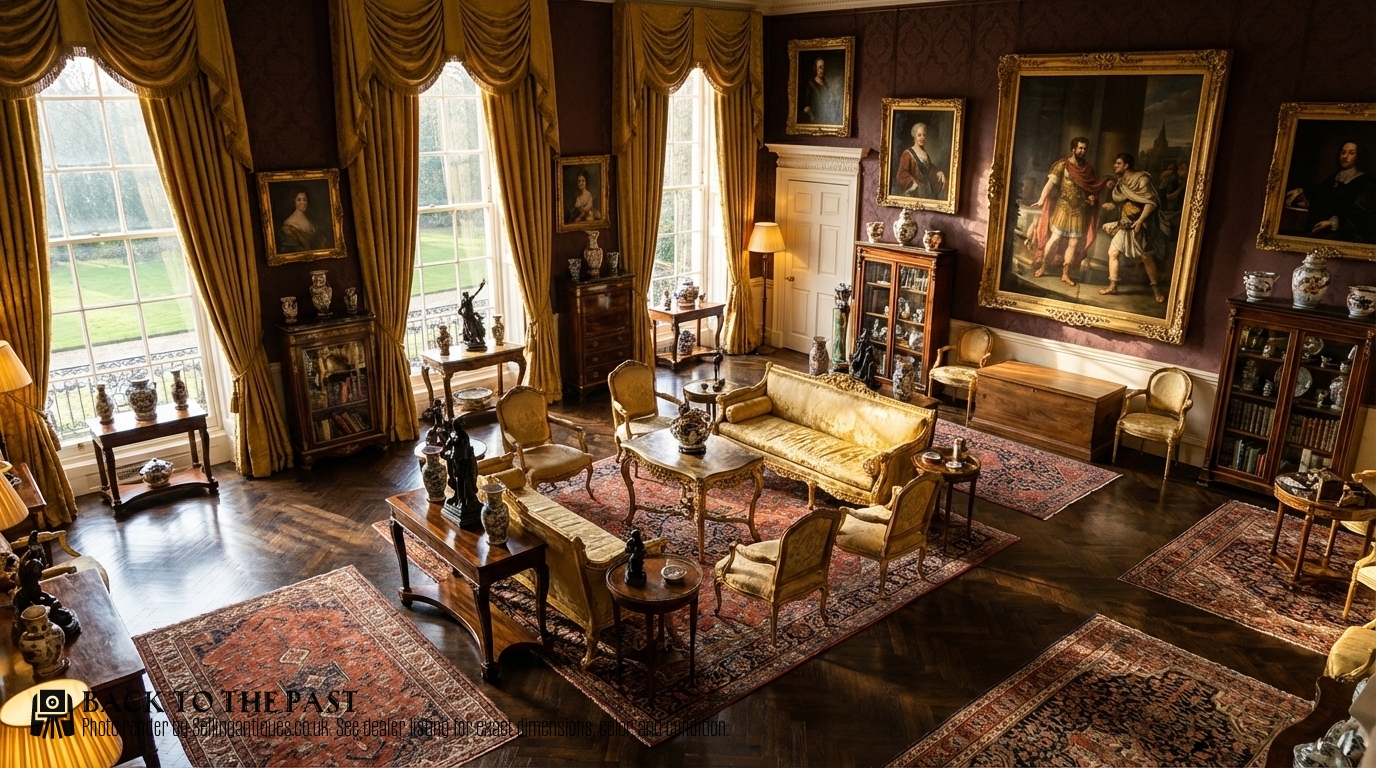
The lidded chest is one of the oldest pieces of domestic furniture, the main store for linen, clothing, grain and plate before drawers and wardrobes took over. Under this heading sit joined and plank oak coffers, pine blanket boxes, mule chests with drawers below, camphor-wood and leather-covered trunks, and upholstered box ottomans.
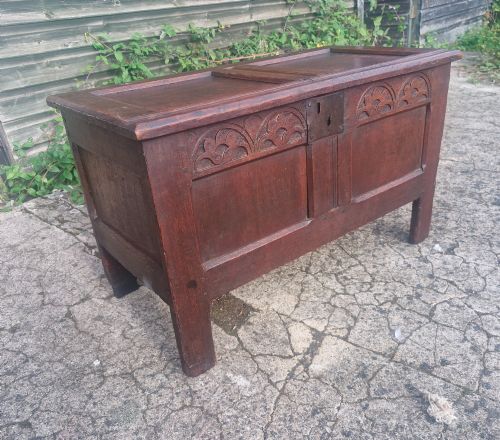
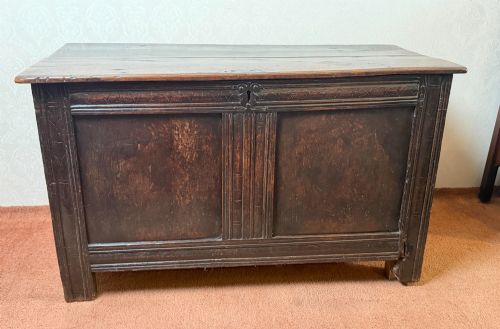
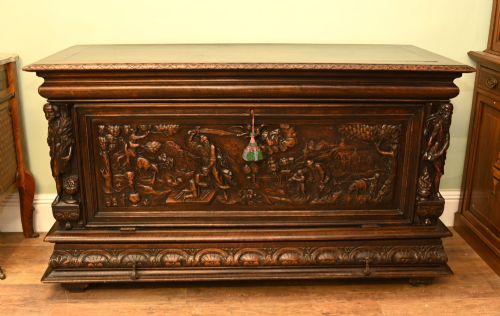
Oak and the word coffer define the naming: oak runs through 341 titles, coffer through 278, and "oak coffer" is a set phrase in 152. So the most likely thing you'll meet is a panelled or carved English oak coffer given a 17th or 18th century date. The second is a Victorian pine blanket box or a trunk.
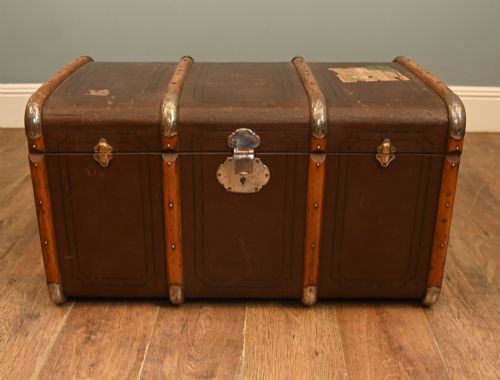
The same object is routinely called coffer, chest, trunk and blanket box in one title. The words follow form and trade habit rather than fixed types. Travelling and campaign trunks make up roughly a quarter of the category, pine boxes a smaller slice, camphor-wood and Eastern chests about a tenth, and mule chests less again. Welsh oak coffers and the miniature coffer bach form a distinct handful.
Dating is mostly by century or style rather than by year. The structured date field runs from 1680 to 1940, while titles reach back to 16th-century, Tudor and Elizabethan coffers, and one late-15th-century Gothic coffer in oak and elm. Read a century-only entry as the dealer's estimate. Around 102 chests are listed a year on Sellingantiques, from one of the widest dealer bases of any furniture form.
Where The Range Splits
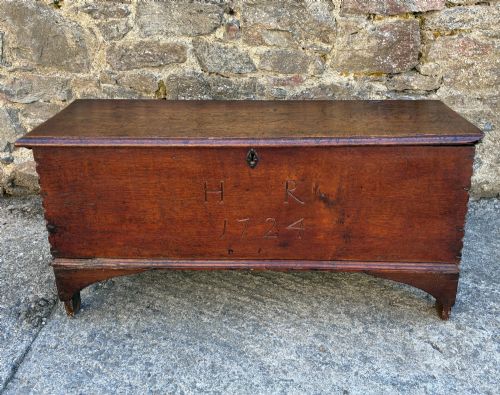
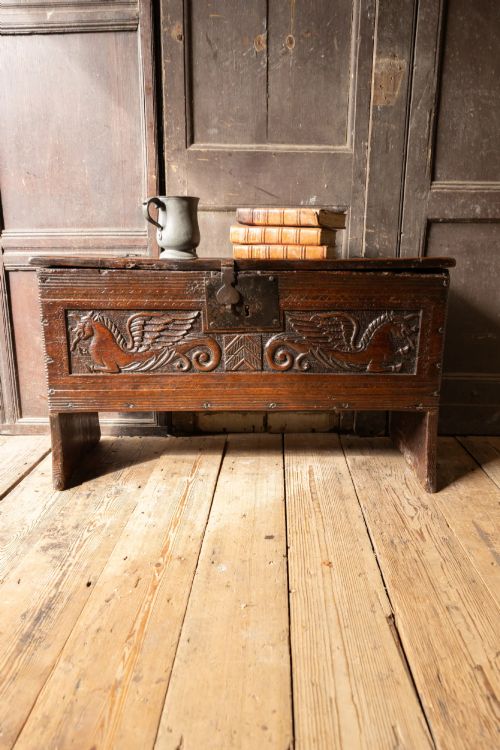
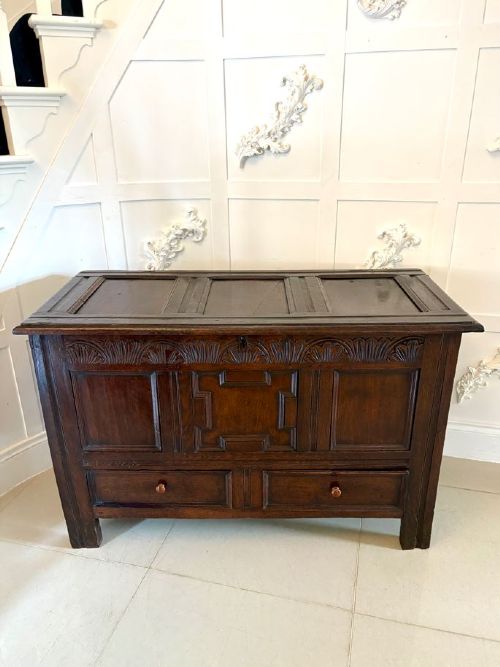
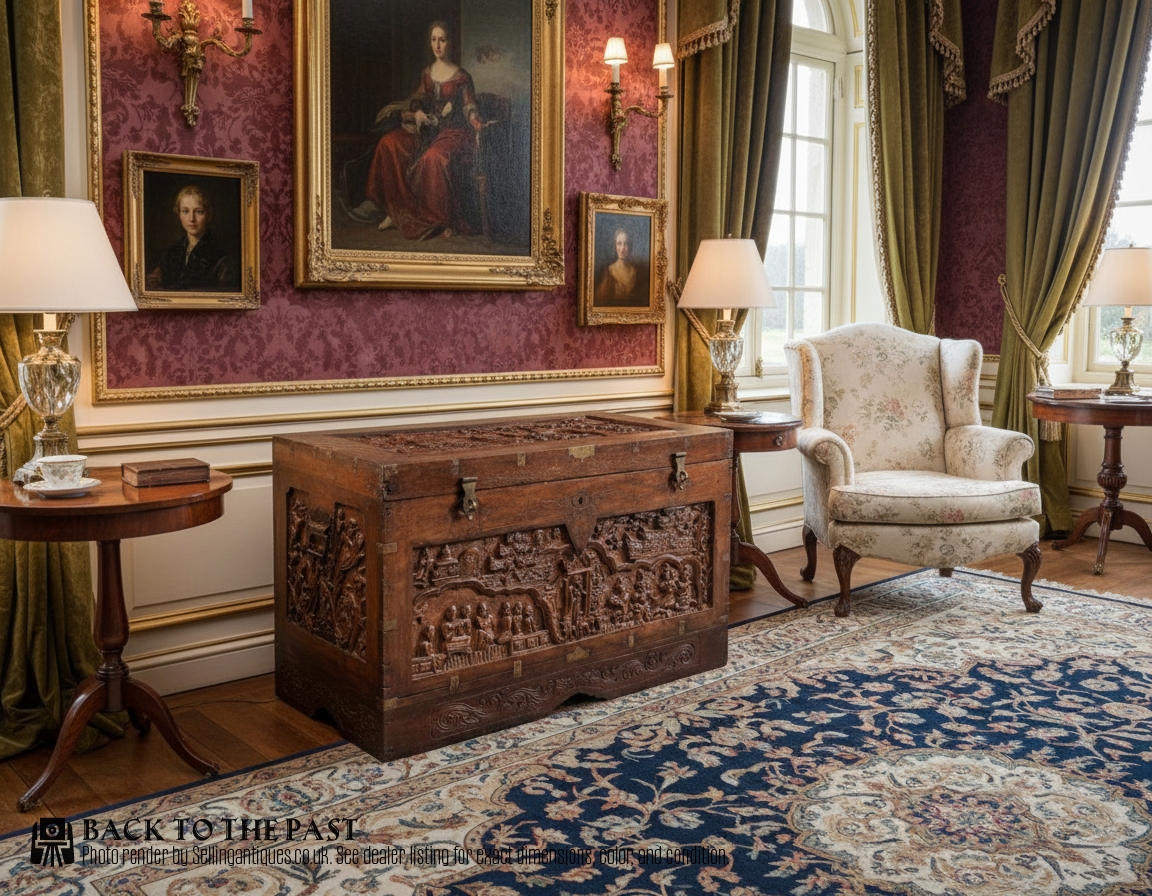
Construction sorts the oak. Joined and panelled work sits toward the top, plank and six-plank chests toward the bottom, and decoration follows the same line: carved, arcaded, linenfold, inlaid and marquetry examples are the ones that carry the higher prices. Carving appears in a good number of titles, panelled in far fewer.
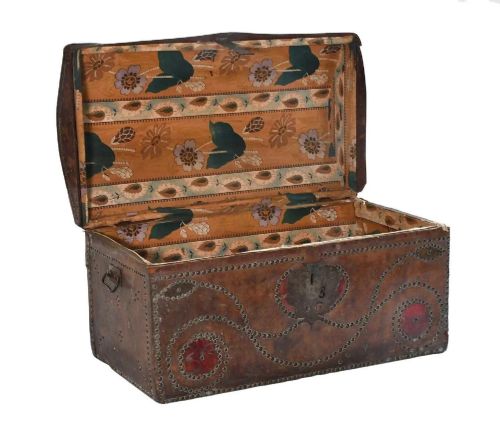
Surface counts for a lot on pine. Original paint, scumbled graining and untouched patina push a box up, and "original throughout" is a claim that recurs in titles. On the trunks and silver chests, brass or iron binding, fitted interiors and zinc or felt linings do similar work.
Two other things lift a chest. A carved or inscribed year, such as 1658 or 1690, is the rarest thing in the category and clusters at the very top. So does a regional label: Welsh, Lancashire, Lakeland, Yorkshire, Westmorland and West Country all appear on higher-priced coffers, though the archive records the claim rather than the evidence behind it. Scale works at both ends, monumental iron-bound teak dowry chests and grain arks at one, table-top and miniature pieces at the other.
Antique Storage Chests Retail Price Guide 2026
Typical UK retail prices for storage chests, calculated from the Sellingantiques database of over a million retail prices indexed since 2003. This retail price guide relies exclusively on Sellingantiques data; no external sources or auction records are used, so the figures do not describe the wider market.
One-offs to pass through: a grain ark from Snowdonia, a Japanese wheeled kuruma-dansu, a Korean elm bandaji, an aluminium shipping chest and one labelled Spanish Royal.
The Antique Storage Chests Glossary
- Coffer
- The traditional name for an early lidded chest, in 278 titles, and used interchangeably with chest and trunk.
- Mule chest
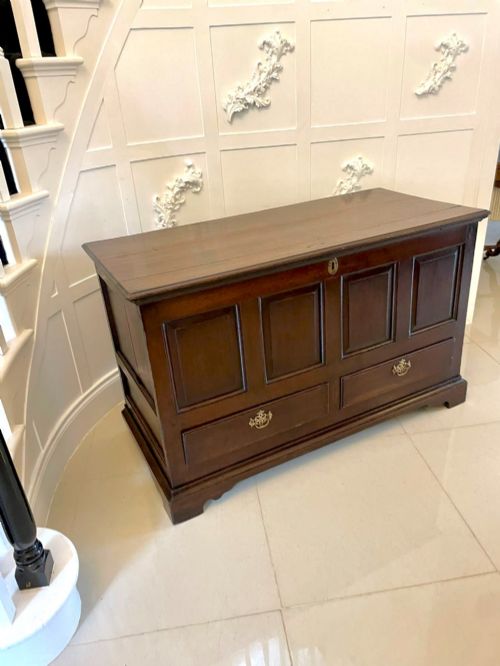
- A chest with one or more drawers built into the base, halfway to a chest of drawers. Oak, pine, elm and mahogany versions appear with two, three or four drawers.
- Blanket box
- A chest kept for household linen and bedding, the phrase used in 60 titles and the word blanket in 108.
- Plank or six-plank
- The simplest construction, boards nailed or pegged rather than framed and panelled. Panelled means framed work with fielded or moulded panels.
- Coffer bach
- Welsh for little chest, sometimes spelled coffor bach. Sixteen titles, several dated to the 1690s-1770s. Kist is the Scots and northern word for a chest, used on pine and oak listings.
- Camphor wood
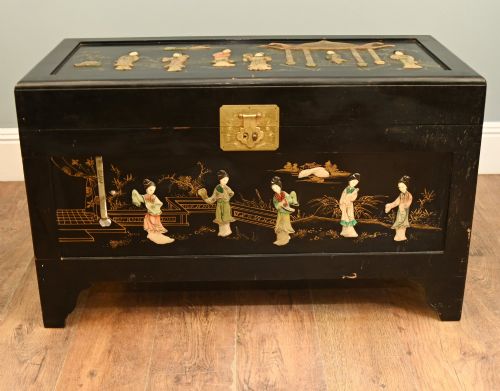
- Aromatic timber used for insect-proof clothing and blanket chests, in 63 titles, mostly on Chinese and Anglo-Indian trunks.
Antique Storage Chests: Frequently Asked Questions
What's the difference between a coffer and a trunk?
In practice, not much. Dealers use coffer, chest, trunk and blanket box for the same object, sometimes several of them in one title.
As a habit, coffer goes on early oak, trunk on travelling and bound pieces, and blanket box on pine. Trunk appears in 229 titles, coffer in 278.
Which timber is most common?
Oak, by a wide margin, running through 341 titles. Pine is the next real presence, in 135.
Camphor wood is the one exotic timber with weight behind it, in 83 titles, mostly Chinese or Anglo-Indian. Teak, elm and mahogany turn up throughout, usually on single pieces or small groups.
How old are these chests?
The structured date field runs from 1680 to 1940. Titles claim more: 16th-century, Tudor, Elizabethan and Henry VIII coffers all appear, plus one late-15th-century Gothic coffer in oak and elm.
Most dating is by century or style, with 19th century the commonest label, then 17th and 18th, then Victorian and Georgian. Only a handful of titles quote a carved year.
Are any of these chests marked with a maker?
Very few. A scan of the archive turned up no maker or workshop with any presence across the category.
The names that do appear come from single listings, so a maker's mark is an exception in this heading, not a feature of it.
What is a mule chest?
A chest with drawers built into the base, standing halfway between a coffer and a chest of drawers. The word appears in 72 titles.
They turn up in oak most often, and also in pine, elm and mahogany, with two, three or four drawers.
Do unusual or Eastern chests appear in this category?
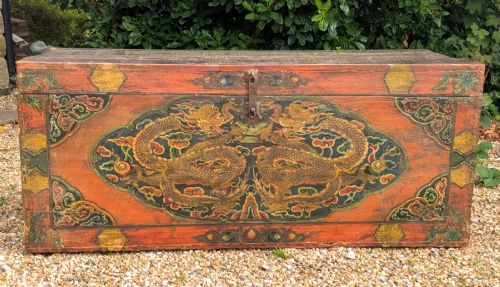
Yes. Camphor-wood and Eastern pieces make up about a tenth of the category, taking in Chinese, Indian, Korean and Japanese examples, and camphor trunks carried as far as Ceylon and Zanzibar.
One-offs appear too: a grain ark from Snowdonia, a wheeled Japanese kuruma-dansu, a Korean elm bandaji, a French elm cannonball box, a Swat Valley dowry chest and an aluminium shipping chest.