


Antique Campaign Chests
A lidded, handled travelling box, bound in brass or iron, built to go overseas with an officer or a colonial official and hold uniforms, linen or plate.
Antique Campaign Chests
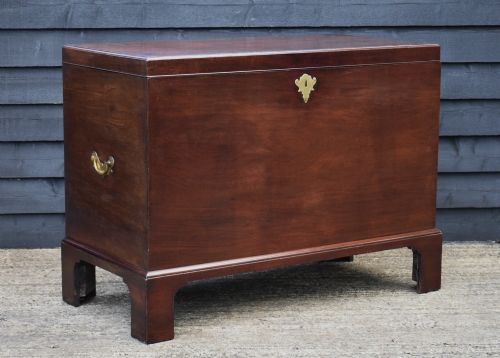
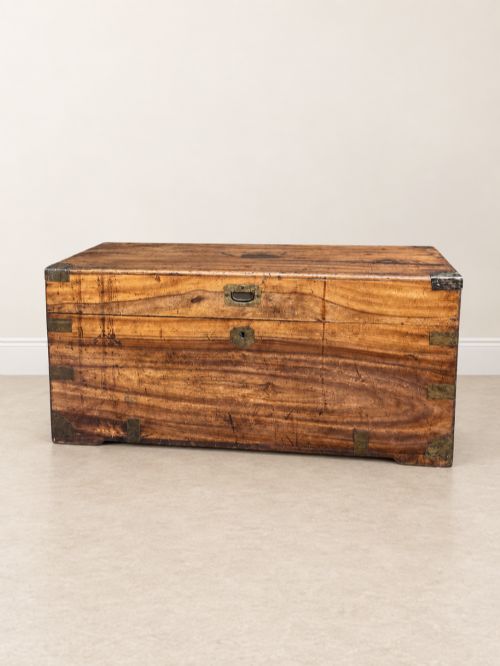
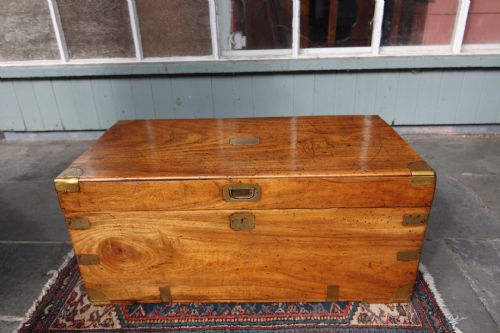
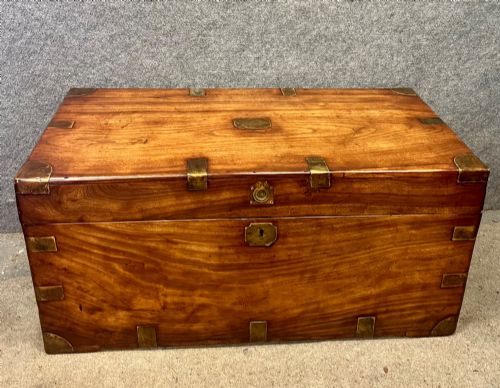
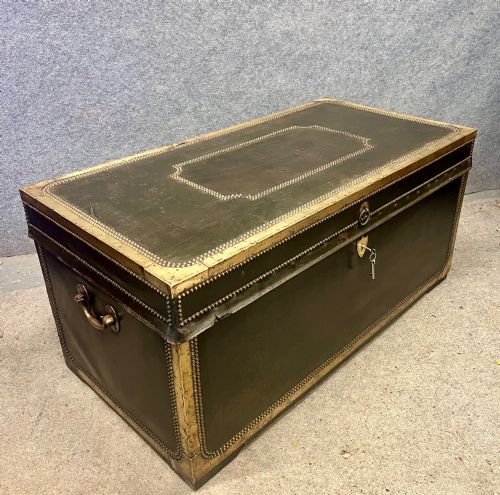
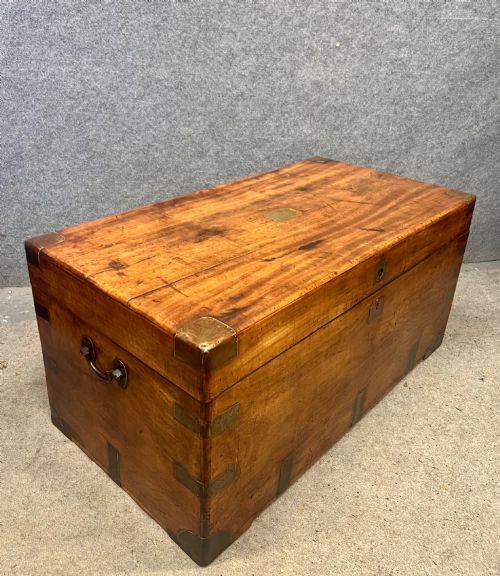
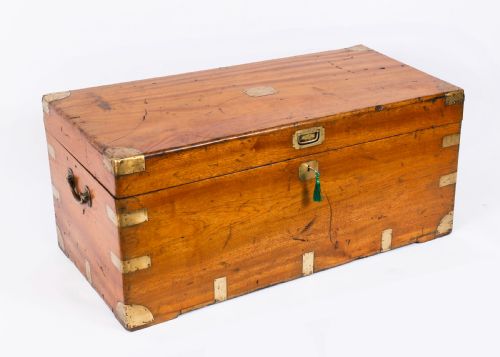
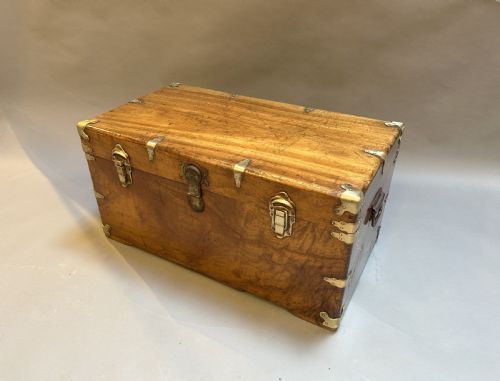
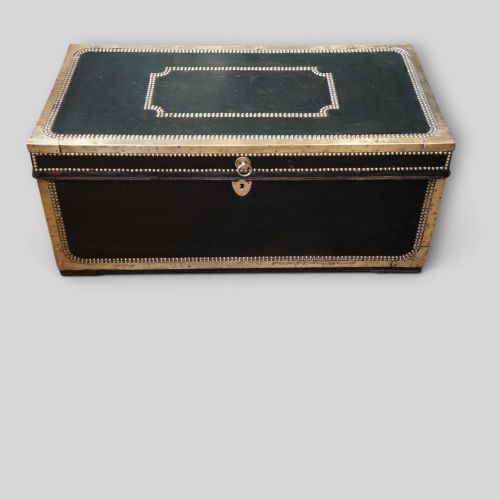
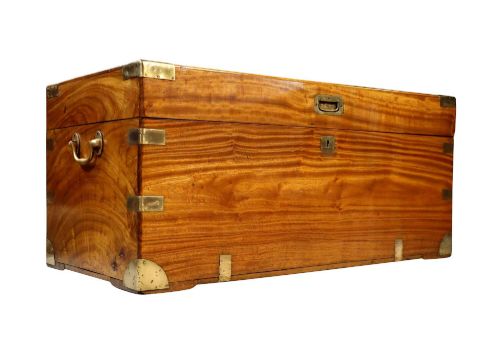
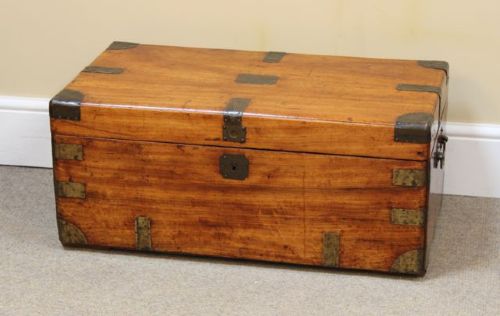
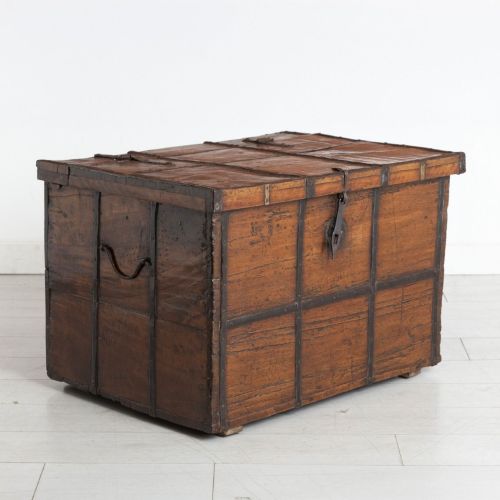
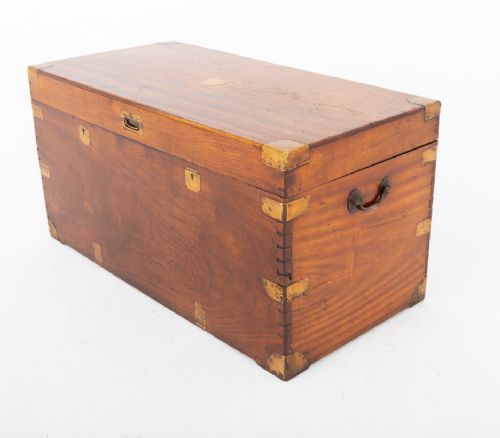
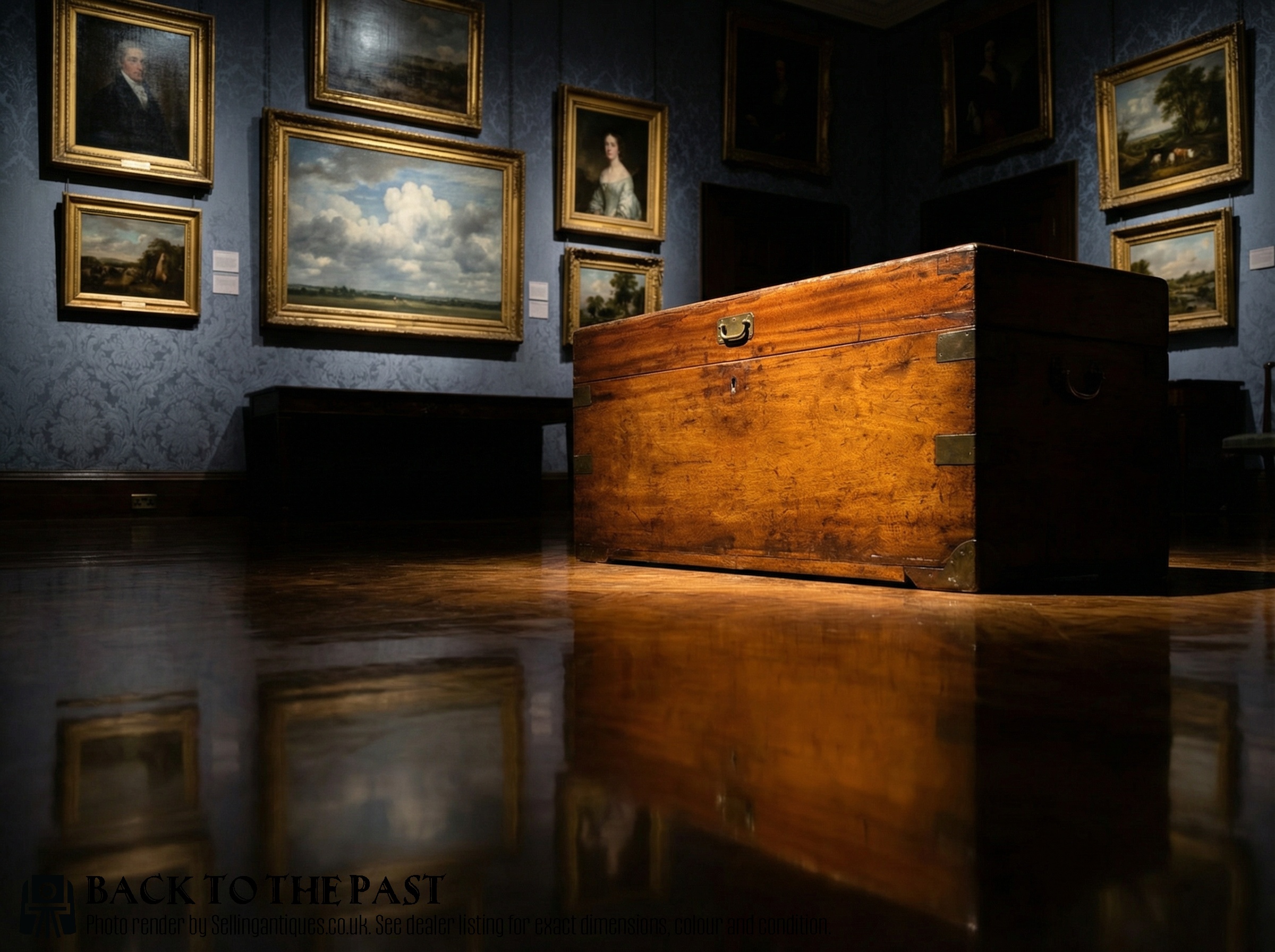
The name suggests the two-part chest of drawers, but that is not what dominates this heading on Sellingantiques. What you'll meet is the campaign trunk: a flat-topped box with a hinged lid, flush handles set into the ends, metal straps at the corners and a lock. "Trunk" appears in 252 of the sampled titles, "chest" in 180, and "chest of drawers" in two.
Camphor wood is the signature timber, named in around two in five titles, usually with brass or iron binding. Trunks in it were made in quantity in China, India and Ceylon through the nineteenth century, because the scent of the timber deters insects and suited storing uniforms and blankets in hot climates. Titles name Canton, Hong Kong and Ceylon; Anglo-Indian appears a dozen times.
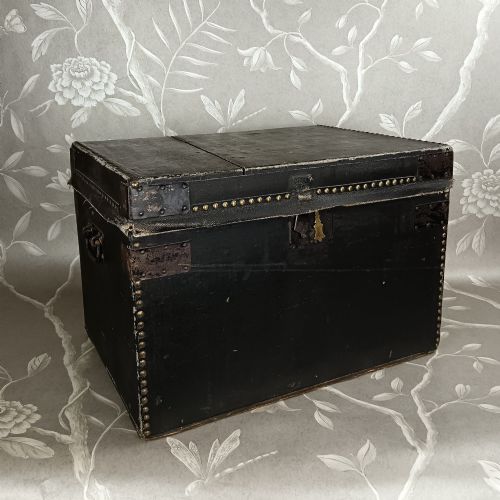
Beside the camphor sits a smaller English population. Oak silver chests bound in iron, made to travel with a household's plate, are strongly represented in current stock. Teak and mahogany officers' chests run through the category, leather- and canvas-covered coaching and steamer trunks account for about one in twenty, and fitted forms surface here and there: writing slopes, a cellarette, a cutlery canteen.
Dating is loose. The field runs 1750 to 1920, but 141 listings are given only as "19th Century" and another 53 only as "Victorian". Where a decade is named it lands late, with the 1880s ahead of everything else. Most trunks carry no maker and no regiment, and a plain title like "C19th camphor campaign trunk" is the norm.
What Sets Them Apart
Size does more work than anything else at the extremes. Thirty-eight titles say large against eleven that say small, and the language tracks the range: miniature camphorwood chests sit at the bottom, while "Extra Large", "Huge" and "Very Large" camphor trunks sit well up it. A trunk you could put a uniform in outranks one you could put gloves in.
Then the metalwork. Binding appears in 70 titles, brass binding in 45, and brass-bound and brass-mounted trunks run through the upper half of the range. Full banding at the corners and edges counts for more than a few brass mounts, and original brass fittings get called out on the higher-priced camphor trunks. Timber pulls the same way: mahogany, oak, rosewood, padouk and satinwood cluster above pine and undistinguished camphor.
What lifts a trunk clear of the crowd is a name or a job. A named port or workshop, a retailer's label, a regiment, a traceable owner: those titles sit above the plain camphor trunks, though provenance is rare enough here to be an event. So does added function. Secretaire chests, cellarettes, a wine cooler trunk and fitted silver chests appear near the top of the range; empty trunks don't.
Antique Campaign Chests Retail Price Guide 2026
Typical UK retail prices for campaign chests, calculated from the Sellingantiques database of over a million retail prices indexed since 2003. This retail price guide relies exclusively on Sellingantiques data; no external sources or auction records are used, so the figures do not describe the wider market.
Camphor leads the timbers named in campaign chest titles on Sellingantiques, spelt 'camphor wood' in 85 titles and 'camphorwood' in 58.
The Antique Campaign Chests Glossary
- Campaign trunk
- A lidded, handled travelling box made to go on service or overseas. The commonest form under this heading, and a different thing from a campaign chest of drawers.
- Camphor wood / camphorwood
- The aromatic timber used for the largest group of these trunks. Both spellings appear in roughly equal numbers, so a search for one misses much of the other.
- Brass bound
- Fitted with brass straps or bands at the corners and edges. In 45 titles, and the most-named form of decoration in the category.
- Iron bound / metal bound
- The same protective banding in iron or steel, usual on the English oak silver chests.
- Silver chest
- An iron- or brass-bound chest, usually oak, made to travel with a household's plate. Fifteen titles.
- Coffer
- Used in eleven titles for a deeper lidded chest, sometimes interchangeably with trunk.
Antique Campaign Chests: Frequently Asked Questions
Are these chests of drawers or trunks?
Trunks, overwhelmingly. "Trunk" appears in 252 of the sampled titles and "chest" in 180, while "chest of drawers" turns up in only two.
The two-part campaign chest of drawers exists in the samples, but as an outlier near the top of the range rather than the standard form under this heading.
Why is camphor wood so common?
The timber's scent deters insects, which made it the obvious choice for storing uniforms, blankets and linen in hot climates.
Trunks in it were made in quantity in China, India and Ceylon through the nineteenth century. Camphor is named in around two in five titles, making it the signature timber of the category.
How precisely are these dated?
Loosely, for the most part. The dated field spans 1750 to 1920, with 168 of 413 listings carrying a clean year.
Nearly half resist a decade altogether: 141 are given simply as "19th Century" and 53 simply as "Victorian". Where decades do appear they cluster late, with 49 listings in the 1880s and 23 in the 1890s.
Do they usually carry a maker's name?
No. Most carry no maker and no regiment, and plain titles of the form "Camphorwood Campaign Chest c.1880" run through the middle of the range in dozens.
Where a name does appear, whether a workshop, a retailer's label or an attribution, it comes from a single listing rather than a pattern across the category.
What is a silver chest?
An iron- or brass-bound chest, usually oak, made to travel with a household's plate. Fifteen sampled titles use the term.
It is a small but distinct English group within the category, and one that's strongly over-represented in current stock on Sellingantiques.
Which unusual forms turn up under this heading?
Odd things surface once and then don't repeat: a campaign wine cooler trunk, a cellarette, a necessaire, a workman's tool chest, a dowry chest on stand.
Origins wander too. Ceylon, Canton, Hong Kong, Japan, Dutch colonial teak and an American military camphor trunk each appear a single time in the samples.