



Antique Cassoni
A cassone is the large lidded Italian chest, carved and standing on feet or a plinth, made to hold textiles and clothing and long tied to marriage and dowry goods.

Antique Cassoni
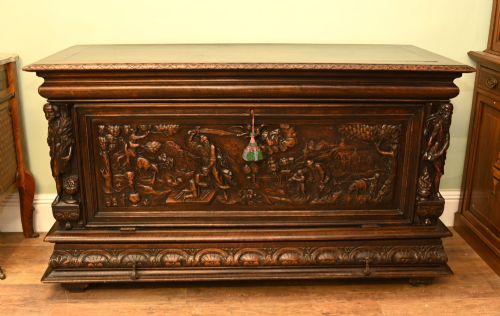
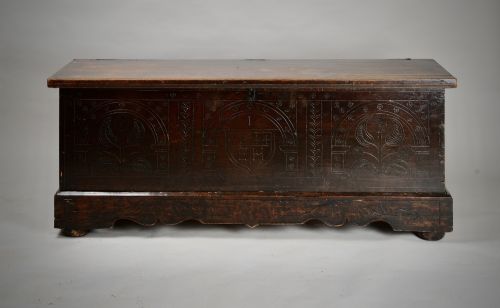
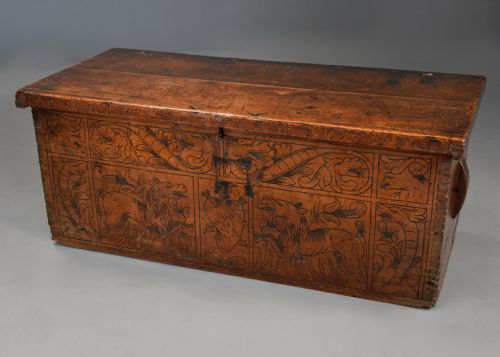
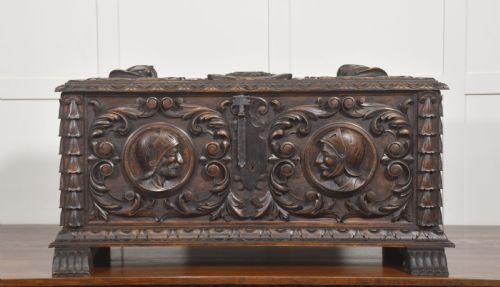
Almost always Italian, almost always walnut. "Italian" appears in 31 of 47 titles on Sellingantiques and "walnut" in 28, with the two together in 11. Carving on the front and sides is the usual finish, and the body sits on feet or a plinth.
The word is used loosely across listings. "Chest" appears in 18 titles and "coffer" in 13, so the same object turns up under any of the three headings. Four are called a marriage chest outright, which points back to the dowry use the form began with.
Dating leans early. The dealers' own dated field is weighted to the 17th century, then the 19th and 18th, with a handful entered as "Before 1700" and one as 16th century. Only eight listings carry a clean year, and those run 1680 to 1890, so century-wide labels are the norm rather than firm dates.
Away from walnut the field thins out fast. Oak accounts for three listings, cedarwood and cypress three between them, and painted, polychrome or parcel gilt surfaces about five. The Renaissance form kept being made and copied for centuries, which is why chests of much later date are still catalogued as cassoni.
Top And Bottom
Decoration beyond the carving does the most work. Gilded, parcel gilt, polychrome and hand-painted chests sit at the upper end, and there are only about five of them in the whole archive. A mid-16th-century walnut and parcel gilt example, tentatively placed in Tuscany, sits at the very top of the range.
Date and honesty about date matter next. The two pieces dated to the 16th century are the highest priced in the sample, while the lowest is a 19th-century chest titled "17th Century Style", and another listed as carved in the Renaissance manner sits low as well. Period and in-the-style-of are different claims and the range reflects it.
Then it comes down to what the carving shows and where the chest is placed. Titles that name a subject - an armorial, putti with cannon, figural medallions, a griffin, lion's paw feet - sit higher than those saying only "carved", as do the few that name a region. Large and very large examples cluster in the upper half; two titles announce a small one.
Antique Cassoni Retail Price Guide 2026
Typical UK retail prices for cassoni, calculated from the Sellingantiques database of over a million retail prices indexed since 2003. This retail price guide relies exclusively on Sellingantiques data; no external sources or auction records are used, so the figures do not describe the wider market.
Italian appears in most cassone titles on Sellingantiques, and walnut in well over half. Cedarwood, cypress and oak account for only a handful between them.
The Antique Cassoni Glossary
- Cassone
- An Italian lidded storage chest, the plural being cassoni.
- Coffer
- Used in 13 titles as a straight synonym for the chest form.
- Marriage chest
- A cassone tied to a dowry or wedding; four titles use the term.
- Parcel gilt
- Gilded in parts only, the rest of the surface left plain.
- Sarcophagus
- A body that swells or tapers like a classical tomb chest.
- Cypress and cedarwood
- Aromatic timbers used for carcases, thought to deter insects in linen storage.
Antique Cassoni: Frequently Asked Questions
Are all cassoni Italian walnut?
The great majority are. "Italian" appears in 31 of 47 titles and "walnut" in 28, so those two words describe the ordinary cassone on Sellingantiques.
Anything else is unusual. Oak turns up in three listings, and cedarwood and cypress in three more between them.
Why is the same chest called a coffer?
Dealers use cassone, chest and coffer more or less interchangeably. Chest appears in 18 of 47 titles and coffer in 13.
It means a search on one word alone will miss chests listed under the other two.
What makes a cassone a marriage chest?
The form began as the Italian Renaissance domestic chest for textiles and clothing, traditionally associated with marriage and dowry goods.
Four listings say so in the title: an 18th-century oak one, a walnut one, a hand-painted Italian one and a late 16th-century carved walnut example. The rest carry the same history without the label.
How reliable are the dates on these chests?
They are mostly century labels rather than years. Only eight of 47 listings carry a clean year, and those span 1680 to 1890.
Titles hedge where the evidence is thin: "17th Century or earlier", "Late 16th. / 17th. C.", "17th Century Style ... - 19th Century".
One entry sits in the dated field as undated while its own title reads "Dated 17thc Cassone", so a carved date and a catalogue date are separate claims.
Do painted or gilded cassoni come up often?
Rarely. Hand painted, polychrome, gilded and parcel gilt appear across about five listings in the whole archive.
All of them sit in the upper half of the range.
How many cassoni are for sale each year?
Only about five a year are listed on Sellingantiques, so the category moves slowly.
Yet 30 different dealers have handled one, close to a chest each. It's an occasional find rather than anyone's speciality.