
Antique Coffers
A coffer is a lidded storage chest, the basic box of the early modern house, used for linen, clothes, grain or valuables, and doubling as seating or a travelling container.

Antique Coffers
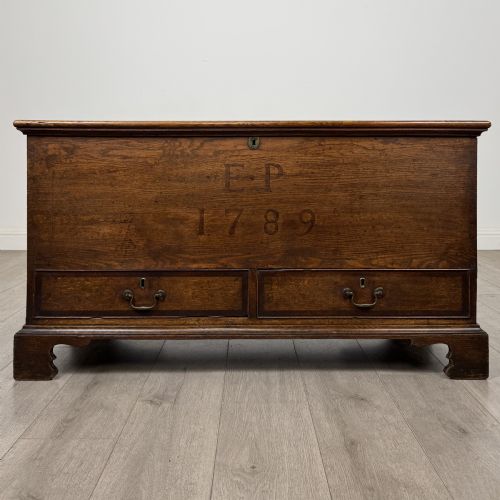
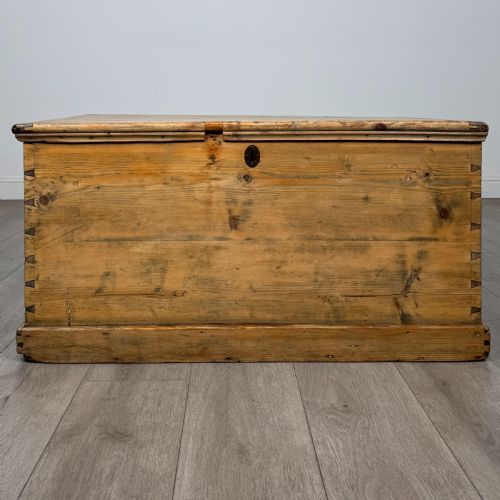
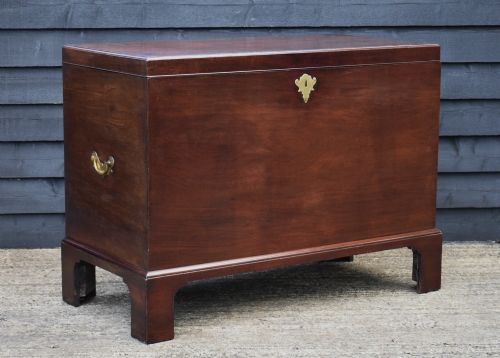
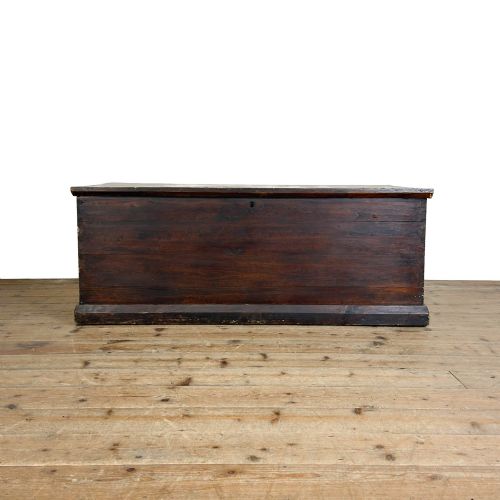
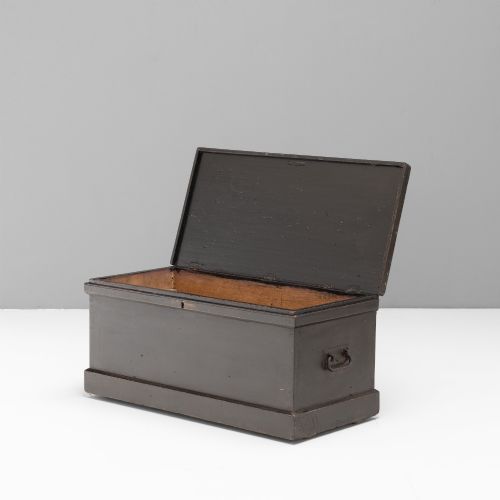
A lidded chest standing on stiles or a plinth, with a hinged plank or panelled top. The word covers two quite different builds: joined chests, framed with rails and stiles around panels, and boarded chests knocked together from five or six sawn boards. Titles on Sellingantiques use coffer, chest, blanket box and trunk almost interchangeably, so the same object often carries two or three names at once.
Oak dominates to an extraordinary degree, appearing in 1,728 of 2,549 titles, with elm, pine, walnut and camphor sharing what's left. The 17th century is the largest period bucket at 655 listings, ahead of the 18th at 563, which is unusual for furniture. So the piece you're most likely to meet is a carved or panelled English oak coffer of the 17th or 18th century, and a modest one: small outnumbers large in titles by 296 to 165.
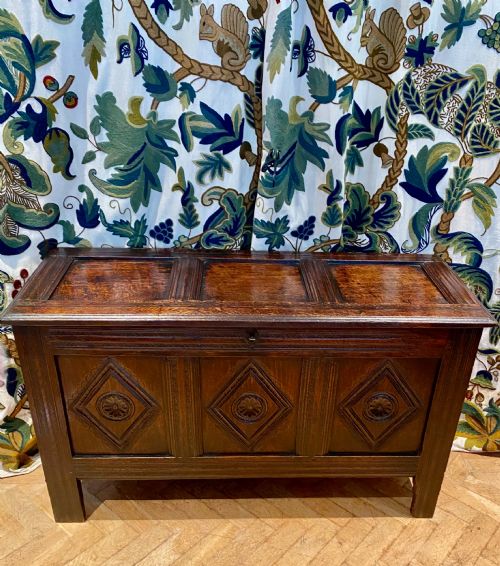
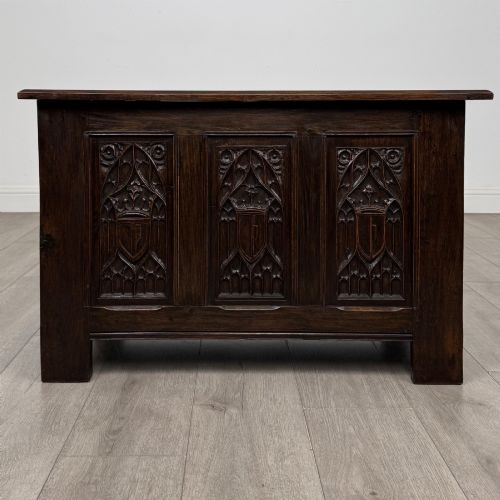
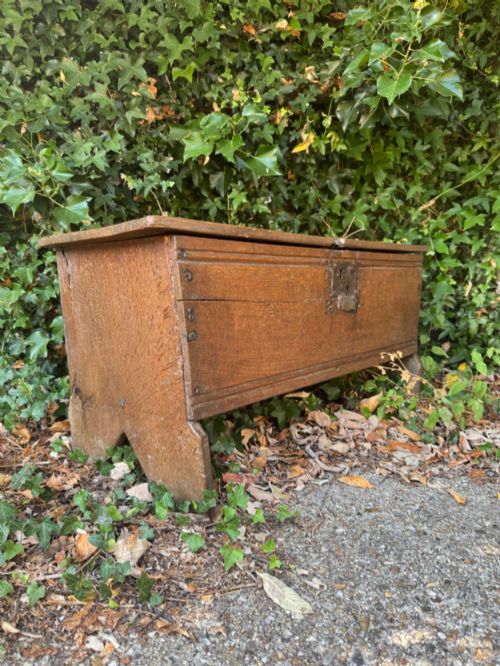
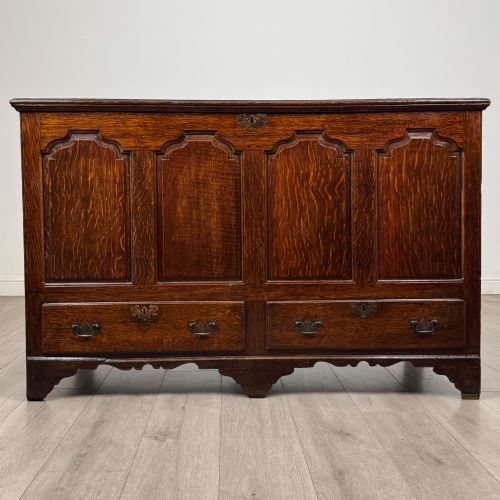
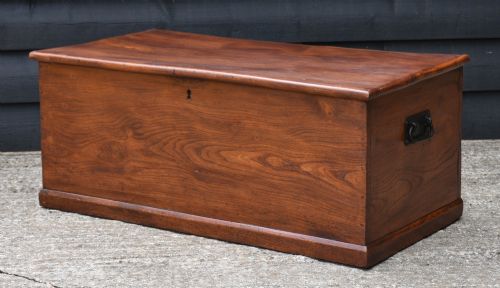
Around the oak core sit several recognised groups. Panelled fronts of two, three or four panels form the largest, with geometric mouldings, arcading and linenfold among them. Boarded or six plank coffers make up a smaller run, oak and elm both, including the long narrow type titled sword chest. Welsh coffer bach and mule chests, the latter with drawers in the base, account for a further slice.
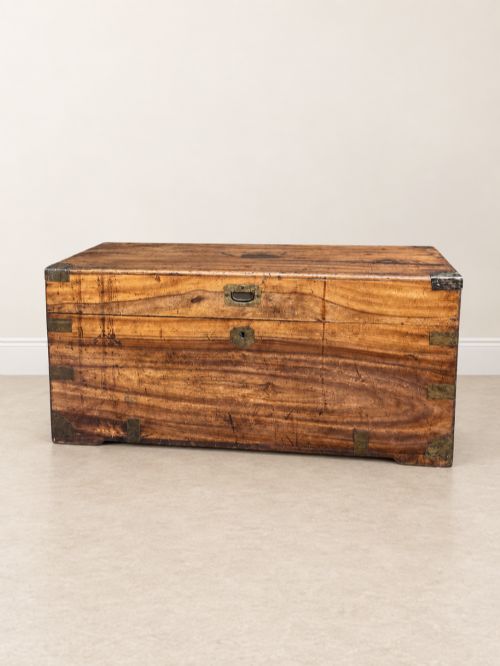
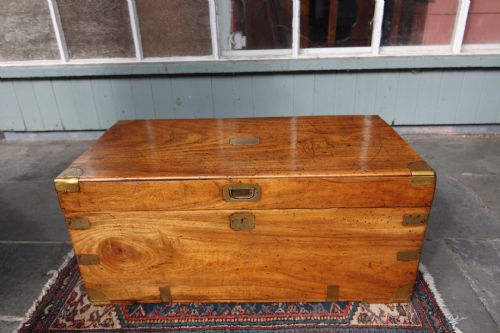
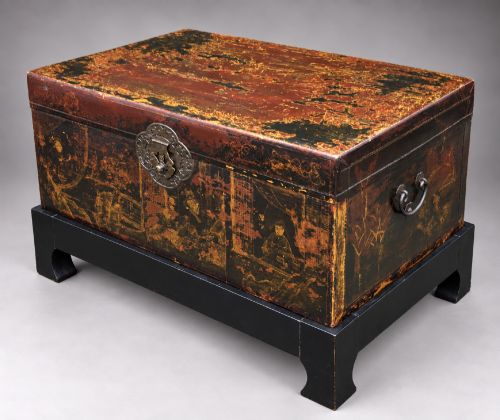
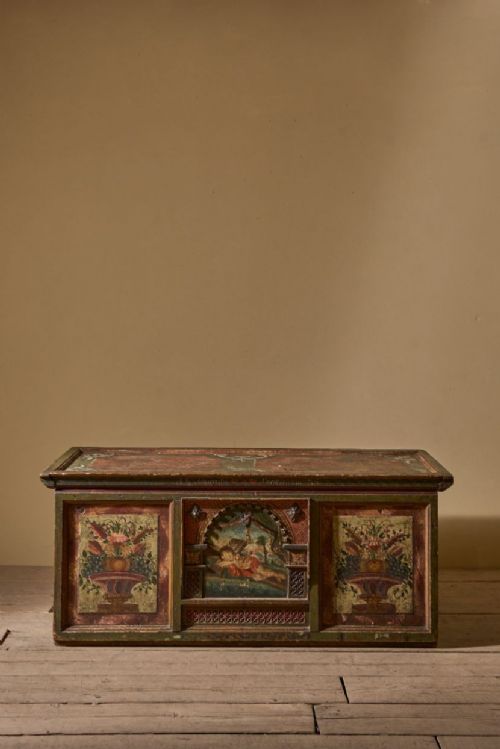
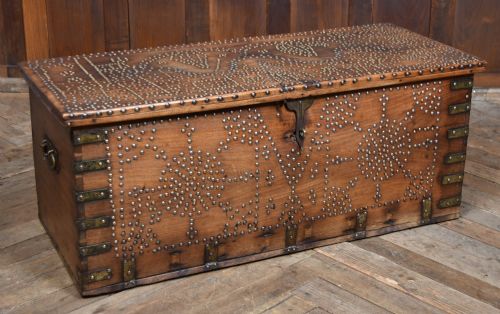
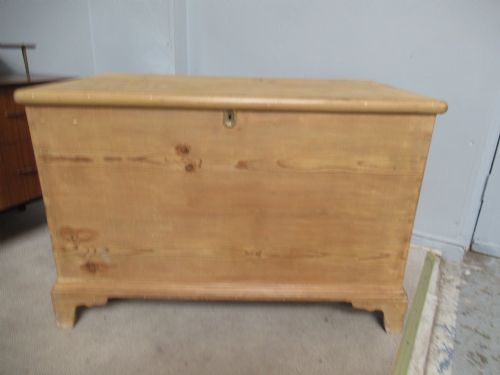
Then the outliers. Travelling, campaign and steamer trunks in leather, hide, camphor wood or brass-bound form are prominent in current stock. Painted pine boxes and Continental marriage chests turn up throughout, Scandinavian, Hungarian, Austrian and Italian among them. Once in a while something arrives from well outside the tradition, a Korean bandaji or a Spanish colonial carved coffer.

Where The Range Splits
Construction sets the first line. Joined and panelled work, framed with mortice-and-tenon around panels, sits above plain boarded building, and multi-panel and geometric moulded fronts cluster through the middle and upper bands. Plain plank and six plank chests run across the lower and middle. Timber echoes it: oak and walnut over pine, with painted pine boxes at the bottom and walnut cassoni near the top.
Carving is the other big lever. Carved appears in 420 titles and carved oak in 275, and the decoration ranges from scratch and chip work up through lunette, arcaded and linenfold fronts, with inlay in a smaller run. A carved date worked into the front turns up repeatedly, 1643, 1676, 1686, 1702, 1744 among them.
Date and place do the rest. The far top of the range is held by 16th and early 17th-century pieces, linenfold and iron-bound coffers and Italian gilded cassoni; 1920s and 1930s coffers made in an earlier style sit low. Regional naming is a habit here, Yorkshire, Westmorland, Lakeland, West Country, Dorset, Lancashire, Cornwall, Leeds and the Gower, and a named region mostly appears in the upper half.
Antique Coffers Retail Price Guide 2026
Typical UK retail prices for coffers, calculated from the Sellingantiques database of over a million retail prices indexed since 2003. This retail price guide relies exclusively on Sellingantiques data; no external sources or auction records are used, so the figures do not describe the wider market.
Coffers have been listed on Sellingantiques since 2007, with more than 1,700 through the archive since then.
The Antique Coffers Glossary
- Joined
- Framed construction, with mortice-and-tenon rails and stiles enclosing panels. The alternative to boarded, and often spelled joyned in titles.
- Panelled
- Front divided into framed panels. Two, three and four panel fronts all appear, along with geometric moulded and arcaded versions.
- Six plank
- The commonest boarded construction: front, back, two ends, base and lid, nailed or pegged. Said outright in 83 titles.
- Mule chest
- A coffer with one or more drawers in the base. Named in 116 titles, often as oak mule chest.
- Coffer bach
- Welsh term for a small chest, often on turned feet. The spelling coffor bach also appears; 87 titles use bach.
- Sword chest
- A long narrow boarded coffer, usually six plank in oak or elm. A named sub-type that appears nowhere in the general furniture vocabulary.
Antique Coffers: Frequently Asked Questions
What's the difference between a coffer and a blanket box?
Nothing, as the titles use them. Blanket box is the domestic-use name for the same lidded chest and appears in 151 titles.
Coffer, chest and trunk are swapped in and out the same way. A single listing will often carry two of the four names together.
Which period do most coffers come from?
The 17th century is the single largest bucket at 655 listings, ahead of the 18th at 563 and well ahead of the 19th at 266. For furniture that's unusual, the oldest band being the biggest.
The dated field spans 1580 to 1940, but only 481 of 2,549 listings carry a clean year. The rest are given as a century or a reign, and Georgian, 1700s and Before 1700 overlap with the century labels.
Are coffers always oak?
Oak appears in 1,728 of 2,549 titles, so it's the default. Elm, pine, walnut and camphor wood divide most of the remainder.
Elm turns up in boarded chests alongside oak. Pine tends to be painted, and camphor belongs mainly to the travelling and steamer trunk group.
What is a Welsh coffer bach?
A small Welsh chest, often on turned feet. The word bach is in 87 titles, and coffor bach is a common alternative spelling.
Welsh attributions run through the category more widely, with welsh in 118 titles. Some coffer bach listings frankly declare themselves later work made in an 18th-century style.
Do trunks count in this category?
Yes. Travelling, campaign and steamer trunks make up about a tenth of titles and are more prominent in what's currently listed than in what has sold.
They come leather, hide, iron and brass-bound, some camphor wood, some zinc-lined or fitted inside.
How often do coffers come up for sale?
Around 271 are listed a year on Sellingantiques, and 281 different dealers have offered one. Almost every furniture dealer touches this category at some point.
Most of that flow is English oak. Now and then something lands from far outside it, a Swat Valley dowry chest or a Moroccan leather-bound example, each appearing just once.