



Antique Dome Top Trunks
A dome top trunk is a lidded chest with a curved rather than flat lid, made for travel and shipboard storage, where the dome shed water and stopped other baggage being stacked on top.
Antique Dome Top Trunks
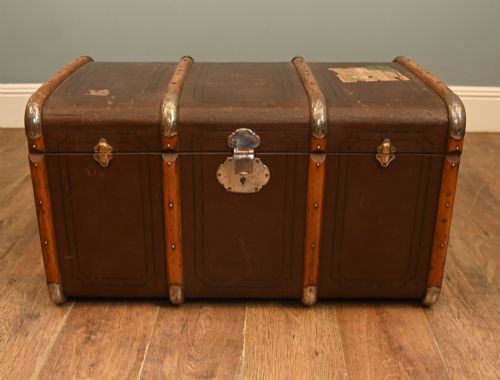
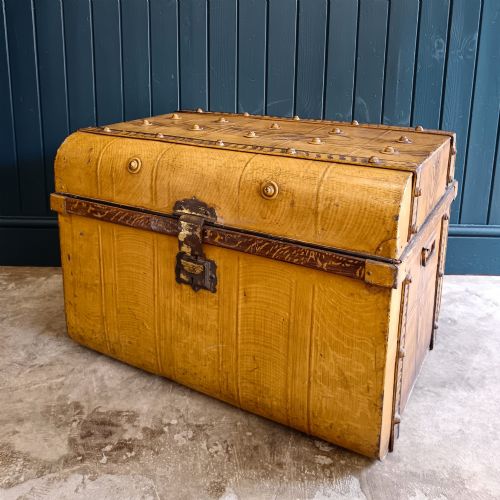
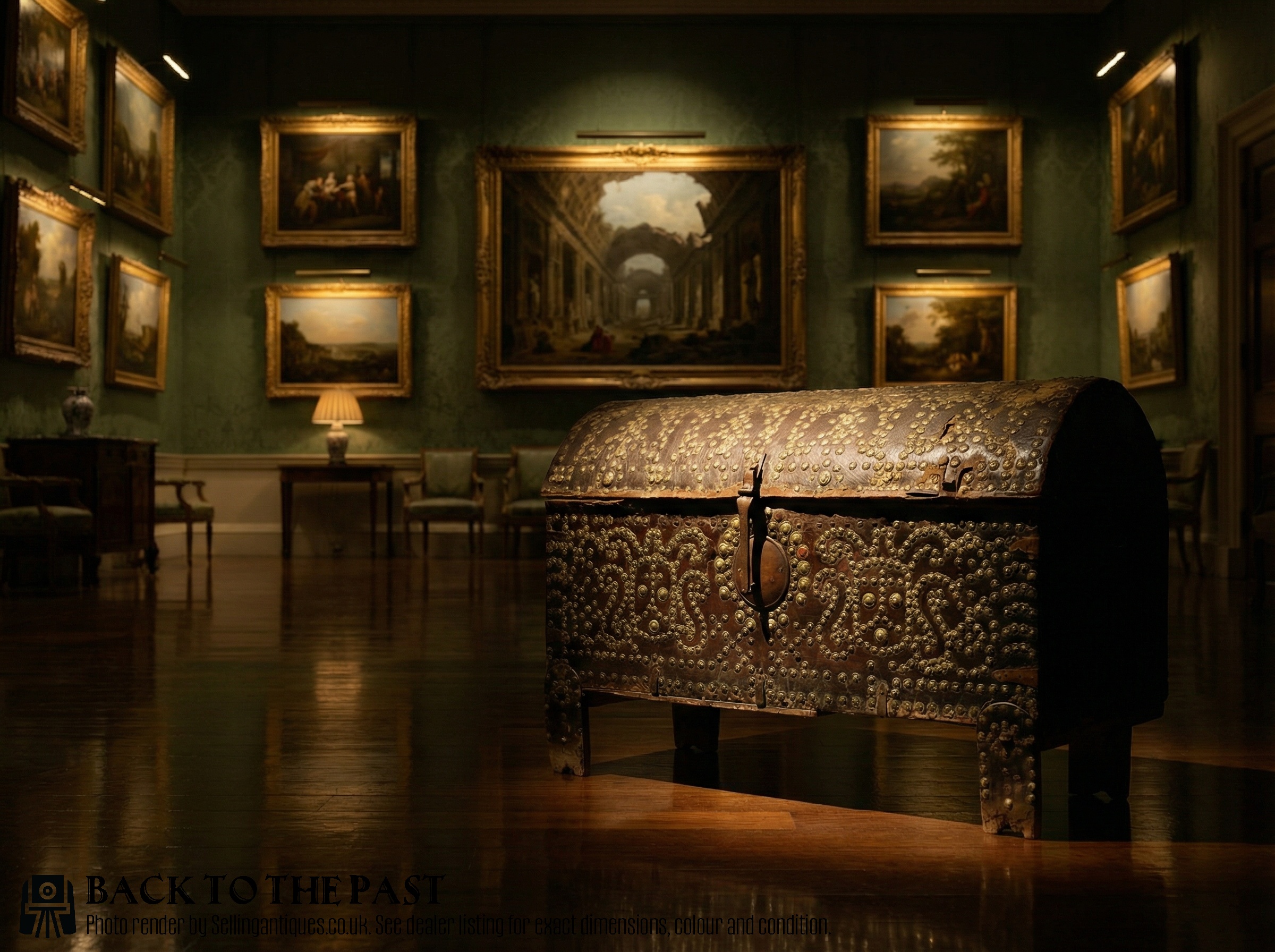
The carcase is wood, most often pine and then oak, or clad in leather, canvas, tin or steel. Iron or brass strapping and studwork strengthen the corners and edges. Sizes run from small boxes up to large floor-standing trunks, with a couple raised on a separate stand.
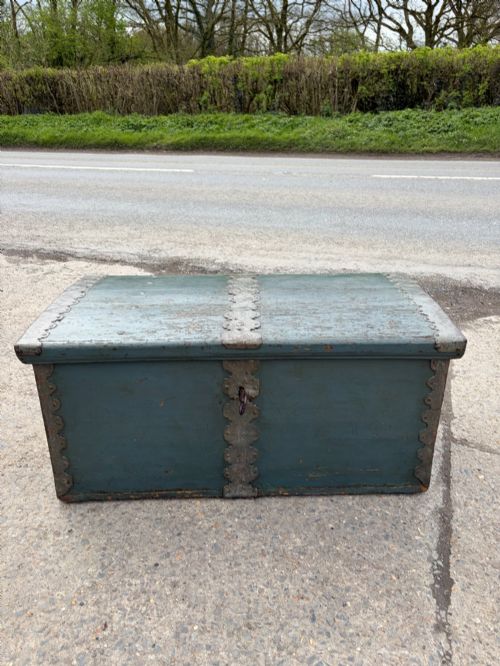
The version you'll meet most often is a pine trunk catalogued to the 19th century. Pine appears in a third of titles on Sellingantiques, and phrases like "Victorian Pine Dome Top Trunk" and "Antique Pine Dome Top Trunk" repeat almost word for word across several dealers. These sit in the lower half of the range.
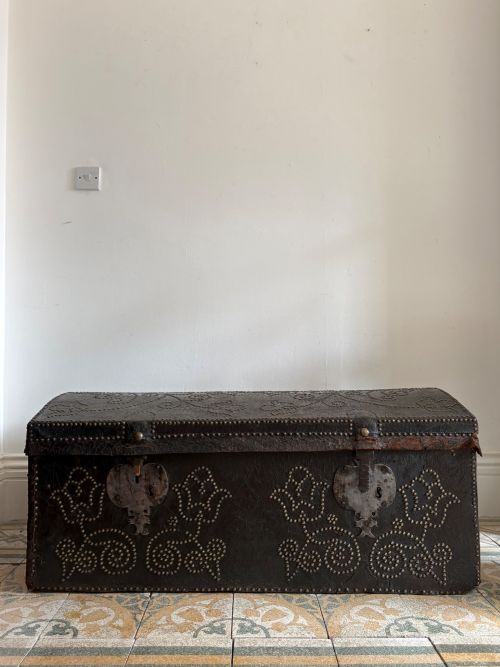
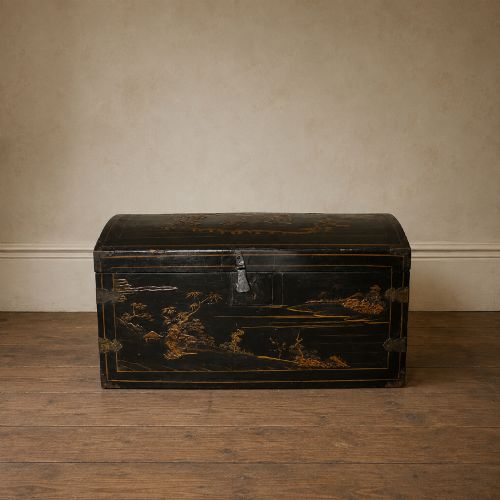
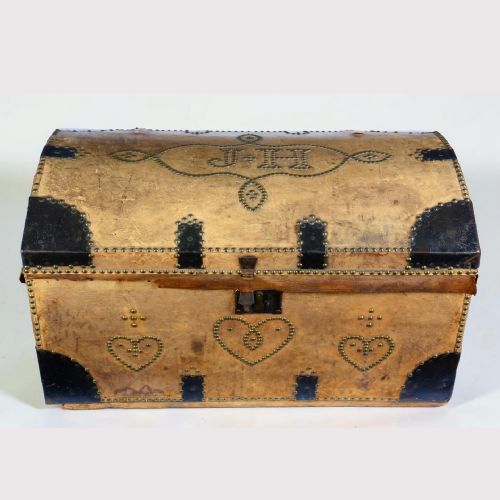
Around that norm sit four other groups: leather-covered and brass-studded travelling trunks, painted coffers and chests that are largely Scandinavian, steamer and cabin and carriage trunks including metal-clad and tin examples, and oak coffers with domed lids. Named origins run wide, with Dutch, Spanish, French, Danish, Swedish, American, Chinese Export and Indian pieces all turning up.
Dating tends to be broad. The dated field returns 19th Century forty times and Victorian seventeen more, against only twenty listings with a clean year. The field spans 1700 to 1920, with eighteenth-century pieces a real but small presence and one sample catalogued to the 17th century. Where a title says "Circa 1890" and the dated field says only "19th Century", the title is the more specific of the two.
Where The Range Widens
Paint decides the top. Nearly everything at the head of the range is a hand-painted Swedish or Continental coffer or chest, and a title that says the decoration is original first finish rather than later work carries more weight than the form itself. Plain pine, by contrast, is where the bottom of the range lives.
Material and covering do most of the rest of the sorting. Pine runs from the lowest samples up to mid-range; oak coffers, inlaid Continental walnut and studded leather trunks sit at the head. Age works the same way, with 18th-century and Queen Anne period examples sitting well above the Victorian pine norm.
A named country lifts a piece. Swedish, Danish, Dutch, Spanish, French, Chinese Export and Indian attributions all appear above the middle of the range, while unattributed pine trunks sit below it. Size helps within a type, modestly: "large" appears in fourteen titles, and those large pine and oak trunks sit above their plainer counterparts.
Antique Dome Top Trunks Retail Price Guide 2026
Typical UK retail prices for dome top trunks, calculated from the Sellingantiques database of over a million retail prices indexed since 2003. This retail price guide relies exclusively on Sellingantiques data; no external sources or auction records are used, so the figures do not describe the wider market.
Pine is the material named most often in dome top trunk titles on Sellingantiques, appearing in about a third of them.

The Antique Dome Top Trunks Glossary
- Dome top
- The curved lid that defines the category, written as "dome top", "domed top" or "dome topped" depending on the dealer.
- Coffer
- An older word for a chest, used in nine titles and attached mainly to oak and painted Continental examples.
- Bound
- Strapped with iron or metal bands over the carcase, as in "Iron Bound Oak Dome Top Trunk" and "metal bound".
- Studded
- Secured and decorated with close-set brass or iron nailheads, usually over leather. Nine titles use the word.
- Steamer trunk
- A trunk described as made for sea passage. It appears alongside "cabin trunk" in a handful of titles, while "carriage trunk" and "coaching trunk" describe the road-travel equivalent.
- Marriage chest
- A dowry or bridal chest, in four titles, one of them a canvas example on a stand.
Antique Dome Top Trunks: Frequently Asked Questions
Why is the lid curved?
The dome shed water and stopped other baggage being stacked on top, which mattered on a coach roof or a ship's deck.
The same form served at home as a coffer or marriage chest, so a curved lid on its own doesn't tell you the piece ever travelled.
What wood are they usually made from?
Pine is the defining material, in a third of all titles on Sellingantiques. Oak comes next, in twelve.
Beyond that you get walnut, and carcases clad in leather, canvas, tin or steel. The metal-clad and tin examples cluster with the steamer and carriage trunks.
How old do these go?
The dated field spans 1700 to 1920, with one sample catalogued to the 17th century, so more than two centuries of the form show up at once.
Eighteenth-century pieces are a small presence, eight as "18th Century" and three as Georgian. Edwardian and 1920s listings mark the tail.
Are any of them signed or stamped?
No. The maker field for this category returned nothing at all, so trunks here are described by material, form and origin rather than by a firm.
What does get named is the country. Swedish, Danish, Dutch, Spanish, French, American, Chinese Export and Indian attributions all appear.
Which ones sit at the top of the range?
Painted Scandinavian work accounts for nearly everything at the top: Swedish and Danish coffers and chests, one of them woven pine.
Studded leather trunks of the early 18th century, inlaid Continental walnut and 18th-century oak coffers also sit well above the Victorian pine norm.
How often do they come up for sale?
Around eleven a year come to market on Sellingantiques, and 44 different dealers have listed one.
That spread means almost nobody specialises in them. Most dealers carry one only occasionally, alongside other country furniture.