Victorian Chests
A Victorian chest is a lidded box on a single hinged lid, made to store bedding, tools or valuables at home, or to carry them on a journey.

What Are Victorian Chests?
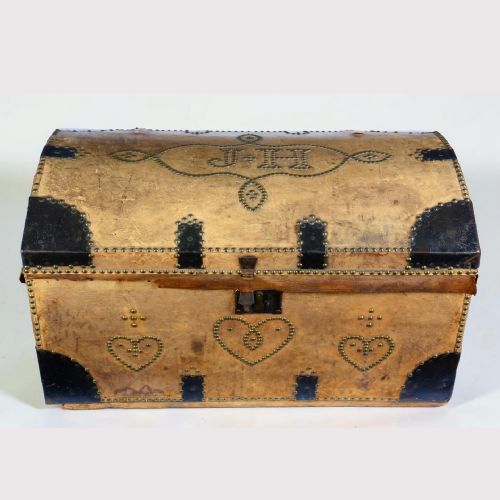
The chest is one of the oldest furniture forms, and in the nineteenth century it split two ways: fixed domestic storage such as blanket boxes, mule chests and ottomans, and portable luggage for travel, military service and emigration. Both ends of that split sit under this heading.
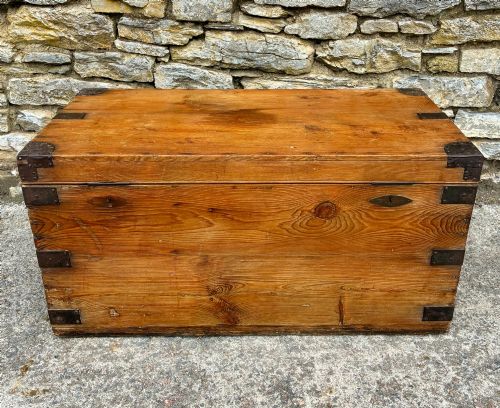
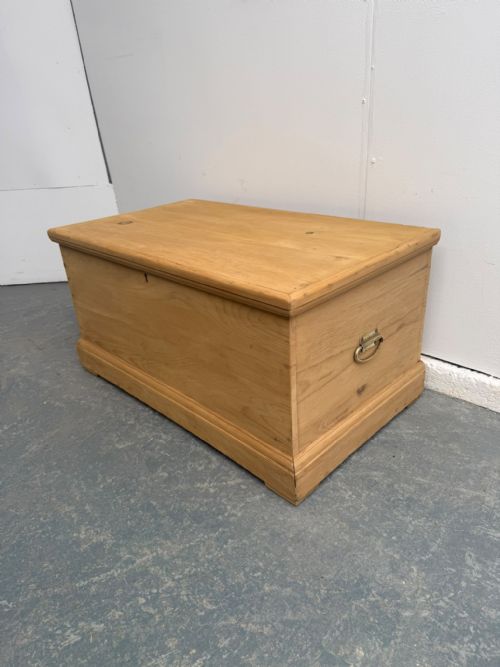
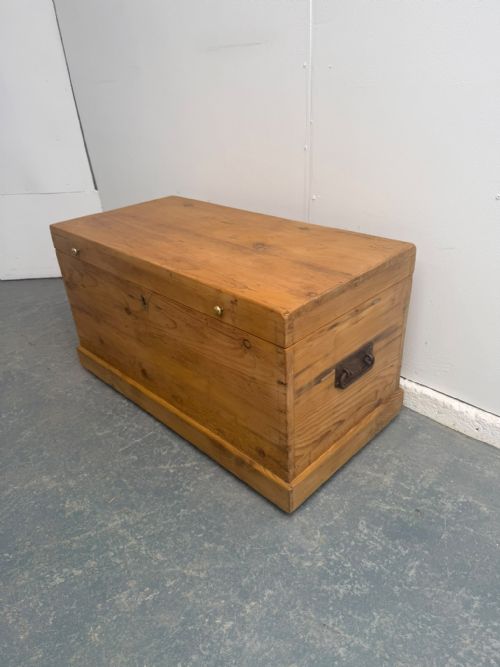
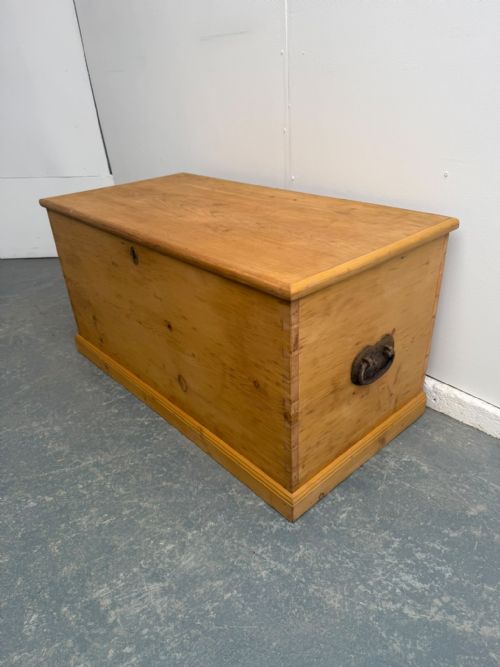
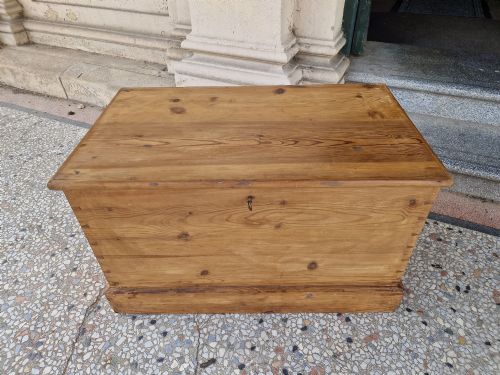
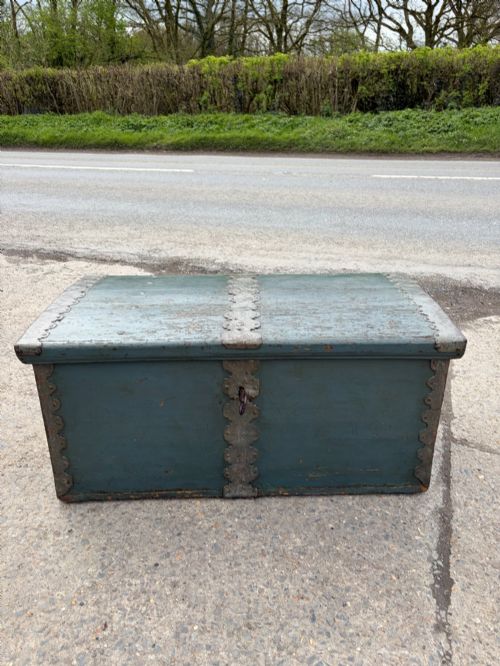
Pine dominates. It appears in around a third of titles, and the piece you are most likely to meet is a pine blanket box or trunk, flat-topped more often than dome-topped, sometimes stripped back and sometimes still carrying painted or grained decoration. Trunk appears in about a third of titles too, box in a quarter, blanket box in one in seven.
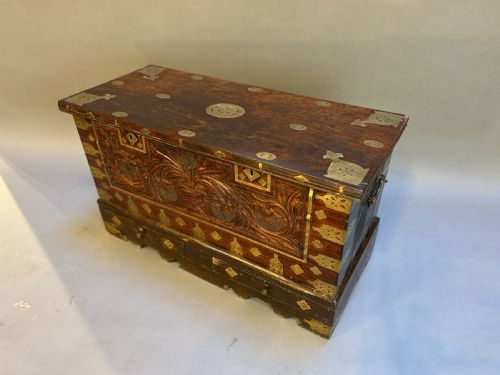
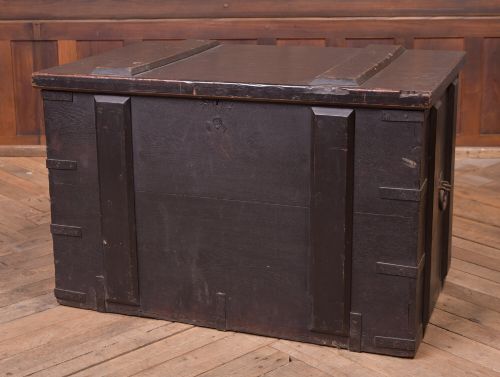
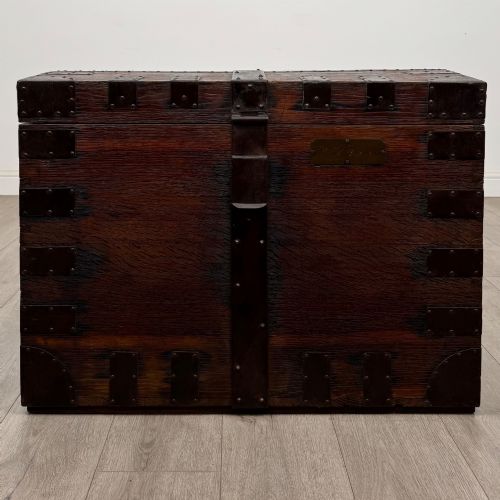
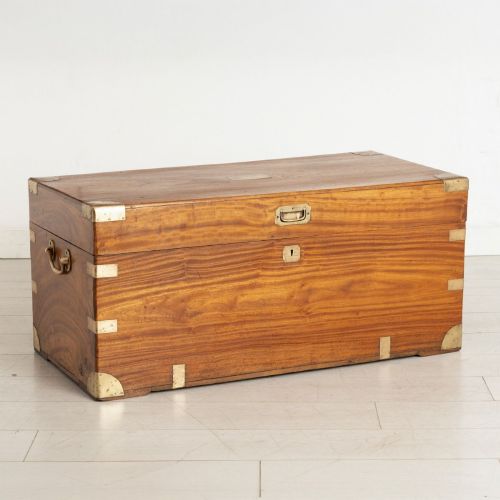
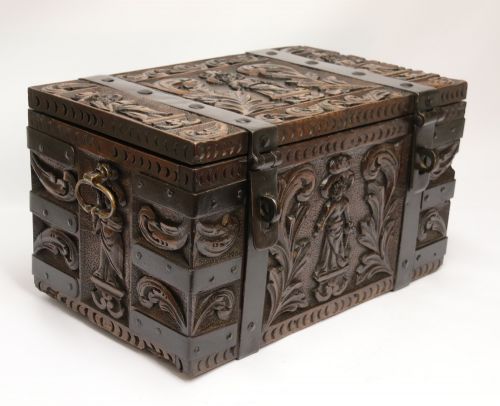
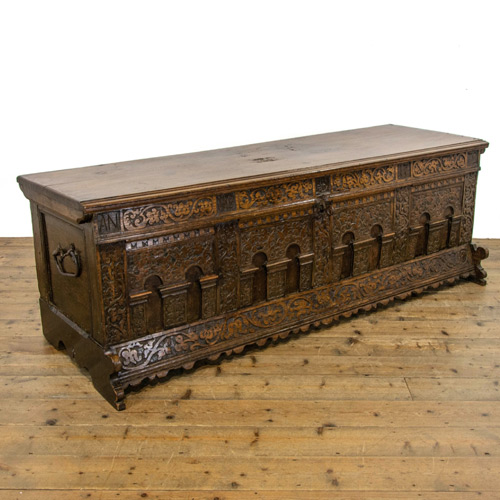
Around the pine sit the other branches. Metal-bound travelling, carriage and steamer trunks in leather and timber. Upholstered box ottomans and box stools on mahogany, walnut, rosewood or birch frames. Campaign and colonial trunks in camphorwood and teak, some Indian, Ceylonese or Anglo-Indian. Then tradesmen's chests for carpenters, joiners, shipwrights and cobblers, and iron-bound oak silver chests and strong boxes.
Dating is usually a label rather than a year. Victorian and 19th Century between them cover the majority of listings, and only 232 of 822 give a clean year at all, running 1800 to 1930. Where decades are named they cluster in the 1850s to 1880s. Scale runs from tabletop and miniature boxes up to pieces titled enormous or monumentally large, and roughly one title in seven offers a second life as a coffee table, TV stand or window seat.

Where The Range Splits
Timber does most of the work. Plain and stripped pine sits at the bottom of the range; camphorwood, teak, mahogany, walnut and rosewood recur among the highest-priced listings. Metal binding follows the same line, with brass-bound camphor and iron-bound oak silver chests sitting well up.
Surface and fitting separate two otherwise similar pine boxes. Original paint, scumble and combed grained finishes lift a plain stripped example, and interiors matter: candle boxes, secret or hidden drawers, lift-out slides and zinc- or tin-lined wells stand above an empty well.
A named purpose or owner in the title pushes upward every time it appears. Boer War regimental, Highland Light Infantry, Royal Navy, sea captain's and shipwright's chests, and boxes with a named house or owner, all sit at the upper end. Scale works the same way, with large and country-house pieces above small and tabletop ones.
Retail Price Guide 2026
Typical UK retail prices for victorian chests, calculated from the Sellingantiques database of over a million retail prices indexed since 2003. This retail price guide relies exclusively on Sellingantiques data; no external sources or auction records are used, so the figures do not describe the wider market.
Victorian is the period label used most on Sellingantiques for these chests, with 19th Century next and the 1880s third.

The Victorian Chests Glossary
- Blanket box
- Domestic lidded chest for bedding and linen, and the commonest single description in this category.
- Trunk
- A chest made for travel, usually with handles and often strapped with metal bands at the corners and edges.
- Ottoman
- An upholstered box with a padded hinged lid, so it works as seat and storage at once.
- Dome top
- A curved rather than flat lid, common on travelling and steamer trunks.
- Mule chest
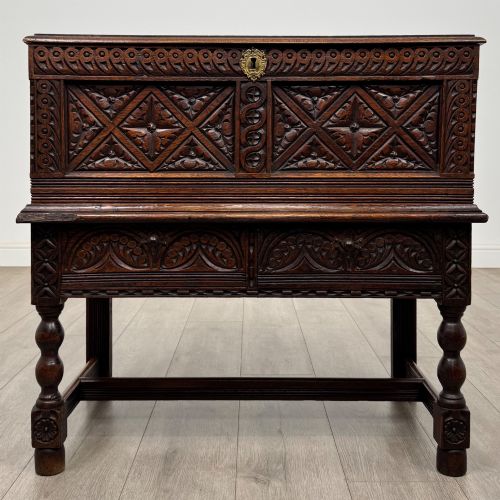
- A chest with one or more drawers built into the base below the lidded well.
- Kist
- Scottish and northern word for a chest, which turns up in several titles.
Frequently Asked Questions
What wood are Victorian chests usually made from?
Pine leads by a wide margin, appearing in around a third of titles on Sellingantiques, both stripped and painted.
Beyond that, camphorwood and teak carry the campaign and colonial trunks, oak and elm the panelled coffers and iron-bound silver chests, and mahogany, walnut, rosewood and birch the frames of upholstered ottomans.
How are blanket boxes and trunks different?
A blanket box is domestic and stays put: a lidded chest for bedding and linen, often with a small candle box compartment at one end of the well.
A trunk was made to move. It usually has handles, frequently metal binding at the corners and edges, and a dome top on a good number of the travelling and steamer examples.
Why do so many listings just say Victorian?
Because the dating field is normally filled with a period word. Victorian and 19th Century labels cover the majority of the archive.
Only 232 of 822 listings give a year, and those run 1800 to 1930, so the shelf stretches either side of the reign. Where decades appear they gather in the 1850s to 1880s.
Are Victorian chests used as coffee tables?
Often. Roughly one title in seven offers the piece a second use, and that is a settled part of how the category is sold.
Blanket boxes appear as coffee tables, TV stands, window seats and hall seats, the flat-topped pine ones most of all.
What is a campaign trunk?
A portable chest made for military or colonial service, most often camphorwood or teak with brass fittings and binding.
Campaign appears in about one in ten titles, and military in a similar band. Indian, Ceylonese and Anglo-Indian examples turn up throughout, and East African Zanzibar chests in teak, padouk and rosewood surface only a handful of times, near the top of the range.
Do tool chests come up in this category?
They do, though in smaller numbers than the pine and trunk groups.
Titles name carpenters', joiners', shipwrights', cobblers' and cabinet makers' chests, and the fitted interiors with lift-out slides and drawered tiers are what set them apart from an empty well.