

Antique Colonial Chests
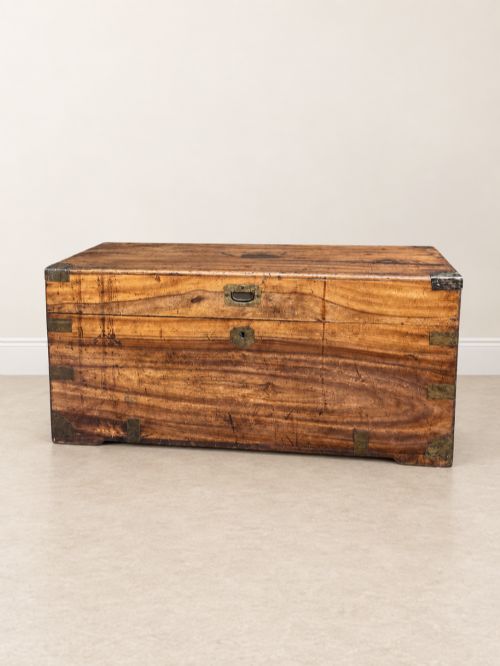
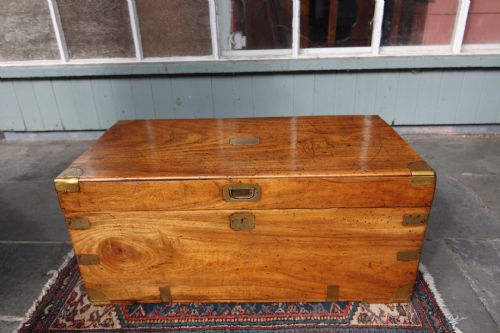
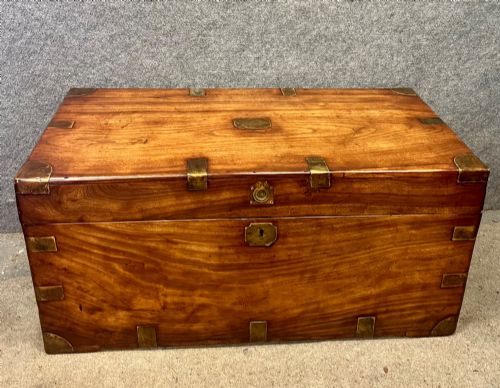
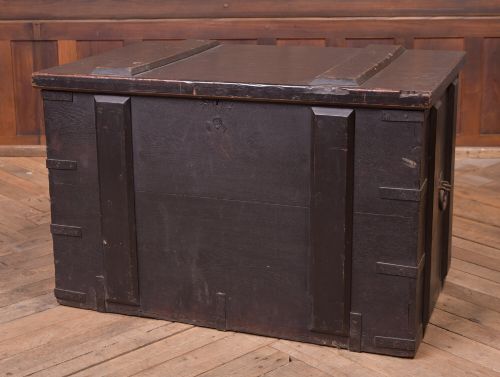
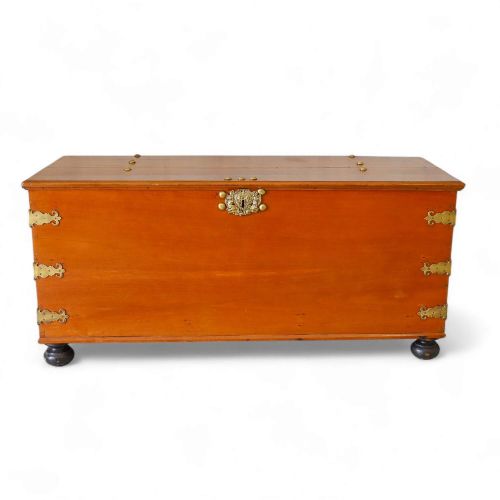
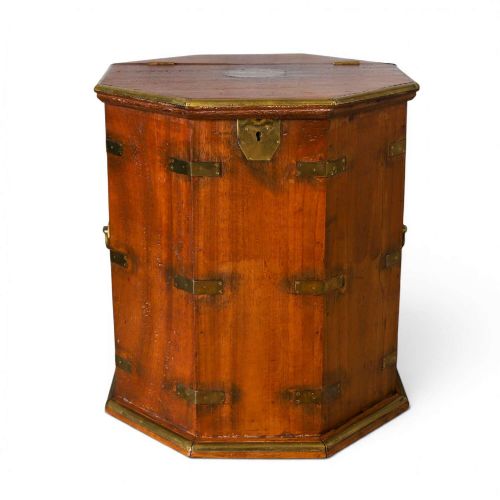
A lidded hardwood storage box made in or for the colonial trade, strapped in brass or iron and fitted with carrying handles, built so that possessions could survive a sea voyage.
Antique Colonial Chests
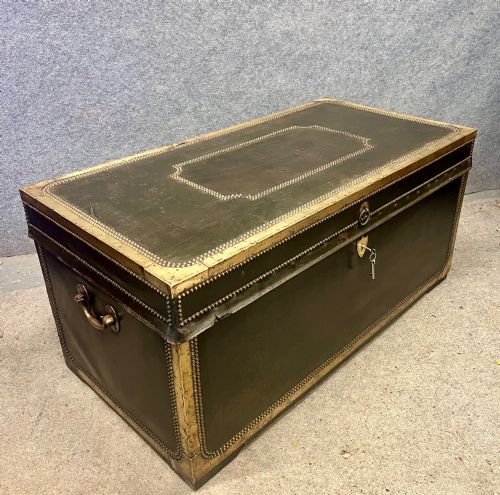
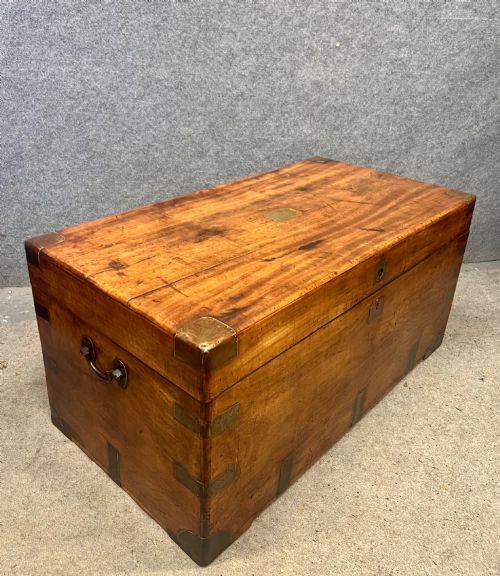
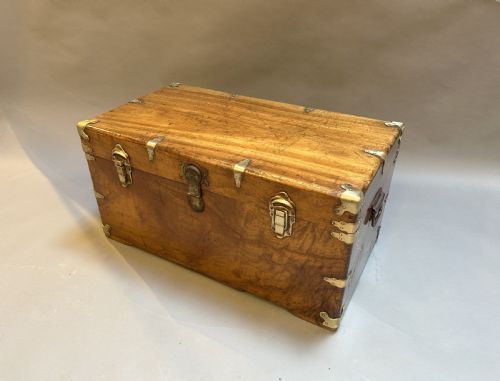
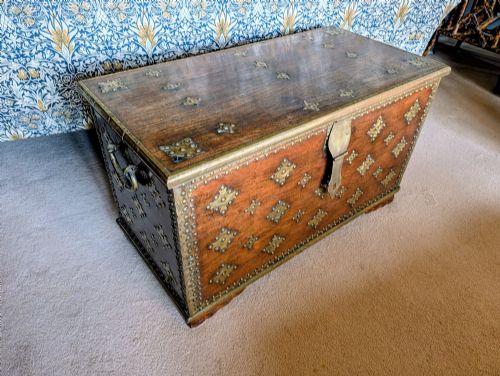
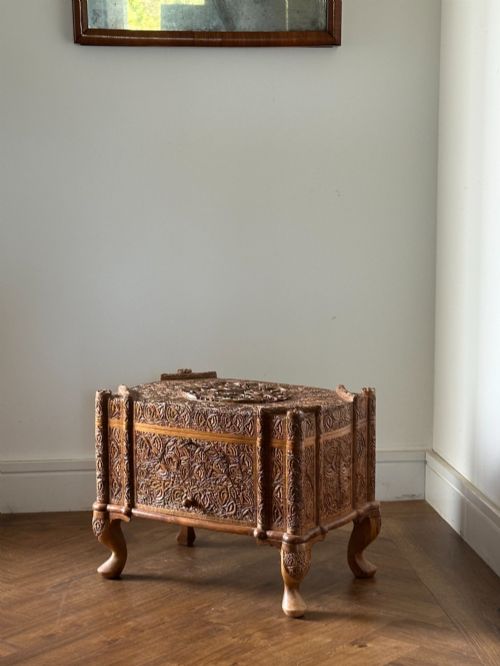
The form is a rectangular or dome-topped trunk in tropical hardwood, bound or mounted with metal, with handles at the ends and a hinged lift-up lid. Titles use "trunk" and "chest" almost interchangeably, and the same object turns up called a coffer, a box or a casket depending on its scale.
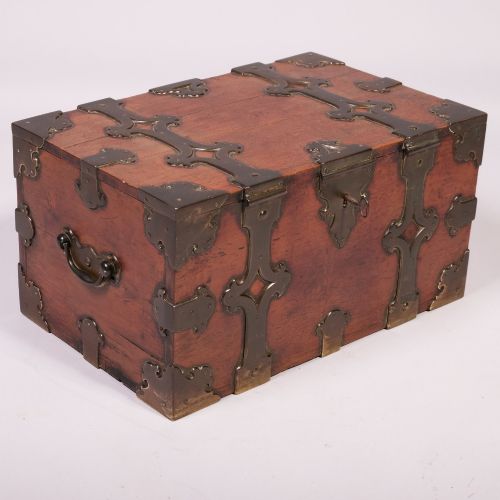
The version you'll meet most often is a 19th-century hardwood trunk with brass fittings. Teak is the timber named most often, then camphor wood, then plain "hardwood" with no species given. Indian and Anglo-Indian origin is stated in a good number of titles, and brass binding is a recurring note.
Chests of this kind were made from the 17th century onward in the tropical territories reached by European trade and empire, using local hardwoods and metal strapping so goods stood up to sea and inland transport. The campaign and officer's variants grew out of military and administrative service abroad, where furniture travelled with its owner.
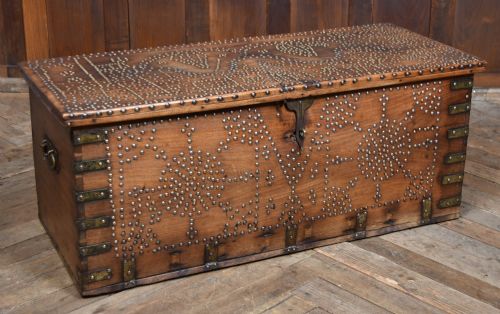
Within that, several groups recur. Brass-bound teak and hardwood trunks of Indian or Anglo-Indian origin are the largest. Camphor wood trunks and chests form a sizeable second group, close to a third of live stock on Sellingantiques. Campaign and military travelling trunks make up about a sixth, iron-bound and studded coffers including Zanzibar chests roughly a tenth, and Iberian and Dutch colonial pieces another tenth.
Where The Range Splits
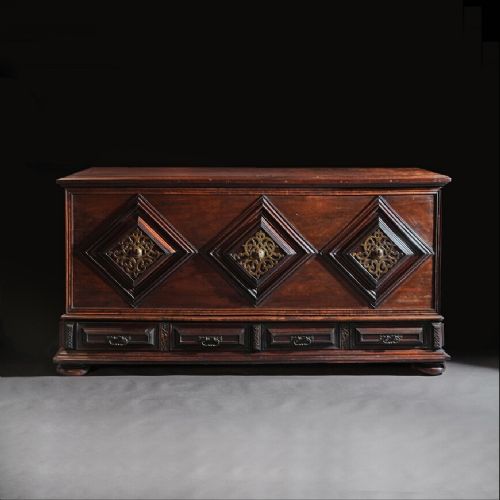
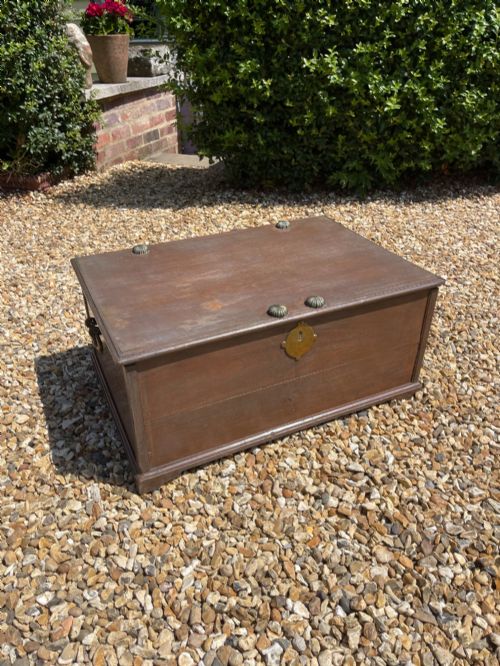
Naming does a lot of the work. The highest-priced sampled pieces specify both an origin and a timber: Portuguese colonial mahogany and brass, a Spanish colonial carved coffer, Dutch colonial palisander and ebony, Ceylonese satinwood and ebony. At the other end sit titles that say only "teak storage chest" or "colonial strong box", one of them doing duty as a blanket box.
Decoration lifts a chest above plain boards. Carving, lacquer, chinoiserie, paint, ripple mouldings and studded leather all cluster in the upper half of the sampled range. Metal counts the same way: brass-mounted and bronze-mounted examples sit high, while the lowest-priced titles more often name no metal at all.
Size and completeness are the other two levers. "Large" appears in sixteen titles and gathers in the middle and upper range, with "small" and "miniature" low down. Chests that have kept their own stand, or a fitted interior, are named as such and sit above the middle.
Antique Colonial Chests Retail Price Guide 2026
Typical UK retail prices for colonial chests, calculated from the Sellingantiques database of over a million retail prices indexed since 2003. This retail price guide relies exclusively on Sellingantiques data; no external sources or auction records are used, so the figures do not describe the wider market.
The oldest to pass through Sellingantiques are three 17th-century pieces: a Spanish leather chest, a Spanish colonial carved coffer and a Portuguese colonial mahogany and brass chest.
The Antique Colonial Chests Glossary
- Trunk
- The commonest word in this category for a portable lidded chest, used in about half of all titles, often with a dome top.
- Brass bound
- Corner straps, bands and mounts in brass laid over the timber. Named outright in a tenth of titles, with brass of some kind in far more.
- Iron bound
- The same strapping in iron, frequently with studwork across the lid and front. It goes with the heavier coffers, Zanzibar chests among them.
- Camphor wood
- Aromatic timber used for storing clothes and linen, named in a sixth of titles and a mainstay of the current stock.
- Campaign
- Made to travel with an officer or official. Turns up in a sixth of titles, covering officers' travelling trunks, gentleman's travelling chests and one cellarette.
- On stand
- A chest supplied with its own separate base rather than sitting on the floor. Four sampled titles record it.
Antique Colonial Chests: Frequently Asked Questions
What is the difference between a trunk and a chest?
In practice, very little. "Trunk" appears in roughly half the titles in this category and "chest" in the other half, and dealers apply them to the same object.
Scale shifts the word rather than the form. The smallest are called caskets or boxes, the heavier iron-bound examples coffers, and a few chests for valuables are called strong boxes.
Which woods were used for colonial chests?
Teak leads, named in about a quarter of titles, with camphor wood next and a plain "hardwood" description behind that.
Beyond those three the timbers are unusually varied for one category. Padouk, walnut, satinwood, rosewood, mahogany, elm, oak, larchwood, sandalwood, palisander and ebony all appear in the samples.
How old are colonial chests?
Dating here tends to be a century rather than a year. Forty-eight of the 109 listings say only "19th Century" and nine say only "18th Century".
Only 34 carry a clean year, spread thinly from the 1750s to the 1910s. A handful are given as Victorian or Edwardian instead, and three sampled pieces reach back to the 17th century.
Are Zanzibar chests part of this category?
Yes. Zanzibar chests are named in five titles, one of them described as African outright, which makes it the most distinctive single origin term after India.
They belong with the iron-bound and studded coffers, a group that accounts for roughly a tenth of the category.
What does a campaign chest mean in these listings?
It means the piece was made to travel with an officer or official abroad, where furniture moved with its owner. The word appears in a sixth of titles.
The group covers officers' travelling trunks, a military teak trunk, gentleman's travelling chests and miniature campaign trunks. One campaign piece in the samples is a cellarette rather than a trunk.
Are colonial chests marked with a maker's name?
Not in this category. A scan of the dealer descriptions for maker, workshop and retailer names returned nothing at all.
What listings identify instead is origin and timber: Indian, Anglo-Indian, Dutch colonial, Spanish, Portuguese, Ceylonese, and the wood the chest is built from.