


Antique Hall Chests
A lidded box made for an entrance hall, holding boots, rugs or linen, with a lid solid enough to sit on.
Antique Hall Chests
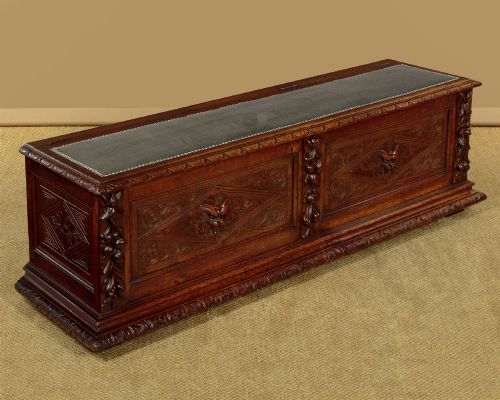
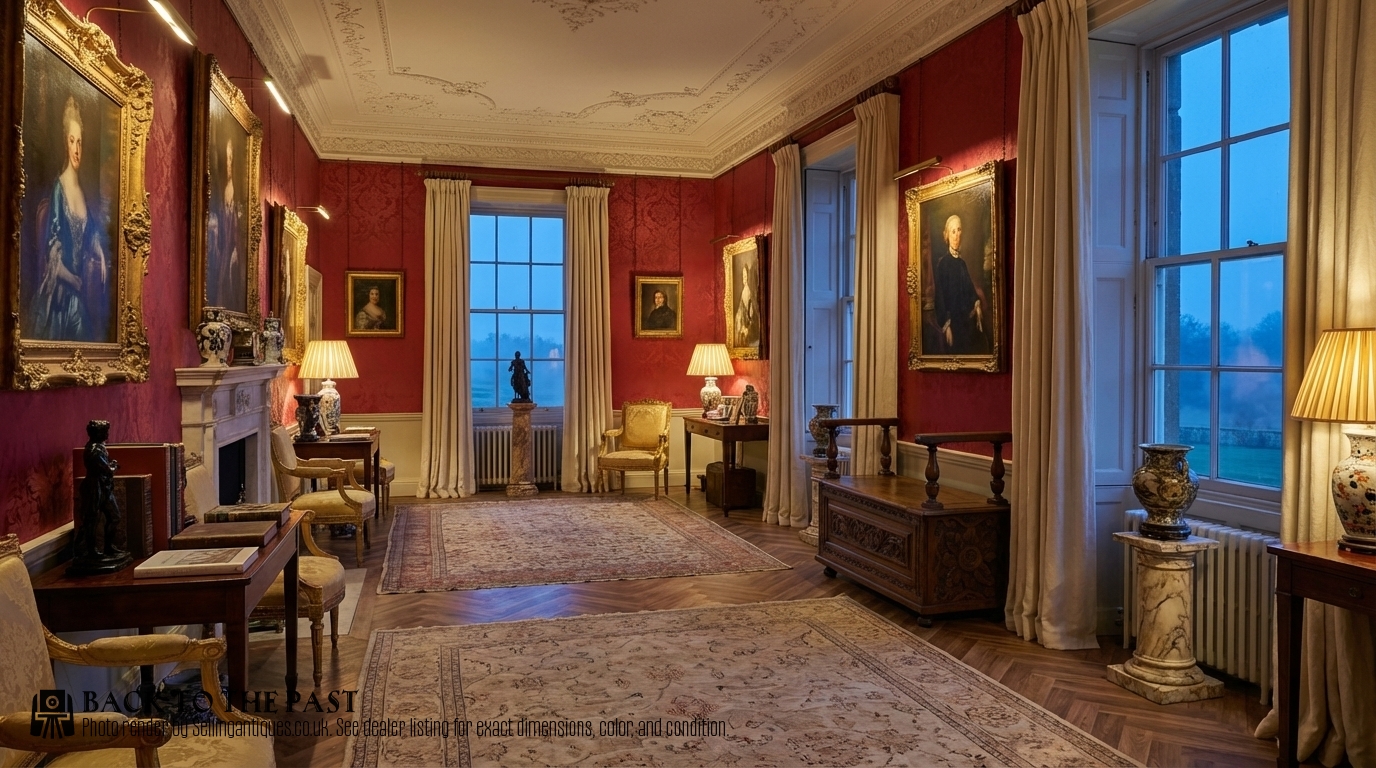
The heading covers lidded storage bought for hallway use: carved oak coffers, panelled chests, mahogany mule chests and trunks, pine boxes and upholstered ottoman seats. What ties them together is the idea of a box you can also sit on, rather than one furniture form. Several listings say so outright, offered as a hall seat as well as a chest.
The carved or panelled oak coffer is what you're most likely to meet. Oak is named in six of the fifteen sampled listings and the word coffer in five, taking in a large 18th century carved example sold as a hall seat, an early 19th century panelled coffer, a golden oak coffer with a Green Man mask, and one raised on a stand.
Around that centre sit the smaller groups. Mahogany accounts for two, described as a mule or hall chest and as a silver or hall trunk. Two are upholstered ottomans, one leather and one birch. Two are pine, including a Scottish folk-art chest and a log box doing duty as a console. Three have no lid at all: a hall chair, a carved hall seat or bench, and a 17th century oak court cupboard, the oldest thing under the heading.
Dating is loose. The dated field runs from 1800 to 1930, but only four of the fifteen listings carry a clean year. Nineteenth-century attributions dominate at six, with two given as 18th century and single entries scattered from the 17th century to the 1930s. Anything without a year is an estimate rather than a date.
Where The Range Splits
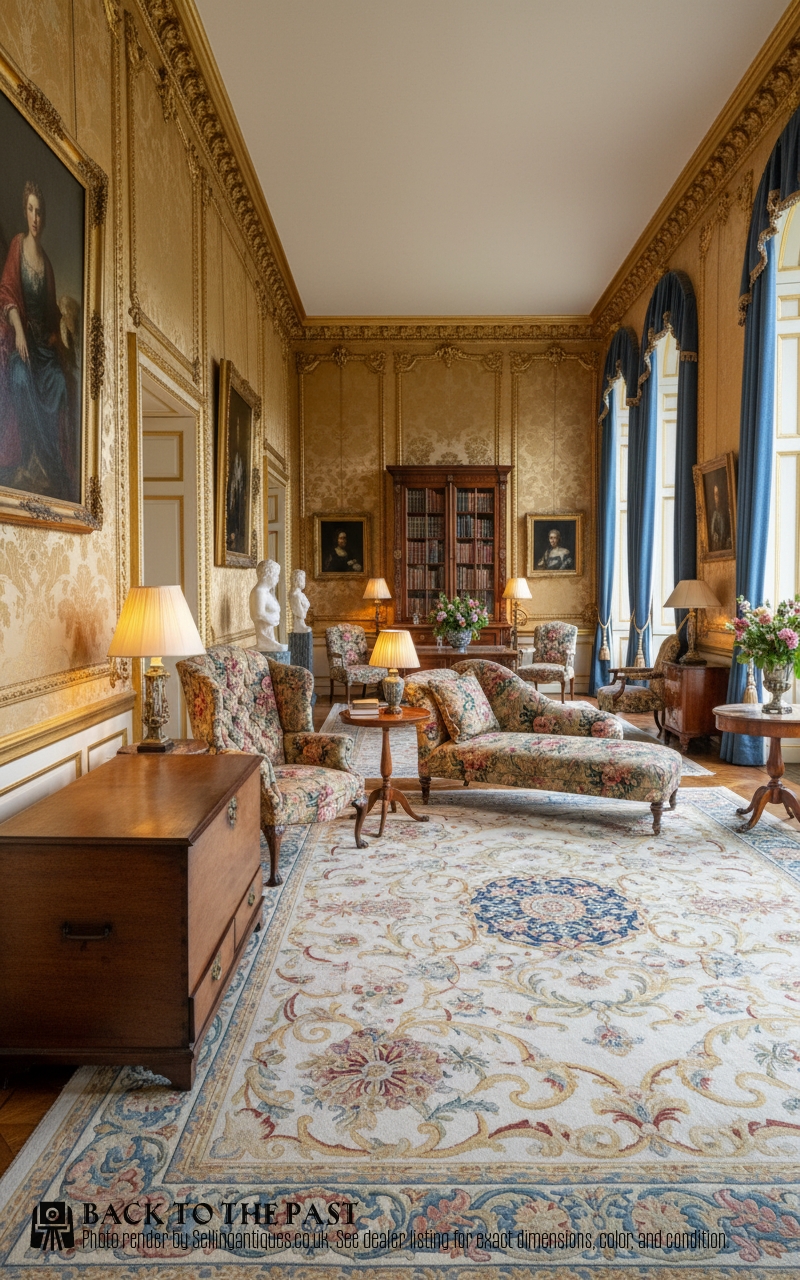
Timber and surface do most of the sorting. The two highest-priced pieces in the sample are both upholstered ottomans, one in leather and one in birch, while the two lowest are pine. Oak fills the middle, and within oak the carved pieces sit above the plain ones. Carving is named in four titles, and the Green Man coffer sits above the middle of the range.
Size and construction push in the same direction. Both listings using the word large, an 18th century carved oak coffer and an early 19th century panelled one, sit in the upper middle. The single coffer on a stand is priced with the dearer oak rather than with the plain chests, the stand lifting it out of the flat-to-the-floor group.
Names and dates behave differently. Two listings carry identification: a Scottish pine chest inscribed 1893 for William Hall, and a pair of Victorian trunks tied to a named Suffolk country house of about 1880. They're the only pieces here that identify anyone, and both sit low in the range, so documentation lifts a piece within its own group rather than across the category.
Antique Hall Chests Retail Price Guide 2026
Typical UK retail prices for hall chests, calculated from the Sellingantiques database of over a million retail prices indexed since 2003. This retail price guide relies exclusively on Sellingantiques data; no external sources or auction records are used, so the figures do not describe the wider market.
Only about two hall chests are listed on Sellingantiques each year, and fourteen dealers have listed one - close to a dealer apiece.
The Antique Hall Chests Glossary
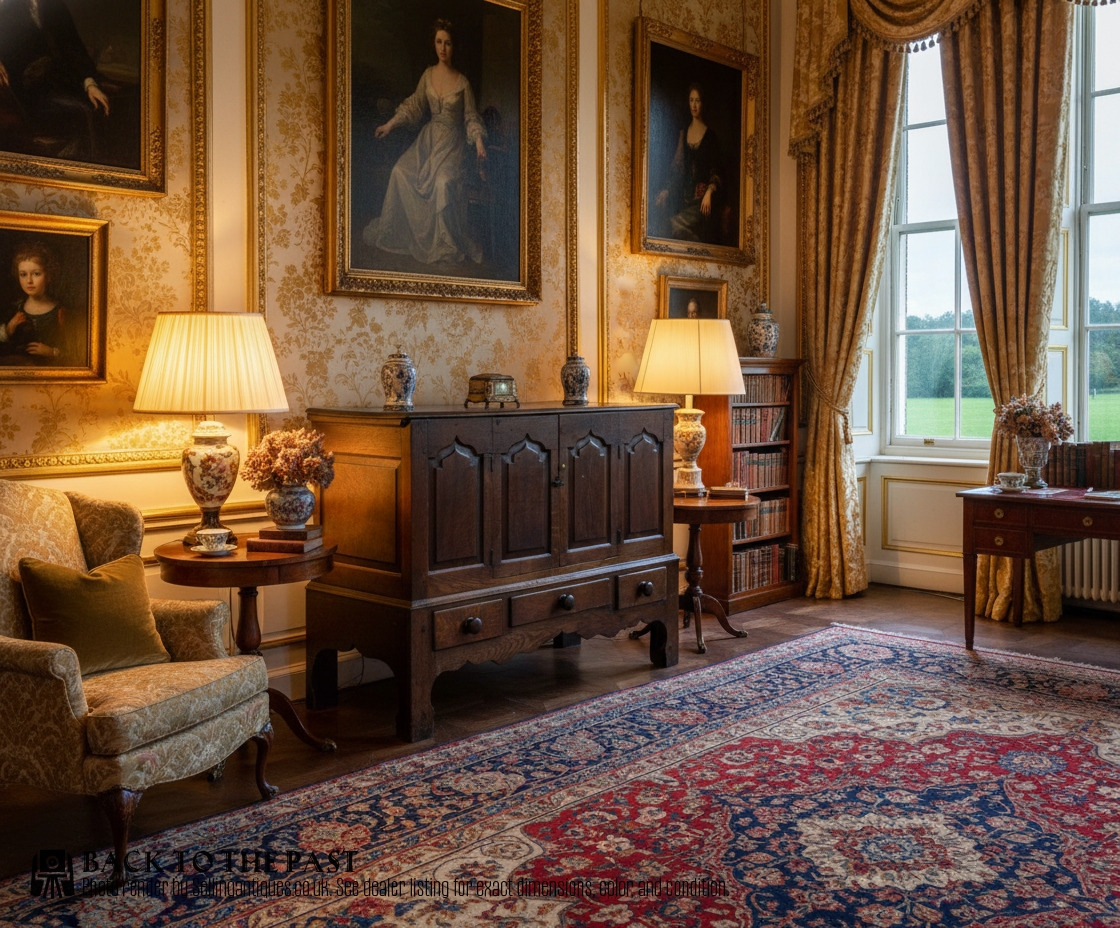
- Coffer
- A lidded chest, typically oak and often carved or panelled. It's the commonest word in these titles, used of five of the fifteen.
- Hall seat
- A chest whose lid is meant to be sat on. Used as a selling description rather than a form of its own, and often paired with coffer in the same title.
- Mule chest
- A chest with a lifting lid above one or more drawers in the base. It appears once, hedged as a mule or hall chest.
- Ottoman
- An upholstered box seat with a hinged padded lid. Two turn up, one in leather and one in birch, the latter also called a blanket box.
- Coffer on stand
- A chest raised on a separate base or frame. One example in the sample.
- Green Man
- A carved foliate mask. It appears on a single golden oak coffer and nowhere else in the archive.
Antique Hall Chests: Frequently Asked Questions
How many hall chests come up for sale?
Only about two a year are listed on Sellingantiques, which makes this one of the smaller headings on the site.
Across the whole archive fourteen different dealers have handled one. That's close to a chest apiece, so no dealer on the site specialises in them.
What wood are they usually made from?
Oak is the default. It's named in six of the fifteen sampled listings, ahead of mahogany, pine, birch and leather, which appear once or twice each.
The oak pieces are the carved and panelled coffers. Mahogany turns up on the mule chest and the trunk, pine on the folk-art chest and the log box.
Is a coffer the same as a hall chest?
A coffer is a lidded chest, usually oak, often carved or panelled. It's the specific form; hall chest is the shelf it sits on.
In these titles the two words often run together, as in carved oak hall coffer or large 18th century carved oak coffer, hall seat.
Why do some listings say mule or hall chest?
Because the hall label is applied loosely. Two titles hedge the form itself, one as mule or hall chest and one as silver or hall trunk.
The hall part describes where the piece was used or where it would suit, not how it was built.
Do these chests carry maker's names?
No. Nothing under this heading is stamped or labelled by a maker, and none is attributed to a workshop.
Two listings do carry names of a different sort: a Scottish pine chest inscribed 1893 for William Hall, and a pair of Victorian trunks associated with a named Suffolk country house of around 1880.
What periods do they date from?
The dated field runs from 1800 to 1930. Nineteenth-century attributions dominate at six of fifteen, with two given as 18th century.
Single entries cover the 17th century, Georgian, Victorian and the 1930s. Only four listings carry a clean year, so most dates here are brackets.