

Antique Travelling Chests
A lidded container built to be roped, stacked and hauled by coach, ship or rail, holding clothes and possessions in transit rather than standing as furniture at home.
Antique Travelling Chests
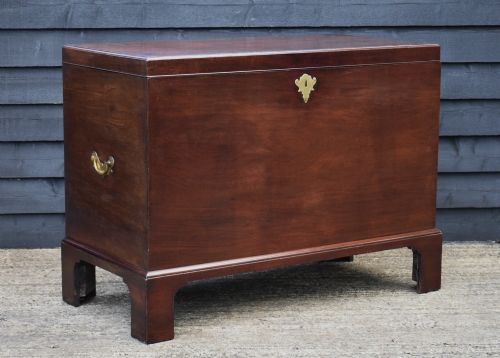
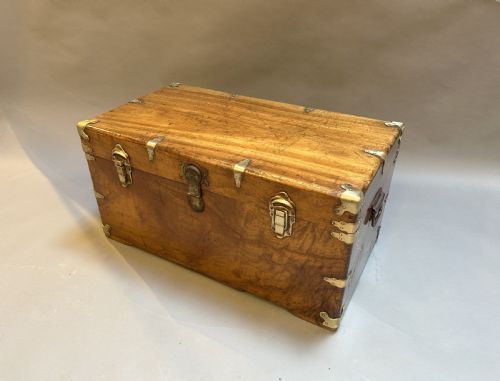
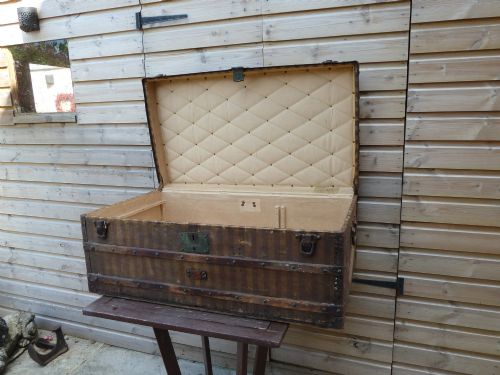
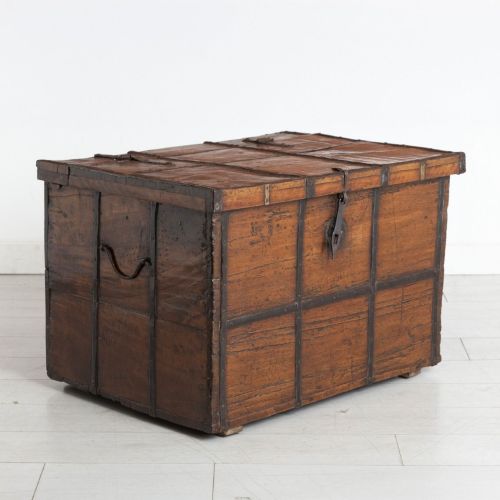
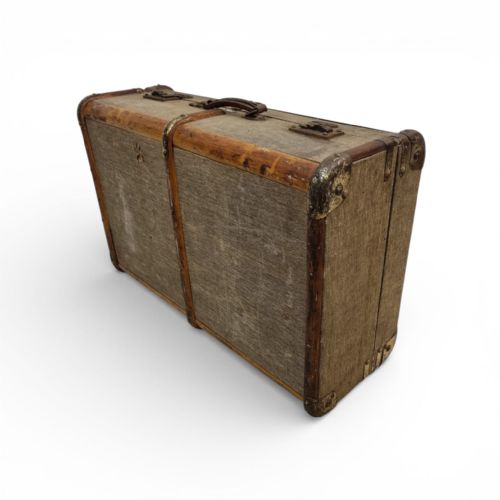
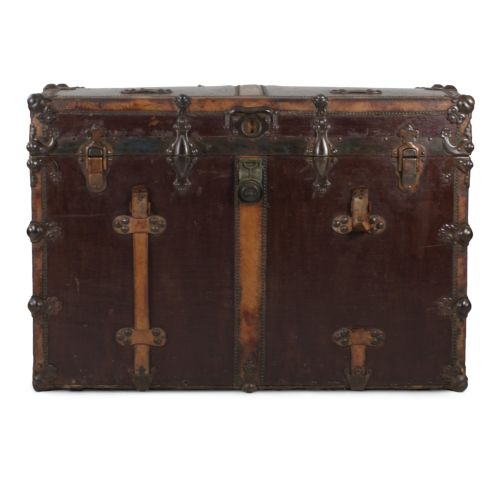
Two words carry this category. 'Trunk' dominates the titles on Sellingantiques, with 'chest' as the secondary word, and plenty of listings use both in the same breath. What sits behind the words is a wooden carcass with a flat or slightly domed lid, reinforced at the corners and banded so it could take rough handling.
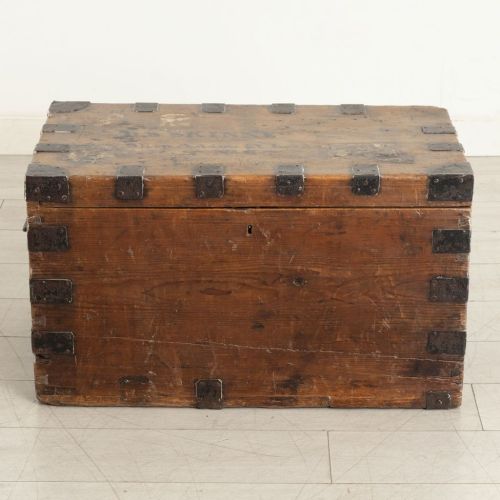
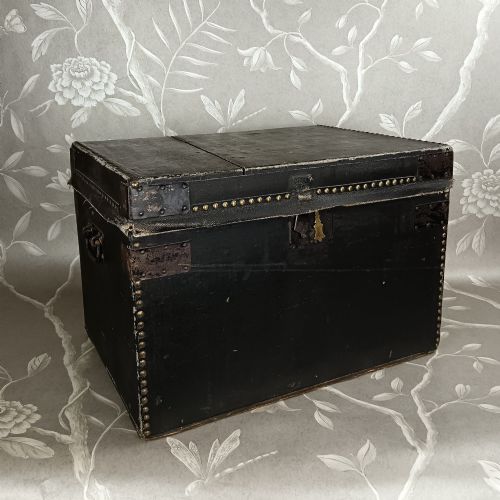
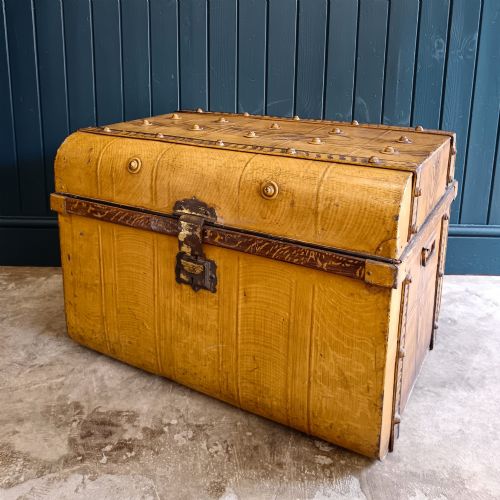
The version you'll meet most often is covered or bound: leather, canvas, or strips of brass, iron, steel or wood laid over the carcass. Titles describe a trunk either by its covering or by its timber, and camphor, pine, oak, teak, mahogany, satinwood, elm, cedar and larchwood all turn up. Sizes are given loosely, 'large' far more often than 'small'.
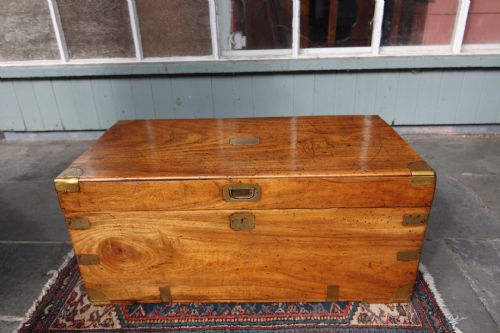
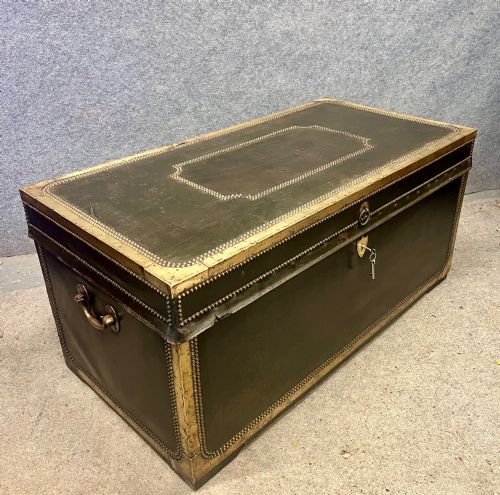
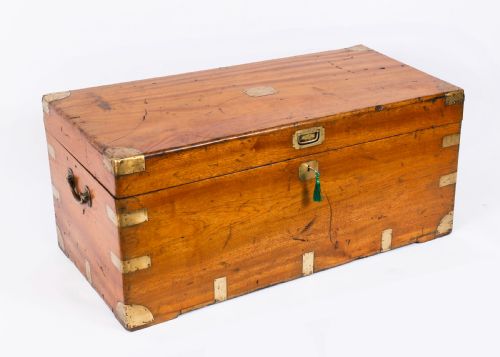
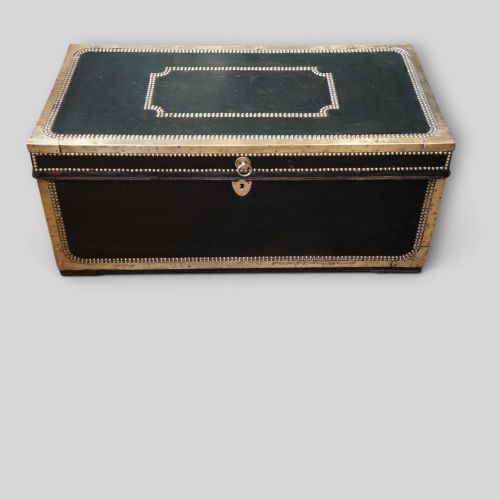
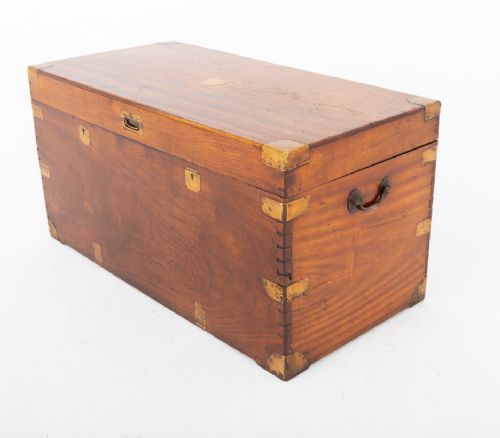
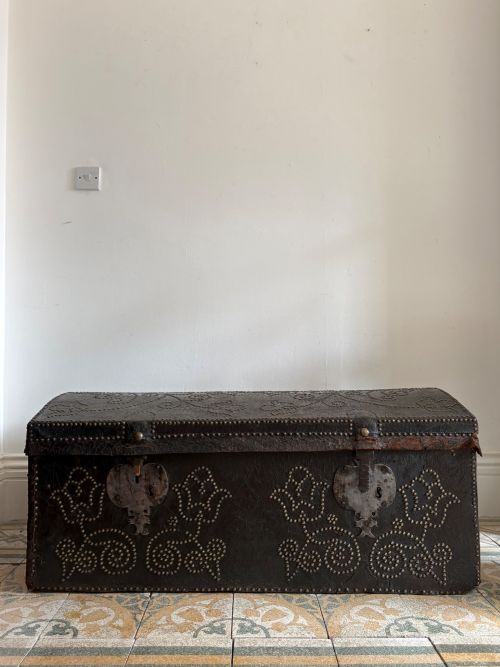
Within that broad shape sit a few recurring types. Steamer and cabin trunks, sized for a ship's berth, account for roughly a sixth. Camphorwood chests, tied repeatedly to Chinese export and Anglo-Indian descriptions, make up about one in seven. Campaign and military trunks are under a tenth of the archive but a larger share of what's listed now, and a smaller run of studded, dome-top leather coffers appears throughout, alongside plain pine, oak and sheet-metal boxes.
Dating is mostly broad. '19th Century' is the biggest single label, with Victorian, Edwardian and Georgian behind it, and decade tags cluster in the 1900s to 1930s. Fewer than half the listings carry a clean year, and that field runs 1750 to 1930, though a handful of 17th- and 18th-century coffers reach back further on century dating alone.
What Sets Them Apart
Timber does most of the sorting. Solid camphorwood, teak, satinwood, mahogany and oak sit at the top of the range; plain pine and sheet metal sit at the bottom. Brass does the rest of the work: brass-bound, brass-mounted and brass-inlaid trunks push upward, and brass gets a mention across a steady run of titles.
Association counts for as much as material. Campaign and officers' trunks occupy the upper third, camphor campaign trunks in particular. A legible shipping-line label, a retailer's name, an inscription or a named owner is treated as part of the object in titles rather than an afterthought, and those listings cluster in the upper half.
The interior matters more than people expect. Titles single out original trays, fitted compartments, zinc and metal linings and coloured paper interiors, and a trunk that has kept them reads differently from an empty box. Size follows the same logic, with large examples above small ones, other things equal. The highest-priced pieces here tend to be twentieth-century named luggage rather than the oldest coffers.
Antique Travelling Chests Retail Price Guide 2026
Typical UK retail prices for travelling chests, calculated from the Sellingantiques database of over a million retail prices indexed since 2003. This retail price guide relies exclusively on Sellingantiques data; no external sources or auction records are used, so the figures do not describe the wider market.
Where a clean year is given on Sellingantiques, travelling chests run from 1750 to 1930. Titles reach back further, into the 17th century.
The Antique Travelling Chests Glossary
- Trunk
- The default word for a travelling container in this category, appearing in the great majority of titles and used interchangeably with 'travel chest'.
- Steamer trunk
- A trunk sized and built for a ship's cabin or hold. Thirty-two titles use the exact phrase, making it the most named single type.
- Bound
- Reinforced with strips of brass, iron, steel or wood laid over the carcass. Thirty-two titles use it, eleven of them 'brass bound'.
- Camphorwood
- Aromatic timber used for chests meant to keep insects out. It behaves like a named type rather than a material, and turns up in thirty-five titles.
- Fitted
- Retaining its internal trays or compartments. Listings say 'fitted trunk', 'original tray', 'fitted interior', and some note zinc or metal linings.
- Cabin wardrobe
- An upright trunk fitted inside to hang clothing, sometimes called a portmanteau. A handful of listings use these terms.
Antique Travelling Chests: Frequently Asked Questions
What's the difference between a trunk and a travelling chest?
On Sellingantiques, very little. 'Trunk' dominates the titles and 'chest' runs second, and many listings use both words for the same object.
Both describe a lidded container built to be carried, strapped or shipped. Which word a dealer reaches for is largely habit.
How old are most of them?
The largest single date label is '19th Century', with Victorian, Edwardian and Georgian behind it, so a good share is placed only to a reign or a hundred-year span.
Of the listings carrying a clean year, the field runs 1750 to 1930. Decade tags bunch in the 1920s and 1900s.
A few 17th- and 18th-century studded leather and hide coffers appear, usually dated to the century rather than the year.
Why is camphorwood so common in these?
Camphor is aromatic, and the timber was used for chests meant to resist insects attacking stored clothing. Thirty-five titles mention it.
It's the one timber here that works like a named type rather than a material, tied repeatedly to Chinese export, China Trade and Anglo-Indian descriptions. Camphor campaign trunks sit in the upper third of the range.
Where were travelling chests made?
Britain and France account for a good deal, but titles name origins well beyond them: Spanish, Portuguese, Dutch, Brazilian, American, Irish, Moroccan, East African, Indian and Chinese.
Most of those appear only once or twice. A Zanzibar chest in East African teak is the kind of one-off that turns up.
Are shipping-line labels worth anything?
Listings treat them as part of the object. Liner labels, retailer names, a vice-consulate marking and named personal owners all get called out in titles.
Those listings cluster in the upper half of the range. A legible label or an original inscription does more for a trunk than a general description of the covering.
Do people use old trunks as furniture?
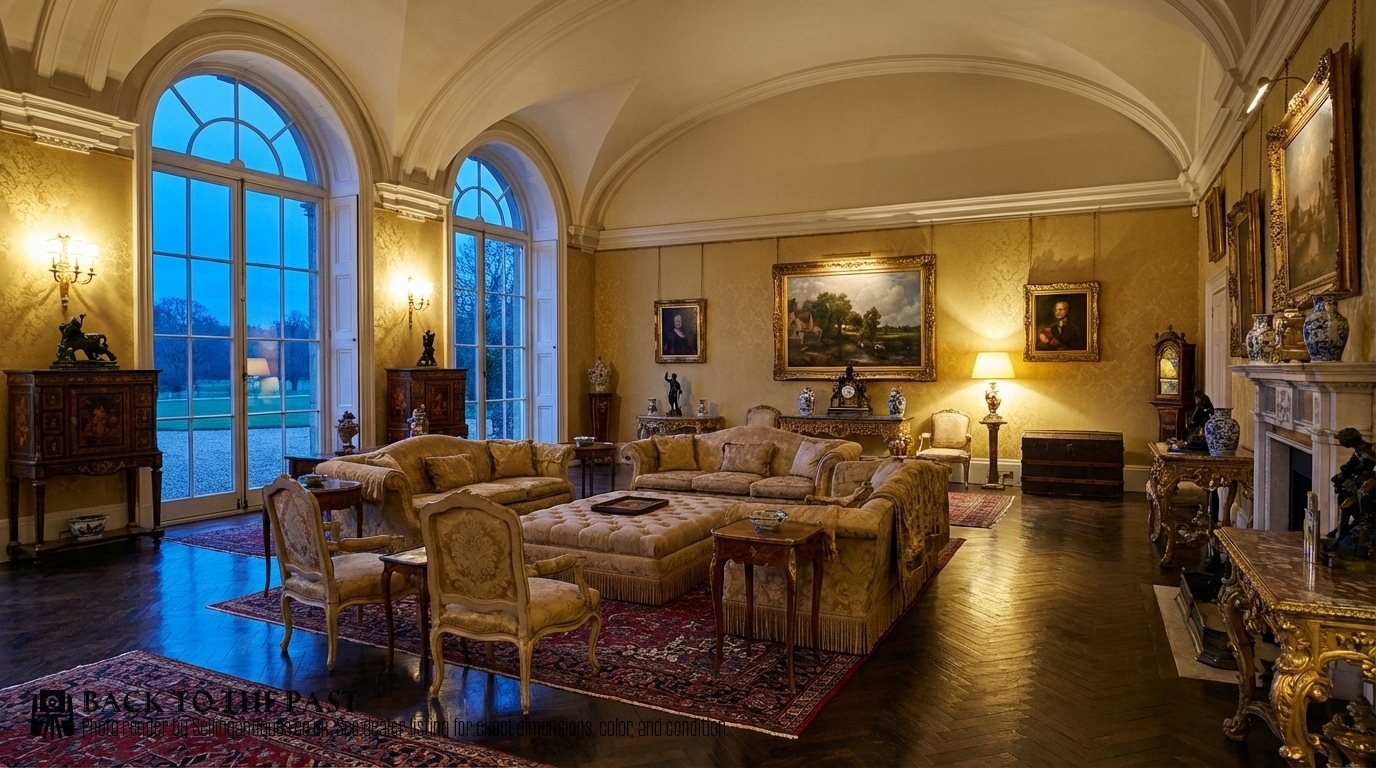
Some are sold that way. A handful of listings offer trunks explicitly as coffee tables, and a pair of leather trunks was sold as sofa tables.
Pairs and trios turn up occasionally too, including two pine chests and three campaign trunks offered together.